

 English
  Russian
  French
  Spanish
  German
  Italian
  Portuguese
  Korean
  Japanese
  Arabic
  Turkish
  Indonesian
  Dutch
Dutch 

Introduction
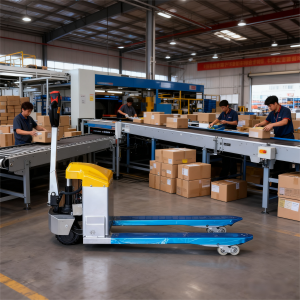
Food and cold-chain logistics facilities rely on transfer equipment that works every day without creating avoidable delays. In these operations, pallet trucks play a foundational role. They move goods across receiving zones, processing interfaces, dock transfer corridors, chilled rooms, and freezer entry areas. Even though they do not perform high-level stacking, they strongly influence productivity, hygiene discipline, and the reliability of warehouse flow.
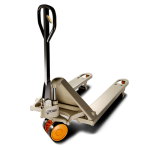
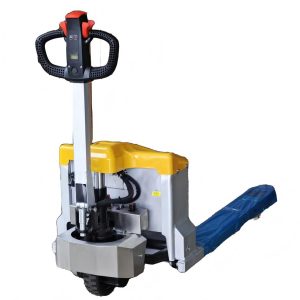
The Akuros T20 galvanized electric pallet truck is designed for this type of environment. It is especially relevant in food-related facilities where surface moisture, condensation, anti-rust requirements, and repetitive short-distance movement make standard pallet trucks less suitable.
Why Food and Cold Chain Logistics Need a Different Transfer Tool
Food Environments Are Hard on Equipment
Food warehouses are often more demanding than standard distribution centers. They may include wet floors, frequent cleaning, chilled air, product residue risk, and pressure for faster movement during receiving and dispatch. In seafood and meat logistics, corrosion risk becomes even more important.
Low-Temperature Routes Reduce Margin for Error
When operators move goods through cold rooms and freezer-adjacent zones, equipment must remain stable, predictable, and easy to control. Any loss of traction or response consistency can slow operations and increase safety risk.
Equipment Choice Influences Hygiene and Maintenance Discipline
A well-selected food industry electric pallet truck does not directly replace sanitation systems, but it supports cleaner operations by offering a more suitable structure for damp and hygiene-sensitive environments.
Why the Akuros T20 Is Well Matched to Food Logistics Operations
Galvanized Structure for Better Surface Durability
The galvanized structure is one of the T20’s major strengths. In cold chain and food handling environments, this can help resist rust and extend structural life. For warehouses that care about equipment appearance, cleanability, and longer-term durability, this matters a great deal.
Designed for Wet and Condensation-Prone Areas
Many warehouses face moisture not only inside the cold room, but also in loading zones and transfer lanes. The T20 is more suitable here because it is configured to handle these conditions more effectively than a standard ambient-warehouse pallet truck.
Suitable for Repetitive Transfer Work
The T20 is designed for frequent pallet transfer, which is exactly the type of work seen in cold-chain and food distribution operations. Fast, repetitive horizontal movement may appear simple, but it is often where warehouse flow either stays smooth or begins to break down.
Typical Use Cases
Frozen Food Warehouse Transfer
In frozen food logistics, pallets often move from receiving to chilled holding to freezer entry. The T20 supports these short and repetitive routes with better environmental suitability.
Seafood Processing and Distribution
Seafood facilities often present some of the most corrosive warehouse conditions. Moisture, product residue, washdown practices, and low temperature all place stress on equipment. The T20 is attractive in these environments because corrosion resistance becomes a core purchase factor, not a secondary feature.
Dairy and Meat Cold Rooms
Dairy and meat operations require consistent transfer performance and reliable movement in chill environments. A durable low temperature transfer pallet truck helps maintain product flow while supporting safer, more efficient daily handling.
Technical Evaluation Factors Buyers Should Understand
| Evaluation Factor | Importance in Food and Cold Chain Use | T20 Advantage |
|---|---|---|
| Corrosion resistance | High due to humidity and cleaning exposure | Galvanized body improves durability |
| Water resistance | Important in wet transfer zones | Better matched to damp operations |
| Battery endurance in cold use | Affects shift continuity | Supports practical low-temperature duty |
| Floor traction | Important for safety on damp surfaces | Supports more stable movement |
| Long-term maintenance burden | Affects total cost of ownership | Lower risk in corrosion-prone environments |
How the T20 Compares with Standard Transfer Equipment
Compared with Manual Pallet Jacks
The T20 reduces manual effort and improves workflow speed, especially in busy facilities where hundreds of pallet movements occur daily. In cold-chain work, reducing physical strain is especially important because operators already work in more demanding clothing and conditions.
Compared with Standard Electric Pallet Trucks
Standard electric pallet trucks may be acceptable in dry warehouses, but in food and low-temperature environments they may wear faster and perform less consistently. The T20 creates differentiation through its corrosion-resistant structure and stronger suitability for cold, damp routes.
Economic Logic: Why Better Transfer Equipment Pays Back
In many warehouses, transfer equipment is judged mainly by initial purchase cost. This is incomplete. A more suitable pallet truck can reduce downtime, lower maintenance frequency, improve daily transfer pace, and help protect labor efficiency. Even when the cost difference appears moderate, the annual operational effect can be meaningful.
For example, if a facility saves 20 minutes per day through smoother transfer work and reduced equipment-related disruption, over 300 operating days that becomes 100 hours of time. The value is even higher when it prevents service interruptions during peak loading periods.
How to Choose the Right Cold Chain Pallet Truck Manufacturer
When evaluating a cold chain pallet truck manufacturer, buyers should not stop at the product photo or capacity label. A reliable supplier should be able to explain why the truck is suitable for your environment, what anti-corrosion features are included, how it handles low-temperature conditions, and what service support will be available after delivery.
A trustworthy supplier usually asks about:
- Actual working temperature
- Humidity and washdown level
- Product type, such as seafood, meat, dairy, or frozen foods
- Floor condition
- Shift length and charging method
- Spare parts expectations
Industry Trend: Why Hygienic and Durable Transfer Equipment Is Gaining Importance
Food and cold-chain operators increasingly want equipment that looks professional, lasts longer, and suits regulated warehouse environments. As food logistics becomes more demanding, generic equipment choices are giving way to more environment-specific solutions. This benefits products like the T20 because it combines daily practicality with stronger environmental matching.
Conclusion
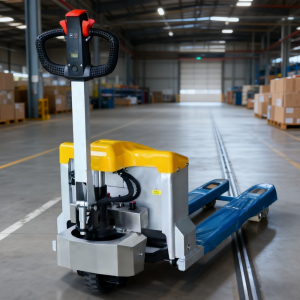
The Akuros T20 galvanized electric pallet truck is a practical and commercially relevant option for food logistics, cold rooms, and moisture-heavy transfer environments. For buyers looking for a food industry electric pallet truck, comparing a cold chain pallet truck manufacturer, or searching for a durable low temperature transfer pallet truck, the T20 stands out because it is built for real low-temperature use, not just standard warehouse handling.
In food and cold chain operations, simple transfer equipment still shapes efficiency, maintenance cost, and operator confidence. That is why the right pallet truck matters much more than it first appears.
FAQ
1. Why is the Akuros T20 a good food industry electric pallet truck?
The T20 is a good food industry electric pallet truck because it is suitable for damp, cold, and repetitive transfer environments where corrosion resistance and reliable pallet movement are important. It fits food logistics operations better than a generic ambient-use pallet truck.
2. What is the advantage of a galvanized electric pallet truck in food logistics?
The advantage is better resistance to rust and surface degradation. In food logistics, where humidity and cleaning exposure are common, galvanization can improve structural life and help the equipment remain more suitable for long-term use.
3. Can the T20 be used in seafood and meat warehouses?
Yes. The T20 is especially relevant in seafood and meat warehouses because these environments often involve high humidity, cold temperatures, and greater corrosion pressure than standard warehouses.
4. How do I choose a reliable cold chain pallet truck manufacturer?
You should choose a cold chain pallet truck manufacturer that can clearly explain low-temperature suitability, corrosion protection, battery logic, charger compatibility, service support, and how the truck matches your actual workflow. Technical understanding matters as much as product supply.
5. Is a low temperature transfer pallet truck worth the extra investment?
In many cases, yes. A low temperature transfer pallet truck can improve durability, reduce maintenance pressure, and support better transfer efficiency in cold-chain environments. That often creates stronger long-term value than using standard equipment not designed for these conditions.
References
- Food Logistics and Cold Chain Operations, FAO, Technical Resource
- Corrosion Control for Industrial Equipment, NACE International, Engineering Publication
- Battery Performance at Low Temperatures, U.S. Department of Energy, Technical Material
- Warehouse Material Handling Safety, Occupational Safety and Health Administration, Safety Publication
- Cold Storage Best Practices, Global Cold Chain Alliance, Industry Guide
- Electric Lift Truck Application Notes, Industrial Truck Association, Industry Resource
- Temperature-Controlled Warehouse Engineering, International Institute of Refrigeration, Technical Publication
- Warehouse Efficiency and Equipment Selection, MHI, Industry Insight
Semantic Insight Block
How does the T20 fit food and cold chain warehouse logic?
It fits because these operations need durable, clean-looking, corrosion-resistant transfer equipment that can work reliably in damp and low-temperature conditions.
Why is galvanization strategically valuable here?
Because galvanization supports better structural durability in environments where rust and surface deterioration happen faster than in ordinary dry warehouses.
What buyers benefit most from this model?
Seafood processors, meat logistics operators, frozen food warehouses, dairy cold rooms, and refrigerated distribution centers benefit most from this model.
What should decision-makers review before ordering?
They should review operating temperature, floor condition, moisture exposure, battery requirements, charger setup, and expected maintenance support.
Why is this product aligned with future market demand?
Because food and cold-chain operators increasingly prefer equipment that matches environmental reality, supports longer service life, and improves daily transfer consistency.