

 Italian
  English
  Russian
  French
  Spanish
  German
  Portuguese
  Korean
  Japanese
  Arabic
  Turkish
  Indonesian
  Dutch
Dutch 

Multi-shift warehousing is a simple game with brutal rules: equipment that isn’t moving is throughput you never get back. When operations run two or three shifts, the battery system is no longer a “component”—it becomes the hidden scheduling manager of your entire facility.
This guide compares lithium battery and lead-acid in the context that matters most: multi-shift utilisation, short breaks, changing operators, variable load peaks, cold-room exposure, and the operational reality of dock doors that don’t care about your charging plan.
What “multi-shift fit” really means in a warehouse
A battery fits multi-shift operations when it can meet four conditions at the same time:
It must keep power consistent across a long duty cycle, so travel speed and lift response don’t fade at the worst times. It must recharge fast enough to match real break patterns. It must not require high-effort daily routines that slip when supervisors are busy. And it must do all of this without creating avoidable safety exposure in charging areas.
If your battery choice forces longer charging blocks, strict cooldown windows, or frequent battery swaps, you’re not just choosing a battery—you’re choosing constraints on labour planning, aisle coverage, and dock scheduling.
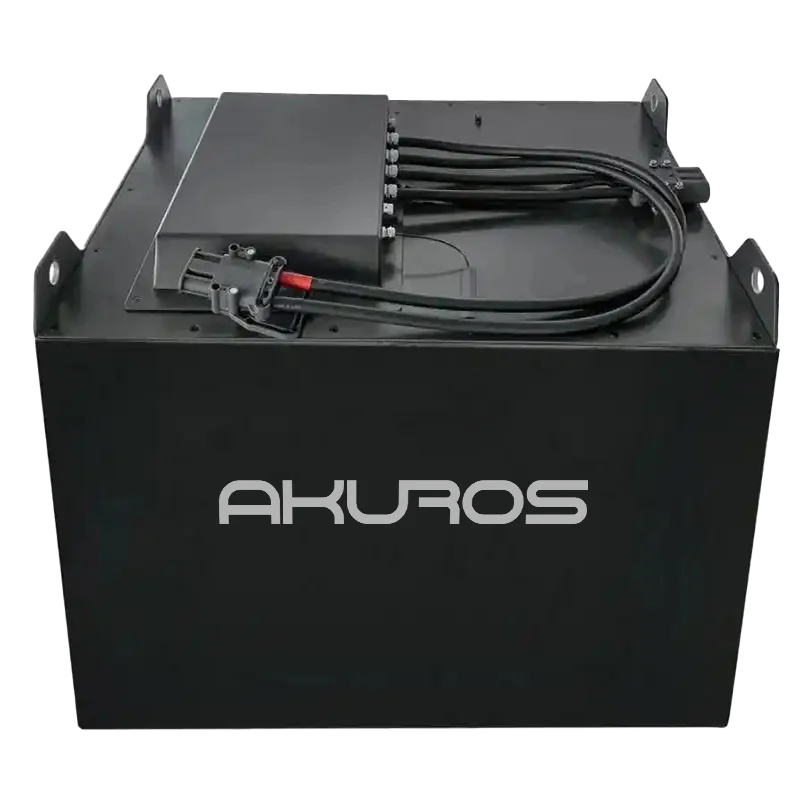
Lithium Battery vs lead-acid in one operational comparison
 |
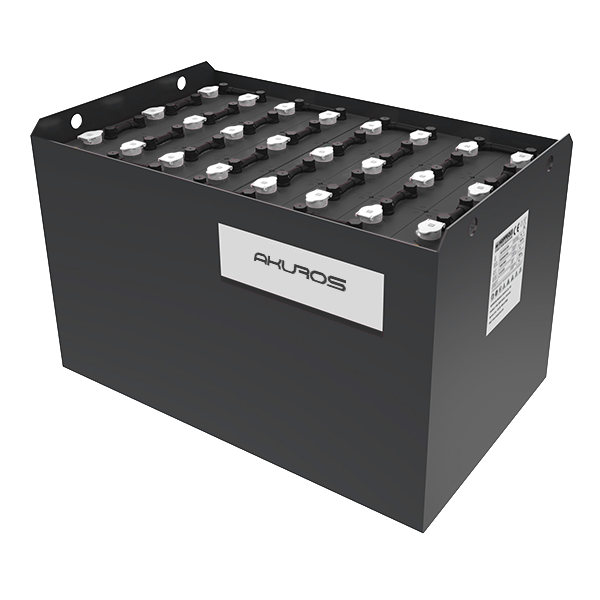 |
The chemistry differences are well-known. What matters is how those differences show up on your warehouse floor.
Charging behaviour and recovery time
Lithium battery are typically used with opportunity charging, meaning short, frequent top-ups during breaks can keep trucks available across shifts. Lead-acid batteries are commonly managed with longer charge cycles and, in many sites, additional time allowances for heat management and battery care routines. In multi-shift operations, the key question is whether your breaks are long enough and predictable enough to support the charging model without forcing parked equipment.
Power delivery and performance stability
Lithium systems generally provide more consistent voltage across the usable range, which helps keep performance stable through a shift. Lead-acid performance can feel progressively weaker as state of charge declines, especially during heavier duty cycles. In a multi-shift environment, that performance drift often appears as slower travel in peak hours, more operator frustration, and a subtle increase in “shortcuts” that impact safety and product handling.
Daily maintenance reality
Lithium battery are typically closer to “inspect and go,” with battery management systems handling many protection functions. Lead-acid requires more hands-on care: watering discipline, cleanliness, ventilation awareness, and prevention of avoidable sulfation through correct charging practices. In single-shift operations with stable staff and strict routines, that’s manageable. In multi-shift operations with rotating teams, it often becomes inconsistent, which accelerates performance drop and operational interruptions.
Space and infrastructure impact
Lithium charging can often be integrated into operational areas with the right controls and chargers, reducing the need for large battery rooms and swap zones. Lead-acid programs frequently rely on dedicated charging spaces, ventilation planning, and in many operations, a workflow for swapping or staging spare batteries. For multi-shift warehouses that are already space-constrained, floor area is a hidden cost driver because every square meter assigned to batteries is a square meter not used for storage, staging, or safer traffic separation.
When lithium Battery is the better match for multi-shift warehousing
 |
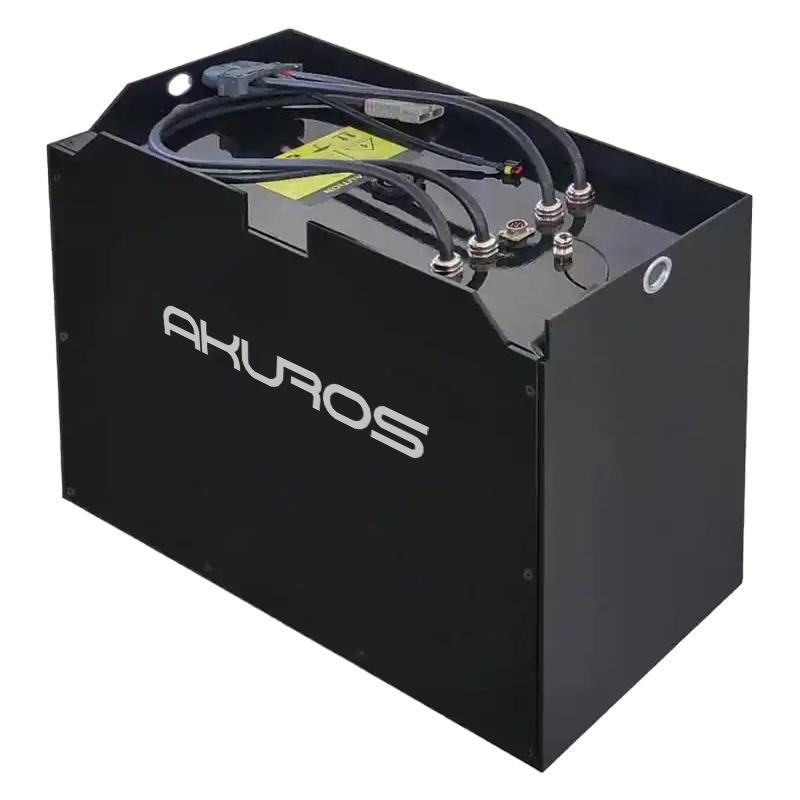 |
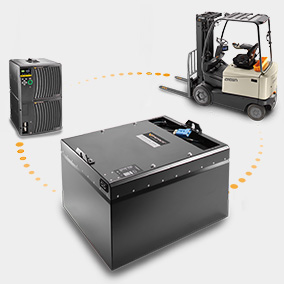
Lithium tends to fit better when your operation has any of the following patterns, because the battery strategy can align with real work rhythms instead of forcing the operation to bend around the battery.
Pattern 1: You rely on short breaks, not long downtime blocks
If your operation runs continuous waves (receiving peaks, picking peaks, dispatch peaks), you rarely have long, clean downtime windows. Lithium opportunity charging allows you to convert short breaks into meaningful energy recovery without scheduling a large charge block that removes equipment from service.
Pattern 2: You cannot afford performance fade in late shift hours
Many warehouses experience a late-shift surge (dispatch cutoffs, carrier arrivals, urgent replenishment). If equipment feels sluggish late in the shift, operators compensate with sharper handling and tighter margins. Lithium’s more stable output reduces this performance variability, which supports consistency and reduces error pressure.
Pattern 3: You want to simplify operator routines across multiple teams
Multi-shift operations often include different supervisors, different habits, and different interpretations of “battery care.” Lithium systems reduce the operational burden of daily battery routines and reduce the dependency on perfect discipline across every shift. That simplicity is often the difference between “works in theory” and “works every day.”
Pattern 4: Your facility is space-constrained
If adding a battery room, swap area, or staging zone is difficult, lithium’s infrastructure footprint can be a practical advantage. The best multi-shift warehouses remove non-core workflows, and battery swapping is often one of the first workflows to evaluate for elimination.
For buyers sourcing equipment fleets and battery programs, many teams use a single supplier framework to standardise training, chargers, and support. If you’re coordinating that approach through akuros, the biggest win is usually not the battery itself—it’s the consistency of the entire charging routine across shifts.
When lead-acid can still be a smart choice
 |
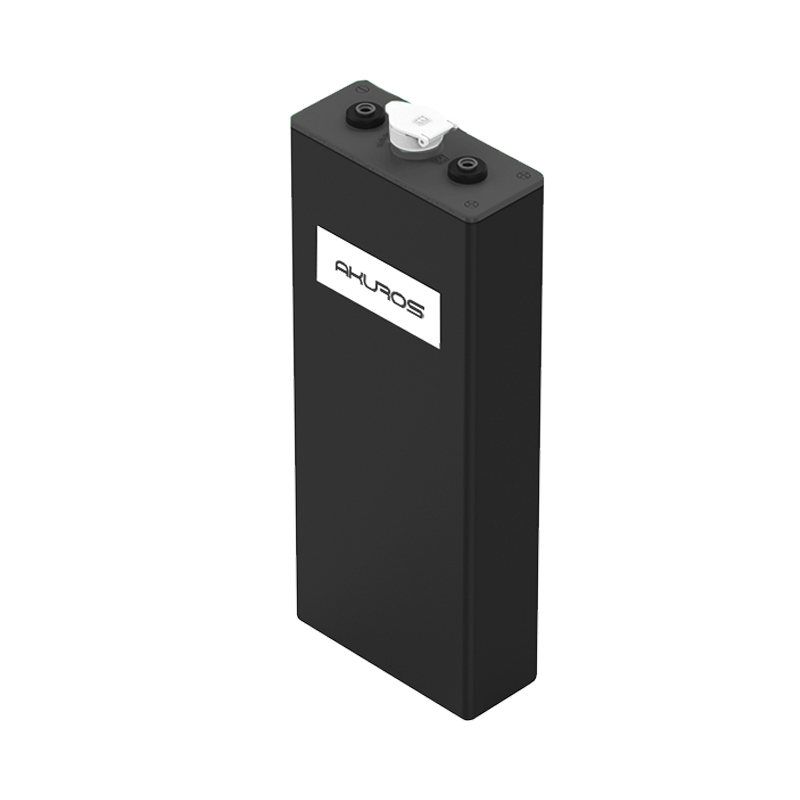 |
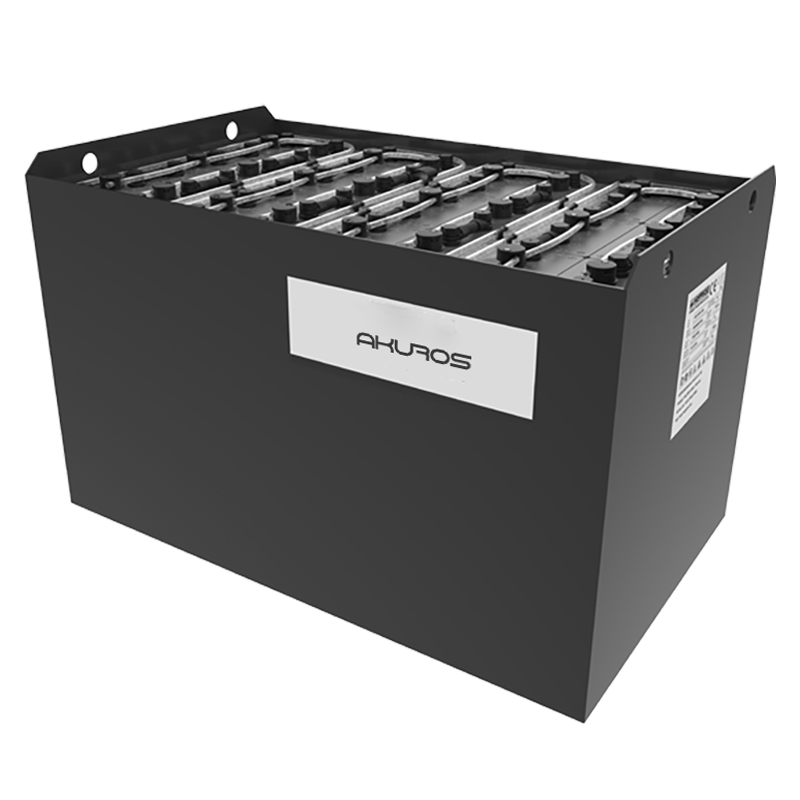
Lead-acid isn’t “bad.” It simply has stronger fit in certain operating models. In some warehouses, lead-acid remains a stable, proven option when the operating environment matches the charging discipline.
Scenario 1: Single-shift or low-intensity duty cycles
If utilisation is moderate and you have predictable overnight downtime, lead-acid can work well. The operation can schedule longer charging windows without compromising throughput.
Scenario 2: You already have strong charging infrastructure and discipline
If you already have a well-managed charging room, strong ventilation practices, consistent watering routines, and supervisors who enforce correct charging behaviour across teams, lead-acid can remain reliable. The risk is not the chemistry—it’s the reality of maintaining that discipline when staffing changes.
Scenario 3: Your operation depends on strict separation of charging zones
Some facilities prefer charging to occur only in controlled areas due to internal safety policies and traffic layouts. If that policy is non-negotiable, lead-acid programs can align naturally—assuming you have enough spare batteries or enough charging capacity to support multi-shift coverage.
Multi-shift decision framework: choose by constraints, not preferences
The wrong way to choose is “which one is better.” The right way is “which one removes the most operational constraints.”
Here is a practical way to decide: start from your shift schedule and break structure, then map the battery model that best fits the time you actually have.
If your reality is short breaks, unpredictable peaks, and high utilisation, lithium often reduces downtime friction. If your reality is long overnight downtime, stable routines, and controlled charging zones, lead-acid can remain workable.
The decision becomes clearer when you write down two numbers: the average time your trucks sit idle due to charging constraints, and the average time lost due to battery-related interruptions (slow performance, emergency swaps, unplanned maintenance). The battery chemistry that reduces those two numbers is the better multi-shift fit.
Common mistakes that make any battery choice fail in multi-shift operations
Even a good chemistry choice can underperform if the operational design is wrong.
One common mistake is treating chargers as an afterthought. Charging capacity must match fleet size and break rhythm, not just “we bought chargers with the batteries.” Another mistake is creating a charging routine that only the day shift follows. Multi-shift success requires that the same standard is followed at 2 a.m. as it is at 2 p.m. A third mistake is ignoring the environment: cold rooms, wet docks, and dusty facilities all change real battery behaviour and connector reliability.
If you want the battery to support throughput, the charging routine must be engineered like a process, not left as an informal habit.
FAQ
1. Is lithium battery always better than lead-acid for warehouses running two or three shifts?
Not always, but lithium battery is often a better fit when equipment utilisation is high and breaks are short. Multi-shift operations usually benefit from faster recovery and less daily maintenance dependency. Lead-acid can still work when you have long downtime windows, strong charging infrastructure, and consistent maintenance discipline across all shifts.
2. What is opportunity charging, and why does it matter in multi-shift operations?
Opportunity charging is topping up during short breaks instead of waiting for a long charge cycle. In multi-shift warehouses, it matters because it turns normal breaks into usable energy recovery, helping keep equipment available without scheduling long charging blocks that remove trucks from service.
3. Why do operators complain more about “weak trucks” with lead-acid late in the shift?
In many real operations, lead-acid performance can feel less responsive as charge declines, especially under heavy duty cycles. That can show up as slower travel or lift response when the warehouse is busiest. Consistent charging discipline and correct routines can reduce the problem, but the performance variability is a common operational complaint in high-utilisation multi-shift sites.
4. Can lead-acid still be used in a multi-shift warehouse without battery swapping?
It can, but it depends on how much downtime your schedule can absorb and how much charging capacity you have. Without swapping, the operation must have enough charging time or enough staggered usage to avoid shortages. If the warehouse has tight dispatch windows and continuous waves, swapping or moving to a faster-charging model is often considered.
5. What should buyers confirm before choosing lithium battery for a fleet?
Confirm charging strategy (where charging happens, when it happens, and who owns the routine), charger capacity planning, connector reliability for your environment, and how performance will be managed across shifts. Buyers should also confirm support expectations for battery monitoring and routine checks so the program stays consistent as staffing rotates.