

 Russian
  English
  French
  Spanish
  German
  Italian
  Portuguese
  Korean
  Japanese
  Arabic
  Turkish
  Indonesian
  Dutch
Dutch 

Multi-shift warehousing is a simple game with brutal rules: equipment that isn’t moving is throughput you never get back. When operations run two or three shifts, the battery system is no longer a “component”—it becomes the hidden scheduling manager of your entire facility.
This guide compares lithium battery and lead-acid in the context that matters most: multi-shift utilisation, short breaks, changing operators, variable load peaks, cold-room exposure, and the operational reality of dock doors that don’t care about your charging plan.
What “multi-shift fit” really means in a warehouse
A battery fits multi-shift operations when it can meet four conditions at the same time:
It must keep power consistent across a long duty cycle, so travel speed and lift response don’t fade at the worst times. It must recharge fast enough to match real break patterns. It must not require high-effort daily routines that slip when supervisors are busy. And it must do all of this without creating avoidable safety exposure in charging areas.
If your battery choice forces longer charging blocks, strict cooldown windows, or frequent battery swaps, you’re not just choosing a battery—you’re choosing constraints on labour planning, aisle coverage, and dock scheduling.
Lithium Battery vs lead-acid in one operational comparison
 |
 |
The chemistry differences are well-known. What matters is how those differences show up on your warehouse floor.
Charging behaviour and recovery time
Lithium battery are typically used with opportunity charging, meaning short, frequent top-ups during breaks can keep trucks available across shifts. Lead-acid batteries are commonly managed with longer charge cycles and, in many sites, additional time allowances for heat management and battery care routines. In multi-shift operations, the key question is whether your breaks are long enough and predictable enough to support the charging model without forcing parked equipment.
Power delivery and performance stability
Lithium systems generally provide more consistent voltage across the usable range, which helps keep performance stable through a shift. Lead-acid performance can feel progressively weaker as state of charge declines, especially during heavier duty cycles. In a multi-shift environment, that performance drift often appears as slower travel in peak hours, more operator frustration, and a subtle increase in “shortcuts” that impact safety and product handling.
Daily maintenance reality
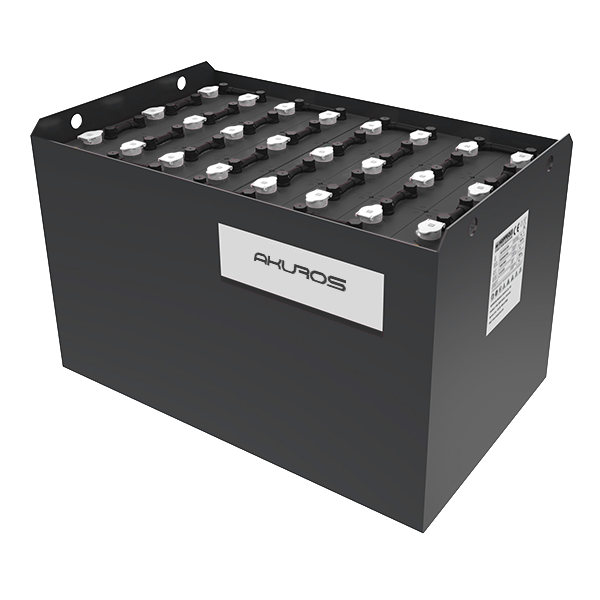
Lithium battery are typically closer to “inspect and go,” with battery management systems handling many protection functions. Lead-acid requires more hands-on care: watering discipline, cleanliness, ventilation awareness, and prevention of avoidable sulfation through correct charging practices. In single-shift operations with stable staff and strict routines, that’s manageable. In multi-shift operations with rotating teams, it often becomes inconsistent, which accelerates performance drop and operational interruptions.
Space and infrastructure impact
Lithium charging can often be integrated into operational areas with the right controls and chargers, reducing the need for large battery rooms and swap zones. Lead-acid programs frequently rely on dedicated charging spaces, ventilation planning, and in many operations, a workflow for swapping or staging spare batteries. For multi-shift warehouses that are already space-constrained, floor area is a hidden cost driver because every square meter assigned to batteries is a square meter not used for storage, staging, or safer traffic separation.
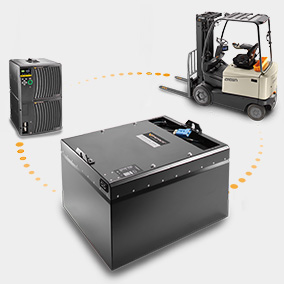
When lithium Battery is the better match for multi-shift warehousing
 |
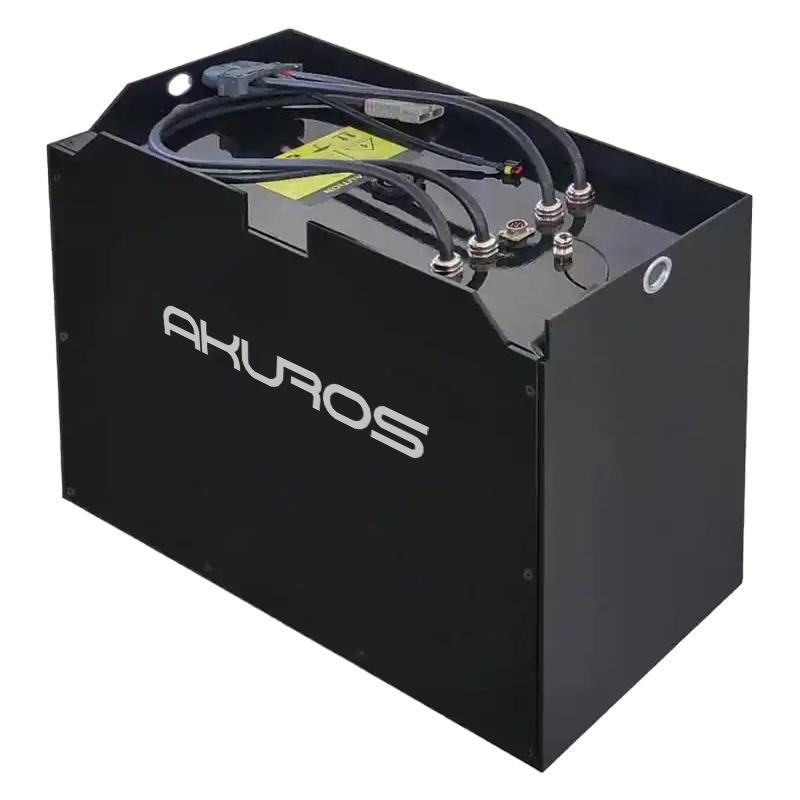 |
Lithium tends to fit better when your operation has any of the following patterns, because the battery strategy can align with real work rhythms instead of forcing the operation to bend around the battery.
Pattern 1: You rely on short breaks, not long downtime blocks
If your operation runs continuous waves (receiving peaks, picking peaks, dispatch peaks), you rarely have long, clean downtime windows. Lithium opportunity charging allows you to convert short breaks into meaningful energy recovery without scheduling a large charge block that removes equipment from service.
Pattern 2: You cannot afford performance fade in late shift hours
Many warehouses experience a late-shift surge (dispatch cutoffs, carrier arrivals, urgent replenishment). If equipment feels sluggish late in the shift, operators compensate with sharper handling and tighter margins. Lithium’s more stable output reduces this performance variability, which supports consistency and reduces error pressure.
Pattern 3: You want to simplify operator routines across multiple teams
Multi-shift operations often include different supervisors, different habits, and different interpretations of “battery care.” Lithium systems reduce the operational burden of daily battery routines and reduce the dependency on perfect discipline across every shift. That simplicity is often the difference between “works in theory” and “works every day.”
Pattern 4: Your facility is space-constrained
If adding a battery room, swap area, or staging zone is difficult, lithium’s infrastructure footprint can be a practical advantage. The best multi-shift warehouses remove non-core workflows, and battery swapping is often one of the first workflows to evaluate for elimination.
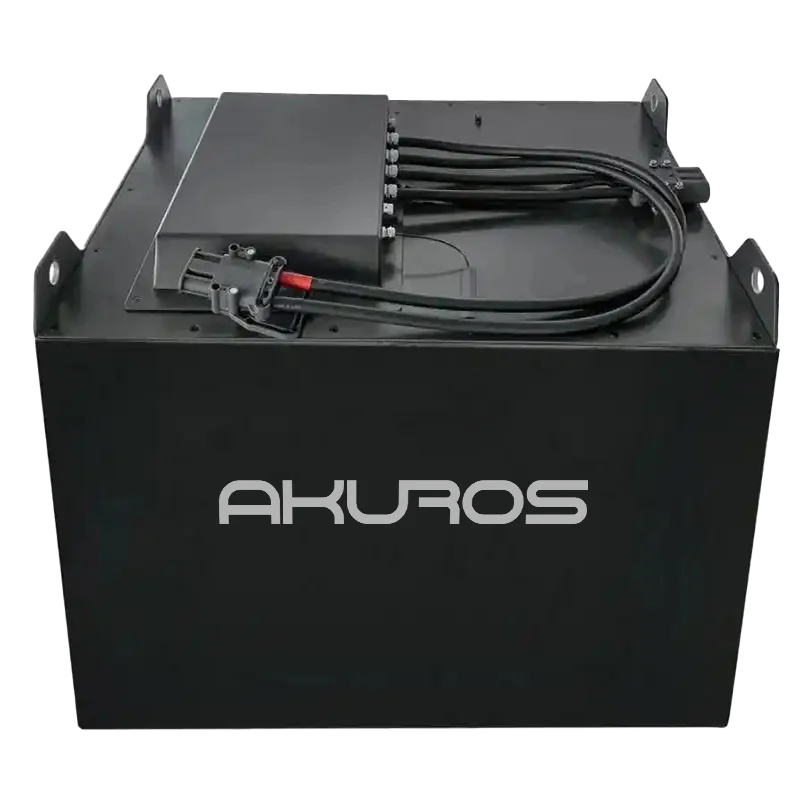
For buyers sourcing equipment fleets and battery programs, many teams use a single supplier framework to standardise training, chargers, and support. If you’re coordinating that approach through akuros, the biggest win is usually not the battery itself—it’s the consistency of the entire charging routine across shifts.
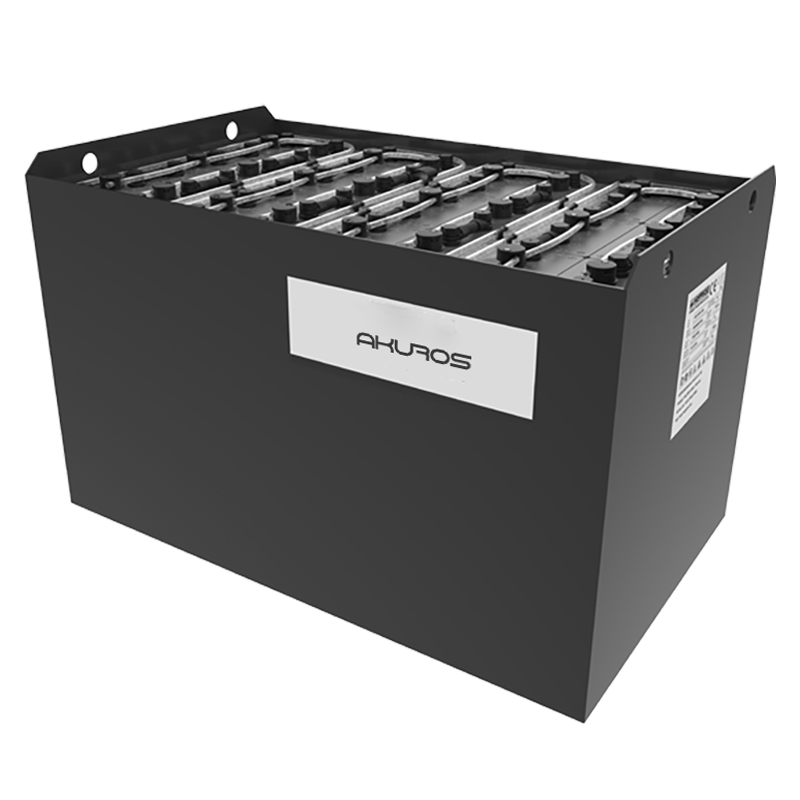
When lead-acid can still be a smart choice
 |
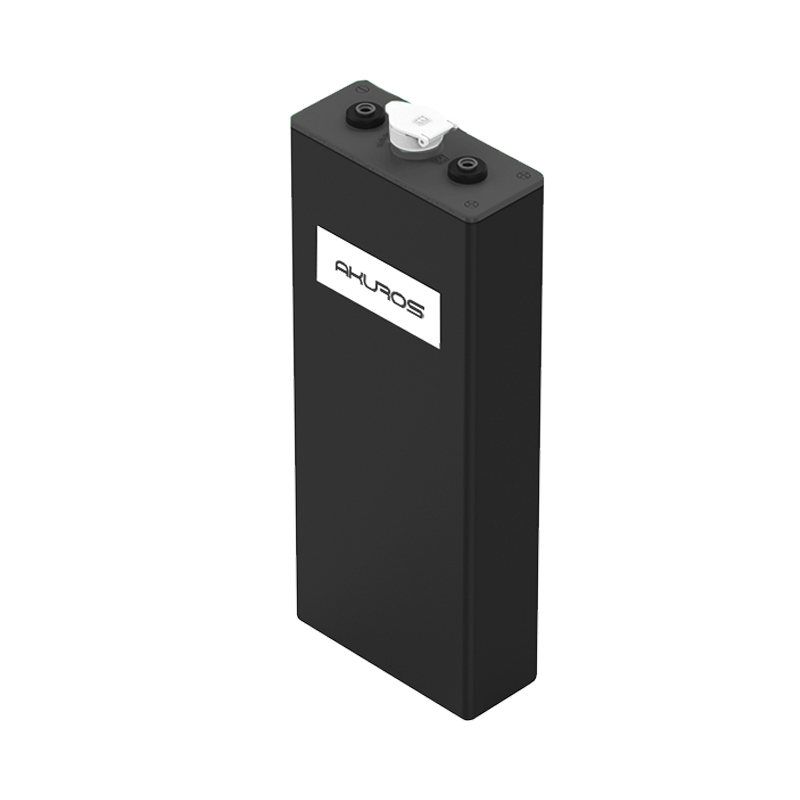 |
Lead-acid isn’t “bad.” It simply has stronger fit in certain operating models. In some warehouses, lead-acid remains a stable, proven option when the operating environment matches the charging discipline.
Scenario 1: Single-shift or low-intensity duty cycles
If utilisation is moderate and you have predictable overnight downtime, lead-acid can work well. The operation can schedule longer charging windows without compromising throughput.
Scenario 2: You already have strong charging infrastructure and discipline
If you already have a well-managed charging room, strong ventilation practices, consistent watering routines, and supervisors who enforce correct charging behaviour across teams, lead-acid can remain reliable. The risk is not the chemistry—it’s the reality of maintaining that discipline when staffing changes.
Scenario 3: Your operation depends on strict separation of charging zones
Some facilities prefer charging to occur only in controlled areas due to internal safety policies and traffic layouts. If that policy is non-negotiable, lead-acid programs can align naturally—assuming you have enough spare batteries or enough charging capacity to support multi-shift coverage.
Multi-shift decision framework: choose by constraints, not preferences
The wrong way to choose is “which one is better.” The right way is “which one removes the most operational constraints.”
Here is a practical way to decide: start from your shift schedule and break structure, then map the battery model that best fits the time you actually have.
Если в вашей реальности — короткие перерывы, непредсказуемые пиковые нагрузки и высокая степень использования, литиевые аккумуляторы зачастую снижают простои и уменьшают их последствия. Если же ваша реальность — длительные ночные простои, стабильные графики работы и контролируемые зоны зарядки, свинцово-кислотные аккумуляторы по-прежнему могут быть вполне приемлемыми.
Решение становится более очевидным, если записать два числа: среднее время простоя ваших погрузчиков из-за ограничений по зарядке и среднее время потерь, связанных с перерывами, вызванными аккумулятором (замедленная работа, экстренная замена, внеплановое техническое обслуживание). Химия аккумулятора, которая позволяет снизить эти два показателя, лучше подходит для многозменной эксплуатации.
Распространённые ошибки, из-за которых любой выбор аккумулятора может оказаться неудачным в условиях многозменной работы
Даже правильный выбор химии аккумулятора может не оправдать ожиданий, если эксплуатационная организация процесса неверна.
Одна из распространённых ошибок — относиться к зарядным устройствам как к чему-то второстепенному. Мощность зарядки должна соответствовать размеру парка и ритму перерывов, а не ограничиваться лишь фразой «мы купили зарядные устройства вместе с аккумуляторами». Другая ошибка — разрабатывать график зарядки, которого придерживаются только дневные смены. Для успешной многозменной работы необходимо, чтобы один и тот же стандарт соблюдался и в 2 часа ночи, и в 2 часа дня. Третья ошибка — игнорирование условий эксплуатации: холодные помещения, мокрые доки и запылённые объекты все изменяют реальное поведение аккумулятора и надёжность соединений.
Если вы хотите, чтобы аккумулятор обеспечивал необходимую производительность, график зарядки должен быть спроектирован как технологический процесс, а не оставаться неформальной привычкой.
ЧАСТО ЗАДАВАЕМЫЕ ВОПРОСЫ
1. Всегда ли литиевый аккумулятор лучше свинцово-кислотного для складов, работающих в две или три смены?
Не всегда, но литиевый аккумулятор часто оказывается более подходящим, когда уровень загрузки оборудования высокий, а перерывы короткие. Многозменная эксплуатация обычно выигрывает за счёт более быстрого восстановления и меньшей зависимости от ежедневного технического обслуживания. Свинцово-кислотные аккумуляторы всё ещё могут использоваться, если у вас есть длительные окна простоя, мощная инфраструктура зарядки и строгая дисциплина технического обслуживания на всех сменах.
2. Что такое возможность зарядки и почему она важна в многозменной эксплуатации?
Возможность зарядки — это подзарядка во время коротких перерывов вместо ожидания длительного цикла зарядки. На многозменных складах это важно, потому что превращает обычные перерывы в полезное восстановление энергии, помогая поддерживать доступность оборудования без необходимости планировать длительные блоки зарядки, которые выводят погрузчики из эксплуатации.
3. Почему операторы чаще жалуются на «слабые погрузчики» со свинцово-кислотными аккумуляторами в конце смены?
Во многих реальных условиях эксплуатации свинцово-кислотные аккумуляторы могут казаться менее отзывчивыми по мере снижения уровня заряда, особенно при интенсивном режиме работы. Это может проявляться в замедлении движения или реакции подъёмника в периоды максимальной загрузки склада. Соблюдение строгой дисциплины зарядки и правильные графики эксплуатации могут снизить эту проблему, но вариативность характеристик — частая жалоба на многозменных объектах с высокой загрузкой.
4. Можно ли использовать свинцово-кислотные аккумуляторы на многозменном складе без замены аккумуляторов?
Можно, но это зависит от того, сколько времени простоя ваш график может позволить себе и какой мощности зарядка у вас имеется. Без замены аккумуляторов эксплуатация должна предусматривать достаточное время зарядки или достаточно распределённого использования, чтобы избежать дефицита. Если на складе жёсткие временные рамки отправки грузов и непрерывные потоки, часто рассматривается вариант замены аккумуляторов или переход на модель с более быстрой зарядкой.
5. Что покупатели должны уточнить перед выбором литиевого аккумулятора для своего парка?
Уточните стратегию зарядки (где происходит зарядка, когда и кто отвечает за этот процесс), планирование мощности зарядных устройств, надёжность соединений в ваших условиях эксплуатации и то, как будет осуществляться управление производительностью на всех сменах. Покупатели также должны уточнить ожидания по поддержке мониторинга аккумуляторов и регулярных проверок, чтобы программа оставалась согласованной при смене персонала.