

 Dutch
Dutch  English
  Russian
  French
  Spanish
  German
  Italian
  Portuguese
  Korean
  Japanese
  Arabic
  Turkish
  Indonesian

Inleiding
Battery selection has become one of the most important decisions in electric forklift fleet planning. In the past, many buyers simply accepted lead-acid as the default option. Today, lithium is often presented as the more modern choice, while lead-acid is sometimes treated as older technology. However, in real warehouse operations, the decision is rarely that simple.
A battery system must match the actual operating model of the warehouse. It must fit the number of shifts, the charging schedule, the maintenance culture, the budget structure, and the level of flexibility the operation really needs. This is why the comparison between a forklift lead-acid battery and lithium should not be framed as old versus new. It should be framed as stable routine versus flexible speed, controlled initial investment versus reduced routine maintenance, and established charging practices versus simplified energy management.
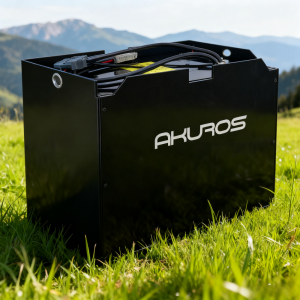
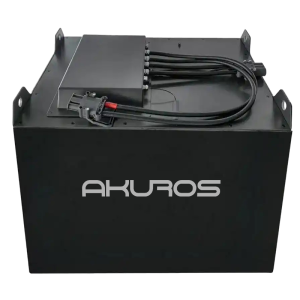
The Akuros lead-acid battery product is positioned for standard warehouse operations, with flooded lead-acid technology, stable output, standard charging cycles, periodic watering and inspection, and suitability for electric forklifts and warehouse trucks in indoor industrial environments. That makes it a strong example of where lead-acid still fits well. By contrast, lithium becomes more attractive when a warehouse values faster charging, lower routine battery maintenance, and more flexible shift use. This article explains how buyers should compare the two in practical terms rather than marketing language.
Why This Comparison Matters More Than Ever
Battery choice now shapes fleet strategy
In a modern electric fleet, the battery affects more than runtime. It affects charger planning, truck availability, maintenance labor, battery room design, daily discipline, and long-term replacement logic. That means the battery is not just a component inside the forklift. It is part of the warehouse operating system.
Warehouse managers are under pressure to do more with less
Many facilities face the same combination of constraints: limited labor, tighter cost control, and rising throughput expectations. In this environment, every decision around forklift uptime and charging efficiency becomes more important. A battery platform that fits the workflow can improve productivity, while a mismatch can create unnecessary downtime or cost.
The best technology depends on the real operating pattern
A warehouse running one standard shift with a well-managed charging room may still get excellent value from a forklift lead-acid battery. A site running longer hours, mixed shifts, or unpredictable peak demand may gain more from lithium flexibility. Both can be correct, depending on the operation.
What a Lead-Acid Battery Does Well
Lower initial investment
One of the most important strengths of a lead-acid battery for electric forklift use is lower upfront cost. For cost-sensitive buyers or fleets with stable usage patterns, this can be a major advantage because the initial capital burden is easier to manage.
Established operating logic
Lead-acid remains attractive because warehouse teams already understand how to use it. Charging routines, watering schedules, inspection procedures, and battery-room practices are widely known. For a site that already has these disciplines in place, there may be little strategic reason to change unless the operating model has changed.
Compatibility with existing infrastructure
Many standard warehouse fleets already have chargers, rooms, ventilation setups, and maintenance habits designed around flooded lead-acid batteries. In those cases, the battery fits not only the truck, but also the building and the maintenance system.
Strong fit for standard shifts
Where forklifts operate on a predictable daily cycle, a warehouse forklift battery solution based on lead-acid can remain highly practical. If the fleet returns to charge according to a known routine, the operation may not need the extra flexibility that lithium is designed to provide.
What Lithium Does Better
Faster charging behavior
The most commonly recognized strength of lithium is charging speed. For operations that need more uptime flexibility between or during shifts, this can be very valuable. A fleet that cannot easily stop for long charge windows may benefit from this feature more than a standard one-shift site.
Lower routine battery maintenance
Lithium is often chosen because it reduces the need for watering and many routine battery care procedures. This does not automatically make it better for every warehouse, but it does reduce a category of routine maintenance work that lead-acid systems require.
Higher flexibility for changing work patterns
Warehouses with variable shifts, seasonal peaks, or less disciplined charging behavior may find lithium easier to integrate because the operating model is less dependent on structured battery-room routines.
Real Warehouse Scenario: Two Fleets, Two Different Right Answers
Consider two warehouses of similar size. The first runs one organized shift, has a designated charging room, and uses technicians who are already comfortable with watering and inspection routines. The second runs longer hours, sees more sudden changes in forklift demand, and wants to reduce battery handling complexity as much as possible.
For the first warehouse, a forklift lead-acid battery may remain the better economic choice because the operation is already structured to support it. The existing infrastructure and disciplined charging schedule reduce the need to pay for lithium flexibility. For the second warehouse, lithium may provide more operational value because the fleet needs faster charging response and less dependence on routine battery care.
This is why the battery decision should always begin with operational rhythm, not with trend pressure.
Comparison Table: Lead-Acid vs Lithium for Standard Fleets
| Comparison Factor | Lead-Acid Battery | Lithiumbatterij | Operational Meaning |
|---|---|---|---|
| Initiële investering | Lager | Hoger | Important for cost-controlled fleet procurement |
| Charging method | Standard charging cycles | Generally more flexible and faster | Affects uptime planning |
| Routine maintenance | Requires watering and inspection | Lower routine battery maintenance | Depends on site discipline and labor structure |
| Infrastructure fit | Often matches existing battery rooms | Can simplify some workflows but changes fleet logic | Important in retrofit decisions |
| Best fit | Standard shifts and predictable routines | Flexible or intensive operating patterns | Selection should follow actual workflow |
How Buyers Should Compare Total Value
Do not compare only purchase price
Many buyers begin by comparing upfront cost. That is understandable, but incomplete. A battery should also be evaluated by how it affects charging discipline, technician time, forklift availability, battery-room requirements, and the overall management burden of the fleet.
Think in terms of fit, not superiority
It is more useful to ask which battery fits the operating model than which battery sounds more advanced. A forklift lead-acid battery vs lithium comparison should focus on whether the warehouse needs routine stability or operational flexibility.
Account for hidden transition cost
When a warehouse already has systems built around lead-acid, the move to lithium is not just a battery purchase. It may also mean a change in charging habits, capital planning, and fleet management expectations. That transition may be worthwhile, but it should be evaluated honestly.
Planning Table: Questions to Ask Before Choosing a Battery Platform
| Planning Item | Question to Ask | Waarom Het Belangrijk Is | Risk If Ignored |
|---|---|---|---|
| Shift pattern | Is the fleet mainly single-shift, standard-shift, or variable-shift? | Defines the value of charging flexibility | Wrong battery chosen for the duty cycle |
| Charging room setup | Does the site already have working lead-acid infrastructure? | Influences retrofit cost and convenience | Unnecessary extra capital expense |
| Maintenance capability | Can the site handle watering and inspection reliably? | Critical for lead-acid performance | Reduced battery life and avoidable downtime |
| Uptime pressure | Does the fleet need faster charging response? | Determines lithium value advantage | Battery choice limits operational flexibility |
| Cost structure | Is lower upfront investment more important than lower routine intervention? | Clarifies the real procurement priority | Decision follows trend instead of business need |
Why Akuros Lead-Acid Positioning Still Works
The Akuros product is positioned around stable output, predictable service behavior, standard charging cycles, periodic watering and inspection, and suitability for single-shift or standard warehouse operations. That is a clear and commercially useful positioning because it speaks directly to warehouses that still benefit from structured lead-acid logic rather than trying to sell the product as universal. It also aligns with existing charging rooms, standard fleets, and operations that prioritize controlled investment.
This creates strong content opportunities around long-tail search intent such as forklift lead-acid battery, lead-acid battery for electric forklift, warehouse forklift battery solution, flooded lead-acid forklift batteryen heftruckbatterij voor standaard ploegwerkzaamheden. These are valuable because they reflect real buyer comparison behavior.

Safety and Facility Considerations
Battery choice also affects the facility. A flooded lead-acid system assumes a charging area with appropriate ventilation and a maintenance routine that includes inspection and watering. That makes facility readiness part of the buying decision. Lithium reduces some of that routine intervention, but it should still be evaluated as part of the fleet energy strategy rather than only as a convenience upgrade.
For a standard warehouse fleet, the safest and most cost-effective choice is usually the one that the site can operate correctly every day with consistency.
Conclusie
The decision between a forklift lead-acid battery and lithium is not a simple matter of old technology versus new technology. It is a decision about what kind of warehouse operation the fleet is supporting. Lead-acid remains highly practical when the site has structured charging, routine maintenance capability, and a predictable shift model. Lithium becomes more attractive when flexibility, faster charging, and lower routine battery intervention matter more.
For standard warehouse fleets, Akuros lead-acid positioning remains commercially strong because it is aligned with the needs of real operations rather than with general market fashion. When the warehouse already has the right discipline and infrastructure, lead-acid can still be the most sensible answer.
FAQ
1. Is a forklift lead-acid battery still a good choice today?
Yes. It is still a strong choice for standard warehouse fleets with predictable shift patterns, established charging space, and maintenance routines that can support watering and inspection.
2. What is the biggest advantage of lead-acid over lithium?
The biggest advantage is usually lower upfront investment combined with compatibility with existing charging infrastructure and familiar maintenance logic.
3. When does lithium become more attractive?
Lithium becomes more attractive when the warehouse needs faster charging flexibility, lower routine battery maintenance, or a simpler energy workflow across changing shifts.
4. Is lead-acid only for old fleets?
No. Lead-acid can still be a rational option for both existing and new fleets if the warehouse operates in a structured way and values controlled capital cost.
5. What should I prepare before asking for a battery quote?
You should confirm forklift model compatibility, battery dimensions, charger conditions, shift pattern, maintenance capability, and whether the site already has a suitable charging room and ventilation setup.
Suggested Tags
forklift lead-acid battery, forklift lead-acid battery vs lithium, warehouse forklift battery, lead-acid battery for electric forklift, forklift battery solution, industrial battery system, flooded lead-acid battery, standard warehouse battery
Semantic Closure Block
How should buyers think about battery selection?
They should think about it as an operating-model decision. The correct battery is the one that matches how the fleet actually works every day.
Why does lead-acid still matter?
Because many standard fleets still benefit from lower upfront cost, established routines, and compatibility with infrastructure they already have.
What is the biggest mistake in battery buying?
The biggest mistake is choosing by trend instead of by shift pattern, charging discipline, and total fleet logic.
What does this mean for a standard warehouse fleet?
It means a lead-acid battery can still be the smarter answer when the warehouse values routine stability, predictable charging, and controlled investment.