

 Dutch
Dutch  English
  Russian
  French
  Spanish
  German
  Italian
  Portuguese
  Korean
  Japanese
  Arabic
  Turkish
  Indonesian

Inleiding
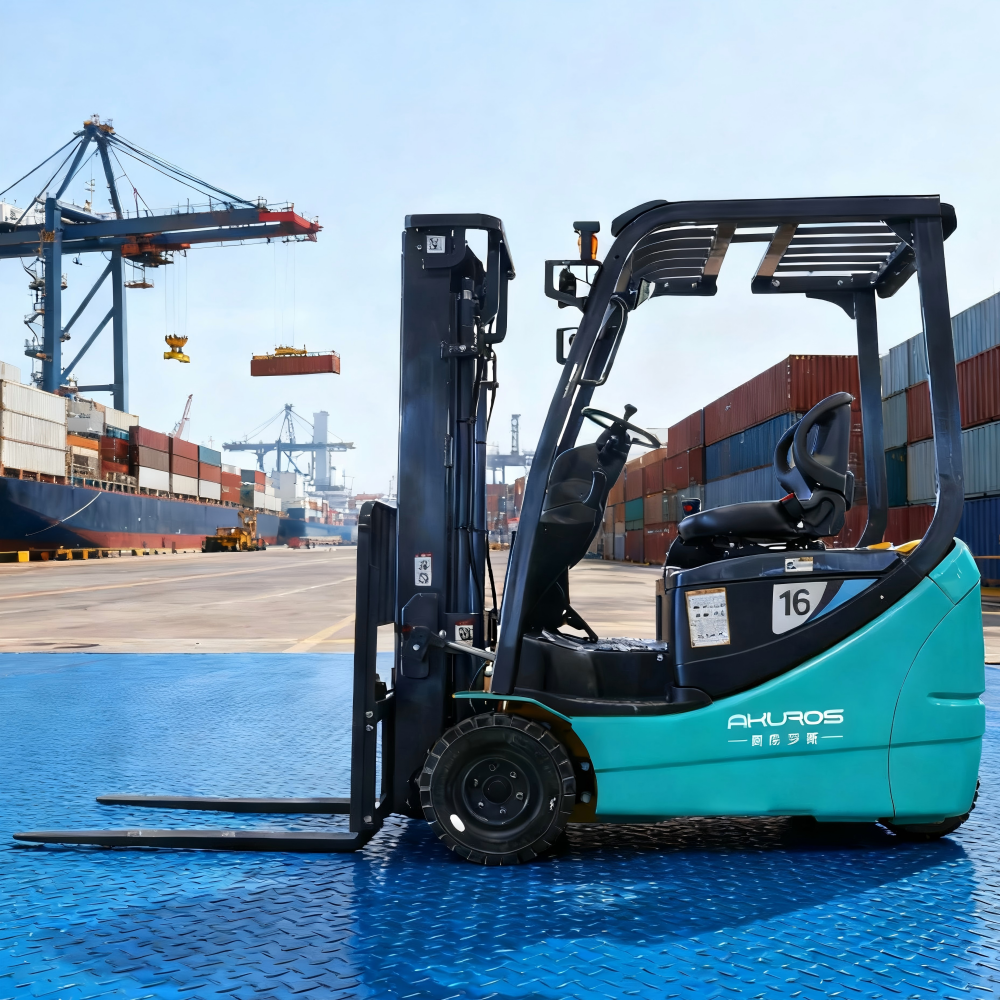
Cold storage developers and warehouse managers constantly face a trade-off between storage density and operating convenience. Wider aisles make driving easier but reduce pallet positions. Tighter aisles improve cube utilization but increase demands on forklift precision and turning capability. This tension is one of the main reasons why the E16 3 wheel electric forklift for cold storage has become a practical topic in modern warehouse planning.
Unlike larger counterbalance trucks, a three-wheel layout is naturally attractive in constrained environments. In freezer warehouses, this advantage becomes even more valuable because the building itself is expensive, refrigeration load is high, and every layout inefficiency compounds operating cost. A compact truck that can turn confidently, stack accurately, and survive low-temperature work cycles can deliver value far beyond its nominal tonnage.
Why Narrow Aisle Thinking Matters More in Cold Storage Than in Standard Warehousing
In ambient logistics, lost space is undesirable. In frozen logistics, lost space is expensive. Cold rooms require insulated structures, refrigeration systems, vapor barriers, energy control, and more careful operational discipline. Because of these infrastructure costs, cold warehouses are designed with much stronger pressure toward dense storage layouts.
This means forklift selection becomes part of warehouse design strategy. If a narrow aisle cold storage forklift can reduce aisle width while preserving safe operation, the return is not limited to driving convenience. It can influence storage capacity, energy efficiency per pallet position, and building economics over the life of the facility.
What Makes the E16 Suitable for Dense Cold Warehouse Layouts
Compact Chassis and Steering Logic
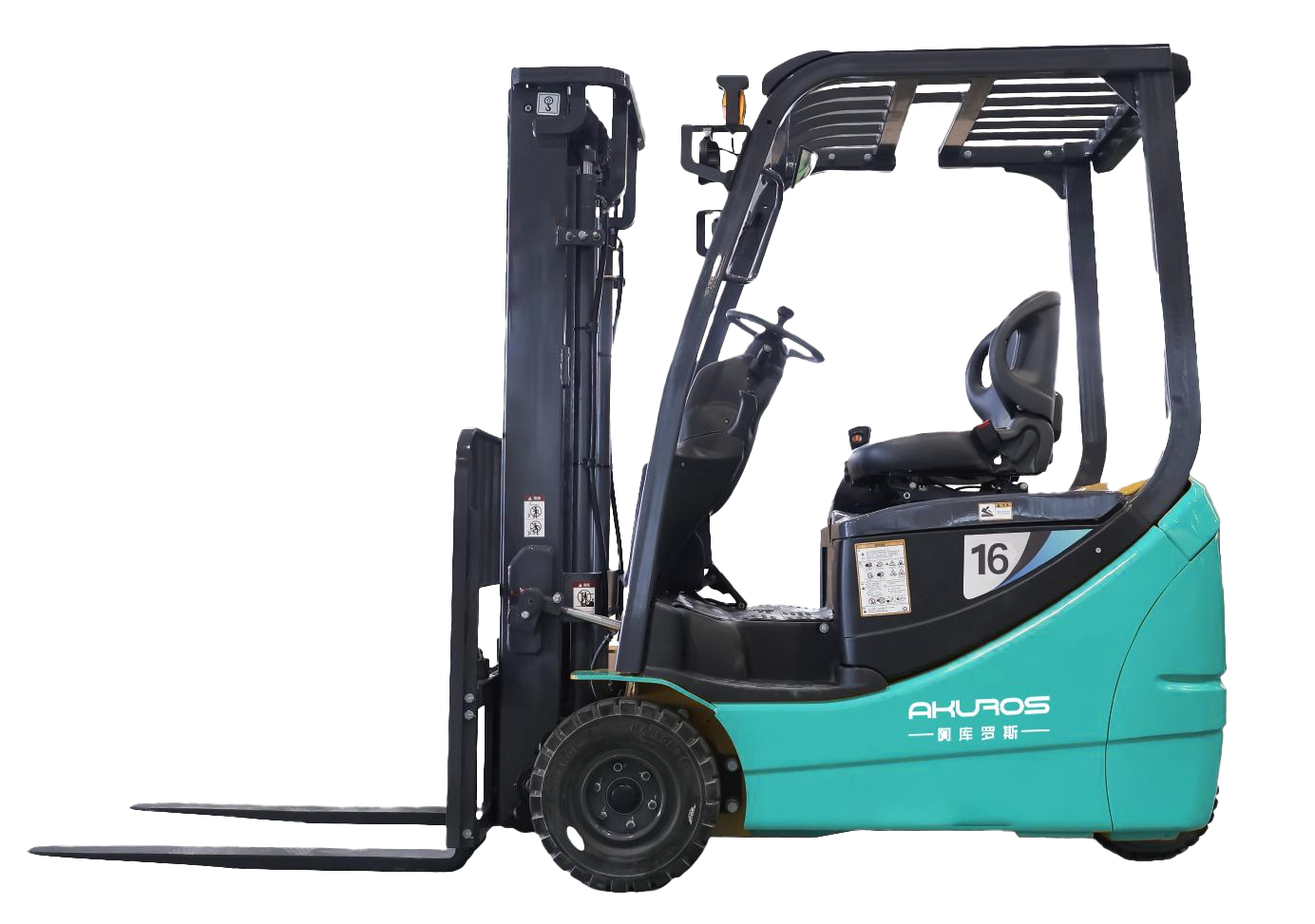
The E16 is attractive because its compact three-wheel structure supports agile turning in restricted areas. This matters not only at the aisle intersection, but also during pallet entry, exit, correction, and repositioning. In a freezer warehouse where operators wear heavy protective clothing and visibility may be affected by mist or temperature transitions, easier maneuverability can have a real safety benefit.
Precision Control During Stacking
Dense layouts leave less room for driving correction. If the truck response is rough or delayed, operators spend more time adjusting. The E16 supports more controlled stacking behavior, which is important for freezer facilities where pallet damage, rack contact, and handling hesitation all reduce throughput.
Electric Operation for Indoor Cold Chain Work
Een elektrische heftruck voor vriesmagazijn is generally preferred because of indoor air quality, lower noise, smoother drive, and the ability to integrate into modern energy-managed facilities. Electric drive also aligns with food logistics environments that value cleaner operations.
Real Warehouse Scenario: How the E16 Supports Daily Workflow
Consider a frozen food warehouse with six inbound trucks per day, selective racking, and a mix of full-pallet storage and replenishment activity. The operation uses narrow transfer aisles near the dock and denser lanes inside the cold room. A standard larger forklift might still lift the load, but the operator would require more correction space when turning, which increases cycle time and the chance of minor impacts.
With the E16, the truck’s compact movement helps the driver approach positions faster and realign more smoothly. Over hundreds of pallet cycles, this can save time and reduce operator fatigue. In layouts where every aisle crossing creates congestion, the more maneuverable truck often contributes to better traffic flow as well.
Quantified Layout Logic: Why Small Turning Differences Matter
Warehouse optimization often depends on marginal gains. A few hundred millimeters of improved turning behavior can determine whether a layout uses a wider aisle or fits one more row of racking. In cold storage, this matters because an additional storage row can change the revenue yield of the room.
| Layout Variable | Less Maneuverable Truck | E16 Compact Layout Logic | Operational Effect |
|---|---|---|---|
| Correctietijd per gangpad | Hoger | Lager | Snellere palletbeweging |
| Turning space requirement | Groter | Kleiner | More usable storage area |
| Rack approach flexibility | Matig | Hoog | Better positioning confidence |
| Congestion at aisle intersections | Hoger | Lager | Smoother traffic flow |
| Operator effort per cycle | Hoger | Lager | Reduced fatigue |
Materials and Technical Considerations in Cold Room Use
Condensation Control
One of the most important but least visible challenges in cold storage is moisture. When equipment passes through temperature gradients, water can condense on surfaces and near electrical components. A cold-ready truck should therefore be evaluated for protective sealing, wiring layout, and the durability of switches, sensors, and connectors.
Anti-Corrosion Priorities
Not all low-temperature environments are equally dry. Seafood, meat processing, and some food packaging zones can produce wet and corrosive conditions. Surface protection and component durability are crucial in these applications. A buyer comparing offers from a compact electric forklift manufacturer should look closely at how the truck resists corrosion over time, not just how it performs on day one.
Hydraulic and Mast Stability
When aisles are narrow, mast stability becomes even more critical because there is less room for recovery after a handling error. Smooth mast performance and predictable lowering speed help protect both goods and rack structures.
E16 Versus Reach Truck: Which Is Better for Dense Cold Storage?
This is a common buying question. Reach trucks can provide excellent vertical storage performance, especially in rack-focused environments. However, an E16 may be a better fit when the operation also needs horizontal flexibility, dock movement, mixed indoor routing, and simpler operator transition across multiple work zones.
| Comparison Factor | E16 3 Wheel Electric Forklift | Reachtruck |
|---|---|---|
| Dock-to-storage flexibility | Sterk | Matig |
| Pure racking specialization | Matig | Sterk |
| Turning performance in mixed routes | Sterk | Matig |
| Adaptability to varied zones | Hoog | More specific |
| Cold storage compactness advantage | Hoog | Depends on layout |
Industry Trends Driving Demand for Compact Cold Storage Forklifts
Three powerful trends are pushing more buyers toward compact electric forklifts in cold storage:
- Cold chain expansion in frozen food, fresh distribution, pharmaceuticals, and cross-border logistics.
- Higher warehouse construction cost, which increases pressure to maximize pallet density.
- Growing preference for electric fleets that support cleaner indoor operation and energy management planning.
Because of these shifts, the market is increasingly interested in equipment that combines traditional forklift flexibility with narrower operating geometry. The E16 fits well within that trend.
Regulatory and Safety Considerations
Any buyer sourcing a truck for international use should review documentation, labeling, battery transport requirements, safety standards, manuals, and maintenance support. In low-temperature logistics, safety also includes visibility, floor traction, braking predictability, and operator ergonomics. A truck that is difficult to control in bulky freezer clothing or on wet floors can create measurable risk.
From a practical standpoint, a good supplier should be able to explain:
- Recommended temperature range
- Battery and charger compatibility
- Parts availability
- Maintenance intervals
- Configuration differences between ambient and cold storage versions
How to Evaluate a Compact Electric Forklift Manufacturer
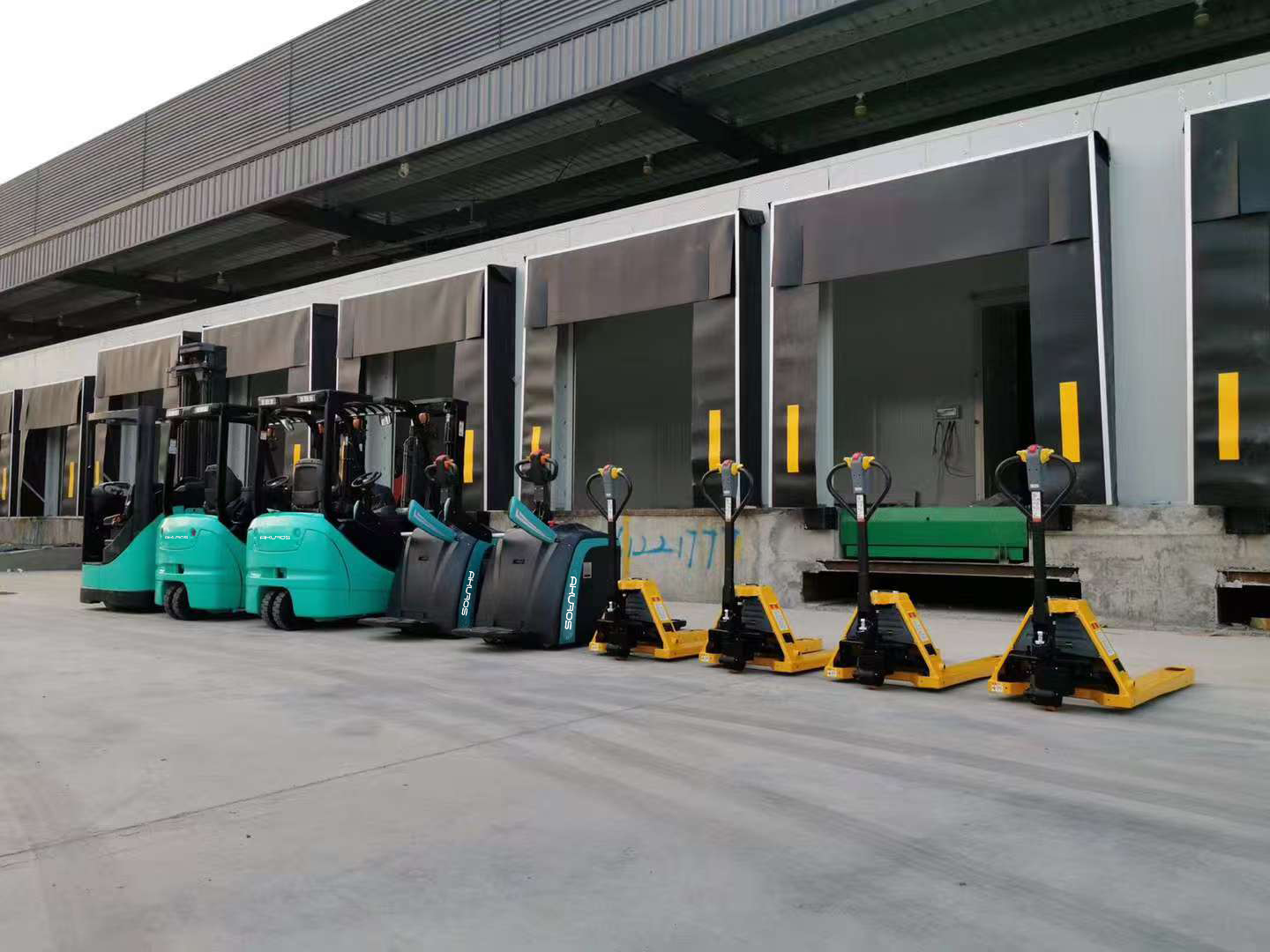
Many suppliers can provide a forklift specification sheet. Fewer can explain warehouse logic. When selecting a compact electric forklift manufacturer, buyers should prioritize suppliers who ask about aisle width, pallet dimensions, rack height, floor condition, humidity, charging schedule, and real-duty cycle. These questions indicate whether the supplier understands the application rather than simply quoting a standard product.
Buying Considerations for the E16
When It Is a Strong Choice
The E16 is a strong choice when your warehouse needs compact turning, electric indoor handling, low-temperature suitability, and flexible movement between dock and storage areas.
When Another Truck Might Be Better
If the operation is focused almost entirely on high-rack storage with very specialized aisle design, a reach truck or VNA solution may deserve comparison. Equipment selection should always follow warehouse workflow, not trend alone.
Conclusie
De E16 3 wheel electric forklift for cold storage makes sense because it addresses the real conflict inside modern freezer warehouse design: the need for higher storage density without sacrificing safety, control, or daily productivity. For companies searching for a narrow aisle cold storage forklifteen elektrische heftruck voor vriesmagazijn, or a reliable compact electric forklift manufacturer, the E16 is a practical and commercially sound option.
Its value lies in maneuverability, precision, and low-temperature suitability. In other words, it is not only a forklift decision. It is a layout decision, an efficiency decision, and a long-term warehouse strategy decision.
FAQ
1. Why is the E16 3 wheel electric forklift good for narrow aisles in cold storage?
De E16 is geschikt voor smalle gangen omdat zijn constructie met drie wielen de wendbaarheid bij het draaien verbetert en de ruimte die nodig is voor aanrijden en corrigeren vermindert. In koelhuizen, waar ruimte kostbaar is en de indeling vaak compact is, kan dit zorgen voor betere toegang tot de rekken en een vlottere doorstroom van het verkeer.
2. Is a narrow aisle cold storage forklift always better than a larger forklift?
Not always. A narrow aisle cold storage forklift is better when the warehouse layout rewards compact maneuverability and precise handling. If the operation mainly handles larger loads in wider areas, another truck type may be more suitable. The best choice depends on aisle width, load size, stacking pattern, and route complexity.
3. Can the E16 replace a reach truck in a freezer warehouse?
In sommige magazijnen wel. Als de bedrijfsvoering flexibele verplaatsingen van het laadperron naar de opslag, gemengde routing en een compacte tegenwichtcapaciteit vereist, is de E16 mogelijk een betere alles-in-één-oplossing. Als de bedrijfsvoering echter sterk gespecialiseerd is in uitsluitend rekwerk, kan een reachtruck nog steeds voordelen bieden. De beslissing dient te worden gebaseerd op de workflow en niet alleen op de apparatuurcategorie.
4. What should I ask a compact electric forklift manufacturer before buying?
U dient te informeren naar het daadwerkelijke bedrijfstemperatuurbereik, de batterijprestaties bij gebruik in de vriezer, de mastopties, aanbevelingen voor gangen, geschiktheid van de vloer, vochtbescherming, levertijd van onderdelen en compatibiliteit met laders. Een solide leverancier dient technische details te koppelen aan de praktijk in het magazijn.
5. How does compact forklift design affect warehouse economics?
Compact design can reduce aisle space, improve storage density, shorten handling cycles, and support smoother movement in congested layouts. Over time, these advantages can affect labor cost, storage revenue per square meter, and the efficiency of the overall cold room design.
Referenties
- Warehouse Layout and Storage Density Principles, MHI, Industry Resource
- Electric Lift Truck Application Guide, Industrial Truck Association, Technical Publication
- Cold Chain Handbook, Global Cold Chain Alliance, Industry Guide
- Battery Behavior in Low Temperature Conditions, U.S. Department of Energy, Technical Brief
- Warehousing in Temperature-Controlled Environments, International Institute of Refrigeration, Industry Material
- Industrial Ergonomics in Material Handling, NIOSH, Safety Guidance
- Materials Handling Optimization, Tompkins Solutions, Operations Insight
- Corrosion Control in Industrial Equipment, NACE International, Engineering Resource
Semantic Insight Block
How does the E16 support dense warehouse strategy?
It supports dense warehouse strategy by reducing the physical and operational burden of turning in tight spaces. This allows warehouse planners to pursue more efficient aisle and rack layouts without creating excessive handling difficulty for operators.
Why is freezer warehouse design closely linked to forklift choice?
Because freezer warehouses are expensive to build and run, layout efficiency has a larger financial effect than in many standard facilities. The forklift determines how narrow the aisles can be, how fast pallets move, and how safely operators work under demanding conditions.
What options should buyers compare before choosing this model?
Buyers should compare mast heights, battery solutions, cold-storage package details, visibility needs, floor conditions, shift structure, and parts support. The best result comes when the forklift specification is derived from the real warehouse workflow.
What should decision-makers consider beyond specifications?
They should consider training burden, operator confidence, maintenance simplicity, and the impact of equipment choice on warehouse density. These are often the factors that determine long-term value after the truck is already on site.
Why is this model aligned with current market trends?
The model aligns with trends toward denser storage, electric fleet adoption, labor efficiency, and practical cold chain modernization. It offers a realistic path for facilities that want better warehouse performance without jumping directly to highly specialized automation.