

 English
  Russian
  French
  Spanish
  German
  Italian
  Portuguese
  Korean
  Japanese
  Arabic
  Turkish
  Indonesian
  Dutch
Dutch 

Quick Load Capacity Summary for Warehouse Buyers
In a busy warehouse, a pallet truck usually fails quietly before it fails completely. First, the operator notices the handle feels heavier. Then the forks no longer rise evenly. A few weeks later, the hydraulic pump starts losing pressure, the wheels wear faster, and one overloaded pallet turns into a small warehouse drama. The funny part? Many buyers still say, “But the catalog said 2000kg.” A rated capacity is useful, but it is not the full buying answer. The real performance of a Heavy-Duty Pallet Truck depends on load center, cargo density, pallet size, steel thickness, hydraulic pump quality, wheel material, floor condition, and daily usage frequency.
For B2B buyers, load capacity is not only a technical parameter. It affects safety, labor efficiency, maintenance cost, downtime, and total ownership value. A 2000kg pallet truck can be excellent for standard cartons and smooth warehouse floors. A 2500kg model can offer a safer middle ground for mixed freight. A 3000kg pallet truck is usually the better choice for dense materials, machinery parts, metal components, chemicals, stone, tiles, or frequent loading. Before choosing any model, buyers should understand the wider selection logic behind choosing the right pallet truck for your warehouse, because the best truck is not always the strongest one—it is the one matched to the real job.
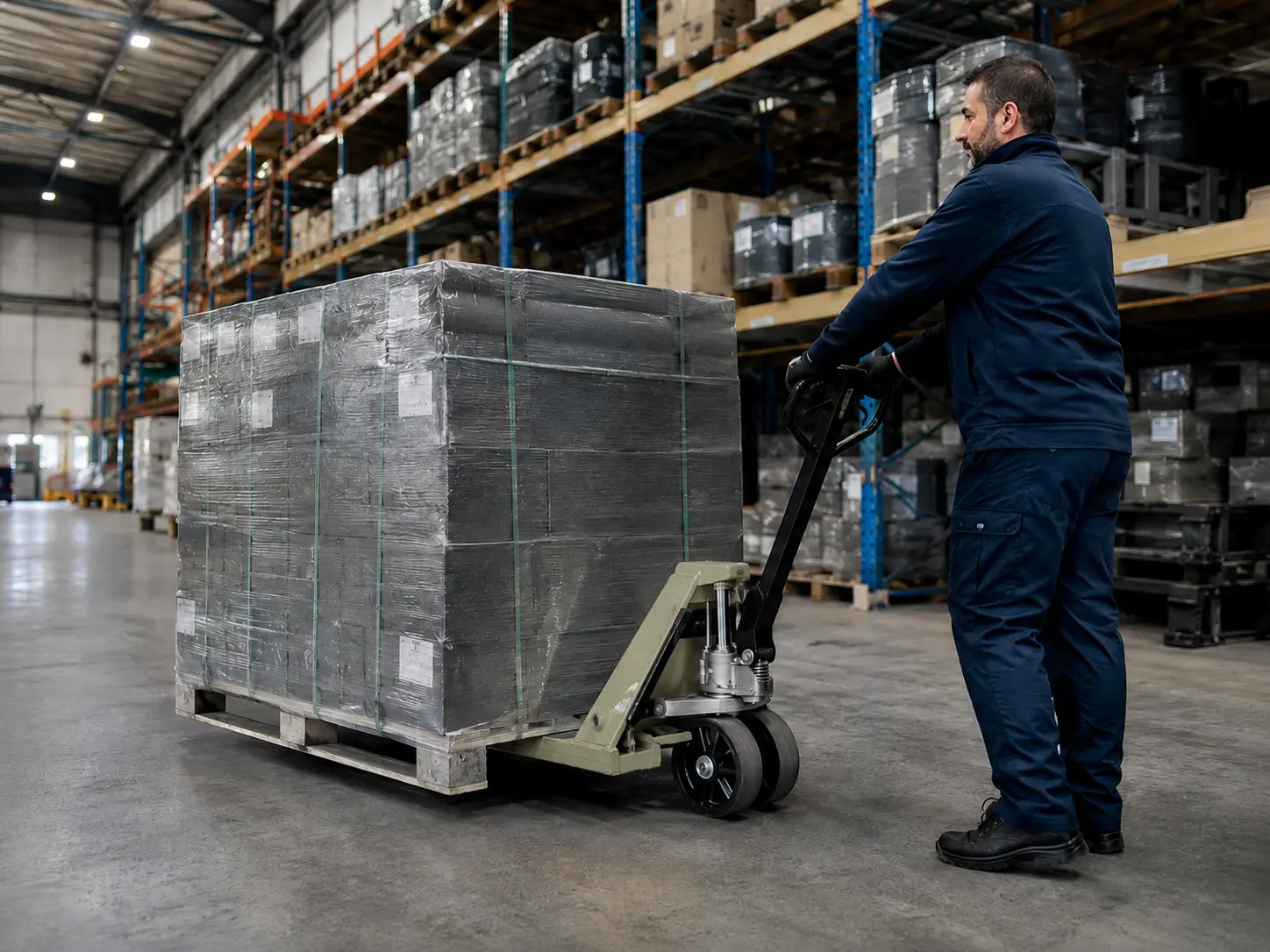
Heavy-Duty Pallet Truck
Understanding Load Centers and Weight Distribution
What Load Center Really Means in Daily Warehouse Work
The load center is the distance from the fork face to the center of gravity of the cargo. In simple buyer language, it tells you where the weight is actually sitting. A pallet of evenly packed cartons may place weight close to the ideal center, while a pallet of metal parts, drums, machinery components, or stone materials may concentrate weight in one area. When the center of gravity moves forward or sideways, the truck needs more structural strength to keep the load stable.
This is why two pallets with the same total weight can behave very differently. A 1600kg pallet of soft packaged goods may be easy to move. A 1600kg pallet of steel parts may feel harder, turn less smoothly, and create more stress on the forks. If the load is long, compact, or uneven, the real working pressure can exceed what the buyer expected. This is also where many buyers make their first mistake: they ask, “Can it lift 2000kg?” but forget to ask, “Can it move my specific 2000kg load safely every day?”
Why Uneven Loads Reduce Practical Capacity
Rated capacity is usually measured under controlled conditions. Real warehouses are not controlled laboratories. Pallets can be damaged, wrapped unevenly, stacked too high, placed off-center, or moved across rough concrete, dock plates, ramps, and floor joints. When the truck turns, brakes, or crosses uneven flooring, the load shifts and creates additional force. OSHA-style safety logic also emphasizes that load weight, weight distribution, size, shape, and position can affect industrial truck stability. That principle is practical for manual pallet trucks as well.
| Load Type | Weight Distribution Risk | Recommended Capacity Logic |
|---|---|---|
| Standard cartons | Usually balanced when stacked correctly | 2000kg or 2500kg can be suitable for smooth warehouse floors. |
| Bottled liquids or drums | Dense load with possible shifting force | 2500kg or 3000kg is safer for repeated movement. |
| Metal parts | High point-load pressure and uneven distribution | 3000kg reinforced structure is recommended. |
| Stone, tiles, or construction materials | Very dense freight with high fork stress | 3000kg heavy-duty model with reinforced forks is preferred. |
2000kg vs. 3000kg: Matching Capacity to Your Freight
When a 2000kg Pallet Truck Is Enough
A 2000kg pallet truck is suitable for many standard warehouse operations. It works well for cartons, packaging materials, retail goods, light manufacturing parts, and short-distance movement. If most pallets stay below 1600kg to 1800kg, the floor is smooth, and heavy loads are occasional, a 2000kg model can be efficient and cost-effective. It is lighter, easier to operate, and usually easier to maneuver in narrow aisles.
The risk appears when buyers use a 2000kg truck near its maximum capacity every day. A truck may still lift the load, but repeated near-limit operation increases hydraulic stress, fork fatigue, wheel wear, and operator effort. To better understand how pallet trucks support picking, staging, loading, production feeding, and short-distance transport, buyers can review the uses of pallet trucks in modern warehouses. The more tasks one truck handles, the more important the safety margin becomes.
When a 2500kg Model Makes Better Sense
A 2500kg model is often the balanced choice for mixed warehouse operations. It is useful when a facility handles both regular goods and occasional heavier pallets. Food factories, export warehouses, logistics centers, and general manufacturing plants often fall into this category. The buyer does not always need the weight and higher cost of a 3000kg truck, but a 2000kg model may be too close to the limit.
If your warehouse moves 1200kg cartons in the morning and 2200kg raw materials in the afternoon, a 2500kg pallet truck can reduce risk. It gives a better operating margin without over-specifying every unit in the fleet. For buyers managing several work zones, one practical strategy is to use 2000kg trucks for standard picking areas and 2500kg or 3000kg trucks for loading docks and heavy material zones.
When You Should Choose a 3000kg Pallet Truck
A 3000kg pallet truck is not only about lifting heavier loads. It is about handling harsher working conditions with better structural stability. Choose 3000kg when your freight includes compact heavy materials, machinery parts, steel components, stone, tiles, chemicals, building materials, or inconsistent pallet quality. In these cases, the load is often dense and uneven, which increases stress on the forks, frame, wheels, and hydraulic system.
However, if the travel distance is long, the route includes ramps, or operators move heavy pallets all day, manual equipment may no longer be the most efficient solution. Buyers comparing manual and powered handling systems should also study the role of a warehouse counterbalanced truck. If a pallet truck is being forced to do forklift-level work every shift, the hidden cost is not the equipment price—it is slower workflow, higher labor fatigue, and more downtime.
| Capacity | Best Application | Main Buyer Risk | Recommended Buyer Type |
|---|---|---|---|
| 2000kg | Standard cartons, light manufacturing, retail distribution | Premature wear if used near limit daily | General warehouse users |
| 2500kg | Mixed warehouse freight and occasional heavy pallets | May be insufficient for dense industrial loads | Distributors, factories, export warehouses |
| 3000kg | Heavy industrial goods, dense materials, frequent loading | Over-specification if only used for light goods | Industrial plants, logistics hubs, heavy material warehouses |
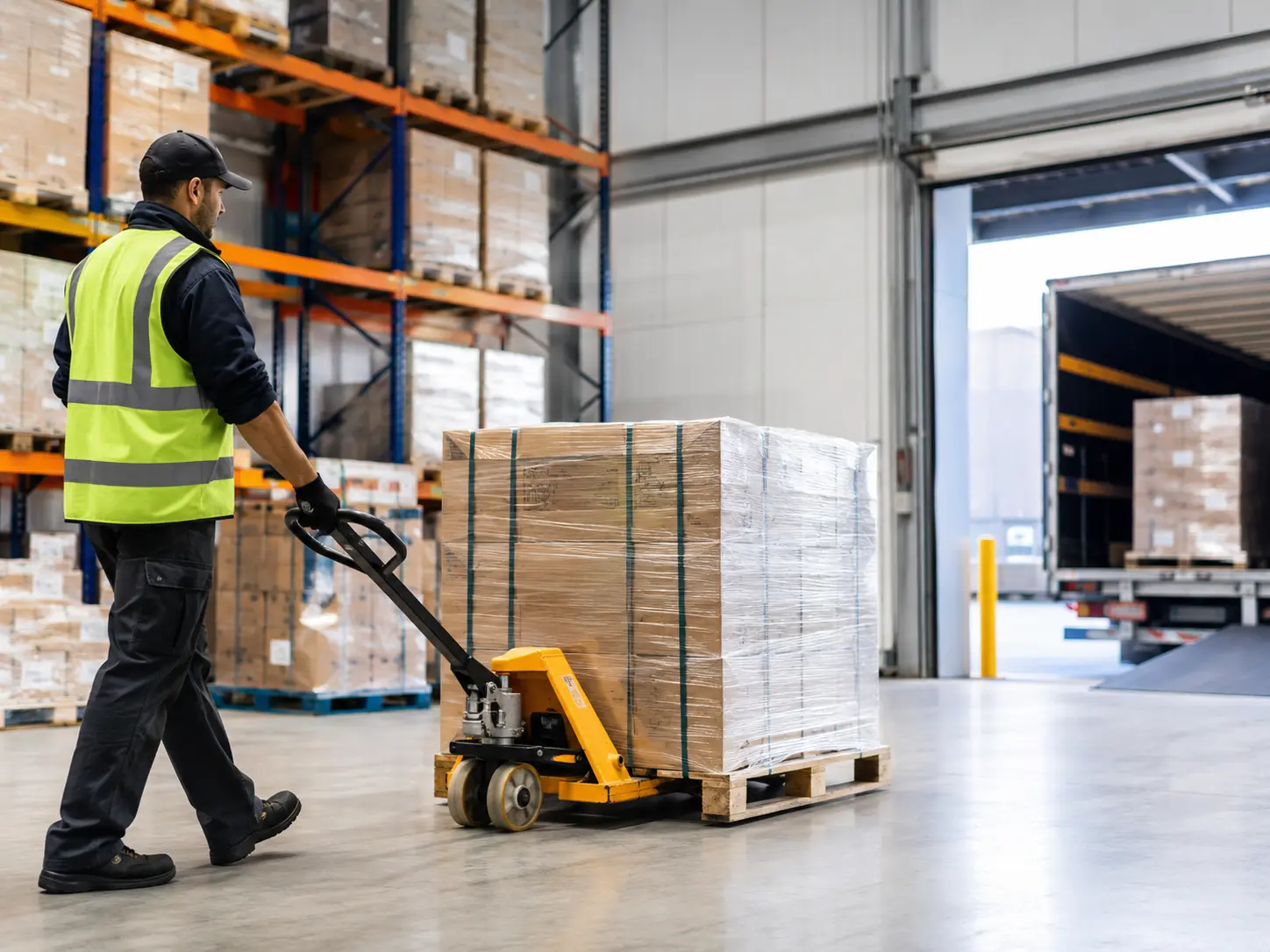
PALLET TRUCK
Structural Integrity: Why Steel Thickness Affects Stability
Steel Structure Is the Real Heavy-Duty Proof
A pallet truck can look strong in photos but perform poorly under repeated heavy loads. The real difference is inside the structure: fork steel thickness, chassis strength, welding quality, push rod design, reinforcement ribs, and axle support. Thin steel may work under light duty, but repeated heavy loading can cause fork bending, frame twisting, and uneven wheel contact.
Buyers should not judge a Heavy-Duty Pallet Truck only by color, paint, or stated capacity. A serious heavy-duty pallet truck factory should be able to explain frame design, fork reinforcement, hydraulic pump quality, wheel material, and inspection procedures. If the supplier cannot answer these basic questions, that is already an answer. A cheap 3000kg label without strong structure is like a cardboard helmet—technically shaped like protection, emotionally very brave, practically dangerous.
Typical Structural Parameters for Capacity Selection
| Rated Capacity | Typical Use Condition | Structural Focus | Buyer Recommendation |
|---|---|---|---|
| 2000kg | Light-to-medium warehouse movement | Smooth steering, standard fork strength, reliable pump | Use for balanced pallets and moderate daily frequency. |
| 2500kg | Mixed freight and export handling | Better fork rigidity and stronger wheel support | Use when pallet weight changes frequently. |
| 3000kg | Dense materials and industrial loads | Reinforced forks, stronger frame, upgraded hydraulic system | Use for heavy, compact, uneven, or high-frequency loads. |
Hydraulic System, Wheels, and Real Operating Efficiency
Hydraulic Pump Quality Controls Long-Term Reliability
The hydraulic pump is the hidden core of a pallet truck. A weak pump may lift slowly, leak oil, lower unevenly, or lose pressure under load. When a truck is overloaded or used near its rated capacity every day, seals, pistons, and valves face higher stress. This is why buyers should ask whether the pump is tested under rated load before shipment. For occasional use, a standard hydraulic system may be enough. For daily loading zones, heavy industrial warehouses, and export facilities, a stronger pump is worth the investment.
Wheel Material Changes the Handling Result
Wheel selection directly affects rolling resistance, floor protection, noise, and operator fatigue. Nylon wheels are suitable for heavy loads on smooth concrete because they roll efficiently and resist deformation. PU wheels are quieter and protect floors better, making them suitable for warehouses with coated floors or noise requirements. Rubber wheels absorb vibration, but they may not be ideal for very heavy industrial loads.
When manual movement becomes inefficient because loads are too heavy, routes are long, or loading cycles are intensive, powered equipment can be considered. In that case, buyers should compare the benefits of a heavy-duty electric counterbalance forklift. The goal is not to replace every pallet truck. The goal is to build a handling system where manual pallet trucks, counterbalanced trucks, and forklifts each do the work they are best suited for.
| Wheel Material | Best Floor Type | Load Performance | Buyer Advice |
|---|---|---|---|
| Nylon | Smooth concrete | Excellent for heavy loads | Choose for lower rolling resistance under heavy freight. |
| PU | Finished warehouse floors | Good balance of strength and floor protection | Choose for quieter movement and surface protection. |
| Rubber | Uneven or vibration-sensitive areas | Moderate for heavy loads | Choose when shock absorption matters more than maximum load efficiency. |
Real Warehouse Scenarios and Buyer Decisions
E-Commerce Warehouse With Standard Cartons
For standard cartons, retail goods, and e-commerce parcels, a 2000kg or 2500kg model is usually enough. If movement frequency is high, the 2500kg option creates a better safety margin. The buyer should focus on steering comfort, wheel material, maneuverability, and operator fatigue.
Food, Beverage, and Chemical Handling
Food and beverage factories often handle dense bottled goods, drums, or liquid containers. Liquids can shift during movement, which affects stability. For this scenario, a 2500kg or 3000kg truck is more practical. Controlled lowering and reliable hydraulic sealing are especially important.
Metal Parts, Machinery, Stone, and Building Materials
For compact heavy materials, choose a 3000kg reinforced model. These loads may not look large, but they place concentrated pressure on the forks. If the warehouse also handles mixed heavy freight, buyers should build a small fleet with different capacity levels instead of forcing one light-duty model to handle every task.
Safety, Compliance, and Supplier Evaluation
Why Documentation Matters
Safety compliance matters because warehouse equipment affects workers, insurance, audits, and operational liability. Buyers should check product specifications, rated capacity labels, inspection procedures, warranty terms, spare parts support, and maintenance guidance. For international orders, documentation becomes even more important because importers and distributors may need product files for resale, safety checks, or customer approval.
A reliable heavy-duty pallet truck manufacturer should not only quote a price. It should help buyers compare load capacity, fork length, wheel material, hydraulic pump quality, packing method, and delivery planning. Buyers who want to understand the supplier background and warehouse solution capability can review Akuros material handling expertise. In B2B procurement, the company behind the product matters because repeat orders require consistency, not lucky first samples.
Common Mistakes Buyers Should Avoid
The first mistake is choosing based only on average load. Peak load matters more. If average pallets weigh 1500kg but weekly peak loads reach 2300kg, the truck should be specified for the heavier condition. The second mistake is ignoring load center. An uneven 1800kg load can be riskier than a balanced 2200kg load. The third mistake is buying the cheapest 3000kg model without checking steel thickness, welding, wheels, and hydraulic components. The fourth mistake is using the same wheel type for every floor. The fifth mistake is ignoring spare parts and after-sales service.
Recommended Specification Checklist Before Ordering
| Specification Item | Why It Matters | Buyer Action |
|---|---|---|
| Maximum pallet weight | Determines minimum safe rated capacity | Choose based on peak regular load, not average load only. |
| Pallet dimensions | Affects load center and fork selection | Confirm fork length and fork width before ordering. |
| Floor condition | Changes rolling resistance and wheel wear | Match nylon, PU, or rubber wheels to the floor. |
| Daily movement frequency | Affects fatigue life and maintenance demand | Use stronger models for repeated heavy handling. |
| Supplier capability | Influences consistency, service, and repeat orders | Check testing, spare parts, warranty, and communication. |
Final Buyer Recommendation: Specify Around the Job, Not the Catalog
The right Heavy-Duty Pallet Truck is not simply the model with the biggest number in the brochure. It is the model that matches real pallet weight, load center, cargo density, floor condition, wheel material, handling frequency, and safety margin. If your goods are light and regular, choose 2000kg. If your warehouse handles mixed freight, choose 2500kg. If your loads are heavy, dense, uneven, or moved frequently, choose 3000kg. If the travel route is long or manual movement becomes inefficient, compare powered equipment as part of a larger material handling plan.
Before placing an order, prepare your pallet weight range, pallet size, load type, floor condition, daily usage frequency, fork size requirement, wheel preference, destination market, and documentation needs. If you need help matching truck capacity to your warehouse operation, you can contact Akuros with your handling details. A clear inquiry helps the supplier recommend the right model faster and prevents the classic buying mistake: choosing equipment that looks strong online but struggles in the warehouse.
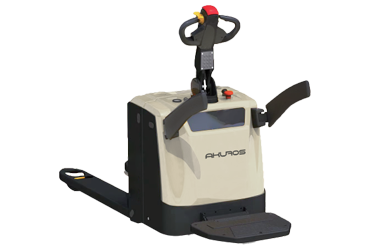 Customizable Pallet Trucks |
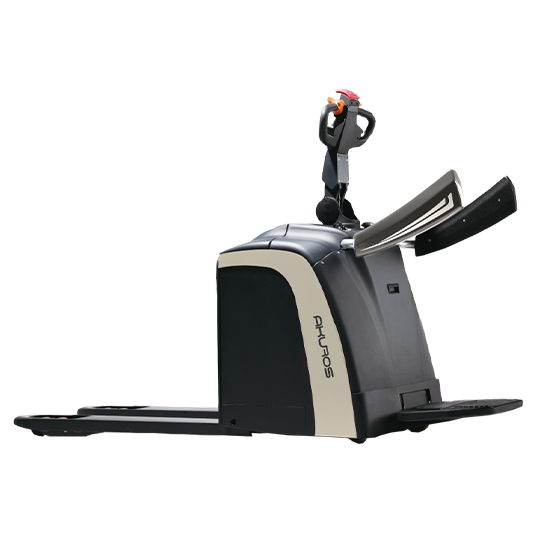 Pallet Trucks |
FAQ: Heavy-Duty Pallet Truck Load Capacity
1. What capacity Heavy-Duty Pallet Truck do I need for my warehouse?
You should choose a Heavy-Duty Pallet Truck based on maximum regular pallet weight, load center, pallet size, freight density, daily usage frequency, and floor condition. If your warehouse usually handles standard cartons below 1600kg to 1800kg, a 2000kg pallet truck may be enough. If your loads often exceed 2000kg, include dense materials, or move frequently through loading docks, a 2500kg or 3000kg pallet truck is usually safer.
2. Is a 3000kg pallet truck better than a 2000kg pallet truck?
A 3000kg pallet truck is better for heavy, dense, irregular, or high-frequency industrial loads, but it is not always necessary for standard warehouse goods. A 2000kg model is practical for cartons, retail goods, packaging materials, and light manufacturing loads. The best choice depends on your real load profile. If your truck often works near its rated limit, selecting a higher-capacity model can reduce fork fatigue, hydraulic stress, wheel wear, and downtime risk.
3. Can a pallet truck lift more than its rated capacity?
A pallet truck should not be used above its rated capacity. Overloading increases the risk of fork deformation, hydraulic pump failure, unstable movement, wheel damage, and workplace accidents. Even if the truck lifts the load once, repeated overloading can permanently damage the frame and shorten service life. Buyers should choose capacity based on maximum regular load and operating conditions, not on emergency lifting attempts.
4. What wheel material is best for a heavy-duty pallet truck?
The best wheel material depends on load weight, floor condition, noise requirements, and travel distance. Nylon wheels are suitable for heavy loads on smooth concrete because they reduce rolling resistance. PU wheels are quieter and protect finished warehouse floors better. Rubber wheels absorb shock but may not be the best choice for very heavy industrial loads. Buyers should describe their warehouse floor before selecting wheel material.
5. How do I know if a pallet truck is truly heavy-duty?
A truly heavy-duty pallet truck should have clear rated capacity, reinforced forks, suitable steel thickness, reliable welding, a stable hydraulic pump, strong wheel support, and proper inspection documentation. Buyers should also check fork length, fork width, wheel material, load testing, spare parts availability, warranty terms, and supplier experience. A heavy-duty label alone is not enough; the structure, pump, wheels, and supplier support must match the rated capacity.
References
1. Load Handling: Load Composition — Occupational Safety and Health Administration — OSHA eTool: Powered Industrial Trucks.
2. Warehousing and Storage: A Guide to Health and Safety — Health and Safety Executive — HSE Books.
3. Industrial Trucks — Safety Requirements and Verification — International Organization for Standardization — ISO 3691 Series.
4. Ergonomic Guidelines for Manual Material Handling — National Institute for Occupational Safety and Health — NIOSH Publication.
5. Manual Material Handling — Canadian Centre for Occupational Health and Safety — CCOHS OSH Answers.
6. Safety Standard for Low Lift and High Lift Trucks — Industrial Truck Standards Development Foundation — ANSI/ITSDF B56 Standards.
7. Warehouse Distribution and Material Handling Best Practices — Material Handling Industry — MHI Industry Resources.
8. Total Cost of Ownership in Supply Chain Equipment Procurement — Council of Supply Chain Management Professionals — CSCMP Supply Chain Resources.
How Buyers Should Understand Load Capacity
How should buyers choose the right Heavy-Duty Pallet Truck?
Buyers should choose a Heavy-Duty Pallet Truck by matching rated capacity with real load weight, load center, cargo density, pallet size, travel distance, wheel material, and floor condition. The safest decision is not based on one number. It is based on how the load behaves during lifting, moving, turning, and lowering.
Why does the wrong capacity create long-term risk?
Wrong capacity selection can cause fork bending, frame twisting, hydraulic leakage, wheel wear, operator fatigue, and unexpected downtime. A 2000kg truck used near its limit every day may cost more over time than a properly selected 2500kg or 3000kg model. For B2B buyers, the real cost is not only purchase price; it is maintenance, productivity, safety, and replacement frequency.
What option should different buyers choose?
If your warehouse handles standard cartons and light-to-medium pallets, choose 2000kg. If your freight changes frequently and sometimes becomes heavier, choose 2500kg. If your operation handles dense, compact, uneven, or high-frequency industrial loads, choose a reinforced 3000kg pallet truck. If manual handling becomes slow or unsafe, compare powered material handling equipment.
What should buyers consider before sending an inquiry?
Before sending an inquiry, prepare maximum pallet weight, average pallet weight, pallet dimensions, product type, floor condition, daily usage frequency, fork size requirements, wheel preference, destination market, and documentation needs. This allows the supplier to recommend the right model instead of simply quoting the cheapest option.
What is the practical recommendation?
The best pallet truck decision balances capacity, safety, structure, efficiency, and supplier reliability. Buyers should avoid overloading light-duty trucks, avoid buying low-cost heavy-duty labels without technical proof, and choose equipment based on real warehouse conditions.