

 Portuguese
  English
  Russian
  French
  Spanish
  German
  Italian
  Korean
  Japanese
  Arabic
  Turkish
  Indonesian
  Dutch
Dutch 

A Conversation at the Warehouse
“How can we reduce time spent moving pallets around the warehouse?”
“Have you considered using stackers?”
“Stackers? Aren’t those just smaller forklifts?”
In many modern warehouses, the choice of material handling equipment can be the difference between an average operation and an exceptional one. Empilhadores, often overlooked in favor of forklifts, are an essential tool for improving efficiency, especially in high-density storage areas. But what exactly is a stacker, and how can it enhance warehouse operations?
In this article, we will explore the definition of stackers, the types available, and how they can improve warehouse picking and stacking efficiency. Let’s dive into the key characteristics and applications of stackers in modern warehouses.
Empilhador
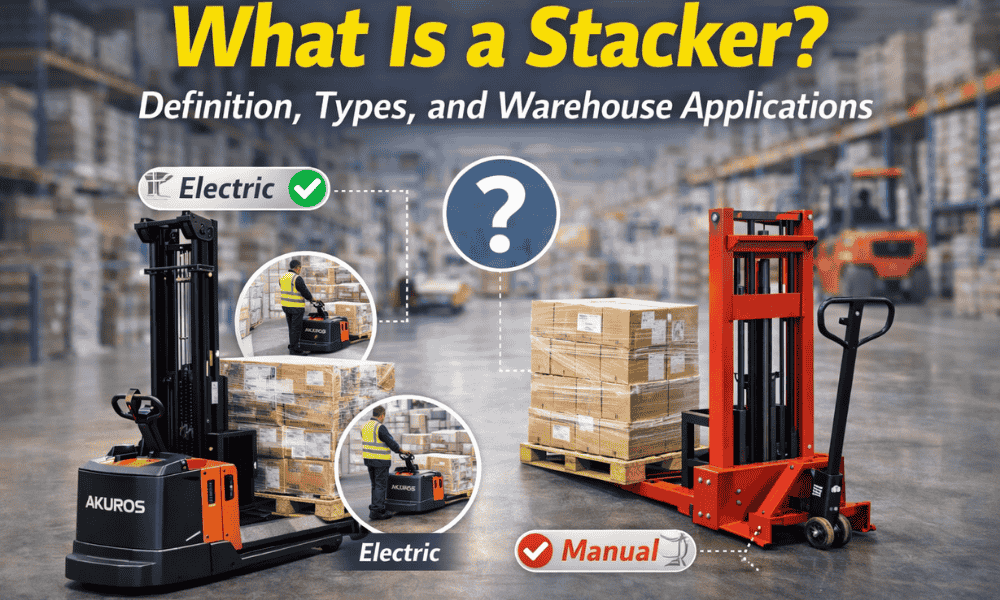
What Is a Stacker?
A empilhador is a type of industrial equipment designed to lift, stack, and transport goods in warehouses. They are commonly used for handling goods in tight spaces, where forklifts might not be practical due to their size. Unlike forklifts, stackers are often designed to be more compact and maneuverable, making them ideal for moving materials in narrow aisles or stacked environments.
Stackers come in both manual and electric versions, each serving different operational needs. Electric stackers, such as the Akuros stacker, offer an enhanced performance with reduced physical strain on operators, increasing throughput and reducing fatigue during long shifts.
To understand more about how stackers fit into your warehouse system, check out Akuros’ Stacker Equipment, which offers a variety of models tailored for specific operational needs.
Types of Stackers
Manual Stackers
Manual stackers are used in environments where frequent lifting isn’t necessary but a compact, easy-to-operate machine is preferred. These models are typically lighter and do not require a power source, making them ideal for low-traffic areas where space is limited.
Caraterísticas principais:
-
Operated by manual effort (no electric motor)
-
Cost-effective for small businesses
-
Best for light to moderate lifting
Electric Stackers
Electric stackers provide more power for heavier lifting and longer operations. These models are battery-operated, which increases their efficiency and reduces the physical effort required by warehouse staff. The Akuros electric stacker is an example of a machine designed to handle frequent lifting tasks with minimal effort.
Caraterísticas principais:
-
Battery-powered for greater lifting capacity
-
Suitable for high-frequency tasks
-
Enhanced ergonomics for operator comfort
Walkie Reach Stackers
Walkie reach stackers offer enhanced functionality by allowing the operator to walk alongside the machine while managing heavy lifting tasks. These stackers are perfect for moving goods at various heights without the need for a forklift.
Caraterísticas principais:
-
Capable of reaching high shelves
-
Ideal for operations in tight aisles
-
Can handle heavier loads compared to manual stackers
Straddle Stackers
Straddle stackers are designed to straddle the load, offering greater stability and the ability to transport items across uneven floors. This type of stacker is often used in industrial settings for bulkier items or for handling materials on pallets.
Caraterísticas principais:
-
Wide base for added stability
-
Best suited for larger, heavier loads
-
Commonly used in manufacturing plants or warehouses with large inventory
Warehouse Applications of Stackers
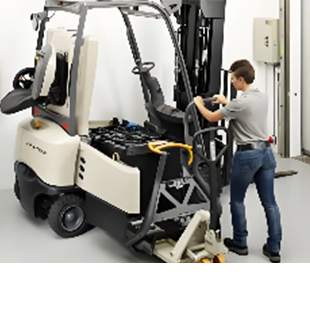
Empilhador
Enhancing Efficiency in Tight Spaces
In many warehouses, corredores estreitos and limited floor space are a challenge. Stackers excel in such environments due to their compact size and ability to move freely between racks. The ability to lift and stack goods in narrow aisles allows for better use of vertical space, maximizing the storage capacity of your facility.
For example, Akuros electric stackers are designed with a small turning radius, making them ideal for warehouses where space is at a premium.
Reducing Operator Fatigue
Heavy lifting and constant movements can result in operator fatigue, which negatively impacts productivity. Electric stackers help reduce the strain on workers by providing powered assistance, making it easier to lift and move heavy items. This is a crucial advantage for warehouses that rely on manual labor and are looking to improve long-term worker health and output.
Improving Pick and Pack Operations
The speed and efficiency of stackers in pick and pack operations can have a significant impact on delivery times. By using stackers to efficiently move materials to and from storage areas, warehouses can improve their order fulfillment processes. Electric stackers, in particular, can move multiple items quickly, reducing the time spent on each task.
Pain Points and Solutions: When a Forklift Isn’t the Answer
While forklifts are indispensable in many warehouse operations, they are not always the most efficient choice in every situation. When faced with high-density storage, narrow aisles, or lighter loads, stackers offer a more efficient alternative. They reduce the need for bulky equipment, allowing warehouses to maximize storage space and improve workflow.
For instance, Akuros pallet stackers are designed to lift items to greater heights without the need for a forklift, making them ideal for high-rise shelving systems that require regular inventory movement.
Case Study: How Akuros Stackers Improved Warehouse Operations
In a warehouse serving multiple industries, the introduction of electric stackers from Akuros allowed the company to improve its order fulfillment times by 25%. The compact design of the stackers enabled operators to easily maneuver through aisles, reducing time spent navigating crowded spaces. Additionally, the ergonomic design led to a 30% reduction in operator fatigue, increasing overall productivity.
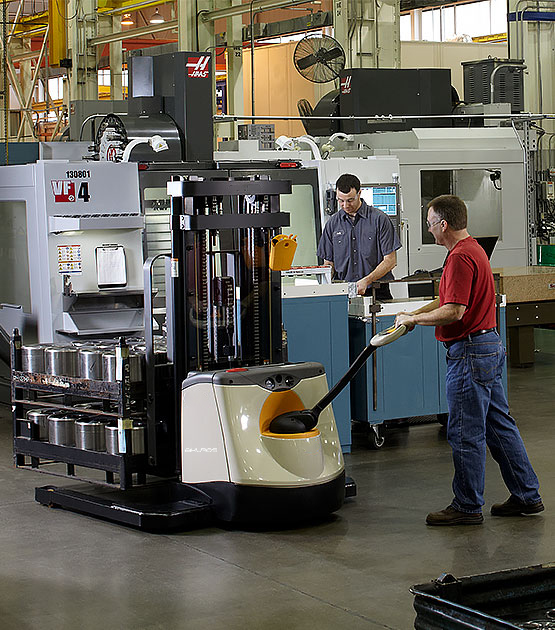
accordion-transport-stackers
Frequently Asked Questions (FAQs)
What is the difference between a stacker and a forklift?
A stacker is smaller and more maneuverable, ideal for tight spaces and light-to-medium lifting. Forklifts are larger and typically used for heavier loads and long-distance movement.
How much weight can a stacker lift?
Stackers can lift anywhere from 1,000 to 3,000 kilograms, depending on the model and type. Electric stackers generally handle heavier loads than manual models.
Can a stacker be used for long-distance transport?
Stackers are best suited for short-distance tasks within confined spaces. For long-distance movement, forklifts or pallet trucks are better options.
Are electric stackers more efficient than manual stackers?
Yes, electric stackers are more efficient as they reduce the physical effort required by operators, especially during long shifts or repetitive tasks.
How often should stackers be maintained?
Stackers should be checked regularly for wear and tear, with a full maintenance review every 6–12 months to ensure optimal performance.
Streamlining Your Warehouse with the Right Equipment
When deciding between a empilhador and other material-handling equipment, consider your warehouse’s specific needs, space limitations, and operational volume. Stackers offer an ideal solution for environments where space efficiency, operator comfort, and speed are crucial. By integrating stackers like those offered by Akuros into your workflow, you can enhance productivity while reducing operator fatigue, making them an essential part of modern warehouse operations.
By choosing the right stacker for your facility, you can ensure that your warehouse operates at its peak efficiency. Whether you’re handling lighter loads in tight spaces or performing high-volume pick-and-pack tasks, stackers are built to make your processes smoother, faster, and more cost-effective.