

 Portuguese
  English
  Russian
  French
  Spanish
  German
  Italian
  Korean
  Japanese
  Arabic
  Turkish
  Indonesian
  Dutch
Dutch 

Choosing the Right Tool in Cold Storage Warehouses
In cold storage projects, E16 electric forklifts and reach trucks serve fundamentally different roles. Choosing the wrong balance between them often leads to congestion, underutilized equipment, or unnecessary cost. This article explains how to decide where E16 forklifts should dominate, where reach trucks are indispensable, and how to combine both effectively in frozen and chilled warehouses.
1. Why “E16 or Reach Truck” Is the Wrong First Question
Many cold storage projects begin equipment planning with a binary mindset:
“Should we use E16 empilhadores ou reach trucks?”
This framing is flawed.
In reality:
-
E16 and reach trucks are not substitutes
-
They solve different movement problems
-
Most performance issues come from misallocation, not from choosing the wrong model
The real question is:
“Which tasks require reach, and which tasks require flow?”
 2. Understanding the Core Functional Difference
At a system level:
-
E16 electric forklifts are optimized for horizontal flow, flexibility, and repetition
-
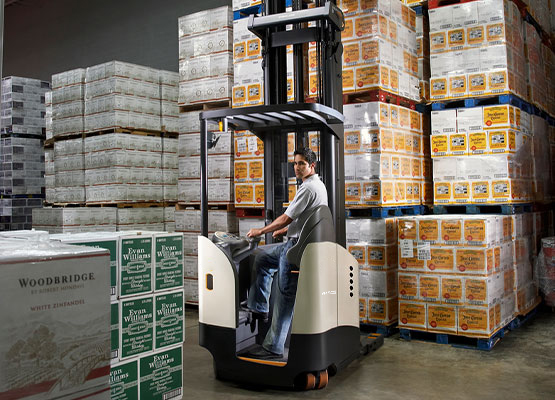
Reach trucks are optimized for vertical access and space efficiency
Cold storage performance depends on assigning each tool to the tasks it handles best, especially under low-temperature constraints.
📊 E16 vs Reach Truck — Cold Storage Functional Comparison
3. Where E16 Is the Right Tool in Cold Storage
E16 forklifts should dominate in areas where:
-
Movement frequency is high
-
Lift height is moderate
-
Tasks are repetitive
-
Flexibility is required
Typical E16 Zones
-
Inbound and outbound docks
-
Staging and buffer areas
-
Selective racking at low–mid levels
-
Cross-docking and mixed-use zones
In frozen environments, E16 forklifts often deliver higher effective throughput per unit than reach trucks outside of narrow aisle contexts.
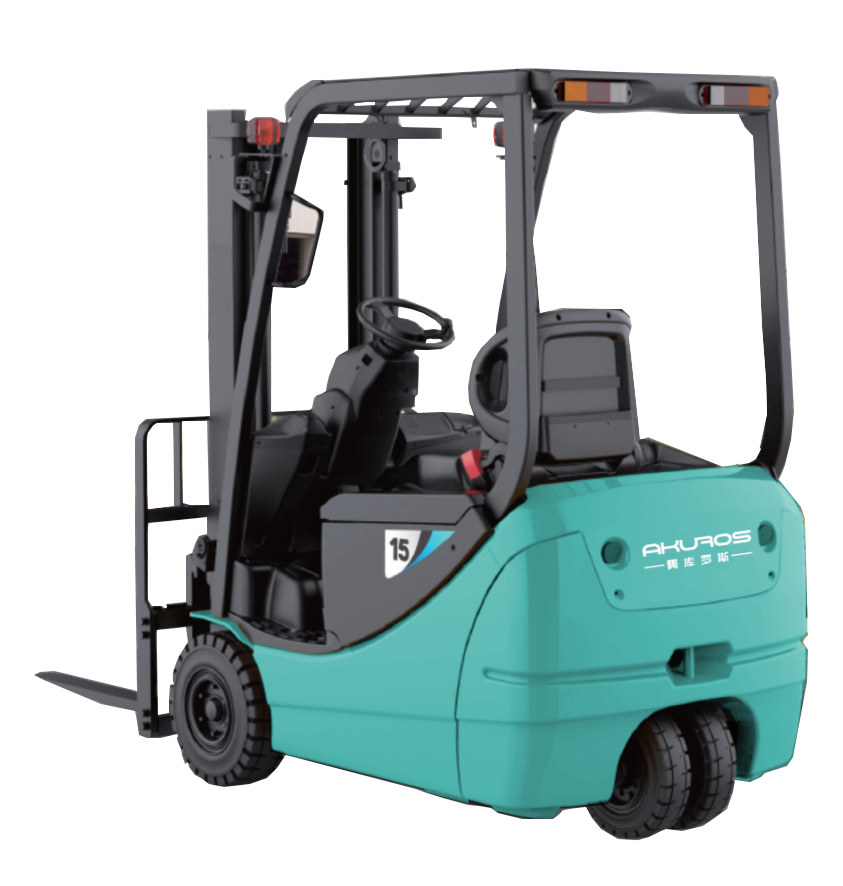
empilhador de contrapeso
4. Where Reach Trucks Are Non-Negotiable
Reach trucks are indispensable when:
-
Storage density is a priority
-
Aisle width is constrained
-
Lift height exceeds counterbalance capability
Typical Reach Truck Zones
-
High-bay selective racking
-
Double deep racking in frozen zones
-
Narrow aisle cold storage
However, reach trucks are not designed to absorb horizontal flow, and overusing them outside aisles often leads to congestion and operator fatigue.
5. The Most Common Mistake: Letting Reach Trucks Do E16 Work
In many cold storage warehouses, reach trucks are mistakenly used for:
-
Dock-to-staging transport
-
Short-distance pallet shuttling
-
General-purpose movement
This leads to:
-
Lower cycle efficiency
-
Higher energy consumption
-
Increased wear
-
Artificial bottlenecks
Reach trucks excel inside aisles, but they are inefficient rhythm keepers.
6. Cold Storage Reality: Flow Beats Density During Peaks
During peak periods:
-
Missed shipments cost more than unused pallet positions
-
Congestion costs more than theoretical space efficiency
A warehouse with:
-
Slightly lower density
-
But smooth E16-driven flow
Often outperforms a high-density warehouse where reach trucks are overstretched.
7. A Practical Allocation Rule (Used in Real Projects)
A simplified but effective rule used in many cold storage designs:
-
E16 forklifts handle 60–70% of total pallet movements
-
Reach trucks handle 30–40%, focused on vertical access
This ratio shifts depending on racking type, but the principle holds:
Reach trucks enable space; E16 forklifts protect throughput.
8. Battery, Stability & Operator Confidence Considerations
Cold environments amplify:
-
Battery voltage sensitivity
-
Steering correction difficulty
-
Operator fatigue
E16 forklifts, being lighter and simpler, often provide:
-
More stable battery discharge
-
More predictable handling
-
Faster operator adaptation
Reach trucks demand stricter discipline in cold conditions and should be assigned accordingly.
9. When the Balance Is Wrong (Warning Signs)
You likely have an imbalance if:
-
Reach trucks queue near docks
-
Operators complain about constant repositioning
-
Battery swaps spike during peak shifts
-
Throughput drops despite “enough equipment”
These are system design symptoms—not operator issues.
10. Google Popular Topics (Contextual Answers)
Can E16 replace reach trucks in cold storage?
No. Reach trucks are essential for high-bay storage.
Can reach trucks replace E16 forklifts?
No. Reach trucks are inefficient for general flow tasks.
Which should be more numerous in a cold warehouse?
Usually E16 forklifts.
Does cold temperature affect reach trucks more?
Yes, due to higher precision and battery load.
What improves performance more: more reach trucks or more E16s?
Often more E16s, when flow is the issue.