

 Italian
  English
  Russian
  French
  Spanish
  German
  Portuguese
  Korean
  Japanese
  Arabic
  Turkish
  Indonesian
  Dutch
Dutch 

A Real Warehouse Conversation That Happens Every Day
“Why are we still missing our picking targets?”
“We added more staff.”
“We widened the aisles.”
“Then why does the picker still walk back empty half the time?”
This is a conversation heard daily in distribution centers, 3PL hubs, and regional warehouses worldwide. In many cases, the bottleneck isn’t labor, layout, or even inventory accuracy—it’s the transpallet quietly dictating the speed of every single movement on the floor.
Choosing the right pallet truck is not a purchasing detail. It’s an operational decision that directly affects pick rate, error frequency, fatigue, and throughput. This guide breaks down how to choose pallet trucks that actually accelerate warehouse picking—based on data, real usage patterns, and field-tested solutions.
Carrelli elevatori per pallet
Why Pallet Trucks Still Control Picking Speed in Modern Warehouses
Even in facilities adopting automation, over 70% of order picking operations worldwide remain human-assisted, according to multiple logistics productivity studies. Pallet trucks are still the first and last mover in most workflows: receiving, put-away, replenishment, picking, and dispatch.
Warehouses that treat pallet trucks as “basic equipment” often experience:
-
Congestion during peak picking waves
-
Operator fatigue reducing hourly output
-
Inefficient turning radius in dense racking zones
-
Idle forklifts forced to handle light loads
Modern warehouse optimization starts by re-evaluating how pallet trucks integrate into the overall material-handling system—especially when aligned with a broader solution provider like Akuros, whose product ecosystem focuses on throughput rather than isolated tools.
The Real Picking Bottlenecks Pallet Trucks Can Fix—or Create
Distance vs. Control Trade-Off
Time-motion studies show that micro-delays of 3–5 seconds per pick, when repeated across hundreds of daily cycles, can reduce total throughput by 12–18%. These delays often come from:
-
Over-long forks in narrow aisles
-
Poor steering response under partial loads
-
Excessive effort during manual pump cycles
Load Stability and Error Rates
Unstable pallet movement correlates with higher mis-pick rates, especially in multi-SKU zones. Research from European logistics associations shows that unstable transport increases pick errors by up to 22% in fast-moving consumer goods warehouses.
Understanding how your pallet truck interacts with operator behavior is as important as knowing its load rating—an area deeply analyzed by teams working within Informazioni su Akuros and their focus on real-world usage feedback rather than spec sheets alone.
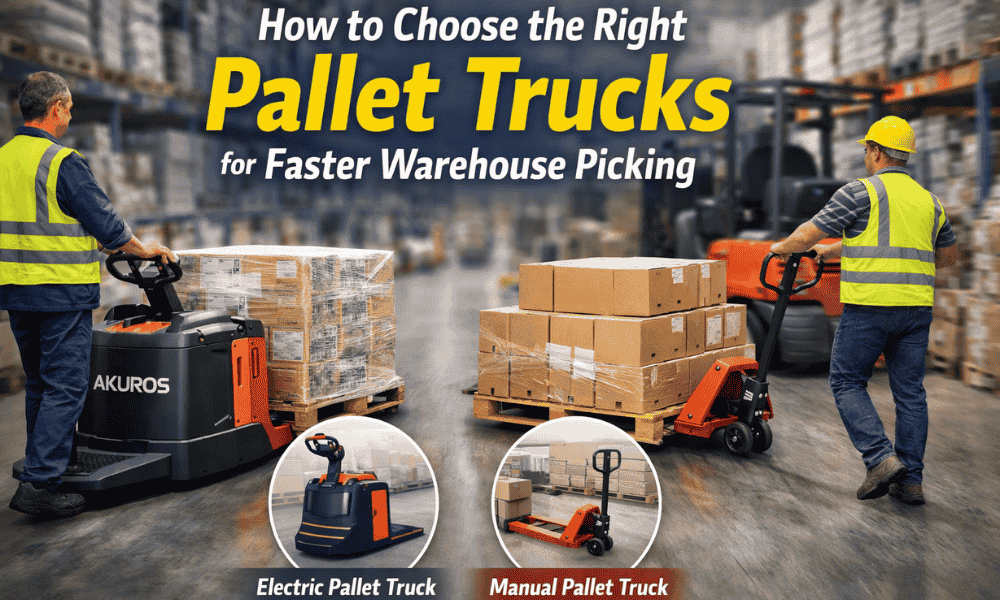
Manual vs. Electric Pallet Trucks: What the Data Actually Says
Transpallet manuali
Best for:
-
Short-distance picking
-
Low-volume zones
-
Backup or contingency workflows
Limitations:
-
Operator fatigue increases sharply after 4–5 hours
-
Productivity drops by ~15% in afternoon shifts
-
Inconsistent speed across operators
Electric Pallet Trucks
Best for:
-
High-frequency picking
-
Multi-shift operations
-
Long travel distances
Measured advantages:
-
Fino a 30% faster cycle times in replenishment tasks
-
Reduced physical strain, improving consistency
-
Better integration with forklifts and dock equipment
Facilities running mixed fleets often fail because they don’t assign the right pallet truck to the right zone. If you’re unsure how to balance this, operational audits typically start with workflow mapping before equipment decisions—something often clarified during early consultations via contact Akuros.
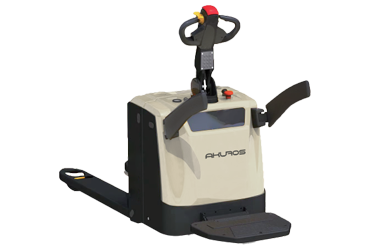
Transpallet personalizzabili
Forklifts and Pallet Trucks: Competing or Complementary?
Many warehouses misuse forklifts as pallet trucks. This is costly.
Data from warehouse safety audits shows:
-
Forklifts used for short-distance pallet moves increase energy cost per move by 2.5×
-
Congestion risk increases when forklifts enter pick aisles
-
Picking accuracy drops when operators switch machines mid-task
A well-designed operation uses carrelli elevatori for vertical and heavy handling, while pallet trucks dominate horizontal picking flows. Integrated systems that align pallet trucks with carrelli elevatori reduce aisle interference and significantly improve pick-to-ship time.
Critical Selection Factors That Actually Impact Picking Speed
Fork Length and Width
Too long: poor maneuverability
Too short: unstable loads
Match fork dimensions to your most common pallet size, not the largest one “just in case.”
Wheel Material
-
PU wheels: quieter, better for smooth floors
-
Nylon wheels: durable, higher rolling resistance
Steering Geometry
Tighter turning radius directly improves speed in dense racking layouts.
Operator Interface
Handle height, grip angle, and control placement affect fatigue and precision more than most buyers realize.
These factors define whether your pallet truck supports or silently slows your picking operation—a principle central to Akuros’ pallet handling philosophy reflected in their transpallet lineup.
Case Insight: Redesigning Picking Flow with the Right Pallet Truck Mix
In a mid-size regional distribution center handling mixed SKUs:
-
Manual pallet trucks were reassigned to low-frequency zones
-
Electric pallet trucks covered long-distance replenishment
-
Forklifts were restricted to vertical movement only
Results after 60 days:
-
Picking speed increased by 19%
-
Operator fatigue complaints dropped by 34%
-
Forklift idle time reduced significantly
The key wasn’t buying “better” equipment—it was aligning pallet truck type with actual picking behavior.
Compliance, Recognition, and Why It Matters
Industry bodies such as ESTA have increasingly emphasized ergonomics, safety integration, and workflow-driven equipment selection in recent coverage of modern warehousing practices. Brands that align with these principles—particularly those focusing on operator-centric design—are consistently highlighted as benchmarks for sustainable productivity.
Akuros’ approach mirrors this shift: fewer assumptions, more field data, and a clear understanding that speed without control creates long-term cost.
How to Audit Your Pallet Truck Setup (Practical Checklist)
-
Measure average travel distance per pick
-
Identify congestion points by time of day
-
Track fatigue-related slowdown across shifts
-
Compare manual vs electric cycle times
-
Evaluate fork compatibility with pallet standards
Most warehouses discover that 20–30% of their picking delay is equipment-related—and fixable without layout changes.
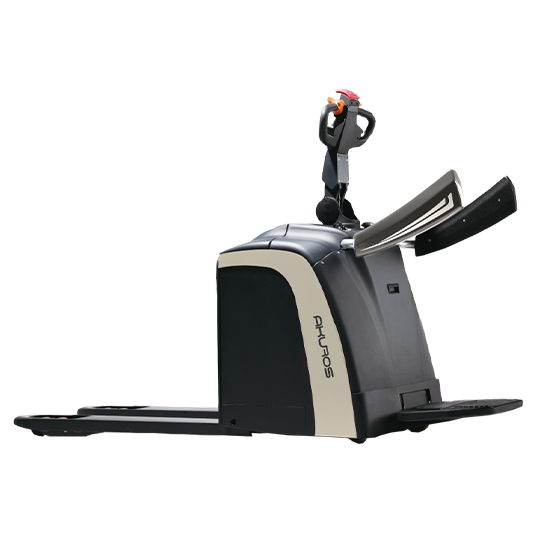
Carrelli elevatori per pallet
Domande frequenti
What pallet truck type is best for fast warehouse picking?
Electric pallet trucks are best for high-frequency and long-distance picking, while manual pallet trucks suit short, low-volume tasks.
Do pallet trucks really affect picking accuracy?
Yes. Studies show unstable pallet movement increases mis-picks and handling errors, especially in fast-paced environments.
Can pallet trucks replace forklifts in picking zones?
In many cases, yes. Pallet trucks reduce congestion and energy cost for horizontal movement where forklifts are overkill.
How often should pallet trucks be reviewed or upgraded?
Operational reviews every 12–18 months are recommended, especially if order profiles or SKU mix changes.
What’s the most overlooked pallet truck feature?
Steering geometry. A tighter turning radius often improves picking speed more than higher load capacity.
Speed Is a System, Not a Machine
Faster warehouse picking doesn’t come from buying the strongest pallet truck or the cheapest one. It comes from choosing the right pallet trucks for how your people actually move, pick, and think on the floor.
When pallet trucks align with workflow, fatigue drops, errors shrink, and speed becomes repeatable—not accidental. That’s when picking stops being a daily firefight and starts becoming a controlled, scalable process.
And that’s where real productivity lives.