

 Italian
  English
  Russian
  French
  Spanish
  German
  Portuguese
  Korean
  Japanese
  Arabic
  Turkish
  Indonesian
  Dutch
Dutch 

Improving Throughput & Reliability in a -25°C Frozen Warehouse
This case study reviews a frozen warehouse project operating at -25°C, where forklift downtime and congestion limited throughput during peak seasons. By reconfiguring the cold storage forklift fleet, battery system, and attachments—without expanding the warehouse footprint—the operator achieved measurable improvements in reliability, safety, and operating cost control.
1. Project Background (Anonymized)
-
Facility type: Export-oriented frozen food warehouse
-
Operating temperature: -25°C
-
Storage system: High-bay selective & double deep racking
-
Main challenge: Forklift instability, battery downtime, peak-period congestion
The warehouse handled mixed frozen products for export markets, with strong seasonal peaks and strict shipment deadlines. Missed dispatch windows directly translated into financial penalties.
2. Key Operational Problems Identified
During the initial operational review, several recurring issues were identified:
-
Forklift availability dropped sharply during peak shifts
-
Battery voltage instability caused mid-shift interruptions
-
Operators struggled with precise pallet positioning in frozen aisles
-
Congestion increased during inbound–outbound overlap
These issues were not caused by a single failure point, but by misalignment between carrelli elevatori, batteries, and layout.
 3. Pre-Optimization Situation — Overview Table
📊 Initial Operating Conditions
| Area | Situation Before Optimization | Impact |
|---|---|---|
| Forklift fleet | Mixed standard electric forklifts | Unstable performance at -25°C |
| Battery system | Standard batteries | Frequent recharging, downtime |
| Allegati | Minimo | Slow pallet positioning |
| Peak handling | Reactive | Missed dispatch windows |
| Safety incidents | Increasing | Higher risk during peaks |
The warehouse had sufficient equipment on paper, but insufficient effective capacity during cold peak operations.
4. Solution Strategy (System-Level, Not Equipment-Only)
Rather than adding more forklifts, the project adopted a system-level optimization approach:
-
Reassign forklifts by temperature zone and task
-
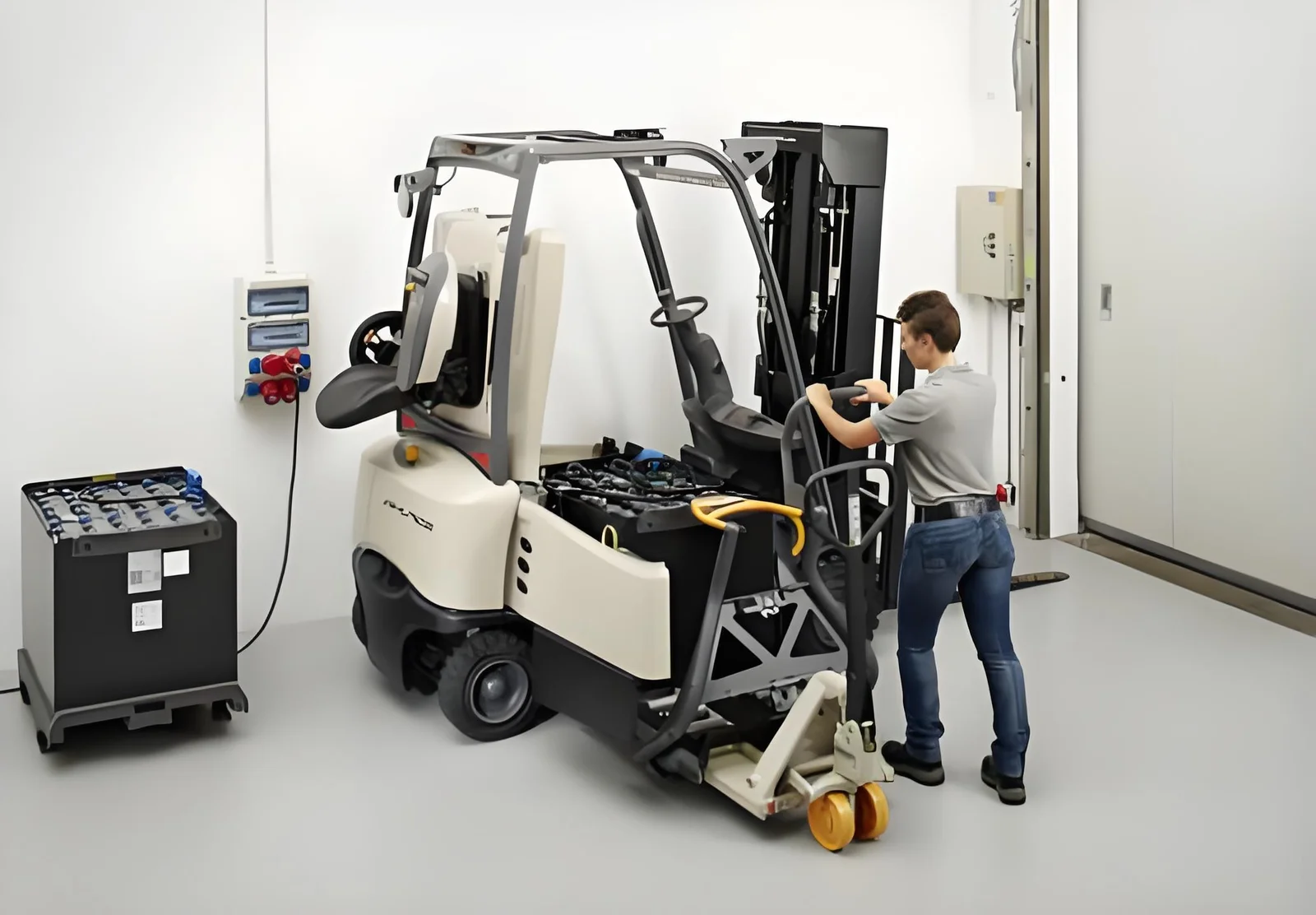
Introduce cold-rated forklift batteries
-
Equip core forklifts with appropriate attachments
-
Adjust operating logic during peak overlap periods
This approach focused on improving effective throughput, not increasing fleet size.
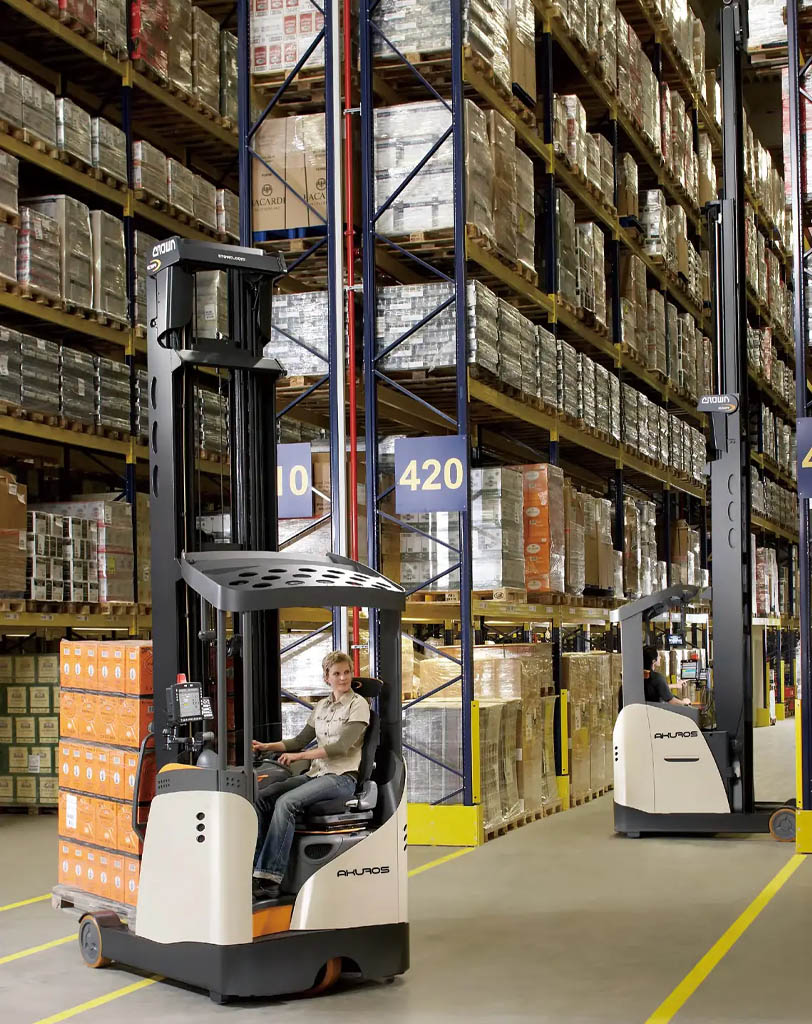 5. Forklift & Battery Optimization
Key Actions
-
Deployed cold storage–specific electric forklifts in frozen zones
-
Introduced cold-rated battery systems to stabilize discharge
-
Separated frozen-zone forklifts from ambient-zone usage
Result
-
Forklift availability during peak shifts increased significantly
-
Mid-shift battery-related interruptions were largely eliminated
-
Operators reported more predictable handling behavior
6. Attachment Deployment to Reduce Congestion
To address precision and congestion issues:
-
Side shifters were added to forklifts operating in narrow frozen aisles
-
Fork positioners were used in staging zones handling mixed pallet formats
This allowed faster pallet placement and reduced the need for corrective maneuvers—particularly important on frozen floors.
7. Post-Optimization Results
📊 Performance Improvement Summary
| Metric | Before | After |
|---|---|---|
| Forklift effective uptime | Low during peaks | Stable across shifts |
| Battery-related downtime | Frequente | Rare |
| Peak-hour congestion | Alto | Controlled |
| Pallet handling accuracy | Inconsistent | Significantly improved |
| Safety incidents | Rising | Reduced |
While no structural changes were made to the warehouse, effective throughput increased and operational risk decreased.
8. ROI Perspective
The optimization strategy avoided:
-
Purchasing additional forklifts
-
Expanding charging infrastructure
-
Major layout reconstruction
Instead, targeted investment in batteries and attachments delivered a faster payback period and lower long-term operating cost—particularly during peak export seasons.
9. Key Lessons from This Cold Storage Project
-
Forklift downtime in cold storage is often a battery problem, not a fleet-size problem
-
Attachments can unlock hidden capacity without adding equipment
-
Zone-specific forklift assignment reduces wear and failure risk
-
System-level thinking delivers better ROI than reactive equipment purchases
These lessons are broadly applicable to frozen warehouses operating at -18°C to -25°C.
10. Who This Case Is Relevant For
This case study is particularly relevant for:
-
Export-oriented frozen food warehouses
-
Cold storage facilities with seasonal peaks
-
Operators experiencing unexplained forklift downtime
-
Facilities considering fleet expansion
11. Google Popular Topics (Contextual Answers)
Why do forklifts underperform in frozen warehouses?
Because batteries, electronics, and traction systems are stressed under low temperatures.
Is adding more forklifts the best solution?
Often no. Optimizing existing equipment can deliver better ROI.
Do attachments really improve cold storage efficiency?
Yes. Precision attachments reduce handling time and congestion.
How important are batteries in cold storage forklifts?
They are often the primary limiting factor for uptime.
Can these improvements be applied without warehouse expansion?
Yes. This case achieved results without changing the building footprint.