

 French
  English
  Russian
  Spanish
  German
  Italian
  Portuguese
  Korean
  Japanese
  Arabic
  Turkish
  Indonesian
  Dutch
Dutch 

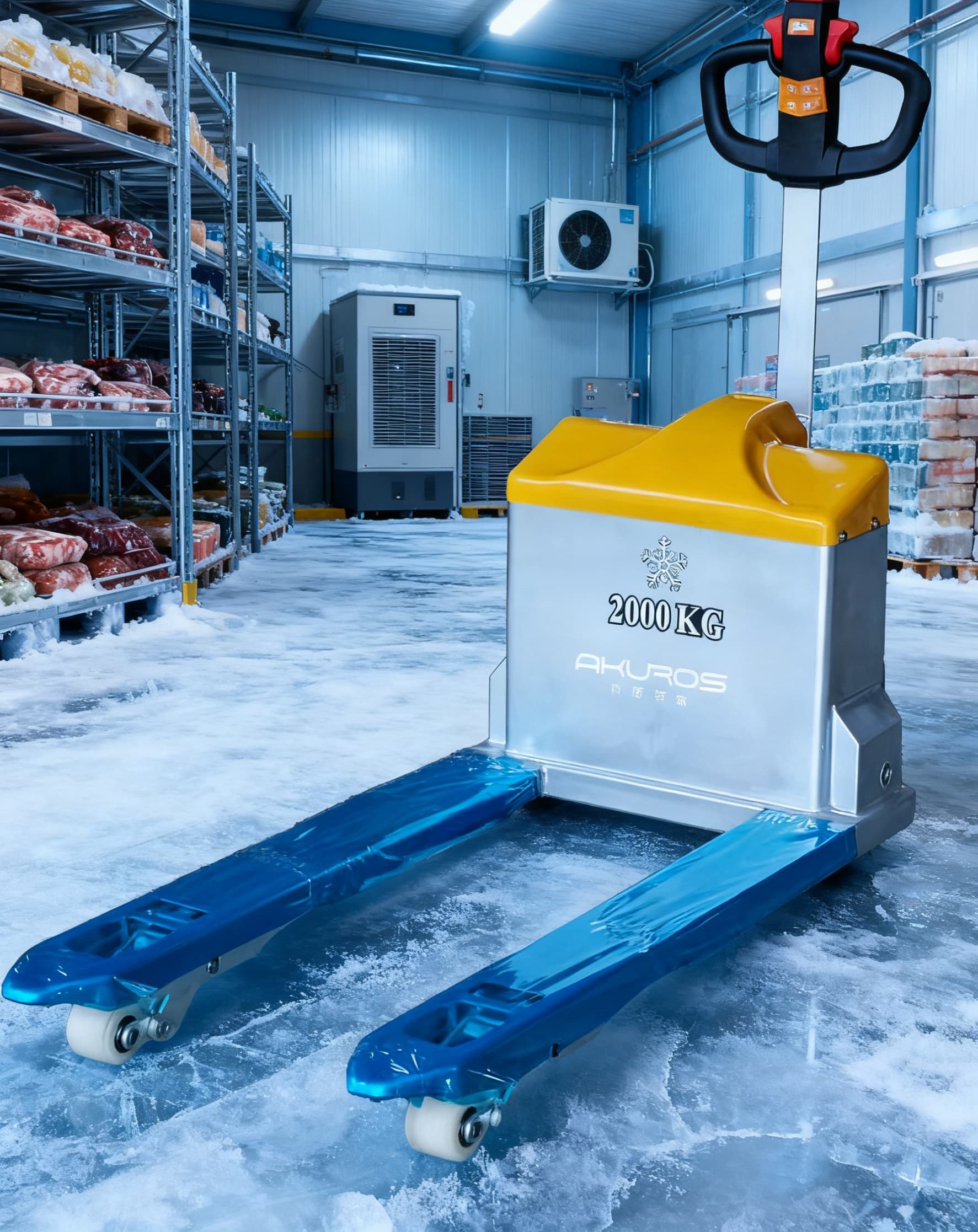
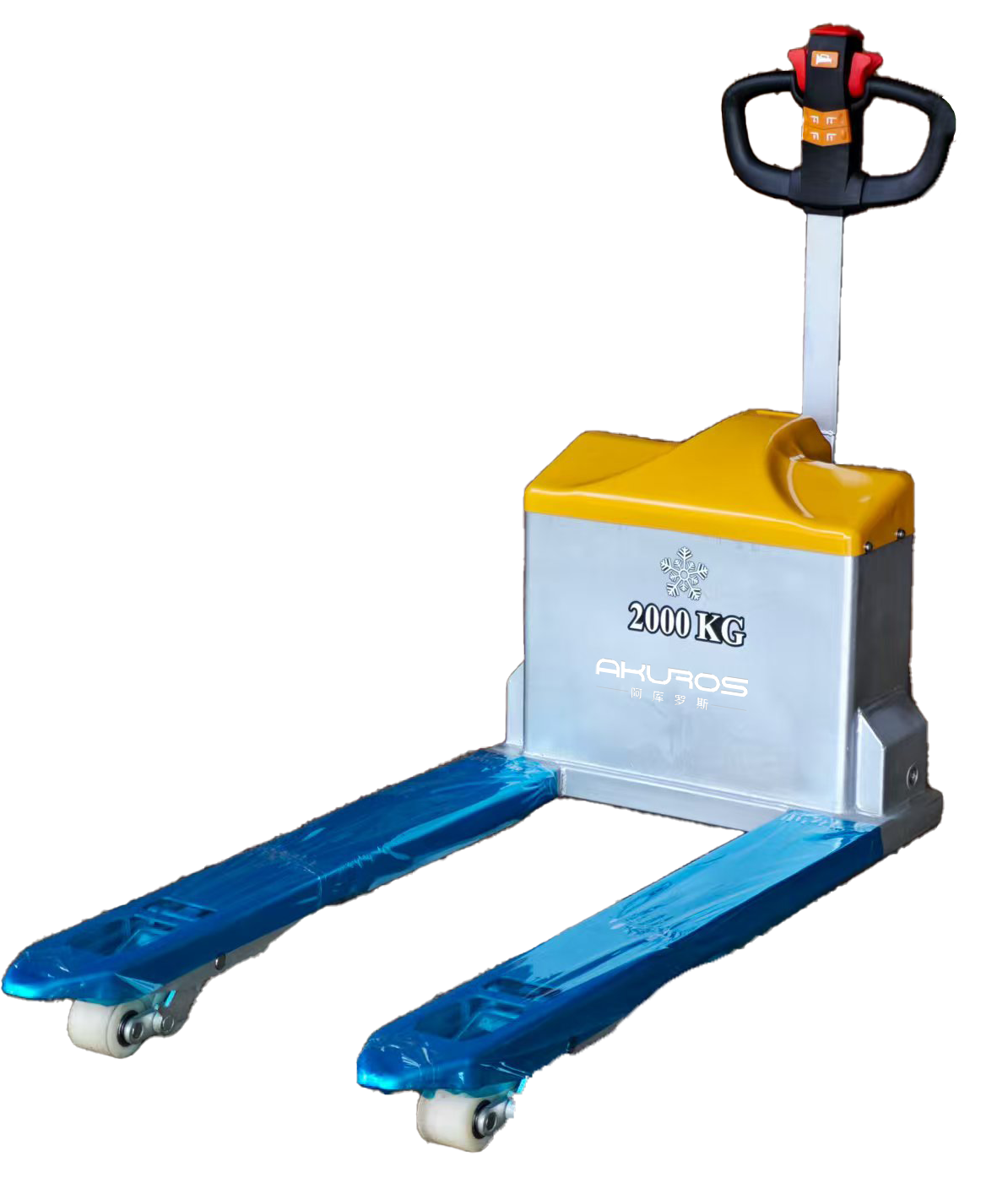
T20B cold storage pallet trucks are often underestimated in freezer warehouses. While forklifts handle lifting and reach trucks manage vertical density, T20B units stabilize dock rhythm and high-frequency pallet movement. This article explains why T20B is not optional—but foundational—in modern cold chain operations.
1. The Hidden Role of T20B in Freezer Operations
In most freezer warehouses, managers focus on:
-
Forklift capacity
-
Racking height
-
Automation potential
But daily throughput is often determined by:
How fast pallets move horizontally at ground level.
That movement is where T20B cold storage transpalettes dominate.
 2. Why Forklifts Alone Cannot Maintain Dock Rhythm
Forklifts are designed for:
-
Mixed handling
-
Load positioning
-
Lifting and stacking
They are not optimized for repetitive, short-distance movement.
In dock zones, forklifts often:
-
Consume excess energy
-
Create congestion
-
Spend time correcting direction
T20B units, by contrast, are built for flow.
📊 T20B vs Counterbalance Forklift in Freezer Docks
| Performance Area | T20B Pallet Truck | Counterbalance Forklift |
|---|---|---|
| Short-Distance Efficiency | Très élevé | Modéré |
| Energy Consumption per Move | Faible | Haut |
| Dock Congestion Impact | Minime | Significant |
| Learning Curve | Faible | Modéré |
| Best Role | High-frequency pallet flow | Mixed handling & stacking |
3. What Makes T20B Suitable for Cold Storage
A properly configured T20B cold storage pallet truck includes:
1️⃣ Cold-Resistant Electrical System
Sealed components to reduce condensation risk.
2️⃣ Stable Low-Temperature Battery Output
Maintains predictable discharge under -18°C to -25°C.
3️⃣ Controlled Acceleration
Important for frozen floors with reduced traction.
4️⃣ Compact Chassis
Improves maneuverability in tight dock areas.
These characteristics allow T20B to operate consistently in harsh cold chain environments.
4. Where T20B Delivers the Highest ROI
T20B forklifts generate strong ROI in:
-
Inbound truck unloading
-
Outbound loading
-
Cross-docking
-
Buffer-to-buffer movement
-
High-turnover SKU operations
In these zones, T20B often:
-
Replaces inefficient forklift cycles
-
Reduces forklift fleet size
-
Stabilizes peak-hour operations
 5. Energy & Battery Impact in Freezer Use
Cold temperatures increase energy demand.
Because T20B units:
-
Are lighter
-
Require no mast lifting during short moves
-
Operate at lower energy draw
They typically:
-
Extend shift coverage
-
Reduce charging frequency
-
Lower battery stress
In high-frequency operations, this energy stability becomes critical.
6. Why Many Warehouses Underestimate T20B
Common misconceptions include:
-
“It’s only a pallet mover.”
-
“Forklifts can do the same job.”
-
“It’s secondary equipment.”
In reality, removing T20B from a freezer warehouse often exposes:
-
Dock slowdowns
-
Forklift congestion
-
Operator fatigue
T20B is a stabilizer—not an accessory.
7. When T20B Is Not the Right Tool
T20B is not designed for:
-
High stacking
-
Heavy irregular loads
-
Long-distance transport
It works best as part of a balanced equipment mix.
8. Google Popular Topics (Contextual Answers)
Is T20B suitable for freezer warehouses?
Yes, when configured for cold environments.
Can pallet trucks replace forklifts in cold storage?
For short-distance dock tasks, yes.
Does T20B improve dock throughput?
Significantly, especially during peak hours.
Is T20B energy-efficient in freezers?
Yes, due to lower lifting energy demand.
Why do freezer warehouses need pallet trucks?
Because high-frequency ground-level movement determines throughput.