

 French
  English
  Russian
  Spanish
  German
  Italian
  Portuguese
  Korean
  Japanese
  Arabic
  Turkish
  Indonesian
  Dutch
Dutch 

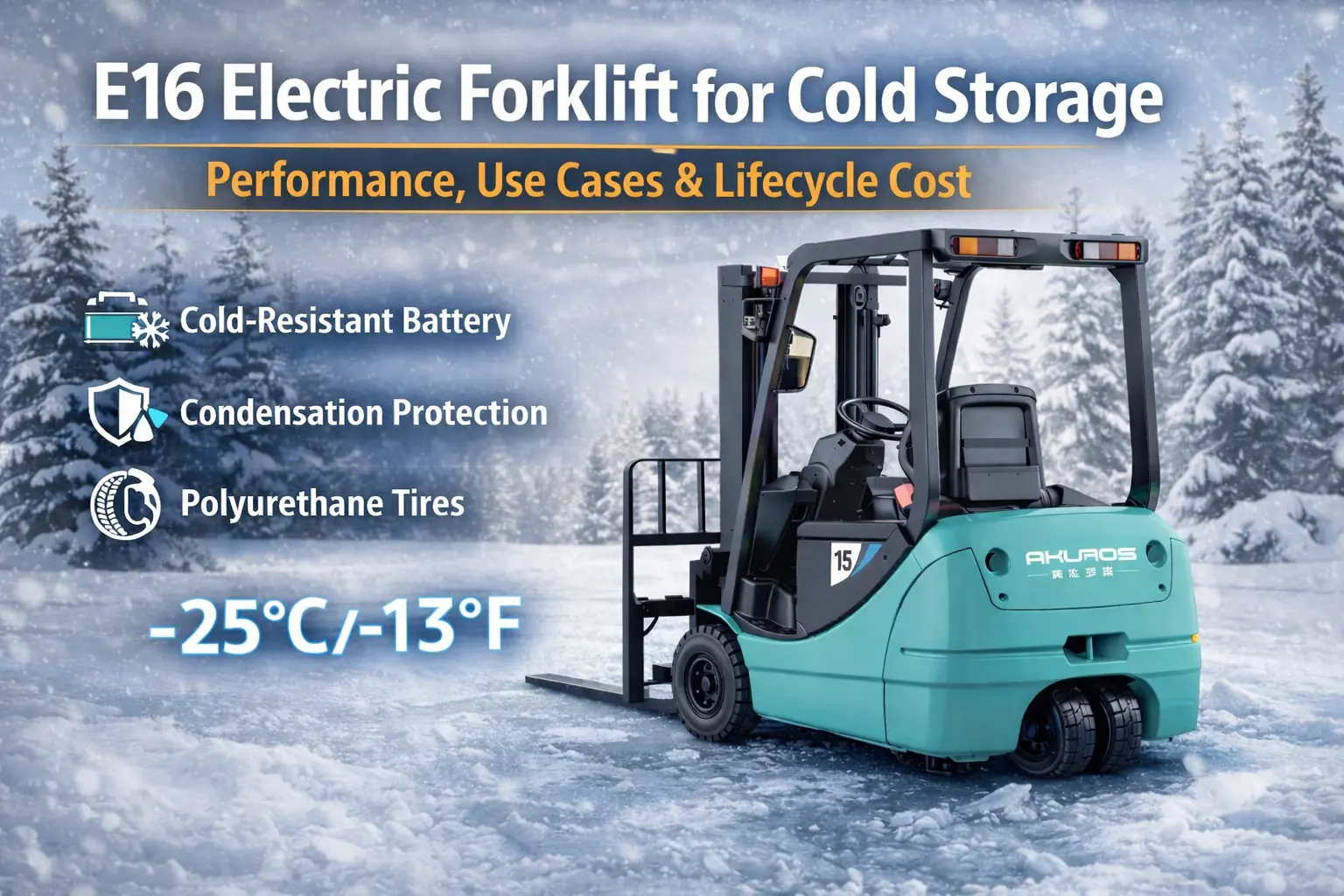
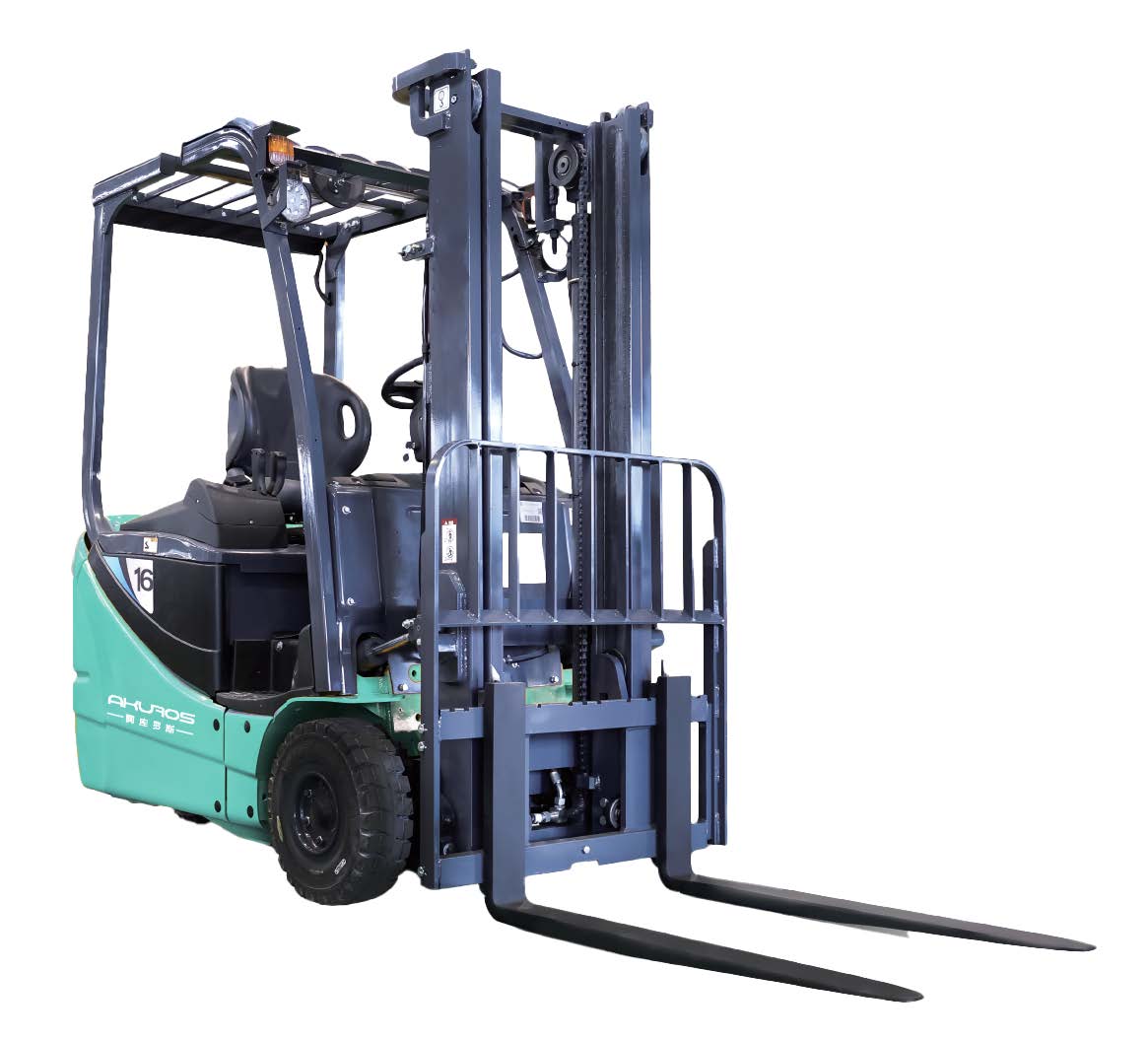
The E16 cold storage forklift represents a balanced configuration for frozen warehouse operations. With optimized load capacity, compact maneuverability, and cold-rated electrical protection, the 1.6-ton class forklift often delivers better throughput and energy efficiency than oversized alternatives. This article explains why E16 has become a preferred choice in many cold chain projects.
1. Why Capacity Oversizing Hurts Cold Storage Efficiency
In many freezer warehouses, forklift selection starts with this logic:
“Let’s choose higher capacity to be safe.”
But in frozen environments, oversizing creates hidden problems:
-
Larger turning radius
-
Higher energy consumption
-
Reduced maneuverability
-
Congestion in dock zones
In most cold storage operations, average pallet weight falls well within the 1.6-ton class.
This is where E16-class chariots élévateurs become strategically optimal.
2. What Makes E16 the “Golden Balance”
The E16 cold storage forklift sits at an operational sweet spot between:
-
Stabilité
-
Maneuverability
-
Energy efficiency
-
Cost control
It is powerful enough for typical frozen food pallets
but compact enough to preserve flow rhythm.
📊 E16 vs Larger Electric Forklifts in Freezer Warehouses
| Evaluation Factor | E16 (1.6T Class) | 2.0T–2.5T Electric Forklift |
|---|---|---|
| Turning Radius | Compact | Larger |
| Energy Consumption | Lower per pallet | Higher |
| Dock Congestion Risk | Faible | Moderate to High |
| Load Suitability (Frozen Food) | Well matched | Often oversized |
| Battery Stability in Cold | More predictable shift coverage | Higher discharge demand |
 3. Cold Storage-Specific Engineering Advantages of E16
A properly configured E16 cold storage forklift typically includes:
1️⃣ Cold-Rated Electrical Protection
Sealed wiring and moisture-resistant connectors to prevent condensation failure.
2️⃣ Stable Battery Performance
Optimized for -18°C to -25°C environments.
3️⃣ Compact Chassis Design
Improves directional efficiency in dock and staging areas.
4️⃣ Balanced Stability
Adequate lateral balance without excessive footprint.
These features allow E16 to operate reliably in daily freezer cycles.
4. Where E16 Performs Best in Cold Chain Operations
The E16 cold storage forklift excels in:
-
Dock-to-buffer movements
-
Cross-docking
-
Low to mid-level racking
-
High-frequency directional change tasks
-
Mixed SKU operations
It is not designed to replace reach trucks in high-bay storage—but to stabilize horizontal flow.
 5. Energy & ROI Perspective
In frozen warehouses, energy loss compounds over time.
Because E16-class forklifts:
-
Are lighter
-
Require less torque per movement
-
Match typical pallet weight
They often deliver:
-
Longer shift duration
-
Lower battery stress
-
Reduced maintenance frequency
Over several years, right-sized forklifts frequently outperform larger models in total cost.
6. Why Many Cold Storage Projects Transition to E16
Across cold chain upgrades, a common pattern appears:
Phase 1: Oversized forklifts dominate
Phase 2: Congestion and battery stress appear
Phase 3: Fleet is right-sized toward 1.6-ton class
E16 becomes the operational baseline once data is reviewed.
7. When E16 Is Not the Right Choice
Avoid E16 if:
-
Pallets regularly exceed rated capacity
-
Heavy attachments are required
-
High-bay stacking is the primary task
In these cases, reach trucks or larger forklifts may be more suitable.
8. Google Popular Topics (Contextual Answers)
Is E16 suitable for freezer warehouses?
Yes, especially for general flow and dock handling.
Is 1.6 ton enough for cold storage pallets?
In most frozen food operations, yes.
Does smaller forklift save energy in freezer?
Yes, when matched to actual load profile.
Why not choose 2.5 ton for safety?
Oversizing increases energy use and reduces maneuverability.
Can E16 replace reach trucks?
No, reach trucks are needed for high-bay storage.