

 French
  English
  Russian
  Spanish
  German
  Italian
  Portuguese
  Korean
  Japanese
  Arabic
  Turkish
  Indonesian
  Dutch
Dutch 

In modern warehouses, efficiency and safety are paramount. One area that significantly impacts both is the handling of pallets. The ability to move and store multiple pallets simultaneously, while ensuring product integrity and minimizing operator strain, is a key to improving overall productivity. The Transpalette simple-double offers an effective solution to these challenges.
Whether it’s cross-docking, high-volume warehouses, or retail distribution centers, the Single-Double Pallet Handler allows operators to handle multiple pallets at once, reducing the time spent on loading and unloading tasks. But with this increased efficiency comes the risk of damaging the product if the proper care and equipment settings are not in place.
This article will dive into the best practices and strategies for using a Transpalette simple-double to prevent product damage, increase operational efficiency, and create a safer work environment.
Why the Single-Double Pallet Handler Is a Game Changer
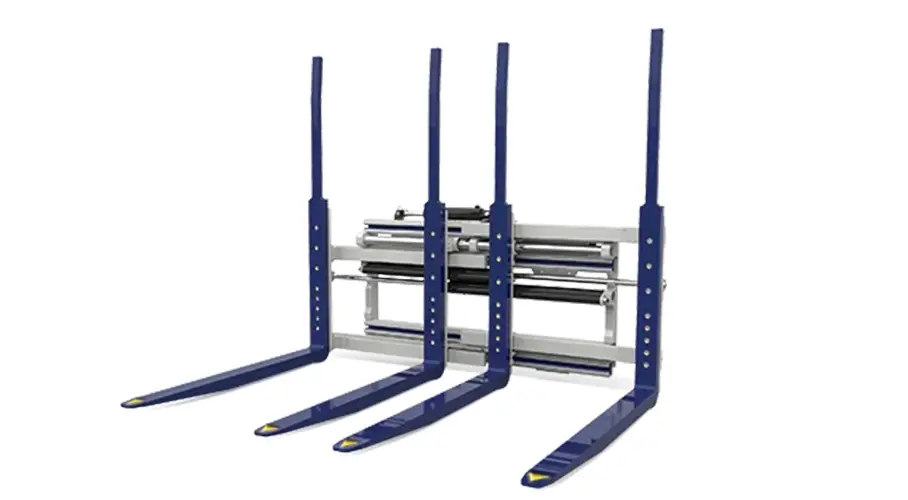
Le Transpalette simple-double is a type of forklift attachment that allows operators to pick up and move two pallets simultaneously. This functionality drastically improves throughput and reduces handling time. However, despite the time savings, careful handling and attention to detail are crucial to ensure that the products remain undamaged.
Key features of the Single-Double Pallet Handler:
-
Dual Pallet Capacity: Unlike standard forklifts, which only move one pallet at a time, the Single-Double Pallet Handler can lift two pallets at once, increasing efficiency.
-
Conception ergonomique: The design of the handler minimizes the physical strain on operators by allowing them to handle heavier loads more comfortably.
-
Increased Throughput: By reducing the time it takes to pick up and move pallets, this handler improves warehouse throughput, allowing operators to manage more inventory in less time.
-
Space Efficiency: In high-density storage environments, the ability to handle two pallets at once minimizes congestion and maximizes space utilization.
By using the Single-Double Pallet Handler, warehouses can increase their productivity and reduce the overall time spent on loading, unloading, and organizing goods.
Common Challenges and Mistakes in Single-Double Pallet Handling
While the Single-Double Pallet Handler is a powerful tool, it requires the proper handling techniques to avoid damage to goods. In warehouses, several common mistakes can lead to product damage if not addressed. These include improper load positioning, excessive lifting height, and incorrect pallet alignment.
Mistake 1: Improper Load Positioning
When pallets are not properly positioned on the forks of the Single-Double Pallet Handler, they can shift during transport, leading to product damage or loss. Misaligned pallets are prone to tipping, which can cause physical damage to products, especially in environments with a lot of movement.
Prevention:
-
Ensure that the pallets are aligned properly before lifting.
-
Check the load for stability before moving the pallet handler.
-
Always use the load backrest to prevent pallets from shifting.
Mistake 2: Lifting Pallets Too High
When pallets are lifted too high, it increases the risk of instability and tipping. While it may be tempting to raise pallets to a higher elevation for clearance, this practice often leads to accidents or damage to the products being transported.
Prevention:
-
Limit the lifting height to the minimum necessary for clearance.
-
Ensure that the load is always positioned at a height that allows for safe and stable transport.
Mistake 3: Overloading the Handler
Overloading a Single-Double Pallet Handler can strain the equipment and increase the chances of damaging products. Exceeding the rated load capacity can cause the forks to bend, decrease lifting efficiency, and lead to unexpected breakdowns.
Prevention:
-
Always adhere to the specified load capacity of the Single-Double Pallet Handler.
-
Regularly inspect the equipment for signs of wear and tear to avoid overloading.
Mistake 4: Inadequate Operator Training
An untrained operator can cause significant damage to goods by mishandling the equipment. Improper use of the Single-Double Pallet Handler can lead to equipment failure, product damage, and even injury.
Prevention:
-
Provide comprehensive training to operators on safe pallet handling, correct lifting techniques, and how to operate the Single-Double Pallet Handler safely.
-
Ensure that all operators are familiar with the equipment’s controls, as well as the safety features and limits.
Best Practices to Maximize Efficiency and Reduce Product Damage
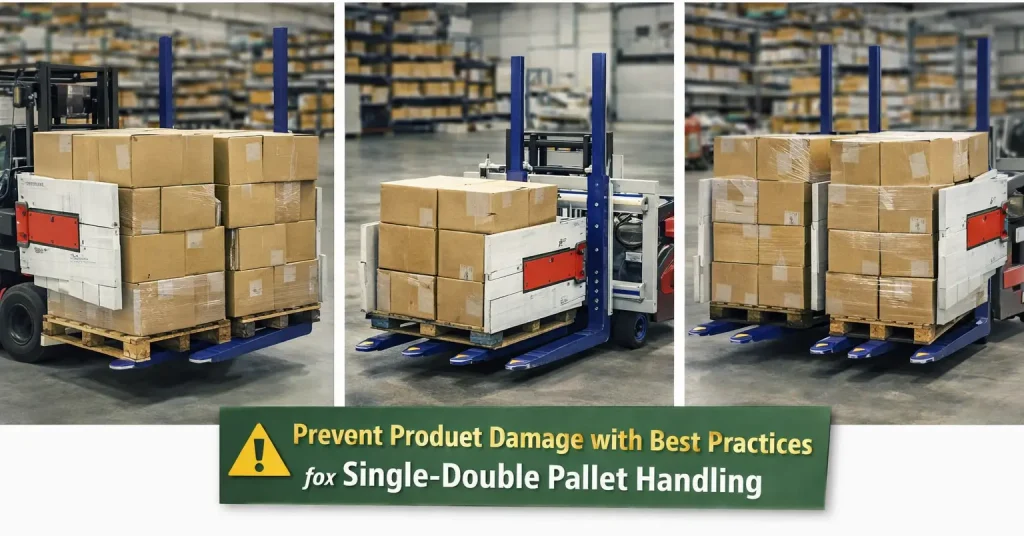
When used correctly, the Single-Double Pallet Handler can be an invaluable tool in reducing product damage and increasing warehouse efficiency. Here are some best practices to ensure optimal performance:
1. Regular Equipment Maintenance
Regular maintenance ensures that the Single-Double Pallet Handler operates efficiently and safely. Check for wear and tear on the forks, load backrests, and hydraulic systems to ensure that the equipment functions as intended.
Maintenance checklist:
-
Inspect hydraulic systems for leaks or malfunctions.
-
Check the condition of forks and ensure they are not bent or damaged.
-
Ensure that the load backrest is securely attached and free from defects.
2. Use Proper Pallet Handling Techniques
When using the Single-Double Pallet Handler, always ensure that pallets are correctly positioned and balanced. Proper load distribution prevents tipping and ensures the safety of products during transport.
Handling tips:
-
Always center the load on the forks to ensure balance.
-
Avoid placing excessive weight on one side of the pallet.
-
Be mindful of pallet size and the type of products being transported.
3. Implement Speed Controls for Safety
While it’s important to keep the flow of goods moving, operating the Single-Double Pallet Handler too quickly can increase the risk of accidents and damage. Ensuring that operators follow speed controls is crucial for preventing mishandling and injuries.
Speed tips:
-
Keep a moderate speed when lifting or transporting pallets.
-
Slow down when navigating turns or passing through narrow aisles.
4. Maximize Storage Efficiency
In high-density warehouses, space is always at a premium. The Single-Double Pallet Handler can help improve space efficiency by allowing operators to handle multiple pallets at once, but it’s essential to organize storage areas carefully to avoid congestion.
Storage tips:
-
Create clear pathways for operators to navigate.
-
Organize products by size and weight to maximize storage density.
-
Use the Single-Double Pallet Handler to reposition pallets quickly and reduce bottlenecks.
Final Thoughts: Single-Double Pallet Handling for the Modern Warehouse
Le Transpalette simple-double is a powerful tool that improves efficiency and reduces product damage when used correctly. It is particularly well-suited for high-volume warehouse environments where speed and accuracy are essential. By following the best practices outlined above, you can ensure that your operations run smoothly, your products stay intact, and your workforce remains safe.
Key Takeaways:
-
Dual pallet capacity: Increases efficiency by handling two pallets at once.
-
Ergonomic design: Reduces operator fatigue and improves comfort.
-
Space efficiency: Helps navigate narrow aisles and high-density environments.
-
Regular maintenance: Keeps equipment running smoothly, reducing downtime.
FAQ
1. How does the Single-Double Pallet Handler prevent product damage?
The Single-Double Pallet Handler reduces product damage by providing a stable, ergonomic platform for moving multiple pallets at once. It minimizes the risk of load shifting or tipping, ensuring the safe transport of goods.
2. Can the Single-Double Pallet Handler be used in tight warehouse spaces?
Yes, its compact design and dual pallet handling capabilities make it ideal for navigating tight spaces in high-density storage areas.
3. What maintenance is required for the Single-Double Pallet Handler?
Regular maintenance includes inspecting the hydraulic system, forks, load backrest, and ensuring that all parts are functioning correctly. Preventive maintenance can help avoid unexpected failures and reduce downtime.
4. Is operator training required for using the Single-Double Pallet Handler?
Yes, proper training is essential to ensure safe and efficient use of the equipment. Operators should be trained in handling techniques, equipment maintenance, and safety protocols.
5. How does the Single-Double Pallet Handler increase efficiency?
By allowing operators to handle two pallets at once, the Single-Double Pallet Handler reduces the number of trips required to move goods, improving overall throughput and efficiency.