

 French
  English
  Russian
  Spanish
  German
  Italian
  Portuguese
  Korean
  Japanese
  Arabic
  Turkish
  Indonesian
  Dutch
Dutch 

What You Actually Need (and What You Don’t)
Cold storage warehouses often invest in the wrong equipment—not because of budget limits, but because of unclear priorities. This checklist breaks down what equipment is truly necessary for cold storage operations, what is conditionally required, and what is frequently over-purchased. Use it as a practical reference before finalizing any cold storage equipment list.
1. Why Cold Storage Projects Need a Checklist (Not More Opinions)
Most cold storage equipment decisions fail for one reason:
Everything looks “important” during planning.
As a result:
-
Equipment lists become inflated
-
Budgets drift upward
-
Operations become harder to manage
A checklist forces one critical discipline:
Every piece of equipment must earn its place by task, not by assumption.
 2. Step 1: Define the Three Equipment Categories
Before listing models, every cold storage project should classify equipment into three groups:
1️⃣ Must-Have – without this, the warehouse cannot operate
2️⃣ Context-Dependent – required only under specific conditions
3️⃣ Often Over-Purchased – commonly added without real need
This separation alone eliminates 20–30% of unnecessary CAPEX in many projects.
📊 Cold Storage Equipment Checklist — Overview
3. What You Actually Need (In Most Cold Storage Warehouses)
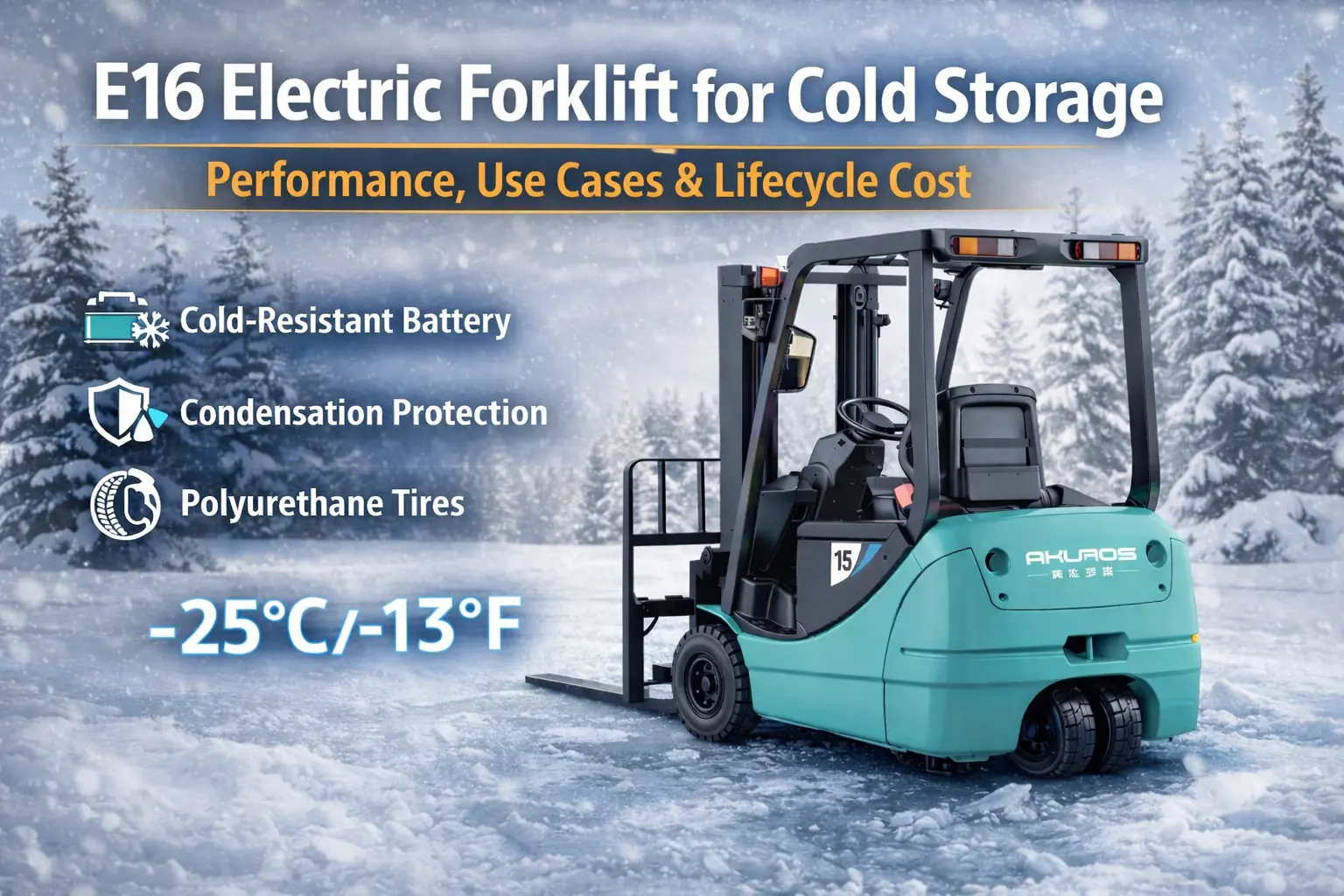
✅ Electric Forklifts (E16-Class or Equivalent)
Why they are essential:
-
Handle the majority of horizontal movement
-
Absorb variability and exceptions
-
Provide operational flexibility
If a cold storage warehouse has too few forklifts, nothing else compensates.
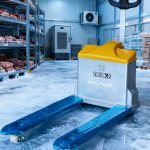
✅ Electric Pallet Trucks
Why they are non-negotiable:
-
Dock operations are high-frequency
-
Forklifts are inefficient for short moves
-
Pallet trucks reduce congestion
Many cold storage projects underestimate how much work pallet trucks quietly do.
4. What You Might Need (Only If Conditions Apply)
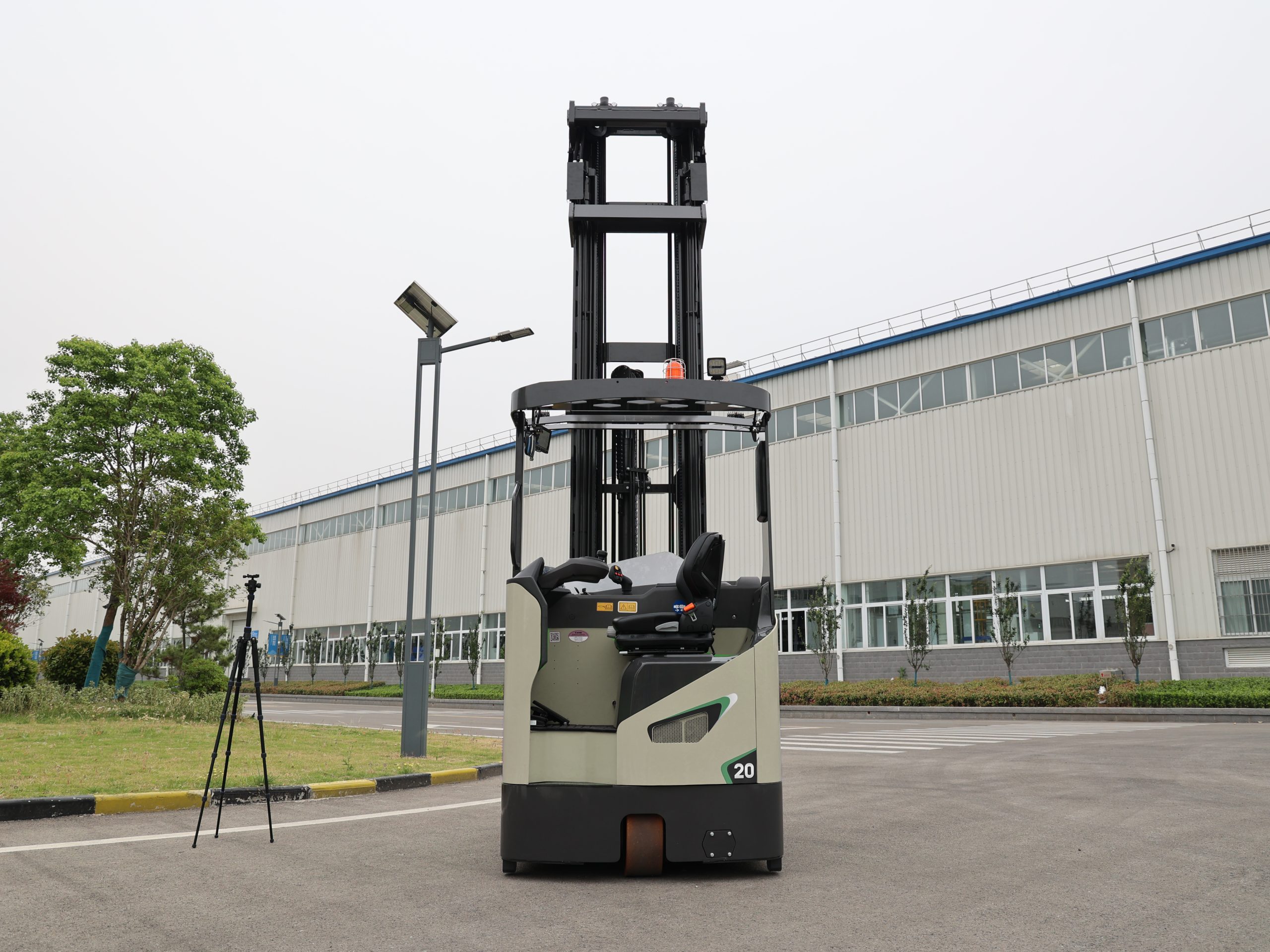
⚠️ Chariots à mât rétractable
Reach trucks are essential only if:
-
Storage height exceeds forklift capability
-
Aisle width is constrained
-
Racking density is a priority
They should be limited to aisle work and not treated as general-purpose machines.
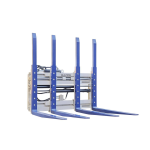
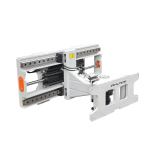
 ⚠️ Forklift Attachments
Attachments make sense when:
-
Pallet standards vary
-
Precision positioning is required
-
Throughput pressure exists
They are a multiplier, not a replacement for core equipment.
⚠️ AGVs
AGVs earn their place when:
-
Routes are repetitive
-
Volumes are stable
-
Labor availability is a constraint
AGVs should stabilize flow, not mask poor manual design.
5. What You Probably Don’t Need (Yet)
❌ Full Automation (AS/RS) Too Early
Common reasons automation is added prematurely:
-
To “future-proof”
-
To compensate for design uncertainty
-
To impress stakeholders
In reality, many cold storage warehouses:
-
Haven’t optimized manual flow
-
Haven’t stabilized SKU profiles
-
Haven’t experienced sustained peak pressure
Automation added too early often locks in inefficiencies.
6. The Most Common Checklist Violations
Across projects, the same mistakes repeat:
-
More reach trucks than forklifts
-
Too few pallet trucks at docks
-
Automation used to fix congestion
-
Attachments ignored, forklifts added instead
These mistakes don’t show up in budgets—but show up in daily operations.
7. A Simple Self-Test Before Finalizing Equipment
Ask these questions:
-
Which equipment handles the most pallet moves per day?
-
Which equipment creates flow vs blockage?
-
Which equipment absorbs exceptions?
If you can’t answer clearly, the equipment mix is likely wrong.
8. How This Checklist Improves ROI
Using this checklist typically results in:
-
Lower upfront CAPEX
-
Higher effective utilization
-
Faster ramp-up after go-live
-
Delayed need for automation
In cold storage, clarity beats complexity.
9. Google Popular Topics (Contextual Answers)
Do all cold storage warehouses need reach trucks?
No. Only those with high-bay or narrow aisles.
Are pallet trucks really that important?
Yes. They handle a large portion of daily movements.
Should automation be planned from day one?
Planned, yes. Purchased, not always.
Why do cold storage projects overspend on equipment?
Because roles are not clearly defined early.
What equipment affects throughput most?
Forklifts and pallet trucks, not reach trucks or automation.