

 Turkish
  English
  Russian
  French
  Spanish
  German
  Italian
  Portuguese
  Korean
  Japanese
  Arabic
  Indonesian
  Dutch
Dutch 

As global supply chains accelerate and customer expectations continue to rise, the material handling industry is undergoing a major transformation. Warehouses are no longer just storage spaces—they are high-performance, data-driven hubs where speed, accuracy, safety, and sustainability determine competitiveness.
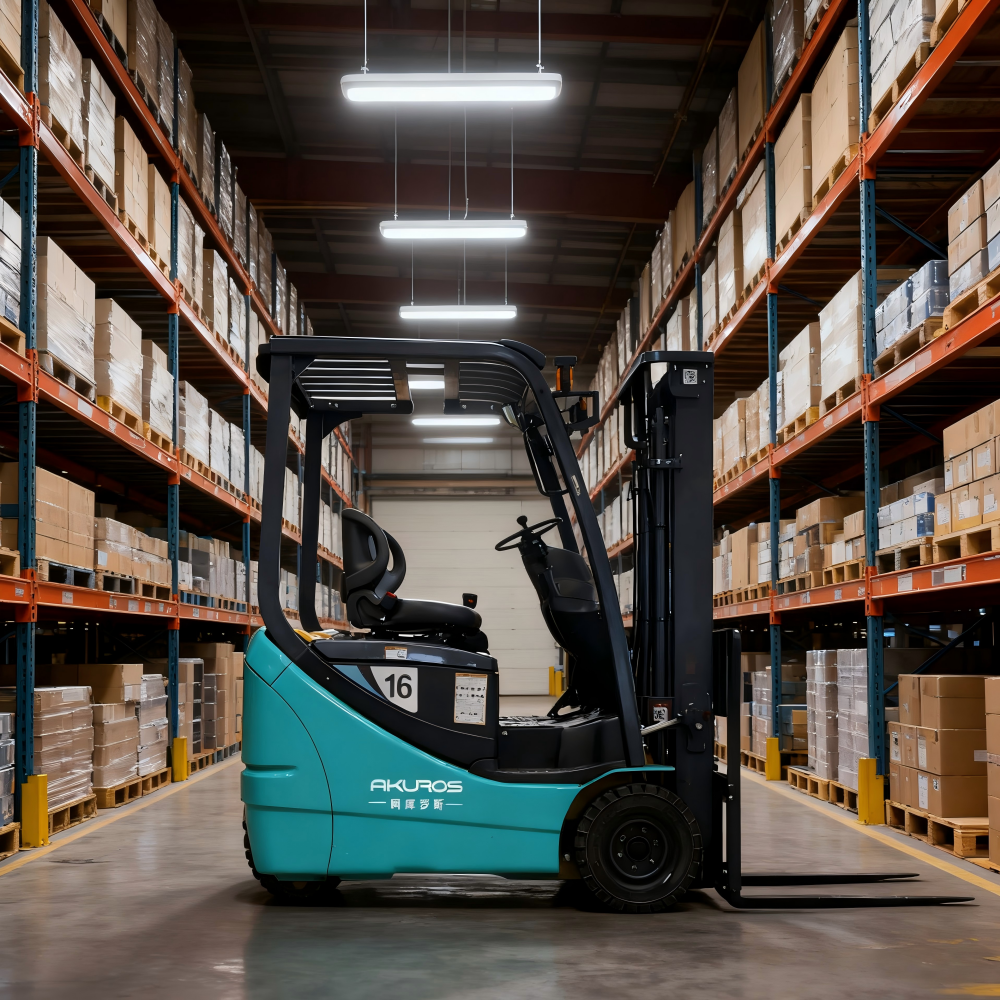
In this shift toward automation and electrification, intelligent electric forklifts such as the Akuros E16 three-wheel elektrikli forklift ve Akuros T20B paletli̇ kamyon are becoming essential tools for modern operations.
This article explores the future of material handling, the technological trends shaping the industry, and why equipment like Akuros E16 and T20B will lead the next decade of warehouse innovation.
 1. The Rise of Electric Forklifts in Modern Warehousing
In the past, internal-combustion forklifts dominated heavy-duty applications. But today, businesses are turning to elektri̇kli̇ forkli̇ftler for several key reasons:
✔ Lower Total Cost of Ownership (TCO)
Electric forklifts significantly reduce fuel, maintenance, and downtime costs. For example:
-
No engine oil changes
-
No exhaust filters
-
Less brake wear
-
Longer service intervals
Over a 5-year cycle, electric forklifts can reduce operating costs by 30–50% compared with diesel units.
✔ Emissions-Free Operation
With increasing environmental regulations, warehousing and manufacturing facilities must reduce carbon footprints. Electric forklifts produce sıfır egzoz emisyonu, making them suitable for:
-
Food and beverage logistics
-
Ecza depoları
-
Cold storage
-
E-ticaret yerine getirme
✔ Intelligent Control Systems
Modern electric forklifts offer advanced features not possible on diesel models, including:
-
Proportional hydraulic control
-
Energy-saving regenerative braking
-
Real-time monitoring via onboard displays
-
Precision load handling
The Akuros E16, for example, offers finger-tip control, ultra-smooth proportional steering, and improved maneuverability in narrow aisles.
 2. How Cold Storage Logistics Are Driving Equipment Innovation
Cold storage is one of the fastest-growing segments in logistics. But extreme temperatures create unique challenges:
-
Battery capacity reduction
-
Condensation issues
-
Traction loss on icy floors
-
Corrosion from humidity and salt
-
High energy consumption
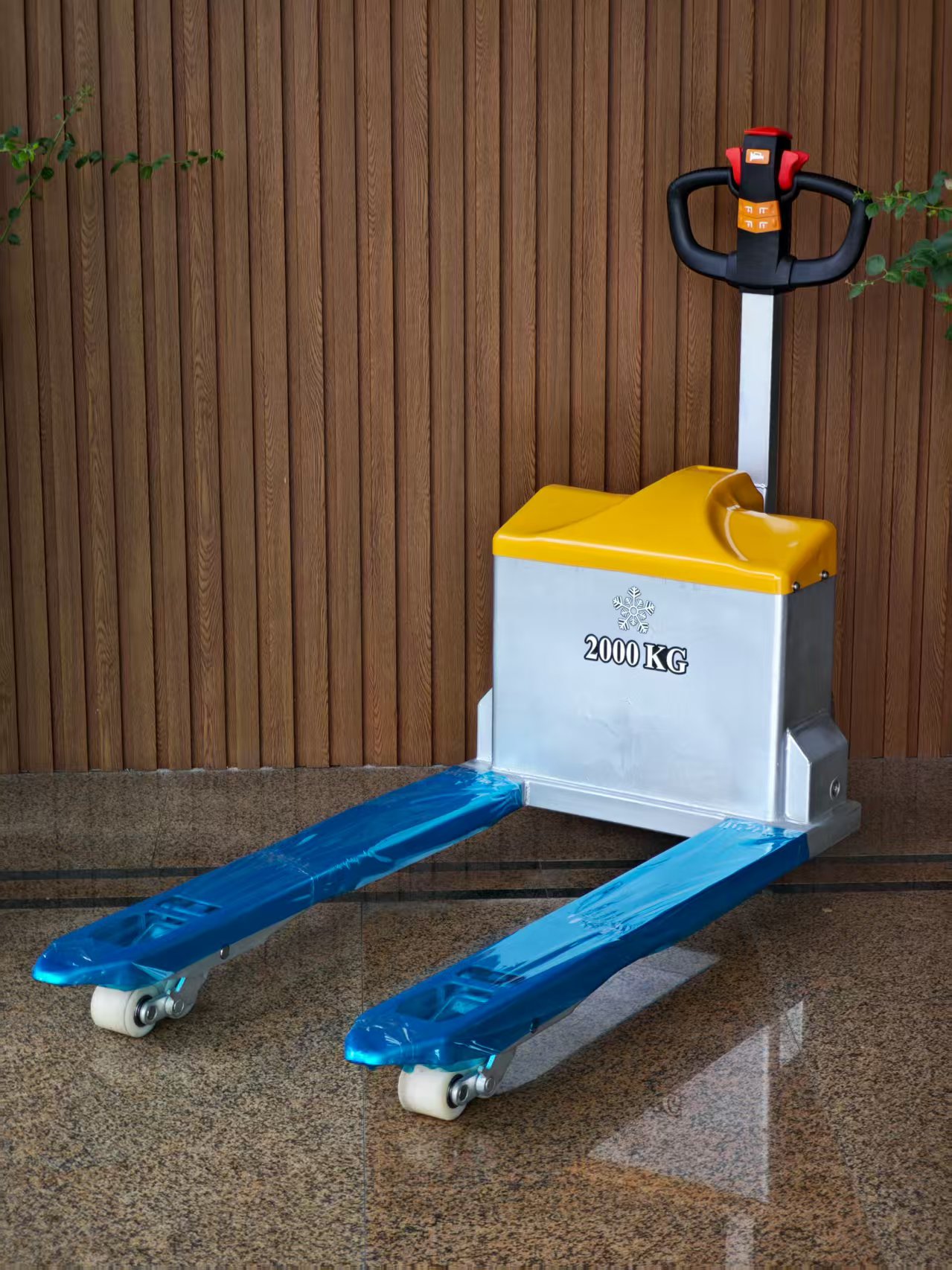
This has pushed manufacturers to develop specialized cold-storage forklifts like the Akuros T20B, built with:
-
Galvanized chassis for corrosion resistance
-
IP67 waterproof tiller
-
Kauçuk kaymaz tahrik tekerlekleri
-
Stainless-steel bearings
-
Twice the battery capacity of standard pallet trucks
As food processing, seafood logistics, and pharmaceutical storage expand, demand for cold-storage-ready equipment will continue to rise.
3. Intelligent Handling: The Shift Toward Automation
Automation is reshaping warehouse operations, and AGVs/AMRs are becoming increasingly common. But before full automation becomes universal, companies need:
-
Highly accurate maneuvering
-
Kararlı yük taşıma
-
High uptime
-
Equipment that can integrate with warehouse management systems (WMS)
Electric forklifts like the Akuros E16 bridge the gap by offering:
-
High-precision load control
-
Smooth acceleration and deceleration
-
Options for fleet management integration
-
Enhanced safety sensors
-
Longer runtime for multi-shift operations
Smart electric forklifts complement automated solutions, enabling hybrid environments where humans, equipment, and robots work seamlessly together.
4. Safety and Ergonomics: Key Priorities for Modern Warehouses
Safety is no longer optional—it’s a measurable KPI in every warehouse. Equipment that reduces operator fatigue and prevents accidents has become a must.
The Akuros E16 is designed with:
-
360° visibility cabin layout
-
Low-effort finger-tip operation
-
Automatic speed reduction when turning
-
Anti-rollback on ramps
-
Stable three-point chassis for tight spaces
The T20B pallet truck improves safety with:
-
Emergency reverse button
-
Long tiller steering for operator distance
-
Excellent stability on slippery cold-storage floors
Better ergonomics mean greater productivity, fewer injuries, and longer operator retention.
5. Sustainability: Electric Equipment as a Strategic Asset
As ESG reporting becomes mandatory in more countries, companies are updating their fleets to minimize emissions and energy waste.
Electric forklifts directly support sustainability goals by:
-
Cutting fuel consumption to zero
-
Reducing noise pollution
-
Lowering CO2 emissions
-
Optimizing energy use with smart battery systems
The Akuros E16’s efficient energy management and the T20B’s extended battery life make them ideal for green warehouse initiatives.
Conclusion: Why Akuros Equipment Fits the Future
Warehousing is entering a new era—one defined by electrification, intelligence, safety, and sustainability.
Whether in standard operations, tight-aisle navigation, or extreme low-temperature environments, equipment like the Akuros E16 ve T20B is engineered to meet the demands of modern logistics.
Akuros forklifts deliver future-ready value through:
-
✔ High energy efficiency
-
✔ Intelligent control systems
-
✔ Low lifetime operating costs
-
✔ Strong cold-storage performance
-
✔ Safety-focused design
-
✔ Environmentally friendly operation
For businesses preparing for the next decade of logistics, upgrading to high-performance electric forklifts is not just an improvement—it’s a strategic advantage.