

 Turkish
  English
  Russian
  French
  Spanish
  German
  Italian
  Portuguese
  Korean
  Japanese
  Arabic
  Indonesian
  Dutch
Dutch 

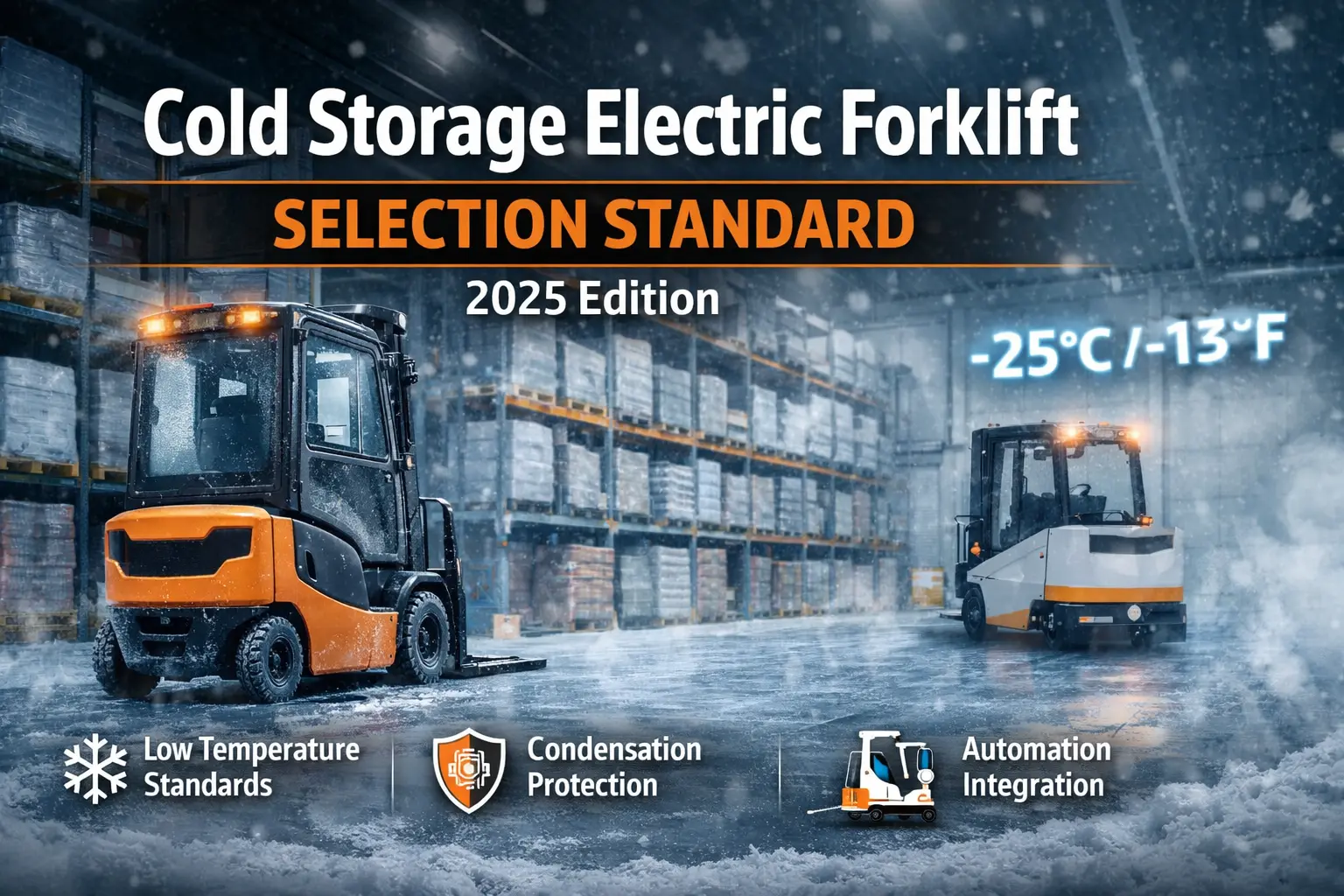
Soğuk hava deposu için elektrikli forklift seçimi, standart depo ekipmanı seçiminden temelde farklıdır. Bu kılavuz, -25°C ila -30°C soğuk odalar için pratik bir seçim standardı tanımlayarak lojistik operatörlerinin, 3PL sağlayıcılarının ve soğuk zincir tesisi sahiplerinin maliyetli arıza sürelerinden, güvenlik risklerinden ve uzun vadeli operasyonel arızalardan kaçınmasına yardımcı olur.
1. Soğuk Hava Deposu Forkliftleri Neden "Normal" Elektrikli Forkliftler Değildir?
Soğuk depolama ortamları aşağıdakilerin bir kombinasyonunu sunar aşırı düşük sıcaklıklar, yoğuşma ve yüksek çalışma yoğunluğu Geleneksel elektrikli forkliftler buna dayanacak şekilde tasarlanmamıştır.
Dondurulmuş depolardaki tipik arıza noktaları şunlardır:
-
20°C'nin altında hızlı akü kapasite kaybı
-
Yoğuşma nedeniyle oluşan elektronik kontrol arızaları
-
Mekanik aşınmaya yol açan yağlayıcı kalınlaşması
-
Buzlu zeminlerde azaltılmış frenleme ve çekiş gücü
Uygulamada, birçok soğuk hava deposu projesi kötü operatörler nedeniyle değil, aşağıdaki nedenlerle başarısız olmaktadır ekipman ortam sıcaklığı mantığı kullanılarak seçilmiştir.
Bu nedenle soğuk zincir projeleri her zaman aşağıdakilerle başlamalıdır entegre depo planlamaizole ekipman alımları değil. İşte bu noktada depo tasarımı ve ekipman seçimine yönelik tek elden yaklaşım kritik hale gelmektedir.
(İç referans: https://www.akuros.com/warehouse-solution/)
2. 25°C Elektrikli Forklift Çalışması için 6 Zorunlu Parametre
Oda sıcaklığında iyi performans gösteren bir elektrikli forklift donmuş ortamlarda güvenilmez veya güvensiz hale gelebilir. Gerçek soğuk hava deposu çalışma koşullarına göre, aşağıdaki parametreler şu şekilde ele alınmalıdır pazarliksiz seçi̇m standartlari.
2.1 Akü Sistemi ve Termal Koruma
-
Soğuğa dayanıklı pil kimyası
-
Yalıtımlı akü bölmeleri
-
25°C'de kararlı deşarj performansı
Uygun akü termal yönetimi olmayan forkliftler sık sık kapanma ve hızlandırılmış bozulma yaşayacaktır.
(Referans: https://www.akuros.com/forklift-battery/)
2.2 Elektronik Kontrol ve Yoğuşma Koruması
-
Sızdırmaz kontrolörler ve kablo tesisatı
-
Sık giriş-çıkış işlemleri için yoğuşma önleyici tasarım
-
IP sınıfı elektronik bileşenler
Nem girişi, soğuk hava deposu forklift operasyonlarında en az önemsenen risklerden biridir.
2.3 Yağlama ve Sızdırmazlık Sistemleri
-
Düşük sıcaklıkta hidrolik yağ
-
Soğuğa dayanıklı contalar ve hortumlar
-
Uzun süreli donmuş vardiyalarda tutarlı performans
2.4 Lastikler ve Yerle Temas Performansı
-
Poliüretan veya soğuğa özel bileşikler
-
Donmuş veya nemli zeminlerde dengeli çekiş gücü
-
Düşük sıcaklıklarda azaltılmış yuvarlanma direnci
(Referans: https://www.akuros.com/polyurethane-tires/)
2.5 Yapısal Bütünlük ve Korozyon Direnci
-
Güçlendirilmiş çelik yapılar
-
Nemli soğuk odalar için korozyon önleyici işlem
2.6 Soğuk Ortamlar için Güvenlik Yedekliliği
-
Geliştirilmiş frenleme tepkisi
-
Operatör görünürlük sistemleri
-
Acil durum kapatma koruması
Bu parametrelerden herhangi biri eksikse forkliftin donmuş depo operasyonları için uygun olmadığı düşünülmelidir.
3. Soğuk Zincir Projelerinden Uzman Görüşleri
Expert Insight #1 - Soğuk Hava Deposu Operasyon Direktörü (Avrupa)
“The biggest mistake we made early on was assuming electric forklifts were ‘all the same.’ Battery performance and electronics stability became our biggest hidden cost.”
Expert Insight #2 — 3PL Cold Chain Manager (Australia)
“Downtime in a frozen warehouse is not linear. One forklift failure often disrupts the entire picking and staging flow.”
Expert Insight #3 — Warehouse Automation Consultant (North America)
“Forklift selection must align with future automation plans. Equipment that cannot integrate with AGV systems becomes obsolete much faster.”
(Expert insights included selectively; not mandatory for every article.)
4. Common Wrong Choices Buyers Make in Cold Storage Projects
Despite growing awareness, several recurring mistakes still appear in cold chain facilities worldwide:
-
Choosing forklifts based on purchase price instead of lifecycle cost
-
Applying ambient warehouse experience to frozen environments
-
Ignoring future automation compatibility
-
Separating forklift procurement from racking and layout planning
High-density storage systems such as double deep or drive-in racking amplify these risks if forklift performance is underestimated.
(Referans:
https://www.akuros.com/double-deep-racking-solutions/
https://www.akuros.com/drive-in-racking-system/)
5. Application Scenario Matrix: Matching Forklifts to Cold Storage Use Cases
Different cold chain operations impose different demands on electric forklifts:
-
Seafood & Frozen Food Processing: High humidity, frequent door cycles
-
Pharmaceutical Cold Storage: Precision handling, safety compliance
-
3PL Cold Chain Warehouses: High throughput, multi-shift operation
-
Automated & Semi-Automated Facilities: Integration with AGVs and WMS
Forklift selection should always be aligned with racking systems, aisle widthve future automation readiness.
(Referans: https://www.akuros.com/automated-solutions/)
6. Why Integrated Planning Matters More Than Forklift Price
In cold storage projects, forklifts are not standalone assets. They are part of a larger system that includes:
-
Warehouse layout and racking design
-
Material flow and picking logic
-
Automation and AGV integration
-
Long-term service and maintenance planning
A one-stop, end-to-end approach significantly reduces operational risk and improves ROI over the full lifecycle of the warehouse.
(Referans: https://www.akuros.com/about/)
7. Final Pre-Purchase Checklist for Cold Storage Forklifts
Before finalizing any electric forklift for frozen environments, decision-makers should confirm:
-
✔ Certified low-temperature operation capability
-
✔ Battery and electronics protected against condensation
-
✔ Compatibility with current and future warehouse systems
-
✔ Proven experience in cold chain applications
-
✔ Long-term service and technical support availability
8. Related Google Popular Topics (Contextual Answers)
1. What temperature can electric forklifts operate at?
High-quality cold storage electric forklifts can operate reliably at -25°C to -30°C with proper battery and electronic protection.
2. Are electric forklifts better than diesel forklifts for cold storage?
Yes. Electric forklifts offer zero emissions, lower noise, and better indoor safety, especially in enclosed frozen environments.
3. How long do forklift batteries last in cold storage?
Battery lifespan depends on chemistry, insulation, and charging strategy. Poorly protected batteries degrade significantly faster.
4. Do cold storage forklifts require special maintenance?
Yes. Lubrication, seals, and electronics require cold-specific inspection routines.
5. Can electric forklifts be integrated with AGV systems?
Many modern electric forklifts can be integrated into semi-automated or hybrid AGV systems if planned correctly.
6. What forklifts work best with double deep racking in cold storage?
Reach trucks and cold-adapted counterbalanced forklifts are commonly used, depending on aisle width and load height.
9. Structured FAQ (For Direct Embedding)
Q1: Can standard electric forklifts be used in cold storage?
A: Standard forklifts are not designed for condensation and low-temperature stress, leading to frequent failures in cold rooms.
Q2: What is the biggest risk when choosing forklifts for frozen warehouses?
A: Underestimating battery performance and electronic protection requirements.
Q3: Is it better to plan forklifts separately from racking systems?
A: No. Forklift selection must align with racking layout, aisle width, and future automation plans.
Q4: Are AGVs suitable for all cold storage warehouses?
A: Not all. AGV adoption depends on throughput, layout stability, and ROI thresholds.
Q5: What is the advantage of a one-stop warehouse solution?
A: Reduced integration risk, optimized performance, and better long-term cost control.