

 Turkish
  English
  Russian
  French
  Spanish
  German
  Italian
  Portuguese
  Korean
  Japanese
  Arabic
  Indonesian
  Dutch
Dutch 

Cold storage warehouses are capital-intensive by nature, leaving little margin for design mistakes. This article outlines the most common cold storage design errors that lead to multi-million-dollar losses, explaining why they occur, how they impact long-term operations, and how to avoid them through system-level planning.
1. Why Design Mistakes Are So Costly in Cold Storage Projects
Cold storage warehouses differ fundamentally from ambient facilities. Every cubic meter is expensive to build, cool, and maintain. Once construction and commissioning are complete, layout changes become exponentially more costly than during the planning phase.
Unlike operational inefficiencies that can be corrected over time, design mistakes in cold storage are structural. They lock in higher energy consumption, limit throughput, and constrain automation options for the life of the facility.
This is why cold storage projects must be planned as part of an end-to-end depo çözümü, rather than a sequence of isolated design decisions.
 2. Costly Cold Storage Design Mistakes — Overview Table
Before diving into individual cases, the table below summarizes the most common design mistakes observed in cold storage warehouses and their long-term financial impact.
📊 Cold Storage Design Mistakes & Cost Impact
| Design Mistake | Long-Term Impact | Typical Cost Consequence | Root Cause |
|---|---|---|---|
| Over-prioritizing pallet count | Reduced throughput, congestion | Lost revenue, higher labor cost | Density-first thinking |
| Ignoring forklift–racking matching | Safety incidents, downtime | Repairs, insurance, delays | Siloed equipment planning |
| Underestimating automation readiness | Costly retrofits | Rebuild CAPEX | Short-term cost focus |
| Poor aisle and traffic design | Bottlenecks, collisions | Productivity loss | Lack of flow modeling |
| Inadequate battery & charging design | Frequent downtime | Energy & replacement costs | Ambient-warehouse assumptions |
These mistakes rarely appear immediately. Their financial impact compounds over years of operation.
3. Mistake #1: Designing for Maximum Pallet Count Only
One of the most common mistakes in cold storage design is maximizing pallet positions without considering flow efficiency. While high-density layouts appear attractive on paper, they often restrict forklift movement and reduce real throughput.
Facilities that overuse drive-in racking systems without accounting for SKU turnover frequently experience congestion during peak periods. The result is a warehouse that looks efficient in drawings but underperforms in reality.
4. Mistake #2: Separating Forklift Selection from Racking Design
Forklifts and racking systems are often procured separately, sometimes even by different teams. In cold storage environments, this separation is especially costly.
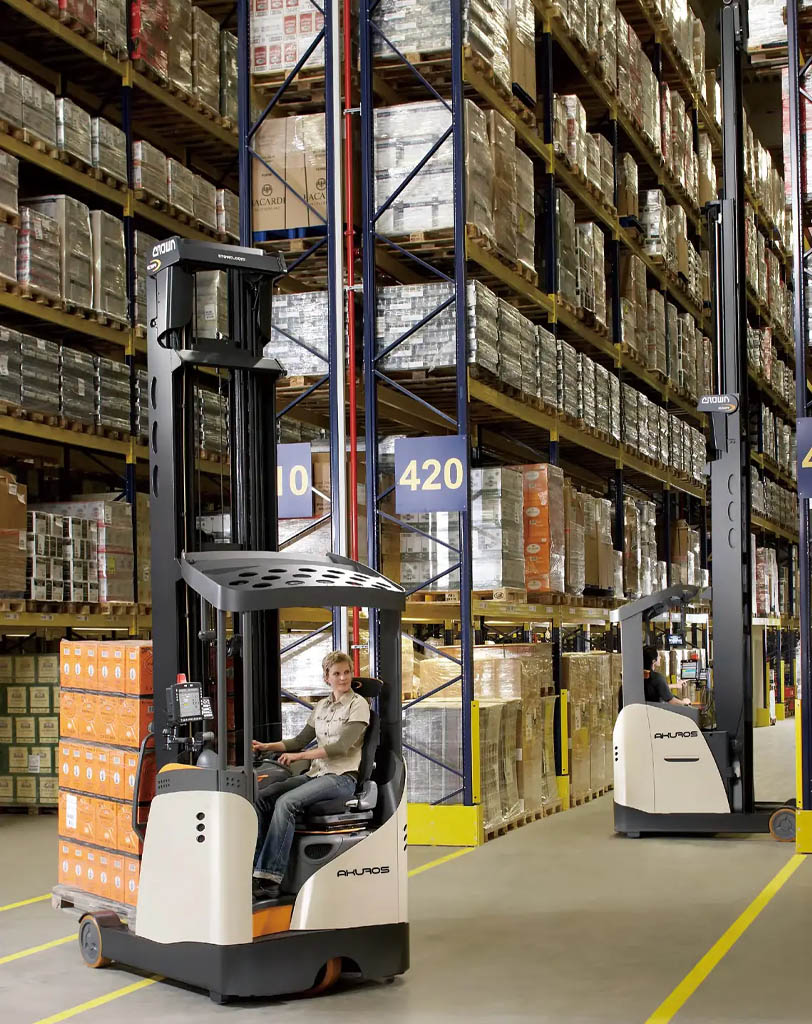
Layouts built around double deep racking systems veya very narrow aisle racking systems require forklifts with precise maneuverability and stability. When forklift selection lags behind layout design, warehouses suffer from reduced pick rates, increased rack damage, and safety incidents.
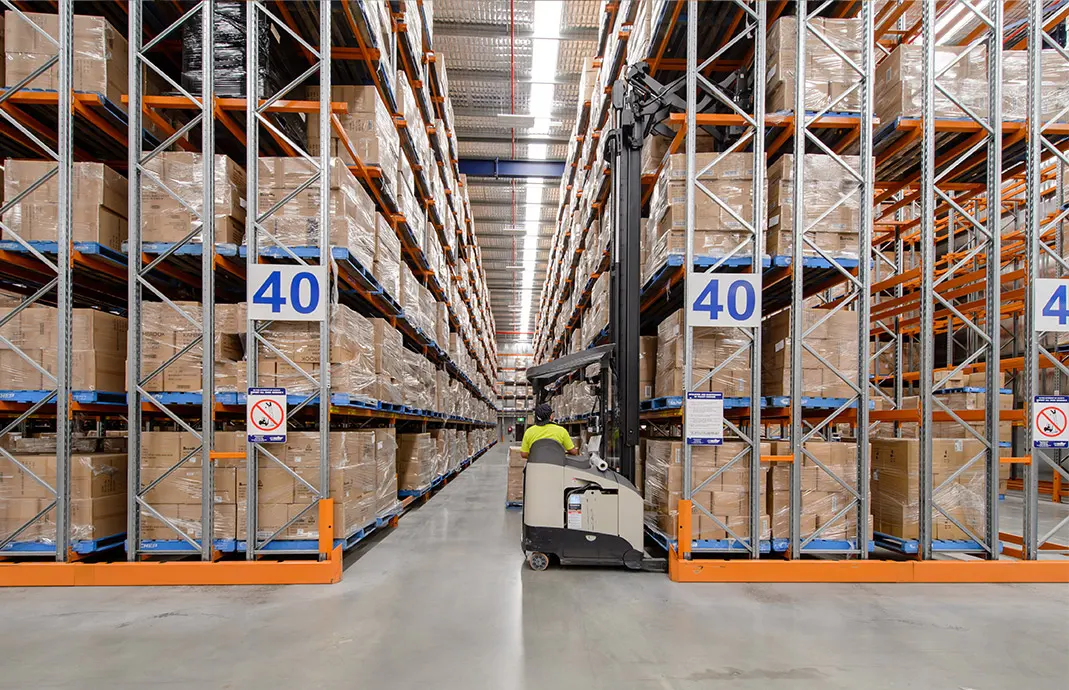
Çift Derin Raf
5. Mistake #3: Ignoring Future Automation During Initial Design
Automation retrofits are far more expensive than automation-ready designs. Many cold storage warehouses delay automation planning to reduce upfront cost, only to discover later that aisle geometry, floor flatness, or equipment compatibility prevent efficient upgrades.
Warehouses that integrate automated warehouse solutions from the outset—even if automation is phased—preserve flexibility and avoid major reconstruction.
6. Mistake #4: Poor Traffic Flow and Door-Zone Planning
Traffic flow errors are often invisible until operations begin. In cold storage warehouses, poorly designed door zones and crossing paths create bottlenecks that disrupt both inbound and outbound flows.
When pallet trucks, forklifts, and AGVs intersect without clear separation, delays and safety risks multiply. These issues are particularly costly in frozen environments where downtime directly impacts temperature control.
7. Mistake #5: Treating Energy and Battery Systems as Secondary
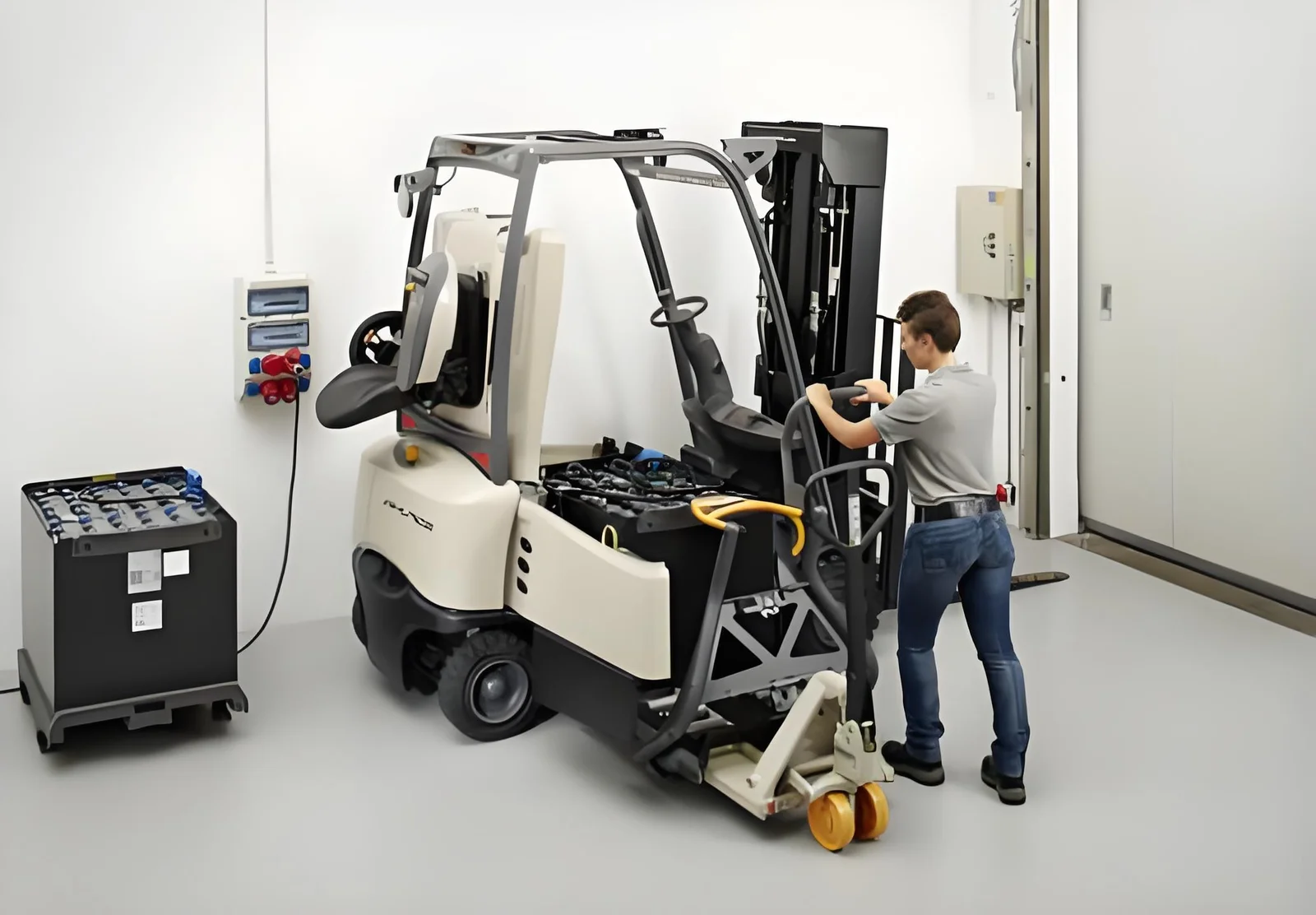
Energy systems are frequently treated as utilities rather than core operational assets. In cold storage, battery rooms, charging schedules, and ventilation design directly affect forklift availability.
Facilities that underestimate the importance of cold-rated forklift battery systems often experience shortened shifts and unplanned downtime—costs that compound quietly over time.
 8. Why These Mistakes Keep Repeating
These design errors persist because cold storage projects are often rushed and fragmented:
-
Architects focus on structure
-
Equipment suppliers focus on their own scope
-
Automation is deferred
Without a system integrator mindset, no one owns the full operational outcome.
9. How to Avoid Million-Dollar Cold Storage Design Errors
Avoiding these mistakes requires a shift from component-level optimization to system-level planning:
-
Align racking, forklifts, and traffic flow early
-
Evaluate automation readiness from day one
-
Plan energy and battery systems as operational assets
-
Design with lifecycle cost in mind
Projects planned within an integrated warehouse solution framework consistently outperform those built on isolated decisions.
10. Google Popular Topics (Contextual Answers)
Why are cold storage design mistakes so expensive?
Because cold rooms are costly to modify after construction and mistakes affect energy, throughput, and safety.
Is maximizing pallet count always the right goal?
No. Throughput and flow efficiency often matter more than raw storage density.
Can automation be added later to any cold storage warehouse?
Not easily. Layout and equipment choices often limit automation feasibility.
What is the biggest hidden cost in cold storage design?
Lost throughput due to congestion and downtime.
Who should lead cold storage system design?
A team or partner capable of system-level integration across layout, equipment, and automation.</p