

 English
  Russian
  French
  Spanish
  German
  Italian
  Portuguese
  Korean
  Japanese
  Arabic
  Turkish
  Indonesian
  Dutch
Dutch 

When the Warehouse Feels Full Before the Building Is
“Why are we running out of warehouse space again when the building is the same size?”
The operations director stood in front of the racking layout, staring at a familiar problem. Inventory had grown. SKU counts had multiplied. Forklift travel paths were getting tighter. Labor pressure was rising. And the automation budget had already been discussed three times this quarter.
The warehouse manager gave the answer that more companies are now arriving at: “We do not only need more racks. We need the aisles to work harder.”
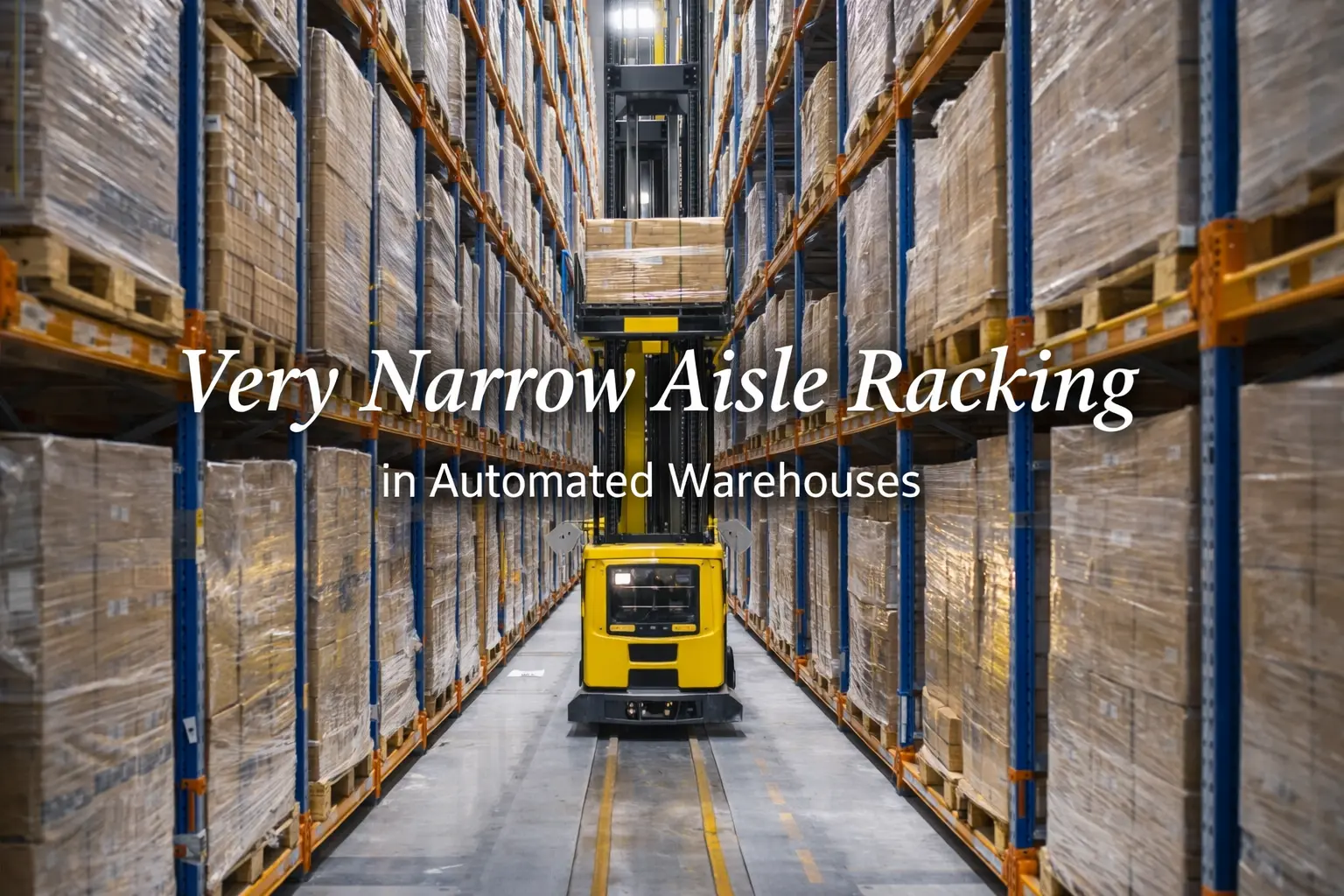
That is the real turning point in warehouse design. Many facilities do not fail because they lack square meters on paper. They fail because too much of that footprint is being consumed by movement, turning clearance, and inefficient storage logic. In automated or semi-automated operations, this becomes even more important. Every meter allocated to an aisle is a meter not generating storage density. Every inefficient route adds labor, travel time, and complexity. That is exactly where Very Narrow Aisle Racking becomes strategically valuable. It is not just a way to “fit more pallets.” It is a warehouse design choice that can improve storage density, support automation, and make capacity expansion more realistic without immediately expanding the building shell. VNA racking is widely recognized as a high-density storage approach for companies trying to maximize available space, and it can also be automated with stacker cranes or AS/RS-style equipment for more continuous, error-resistant operation.
Very Narrow Aisle Racking In Automated Warehouses
Why Very Narrow Aisle Racking Matters More in Automated Warehouses
Traditional pallet racking leaves wider aisles to accommodate standard lift-truck maneuvering. That works, but it comes with a cost: lower storage density. In a conventional warehouse, this may be acceptable if throughput is low or space is plentiful. In an automated warehouse, or in a facility moving toward automation, that trade-off becomes harder to justify.
Very narrow aisle systems reduce aisle width so that more of the building footprint can be dedicated to storage positions instead of travel lanes. The narrower layout typically requires specialized equipment or automated handling solutions, but that is precisely why VNA fits so well with modern warehouse strategies. Automated systems, stacker cranes, and narrow-aisle material-handling equipment are all designed to operate efficiently where human-operated standard forklifts would struggle. Industry guidance on warehouse space optimization specifically notes that reducing aisle width directly affects handling methods and often pushes companies toward adapted equipment or automation to use space safely and effectively.
This broader logic is reflected in Akuros About, where the brand positions itself around integrated racking and intralogistics solutions rather than simple shelving supply. That distinction matters. Automated warehousing is not just about buying hardware. It is about designing a system in which storage density, access method, equipment compatibility, and long-term scalability all support one another.
The First Big Advantage: Higher Storage Density Without Building Expansion
The most obvious advantage of VNA racking is also the one that gets underestimated. Narrower aisles mean more racking positions in the same footprint. That sounds simple, but the financial impact can be significant.
For many companies, warehouse expansion is expensive, disruptive, and slow. Additional land, new permits, building work, higher utilities, and more travel distance inside a larger site all add cost. VNA racking offers a different route: use the same building cube more intelligently.
This is exactly why A Complete Guide to Very Narrow Aisle Racking for Warehouse Optimization is such a strong content angle. The real question is not merely whether VNA stores more pallets. It is whether the warehouse can convert underperforming aisle space into productive storage capacity. In many cases, that is the most direct and capital-efficient way to improve warehouse economics. Public warehouse-optimization guidance consistently frames VNA as a space-maximizing solution for facilities under pressure to increase capacity without increasing footprint.
The Second Big Advantage: Better Fit for Automation and AS/RS Logic
VNA racking becomes even more compelling when automation enters the conversation. Automated warehouses depend on repeatable travel paths, consistent rack geometry, accurate load handling, and predictable movement. Very narrow aisle designs align naturally with those requirements.
Why? Because automated systems are good at precision. They do not need the same turning radius assumptions as conventional counterbalance forklifts. They perform well in defined, engineered travel corridors. That makes VNA a logical storage format for automated pallet handling, trilateral solutions, and stacker-crane-based systems. Mecalux notes that VNA systems can be automated by incorporating trilateral stacker cranes, while stacker cranes themselves are designed to store and retrieve pallets automatically with agile, precise movement across warehouse height and length.
This also explains why How Very Narrow Aisle Racking Systems Revolutionize One-Stop Warehouse Solutions is more than a marketing phrase. In a properly designed automated warehouse, the racking system is not a background fixture. It is part of the logic of the automation itself. If the racking, aisle design, and handling equipment are aligned, the warehouse can deliver stronger capacity utilization, more accurate pallet movement, and smoother system integration.
The Third Big Advantage: Stronger Space Utilization in High-Cost Warehousing Markets
Not all warehouse square meters are equal. In some regions, industrial space is cheap enough that inefficiency hides quietly in the background. In others, land and building costs make wasted aisle width painfully visible.
That is why VNA racking is especially attractive in:
-
urban or near-port distribution centers
-
facilities with high land costs
-
operations facing rapid SKU growth
-
warehouses where relocation is impractical
-
buildings with enough clear height to justify denser vertical storage
In these cases, VNA supports a more disciplined use of cubic space rather than simply floor space. High-density layouts often work best when vertical capacity is also being used intelligently. An automated or semi-automated warehouse can then convert height and reduced aisle width into a more powerful overall storage model.
The trend toward higher warehouse automation is also linked to pressure around labor, digitization, and end-to-end supply chain performance. MHI and Deloitte’s 2025 supply chain report highlights continued focus on digital supply chain orchestration and innovation across logistics operations, while MHI industry-group materials point to labor shortages and the need for space optimization as ongoing drivers of automation demand.
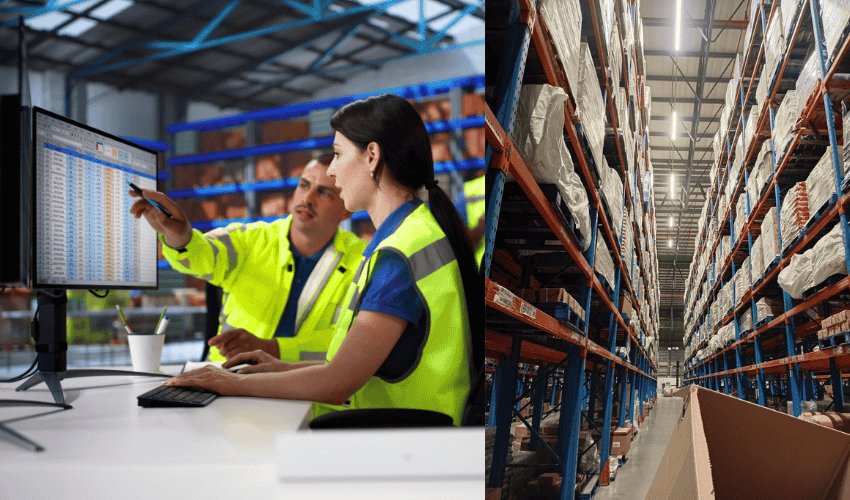
Analyze solutions for very narrow aisle racks
The Fourth Big Advantage: More Structured Warehouse Flows
A warehouse with standard wide aisles can be flexible, but flexibility is not always the same as control. In many facilities, wider aisles encourage more ad hoc movement, more travel variance, and less disciplined route planning. In automated environments, that becomes a problem.
Very narrow aisle layouts force a more intentional warehouse structure. Pallets are stored, accessed, and moved within tighter logic. That can improve process design in several ways:
-
clearer traffic routing
-
better zoning of storage areas
-
more predictable handling patterns
-
stronger support for digital inventory mapping
-
easier integration with standardized automation workflows
This is not to say VNA automatically fixes poor management. It does not. But it does encourage a more engineered warehouse structure, which is exactly what automated operations need. Companies that automate warehouses often report gains not just in efficiency, but also in traceability and service consistency. For example, automated warehouse case studies highlight results such as higher on-time performance and real-time pallet traceability when storage and movement are systematized properly.
The Fifth Big Advantage: Lower Long-Term Pressure from Labor Constraints
One of the less obvious benefits of VNA in automated warehouses is how it helps respond to labor pressure. On its own, VNA does not eliminate labor. But when it is paired with adapted equipment or automation, it supports more productive use of available labor and can reduce the operational chaos that often comes with congested warehouses.
This matters because the industry is still dealing with labor shortages and rising expectations around throughput accuracy. MHI materials explicitly connect space optimization and labor pressure with stronger interest in warehouse automation. That means VNA is not merely a storage choice. It is often part of a wider strategy to reduce dependence on inefficient manual movement and to make each operator, truck, or automated asset more productive.
From a buyer’s point of view, that is important. The warehouse decision is no longer just “How many pallet positions can I add?” It is increasingly “How can I make this facility perform better with fewer wasted movements and tighter operational control?”
But VNA Is Not Magic: Safety and Equipment Fit Still Matter
This is where smart buyers stop reading glossy claims and start asking serious questions.
Very narrow aisle racking works best when the warehouse also respects the realities of narrow-aisle operation. OSHA’s forklift guidance stresses caution in confined areas and narrow aisles, noting the risks related to turning, rear-end swing, and route planning. OSHA also requires permanent aisles and passageways to be kept clear and appropriately marked where mechanical handling equipment is used. In other words, the narrower the aisle, the more important good design, visibility, traffic control, and equipment suitability become.
That means VNA projects should always evaluate:
-
handling equipment compatibility
-
turning and approach behavior
-
pedestrian separation and guarding
-
rack protection strategy
-
floor quality and tolerances
-
automation system precision requirements
So yes, VNA can dramatically improve density. But done badly, it can also create operational friction. The real advantage comes from matching the racking system with the right trucks, automation logic, and safety planning.
A Practical Scenario: Why Many Automated Warehouse Projects End Up Choosing VNA
Imagine a fast-growing distribution center with limited building expansion options. SKU counts rise. Buffer storage requirements increase. Outbound pressure grows. The facility wants more capacity, but conventional aisles already occupy too much of the floor plan.
At first, the team considers adding mezzanines, leasing overflow space, or redesigning slotting alone. Those may help, but they do not solve the core problem: the warehouse is still spending too much footprint on movement rather than storage.
Now imagine the same facility redesigned around VNA principles and partial automation. Specialized narrow-aisle handling or automated pallet movement allows aisles to shrink. Rack density increases. Storage capacity rises within the same shell. Travel paths become more structured. Inventory control becomes easier to model digitally. Suddenly, the building starts behaving like a more advanced asset rather than a crowded compromise.
That is why VNA is increasingly discussed not as a niche storage style, but as a mainstream answer for space-constrained warehouses seeking automation-compatible layouts. Public industry sources repeatedly describe VNA as a recommended solution for companies trying to maximize capacity in limited space, especially where continuous, precise operations matter.
Why Akuros Fits the VNA Conversation Well
Akuros’s positioning makes sense here because VNA is rarely a single-product decision. It usually sits inside a larger warehouse strategy that involves rack design, truck compatibility, safety accessories, and sometimes automation planning.
That broader thinking is one reason Very Narrow Aisle Racking works as more than a category page. It is part of a warehouse-optimization discussion that increasingly combines density, automation, safety, and long-term adaptability. Buyers evaluating VNA are not simply buying upright frames and beams. They are deciding how the warehouse should function for the next several years.
And when a team reaches the stage where layout, load type, pallet dimensions, and future automation plans need to be aligned, the smartest next step is usually to Contact Us. That is where racking theory turns into a real project.
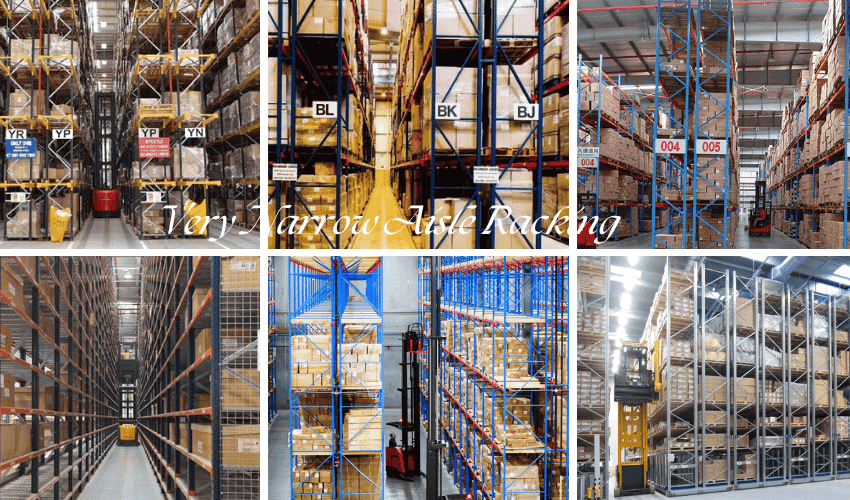
Very Narrow Aisle Racking
What Buyers Should Check Before Choosing VNA for an Automated Warehouse
Before moving forward, procurement teams should ask several practical questions.
Is the warehouse truly space-constrained?
VNA creates the greatest value where every square meter matters. If space pressure is mild, the business case may be weaker.
Is the operation ready for specialized equipment or automation?
Narrower aisles demand tighter compatibility between racking and handling systems. This is not a “buy racks first, think later” category.
Is the safety plan robust enough?
OSHA’s narrow-aisle and pedestrian guidance makes clear that confined movement demands caution, clear aisles, route control, and separation measures where needed.
Will future throughput justify the density gain?
If the warehouse expects continued growth, VNA can be a proactive decision rather than a reactive fix.
Can the supplier think beyond the rack itself?
This is where systems-oriented suppliers matter more than simple product vendors.
FAQ
1. What is Very Narrow Aisle Racking?
Very Narrow Aisle Racking is a high-density pallet storage system designed with reduced aisle widths so that more of the warehouse footprint can be dedicated to storage positions instead of travel lanes. It is often paired with specialized handling equipment or automation-compatible solutions.
2. Why is Very Narrow Aisle Racking good for automated warehouses?
It is a strong fit because automated and precision-guided systems can operate effectively in narrower, more controlled aisles than standard forklifts typically require. This allows the warehouse to improve storage density while supporting consistent, repeatable pallet movement.
3. Does VNA racking improve warehouse space utilization?
Yes. One of its main advantages is converting aisle space into storage capacity, which can raise pallet density without requiring building expansion. That is why it is commonly recommended for warehouse optimization where space is limited.
4. Is Very Narrow Aisle Racking safe?
It can be, but safety depends on correct design, the right equipment, clear aisle marking, operator discipline, and suitable traffic management. OSHA guidance emphasizes caution in narrow aisles and proper control of permanent passageways and pedestrian interaction.
5. How do I know if my warehouse should use VNA racking?
VNA is usually worth considering when the warehouse faces space pressure, rising inventory density, high building costs, or a move toward automation. It is especially relevant when the operation can support the specialized equipment or automated logic needed to make narrow aisles efficient and safe.
Where Warehouse Capacity Starts with Better Aisle Strategy
Back to the original warehouse question: why does the building feel too small when the walls have not moved?
Because in many warehouses, the real capacity problem is not the building. It is the aisle strategy.
That is the real advantage behind Very Narrow Aisle Racking in automated warehouses. It increases storage density, fits naturally with precision handling and automation logic, supports more disciplined warehouse flow, and helps companies respond to rising space pressure without treating expansion as the only answer. Done well, it is not just a racking upgrade. It is a smarter use of the warehouse itself.
For operations teams, developers, and warehouse buyers, that matters. It means capacity growth can come not only from bigger buildings, but from better design decisions. And in a market where space, labor, and throughput pressure keep colliding, that is exactly why VNA continues to gain ground as a serious solution rather than a niche option.