

 English
  Russian
  French
  Spanish
  German
  Italian
  Portuguese
  Korean
  Japanese
  Arabic
  Turkish
  Indonesian
  Dutch
Dutch 

From Design to Equipment and Automation
Cold storage projects succeed or fail based on system-level decisions made early in the design phase. This article explains what a true one-stop cold storage warehouse solution looks like—covering layout design, racking systems, forklifts, automation, and lifecycle planning—to help operators reduce risk, control cost, and future-proof their investments.
1. Why “One-Stop Solution” Matters in Cold Storage Projects
Cold storage warehouses are among the most capital-intensive logistics assets. Once built and commissioned, layout errors, equipment mismatches, and automation limitations are extremely costly to correct.
Many projects fail not because of poor equipment quality, but because design, equipment, and automation decisions are made in isolation. Architects focus on structure, equipment suppliers focus on individual products, and automation is often postponed.
A true one-stop cold storage warehouse solution integrates all these elements from the outset, ensuring that every decision supports long-term operational performance.
 2. One-Stop Cold Storage Solution — System Overview Table
Before exploring each element in detail, the table below summarizes the core components of a one-stop cold storage solution and how they interact.
📊 One-Stop Cold Storage Warehouse Solution Framework
| System Layer | Core Elements | Primary Objective | Key Risk if Isolated |
|---|---|---|---|
| Layout Design | Aisle width, traffic flow, door zones | Throughput & safety | Structural bottlenecks |
| Racking Systems | High-density and selective storage | Space utilization | Inflexible operations |
| Forklifts | Electric forklifts, reach trucks | Reliable handling | Downtime & accidents |
| Automation | AGVs, hybrid automation | Labor & consistency | Costly retrofits |
| Energy Systems | Batteries, charging rooms | Shift continuity | Reduced availability |
| Lifecycle Planning | Maintenance, expansion | Long-term ROI | Hidden operating cost |
A one-stop solution aligns all layers into a single operational system rather than treating them as separate purchases.
3. Layout Design: The Foundation of Every Cold Storage Warehouse
Layout design determines how efficiently space, labor, and equipment interact. In cold storage environments, aisle width, turning radius, and door-zone planning are far more restrictive than in ambient warehouses.
Designing layout without considering forklift maneuverability or future automation often locks warehouses into permanent inefficiencies. This is why layout planning must be aligned early with equipment and automation strategy as part of a warehouse solution.
4. Racking Systems: Balancing Density, Flow, and Flexibility
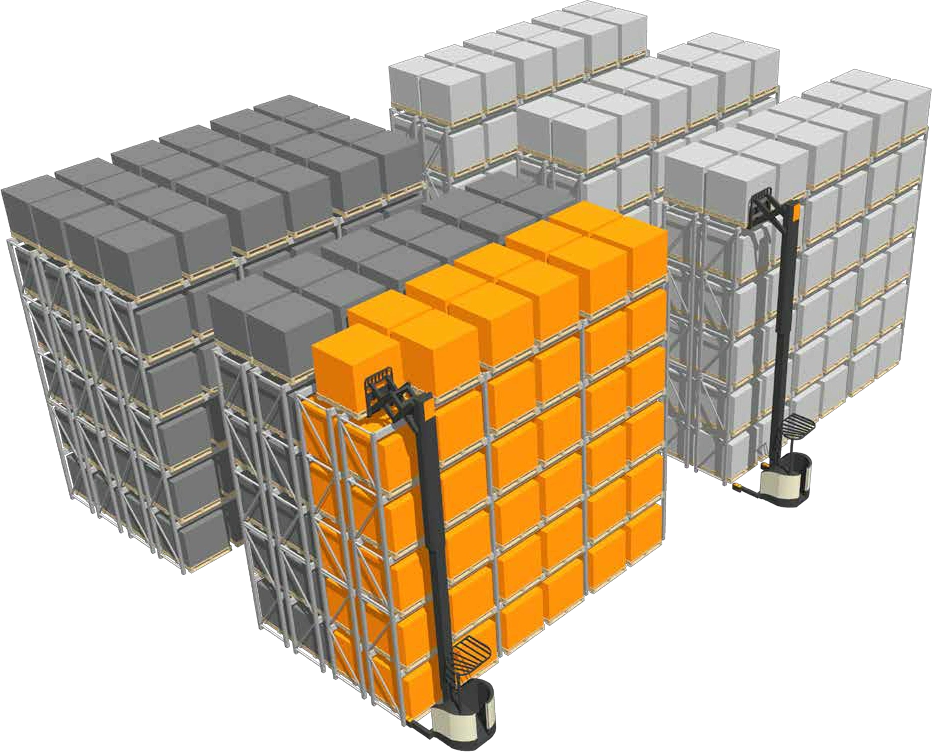
Racking systems define both storage capacity and material flow. Cold storage facilities commonly deploy double deep racking systems for balanced density, drive-in racking systems for homogeneous bulk storage, or very narrow aisle racking systems for high selectivity and automation readiness.
A one-stop solution evaluates racking not only by pallet count, but by how it interacts with forklifts, traffic flow, and long-term expansion plans.
 5. Forklifts: Reliability Over Specification
Forklifts are the most active assets in cold storage warehouses and the most frequent source of operational disruption. Equipment designed for ambient environments often fails under sustained low temperatures due to battery degradation, condensation-related electronics issues, and reduced traction.
A one-stop solution prioritizes electric forklifts engineered for cold storage, ensuring compatibility with racking geometry, aisle width, and frozen-floor conditions.
6. Automation: When and How to Integrate It
Automation delivers the strongest ROI in cold storage environments with stable, repetitive workflows and rising labor constraints. However, automation should complement—not replace—manual flexibility.
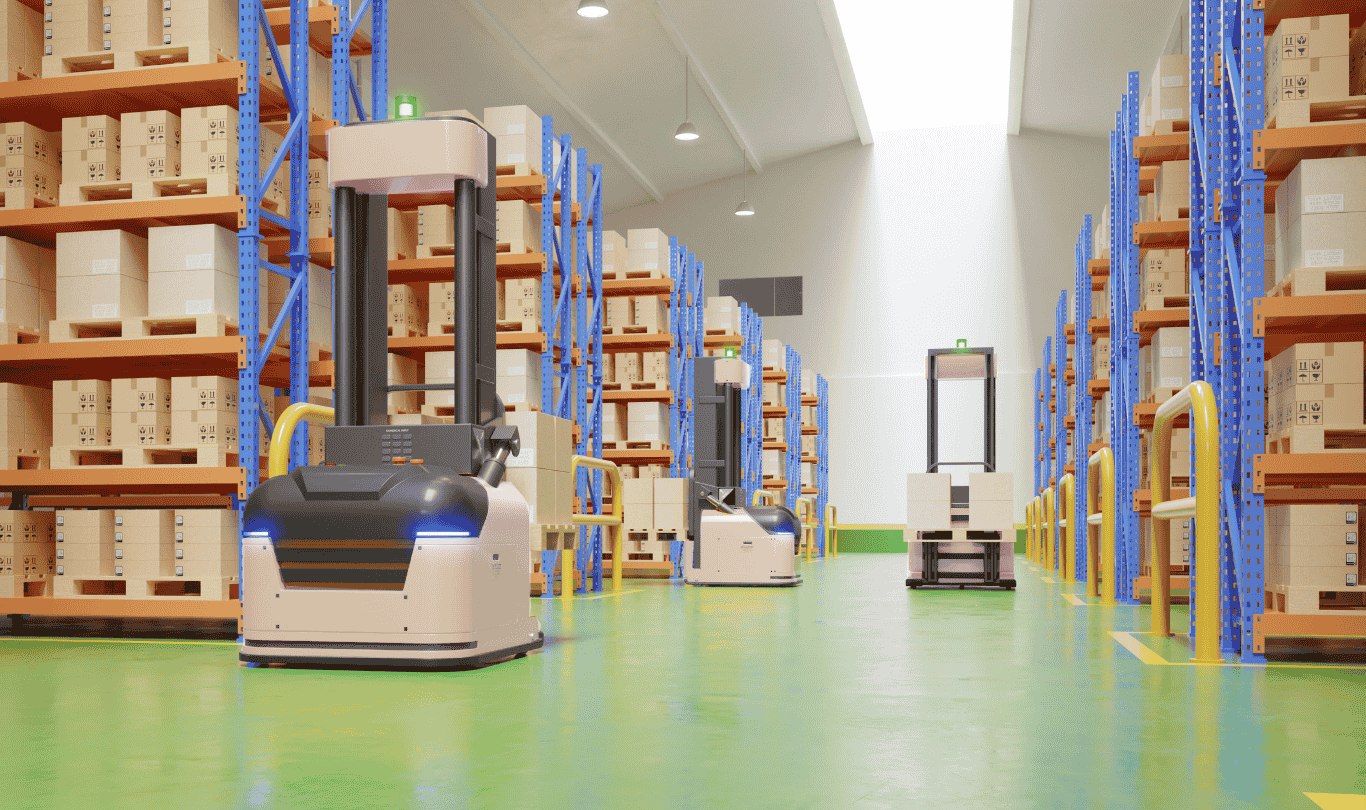
Integrating AGV systems within broader automated warehouse solutions allows operators to automate repetitive transport while preserving flexibility for exception handling. One-stop planning ensures automation readiness even if implementation is phased.
7. Energy Systems and Supporting Equipment
Energy systems are often treated as secondary utilities, yet they directly determine forklift availability. Cold-rated forklift battery systems ensure stable discharge in -25°C environments, while polyurethane tire solutions provide essential traction and braking stability on frozen floors.
A one-stop approach treats these components as operational assets rather than accessories.
8. Lifecycle Planning: The Hidden Value of Integration
The true value of a one-stop solution appears over time. Integrated planning reduces:
-
Downtime caused by mismatched equipment
-
Maintenance cost driven by unsuitable specifications
-
Retrofit expenses when automation is introduced later
Lifecycle-focused planning consistently delivers lower total cost of ownership than piecemeal procurement.
9. Who Benefits Most from a One-Stop Cold Storage Solution
A one-stop approach is particularly valuable for:
-
Cold chain logistics operators
-
Food and pharmaceutical manufacturers
-
Third-party logistics providers
-
Investors and developers building long-term assets
These stakeholders benefit from reduced project risk, faster commissioning, and predictable operational performance.
10. Google Popular Topics (Contextual Answers)
What is a one-stop cold storage warehouse solution?
An integrated approach covering layout design, racking, forklifts, automation, and lifecycle planning.
Is a one-stop solution more expensive upfront?
Not necessarily. It often reduces total cost by preventing rework and inefficiencies.
Can automation be phased in later?
Yes, if the warehouse is designed with automation readiness from the beginning.
Why is forklift selection critical in cold storage?
Because low temperatures amplify battery, electronics, and traction risks.
Who should lead one-stop cold storage planning?
A partner capable of system-level integration across design, equipment, and automation.