

 English
  Russian
  French
  Spanish
  German
  Italian
  Portuguese
  Korean
  Japanese
  Arabic
  Turkish
  Indonesian
  Dutch
Dutch 

Choosing the right battery powered pallet truck depends on how your warehouse actually moves pallets every day. Travel distance, shift frequency, dock intensity, operator workflow, and battery preference all matter when selecting the best electric pallet truck for internal transfer and loading support.
In many warehouses, the most repeated material handling task is not high stacking or long-distance transport. It is simple ground-level pallet movement between receiving, staging, storage, packing, and loading areas. Because this work happens so often, the equipment used for it has a direct impact on labor efficiency, workflow rhythm, and daily operating cost. That is why choosing the right battery powered pallet truck is more important than many buyers first assume.
At first glance, most electric pallet trucks may look similar. They all move pallets horizontally, they all serve daily internal logistics, and they all appear to solve the same transfer problem. But once the truck enters real use, the differences become more obvious. Some models are better for short-distance warehouse transfer. Some are more suitable for busy loading docks. Some are designed for compact maneuvering in narrow staging lanes. Others are chosen mainly because the battery system better matches the shift schedule.
For buyers planning equipment for a warehouse, distribution center, manufacturing facility, or refrigerated logistics operation, the right question is not simply “Which pallet truck is available?” The better question is “Which electric pallet truck best fits our actual movement pattern?”
What a Battery Powered Pallet Truck Is Designed to Do
A battery powered pallet truck is designed for ground-level pallet transport where lifting height is minimal but movement frequency is high. Unlike forklifts, which are used for stacking and elevated handling, pallet trucks focus on transporting pallet loads efficiently over short to medium distances.
This makes them especially suitable for:
- warehouse transfer between work zones
- loading and unloading support
- internal logistics in manufacturing plants
- distribution center replenishment
- dock-side pallet handling
- short-haul movement in cold storage and refrigerated areas
Because the equipment is used so frequently, even small differences in maneuverability, battery endurance, operator comfort, or control quality can have a meaningful effect on daily productivity.
Why Selection Should Be Based on Workflow, Not Just Specification
One common buying mistake is to focus only on headline specifications such as maximum load capacity or battery type. Those details are important, but they do not tell the full story. A truck that looks technically strong on paper may still be the wrong choice if it does not match the actual transfer pattern of the warehouse.
For example, a truck used for frequent dock-side movement may need different priorities than a truck used mainly for internal production transfer. A pallet truck working in a chilled warehouse may require different battery logic than one working in a normal ambient facility. A truck used across multiple shifts may need a different charging strategy than one used only for occasional movement.
The best warehouse transfer pallet truck is the one that fits the real work cycle, not just the catalog description.
Key Factors to Review Before Choosing
1. Daily Travel Distance
The first question is how far the truck actually travels each day. Some pallet trucks are used for very short transfer loops between adjacent staging lanes. Others are used repeatedly across larger warehouse zones. The more distance the truck covers, the more important drive efficiency, battery endurance, and operator comfort become.
If the travel pattern is repetitive and continuous, a higher-quality electric pallet jack often creates a better long-term result than a minimal-entry model.
2. Frequency of Starts and Stops
Warehouse transfer work is rarely smooth, uninterrupted travel. In most operations, the truck stops, turns, starts again, waits, repositions, and repeats the process throughout the shift. A pallet truck used in this kind of environment should have predictable control response and smooth acceleration.
This is especially important in loading docks, transfer lanes, and mixed-use warehouse traffic areas where precision matters just as much as movement speed.
3. Shift Pattern and Utilization Rate
Not all warehouses use pallet trucks the same way. Some operate on a single shift with occasional transfer demand. Others rely on the truck almost continuously across two or three shifts. This changes what kind of battery configuration makes sense.
A truck that is lightly used may work well with a simpler charging schedule. A truck used all day in a busy logistics center needs a more deliberate battery and charging plan. That is why utilization rate should always be part of the buying decision.
4. Loading Dock Intensity
Dock operations create concentrated transfer pressure. Pallets may need to be moved quickly between receiving, inspection, staging, and outbound lanes. If the dock is busy, a manual pallet jack often becomes too slow and physically demanding. In that case, a battery powered pallet truck usually provides a much better balance between speed and labor efficiency.
When evaluating a truck for dock work, buyers should think about turning space, operator frequency, and how often the truck must move under time pressure.
5. Operator Workflow and Ease of Use
If multiple people use the same truck across shifts, ease of operation matters. A pallet truck that is simple to control and quick to learn helps maintain stable daily performance. Operator-friendly handling becomes even more important when the application involves frequent starts, busy aisles, or colder environments where physical effort feels heavier.
6. Working Environment
The warehouse environment should always influence equipment choice. Dry ambient warehouses, refrigerated facilities, loading docks, packaging plants, and manufacturing workshops all create different demands.
For example, a truck used in a cold storage dock or refrigerated transfer zone may need battery and operational planning that differs from a truck used in a standard temperature warehouse. Moisture, temperature transitions, and repeated short-haul cycles all influence what makes a truck practical.
 Lead-Acid or Lithium: Which Battery Strategy Makes More Sense?
Battery choice is one of the most important decisions when selecting a battery powered pallet truck. The best option depends on how the truck will be used, not simply on whether one chemistry sounds more advanced.
Lead-Acid Battery Logic
Lead-acid batteries remain a practical choice in many warehouses because they are familiar, cost-effective, and widely supported. They can work well in operations with stable schedules, defined charging windows, and moderate daily use.
Lithium Battery Logic
Lithium battery systems are often preferred when the warehouse wants lower maintenance, faster opportunity charging, and more flexible daily use. In higher-utilization environments, this can make the truck easier to keep in service across shifts.
The correct choice should be based on:
- number of daily operating hours
- shift structure
- charging opportunities
- maintenance preference
- budget strategy
- warehouse power conditions
For many buyers, the right question is not “Which battery is better?” but “Which battery is better for this exact workflow?”
Battery Powered Pallet Truck vs Manual Pallet Jack
Another important part of the decision is understanding whether a manual pallet jack is still enough. In low-frequency applications, manual jacks can still be useful. But once pallet movement becomes repetitive, high-frequency, or labor-intensive, the advantage shifts quickly toward powered equipment.
| Factor | Manual Pallet Jack | Battery Powered Pallet Truck |
|---|---|---|
| Initial investment | Lower | Higher |
| Operator effort | High | Low |
| Daily transfer efficiency | Lower | Higher |
| Dock workflow suitability | Basic | Better |
| Multi-shift practicality | Limited | Stronger |
| Best use case | Occasional movement | Frequent daily transfer |
For most warehouses with regular internal logistics demands, an electric pallet truck becomes easier to justify once labor strain and daily throughput are included in the decision.
Typical Application Scenarios
Warehouse Transfer Between Zones
In many facilities, pallets move constantly between receiving, staging, storage, and packing areas. This is one of the most common and most suitable applications for a warehouse transfer pallet truck.
Loading and Unloading at Docks
Busy docks require quick and repetitive ground-level movement. A powered pallet truck supports faster flow and lower operator fatigue than manual alternatives.
Manufacturing and Internal Plant Logistics
Production plants often need short-distance movement between workstations, finished goods areas, and dispatch lanes. In these cases, compact electric pallet trucks provide efficient daily support.
Cold Storage and Refrigerated Transfer
Refrigerated workflows place extra pressure on operators and on movement speed. A powered truck is often more practical than manual handling in these environments.
Signs You May Be Choosing the Wrong Type of Pallet Truck
Even if the truck works, it may still be the wrong fit. Warning signs include:
- operators becoming fatigued too quickly
- dock movement falling behind schedule
- too much time spent on simple transfer work
- charging strategy not matching shift demands
- the truck being oversized or undersized for the application
- frequent reliance on larger forklifts for tasks that should be simple pallet transfer
These signs usually indicate that the issue is not just operator performance. It is equipment mismatch.
How the Akuros T20 Fits This Buying Logic
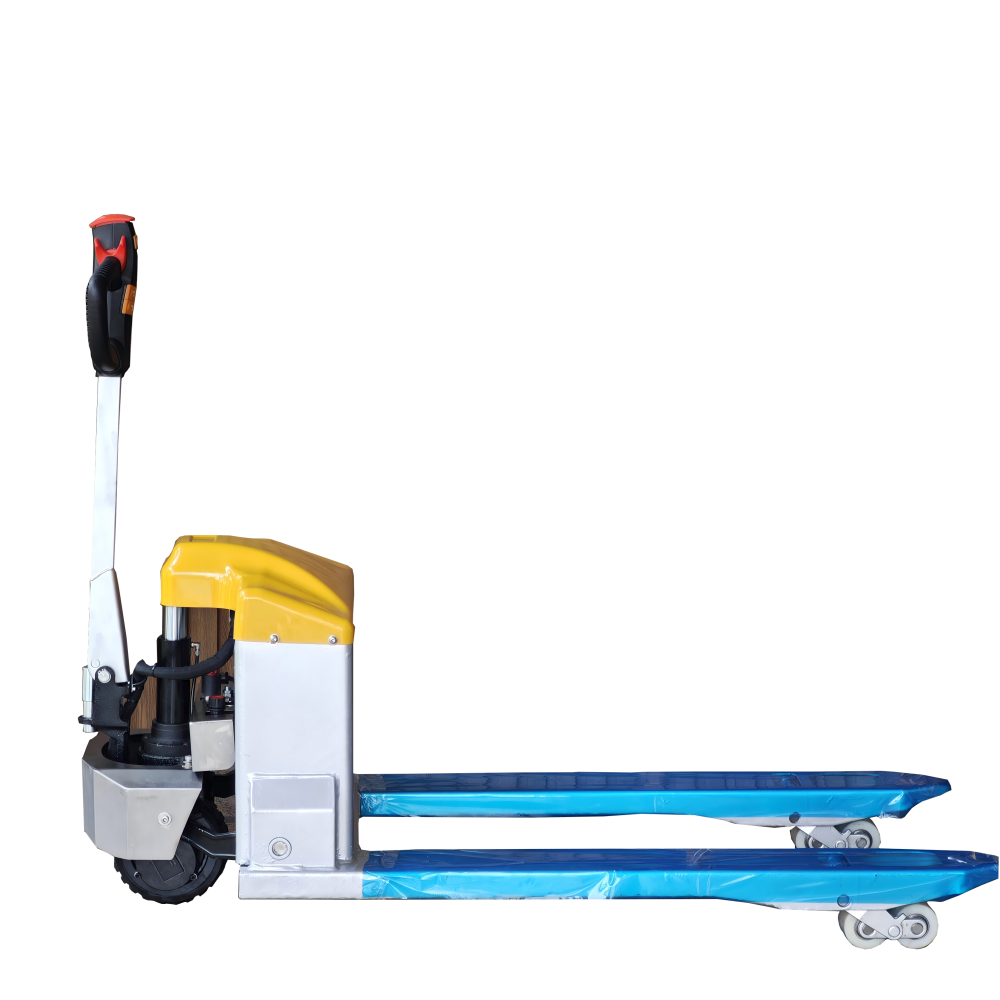
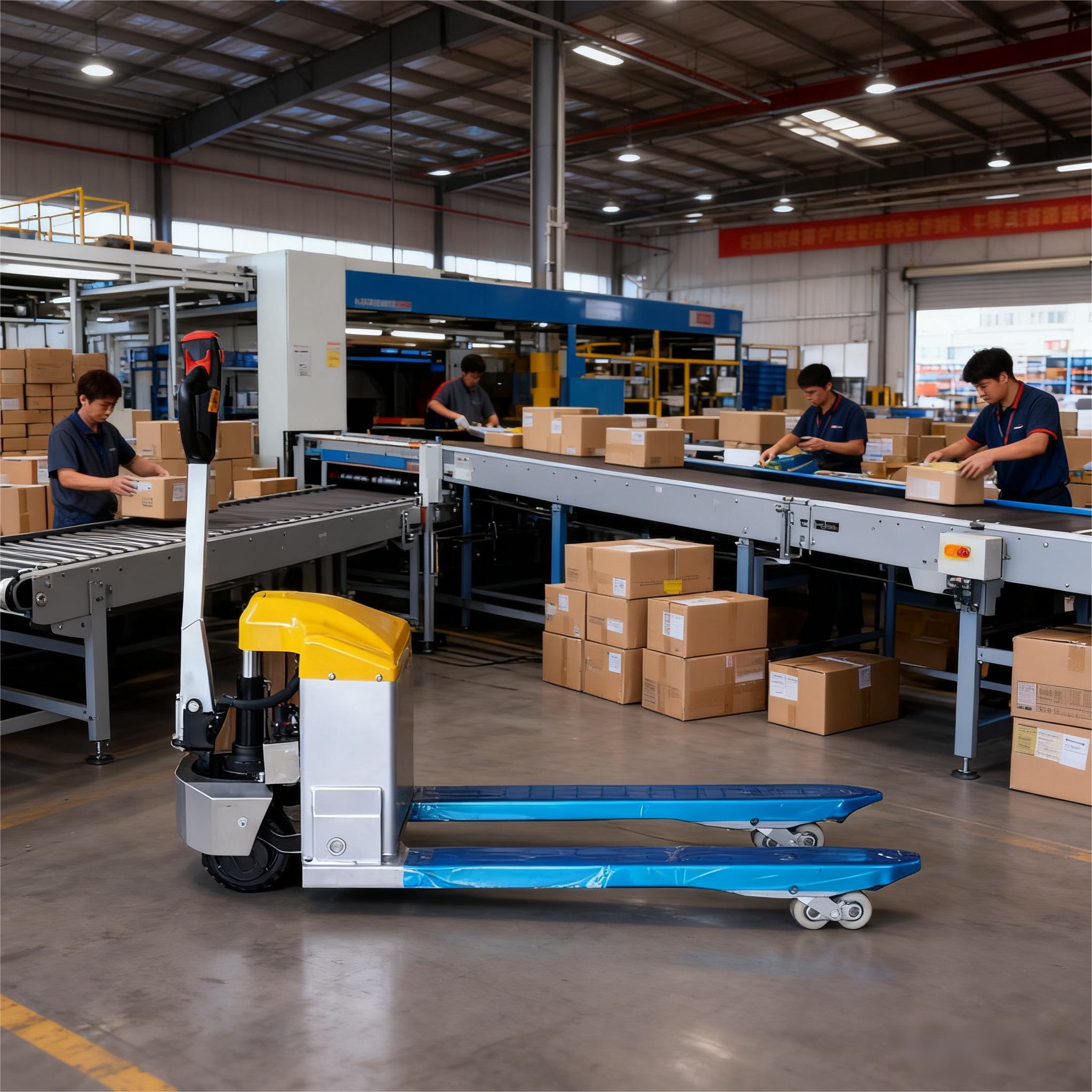
The Akuros T20 is designed for high-frequency warehouse transfer, daily pallet transport, and practical loading support. It is well suited for facilities that need a compact and dependable battery powered pallet truck for short to medium distance movement.
Its application logic is straightforward: reduce manual effort, improve daily pallet flow, and provide a more efficient alternative to purely manual transfer tools. This makes it relevant for distribution centers, warehouse staging zones, loading docks, manufacturing plants, and refrigerated logistics operations.
This article can also connect naturally with related pages such as electric pallet truck for cold storage dock, electric pallet truck vs manual pallet jack in cold storage, and broader pallet truck solution pages.
Conclusion
Choosing the right battery powered pallet truck is really about understanding how your warehouse moves pallets every day. The right model should fit the transfer distance, shift structure, dock intensity, operator pattern, and working environment of the site.
If pallet movement is repetitive, time-sensitive, and central to daily workflow, powered transfer equipment is usually the more practical choice. A well-matched electric pallet truck can improve efficiency, reduce fatigue, and support a smoother warehouse rhythm without unnecessary complexity.
Frequently Asked Questions
What is the best use for a battery powered pallet truck?
A battery powered pallet truck is best for short to medium distance pallet transfer in warehouses, docks, manufacturing plants, and internal logistics operations.
How do I know whether I need lithium or lead-acid?
The choice depends on shift pattern, charging opportunities, maintenance preference, and how intensively the truck is used each day.
Is a battery powered pallet truck better than a manual pallet jack?
For frequent daily movement, yes. It reduces labor strain and usually improves transfer efficiency.
Can electric pallet trucks be used in refrigerated warehouses?
Yes. They are often used in refrigerated transfer zones and cold storage dock operations where repetitive movement is common.
What should I check before buying?
You should review transfer distance, dock intensity, operator frequency, shift schedule, battery preference, and the actual working environment.