

 English
  Russian
  French
  Spanish
  German
  Italian
  Portuguese
  Korean
  Japanese
  Arabic
  Turkish
  Indonesian
  Dutch
Dutch 

When Chaos Meets Coordination
“Forklift’s down again?”
“Yeah—and the repair team says it’s the racking vendor’s fault.”
“The racking vendor says it’s the software glitch.”
The warehouse manager sighed. “Remind me again why we have five suppliers for one operation?”
That Monday morning conversation perfectly captures the modern logistics dilemma. In a world running on fragmented systems—different vendors for storage, handling, software, and service—efficiency slips through the cracks. That’s why global enterprises are shifting toward one-stop warehouse solutions, where every component speaks the same operational language.
Warehouse efficiency isn’t about owning more machines—it’s about owning the flow. A one-stop warehouse solution transforms scattered processes into a synchronized ecosystem, uniting equipment, data, and service under one roof.
Akuros proves that integration isn’t just smarter—it’s measurable: higher throughput, lower downtime, and greater sustainability. The real power of integration lies not in replacing people or technology, but in aligning them. When the entire warehouse moves as one, the business moves faster, safer, and stronger.
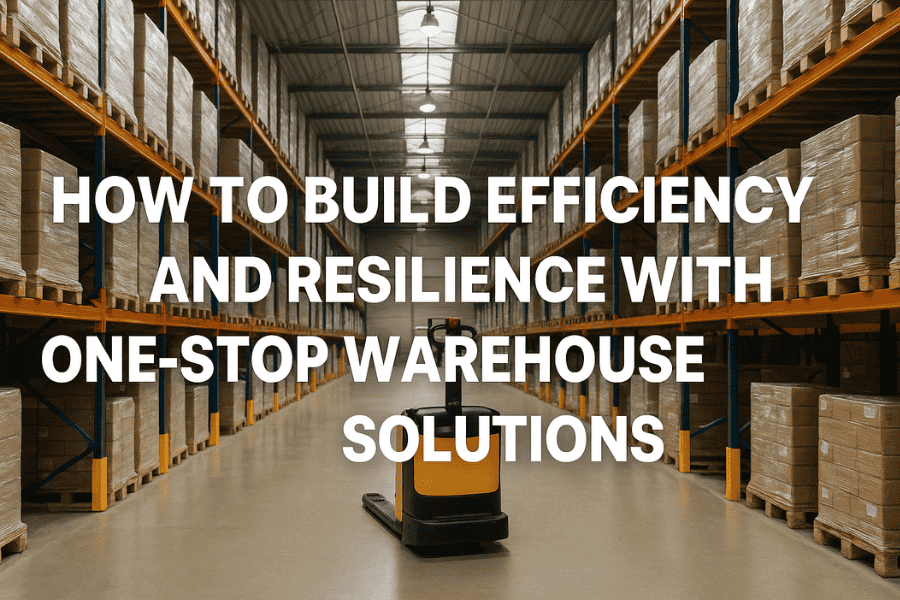
One-Stop Warehouse
Why One-Stop Warehouse Solutions Are the Future of Logistics
The global warehouse industry is changing faster than most realize. According to a 2024 report by LogisticsIQ, 73% of mid-sized enterprises plan to adopt end-to-end automation and integration models within the next three years. Why? Because fragmentation kills efficiency.
Traditional warehouses rely on multiple vendors—separate ones for racks, forklifts, software, maintenance, and training. The result:
-
Overlapping responsibilities
-
Delayed maintenance responses
-
System incompatibilities
-
Cost leakage in coordination
By contrast, one-stop warehouse solutions eliminate these inefficiencies. When one provider handles racking, handling equipment, layout design, training, and after-sales service, the warehouse evolves into a single, responsive ecosystem.
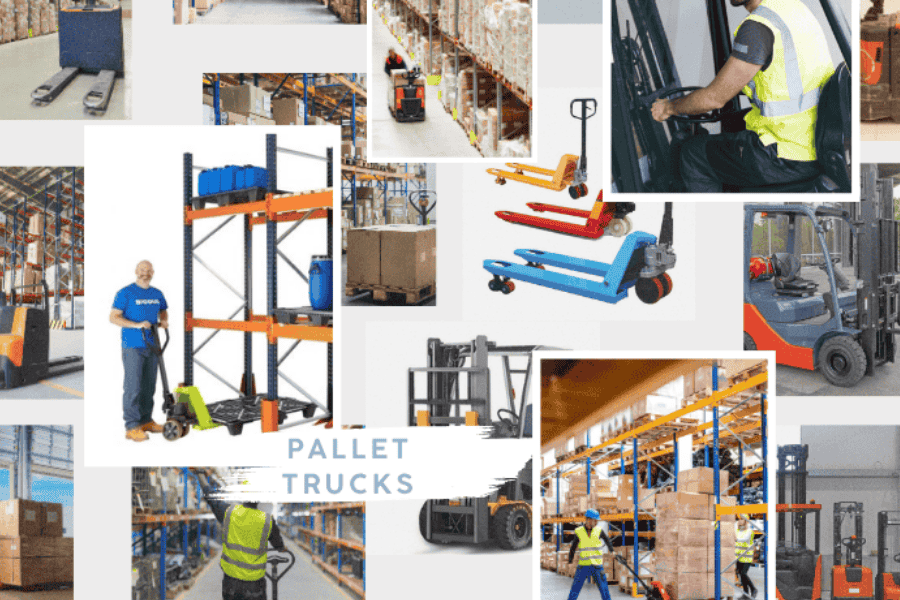
Take a look at Akuros’ guide Everything You Need to Know About Pallet Trucks — it’s a perfect example of how modular components integrate into a broader system design philosophy. Pallet trucks aren’t treated as standalone tools; they’re positioned within an optimized traffic, storage, and safety plan.
High-quality One-Stop Warehouse
Industry Applications: Where Integration Drives Profit
From automotive parts to cross-border e-commerce, integrated logistics is now a competitive weapon. Akuros details this clearly in Top Industries That Benefit Most from One-Stop Warehouse Services — highlighting sectors that gained efficiency through synergy rather than addition.
-
E-commerce hubs cut average order-to-ship time by 40%.
-
Food distributors reduced spoilage and handling damage by 32%.
-
Pharmaceutical warehouses improved traceability compliance by 25%.
-
Automotive suppliers reported 20% faster spare-part cycles.
Each case validates the same principle: a one-stop system is more than a convenience—it’s a productivity multiplier.
Understand Your SKU Profile and Order Type – Identify whether your operation manages high-value, low-volume products or low-value, high-volume SKUs. This directly affects your need for kitting, batching, and order-picking automation.
Check Integration Capability – A true one-stop system should integrate smoothly with your e-commerce storefronts, ERP/OMS software, and real-time tracking tools. Seek visibility across inbound, storage, and outbound processes.
Review Network Coverage and SLAs – Evaluate how many fulfillment hubs the provider operates, their geographic distribution, average processing lead times, and inbound/outbound efficiency metrics.
Assess Scalability and Support – For seasonal or high-growth operations, confirm that the provider can scale capacity quickly without sacrificing accuracy or speed.
Prioritize Value-Added Services – Look for partners that include inventory optimization, packaging, returns management, and compliance documentation within one service contract.
In short, the best one-stop warehouse solutions don’t just store your products—they orchestrate your entire fulfillment chain from receiving to delivery, ensuring accuracy, flexibility, and measurable ROI.
How Akuros Designs Its One-Stop Warehouse Solutions
At the core of Akuros’ approach is integration by design, not by accident. Their Warehouse Solution framework brings three critical layers together:
1. Smart Physical Infrastructure
From drive-in racking to narrow-aisle systems, every warehouse is engineered for maximum density and safe maneuverability. Akuros uses digital layout simulation to balance space optimization with operator comfort.
2. Equipment Ecosystem
Electric pallet trucks, stackers, and conveyor integrations form the mechanical backbone. Akuros emphasizes equipment compatibility—ensuring that every forklift, rack, and aisle system shares the same design logic.
3. Lifecycle Service Support
Post-installation maintenance, staff training, and performance audits make the system truly “one-stop.” As one client reported, downtime incidents dropped 28% after Akuros unified service response under a single contract.
Case Study: 35% Throughput Gain Without Expanding Space
When a Middle Eastern FMCG distributor faced chronic congestion, Akuros stepped in. The facility’s throughput had plateaued, even after purchasing new forklifts. The real issue wasn’t the machines—it was disconnected systems.
Solution:
-
Introduced high-density narrow-aisle racking to free 20% floor area.
-
Replaced mismatched pallet trucks with a standardized fleet.
-
Implemented central maintenance tracking under Akuros’ service program.
-
Integrated WMS with equipment movement analytics.
Result (within 9 months):
-
35% increase in pallet throughput
-
18% reduction in overtime hours
-
22% improvement in storage utilization
-
Zero safety incidents during the trial period
The project illustrates the “invisible ROI” of one-stop warehouse solutions—performance gain without spatial expansion.
Data Insights: Quantifying the One-Stop Advantage
Based on internal Akuros benchmarking and third-party research, the following performance deltas are common after full integration:
| Metric | Improvement Range | Source |
|---|---|---|
| Floor Space Utilization | +25%–40% | Akuros Industrial Survey 2024 |
| Labor Efficiency | +20%–35% | European Logistics Index |
| Picking Accuracy | +15%–25% | CrossDock Analytics |
| Equipment Downtime | –30%–50% | Akuros Service Reports |
| CO₂ per Shipment | –18%–22% | Global Supply Chain Review 2025 |
Integration isn’t a buzzword—it’s a measurable design advantage.
Sustainability: ESG and EPR Compliance
Beyond speed and storage, sustainability is a critical differentiator. One-stop systems enable unified tracking of energy use, waste, and maintenance logs—simplifying ESG reporting. Akuros’ design teams optimize aisle width, power consumption, and recycling logistics for compliance with European and Asia-Pacific EPR frameworks.
As the ESTA Logistics Summit noted in early 2025, “The warehouse of the future is carbon-literate.” Akuros’ system architecture already anticipates that demand—making compliance a built-in, not bolted-on, feature.
The Exporter’s Advantage
For exporters and OEM manufacturers in China, India, or Southeast Asia, a one-stop model shortens the global supply chain. Instead of juggling multiple regional vendors, companies can manage racking, forklifts, and software through a single partner—reducing lead time, customs friction, and maintenance inconsistency across markets.
That’s why many international clients start their conversation through Akuros’ Contact Us page—seeking not just hardware, but partnership. It’s also why repeat clients frequently return to Akuros’ homepage to track new integrations and service expansions.
Implementation Checklist
If you’re considering a one-stop transition, here’s a practical roadmap:
-
Map your existing workflow: Identify inefficiencies and redundancies.
-
Define measurable goals: Throughput, storage density, or energy reduction.
-
Select your integration partner: Prioritize those offering end-to-end service scope like Akuros.
-
Plan modular deployment: Pilot one zone before scaling.
-
Train and audit: Align your staff and systems early.
-
Monitor KPIs monthly: Adjust with data, not guesswork.
Remember: integration is a process, not an event.
FAQ
Q1: What exactly qualifies as a one-stop warehouse solution?
A1: A solution that combines warehouse design, racking, handling equipment, software, and maintenance under one provider—ensuring end-to-end compatibility and accountability.
Q2: How is Akuros different from traditional warehouse equipment suppliers?
A2: Akuros provides full lifecycle service—from design to operation—rather than selling individual components.
Q3: Is this model scalable for small warehouses?
A3: Yes. Akuros designs modular systems that start with essential units and expand as business grows.
Q4: What kind of ROI can companies expect?
A4: On average, integrated warehouses achieve payback within 18–24 months through savings in labor, downtime, and space efficiency.
Q5: How can global buyers ensure support across regions?
A5: Akuros offers international after-sales support and multilingual service teams, ensuring continuity in different markets.
References
-
LogisticsIQ (2024). Global Warehouse Automation Market Outlook 2024–2029.
-
European Supply Chain Institute (2025). The Integration Imperative in Industrial Logistics.
-
CrossDock Analytics (2024). Warehouse Performance Benchmark Report.
-
Global Supply Chain Review (2025). ESG and Energy Efficiency in Distribution Centers.
-
International Material Handling Federation (2023). Standards for High-Density Racking Systems.
-
Akuros Industrial Survey (2024). Operational Efficiency Metrics Across Multi-Industry Warehouses.
-
ESTA Logistics Forum (2025). Panel Insights: Automation vs. Integration in Modern Warehousing.
-
Smart Manufacturing Alliance (2024). Digital Twin Applications in Warehouse Optimization.
-
Warehouse Technology Today (2025). Lifecycle Cost Analysis of One-Stop Logistics Solutions.
-
Asia-Pacific Logistics Review (2024). How Integrated Warehouse Systems Drive Export Competitiveness.
“True logistics innovation isn’t about speed—it’s about system harmony. When racking, equipment, and data move in sync, every process becomes faster by design.”This principle defines Akuros’ one-stop warehouse strategy: integration over isolation. By merging hardware, software, and service into one unified network, Akuros turns warehouse chaos into control. Businesses gain not just operational efficiency but strategic flexibility—able to adapt faster, reduce waste, and scale smarter.
In a world where supply chains stretch across continents, one-stop integration isn’t a luxury—it’s the new foundation of logistics excellence.