

 English
  Russian
  French
  Spanish
  German
  Italian
  Portuguese
  Korean
  Japanese
  Arabic
  Turkish
  Indonesian
  Dutch
Dutch 

When a Storage System Looks Fine Until the Warehouse Gets Busy
“Why did the rack problem show up only when business got better?”
The warehouse director looked up at the overloaded bay and said what many industrial operators eventually realize after one stressful peak season too many. For most of the year, the storage system had seemed “good enough.” Pallets went in, pallets came out, and the aisles remained just manageable. But once inbound volume rose, forklift traffic intensified, and temporary overflow started creeping into permanent storage zones, the weaknesses became impossible to ignore. Beam levels felt too rigid in the wrong places, replenishment took too long, and operators began spending more time working around the racking than working with it.
That is the real problem with warehouse storage decisions made too casually. A Heavy Duty Racking System is not simply a stronger version of ordinary shelving. It is an infrastructure decision that affects load capacity, traffic flow, expansion flexibility, peak-season survival, and the daily reliability of the whole warehouse. If it is specified badly, the business keeps paying for that mistake every day—in time, congestion, labor strain, and operating risk. If it is specified correctly, it becomes one of the most valuable invisible assets in the building.
This is exactly why buyers exploring Akuros About often see more than a product supplier. The real value is not only in providing racks. It is in understanding how warehouse pressure changes under real operating conditions and how storage systems should be matched to growth, layout, and handling behavior rather than chosen from a generic capacity chart.
For industrial warehouses, the point is not just to hold more pallets. It is to create a storage system that still works when the warehouse gets busy, complicated, and expensive.
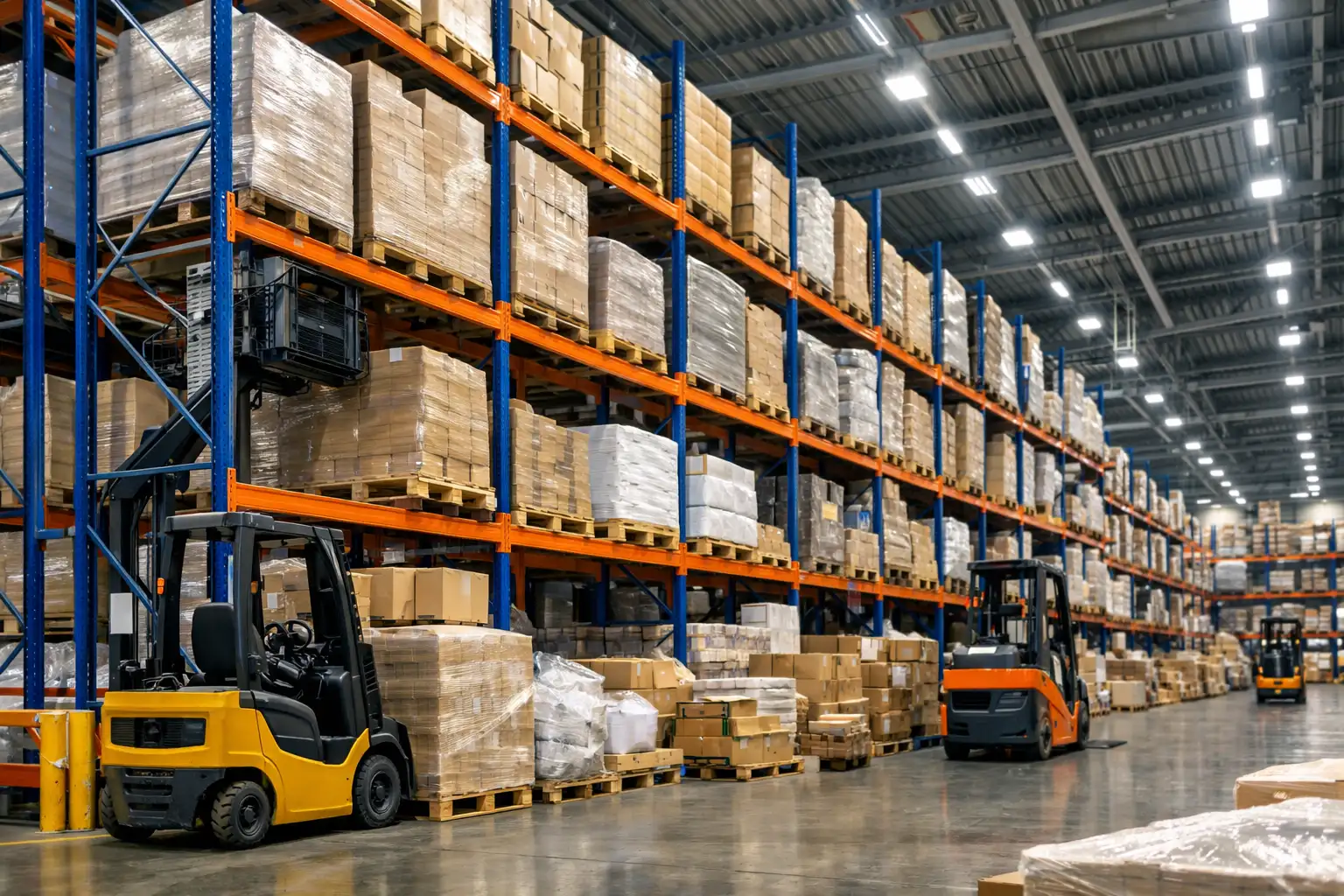
Heavy Duty Racking System
Why Heavy Duty Racking Systems Matter More Than Many Buyers Realize
A lot of warehouses do not think seriously about racking until space starts tightening, forklifts start waiting, or seasonal volume exposes how awkward the whole layout has become. That delay is understandable, but costly.
A heavy duty racking system influences far more than storage density. It affects:
-
how pallets are accessed
-
how quickly replenishment happens
-
how safely equipment can move
-
how much cubic space is actually usable
-
how easily the warehouse can adapt to new SKU profiles
-
how well the operation survives peak demand
That is why Heavy Duty Racking System should be treated as a system-level business decision rather than a metal-and-beam purchase. In industrial environments, the rack is not passive background structure. It actively shapes the speed, cost, and reliability of warehouse performance.
The deeper issue is simple: once storage logic is wrong, everything downstream becomes more expensive.
What Makes a Heavy Duty Racking System Different
Not every warehouse storage system is built for industrial load profiles. A heavy duty racking system is designed specifically for higher-capacity palletized storage, more demanding operating cycles, and tougher warehouse environments where the structure must support repeated handling, denser storage, and long-term load integrity.
What makes it different is not just “more steel.” The real distinction usually comes from the combination of:
-
higher load-bearing capability
-
stronger structural reliability
-
better compatibility with industrial handling equipment
-
more scalable bay and beam configuration
-
longer-term suitability for changing warehouse demand
This matters because industrial warehouses do not only store goods. They absorb variation. SKU turnover changes. pallet weights shift. outbound patterns evolve. peak periods stretch the operation. A proper heavy duty racking system must survive not just the average day, but the worst realistic week.
That is exactly why the one-stop heavy duty racking system solution is such a useful way to frame the topic. The right system is not simply about buying uprights and beams. It is about aligning structure, storage logic, and warehouse behavior into one workable operating model.
The First Big Benefit: Better Load Support for Real Industrial Inventory
Industrial warehouses often handle inventory that is heavier, more varied, and less forgiving than standard light-commercial stock. That means the rack system cannot be chosen based on appearance or nominal capacity alone.
A real heavy duty racking system should support:
-
high pallet loads without overcomplicating access
-
repeated forklift interaction without constant operational anxiety
-
storage of bulkier industrial goods with stronger structural confidence
-
predictable beam-level performance across real-use cycles
The crucial point is that heavy duty storage should be evaluated under actual warehouse use, not idealized brochure conditions. Many warehouses think they need “stronger racks,” but what they really need is a storage system specified around their actual pallet weights, aisle behavior, lift-truck patterns, and replenishment rhythm.
That difference separates a rack that merely exists from a rack that performs.
The Second Big Benefit: Better Space Use Without Making the Warehouse Harder to Run
More storage is useful only if the warehouse can still breathe.
This is where many badly planned industrial storage projects go wrong. Businesses try to push for more pallet positions without respecting equipment turning space, replenishment logic, or access patterns. The result is a warehouse that looks denser on paper and behaves worse in reality.
A properly designed heavy duty racking system should improve space use while keeping operations practical. That usually means:
-
using vertical space more intelligently
-
matching aisle planning to actual equipment
-
balancing density with accessibility
-
protecting fast-moving inventory from slow-moving storage logic
-
reducing the amount of dead or awkward storage space
The goal is not simply to fit more in. The goal is to fit more in without making every forklift movement feel like a negotiation.
The Third Big Benefit: Stronger Peak-Season Survival
Most warehouse systems look acceptable during quiet months. The real test comes during peak season.
That is why how to specify a heavy duty racking system that actually survives peak season is such an important reference point. The title itself captures a truth that many industrial operators learn late: a system that works in normal traffic may fail under pressure if it was not specified for the warehouse’s true demand pattern.
Peak season exposes weaknesses in:
-
access speed
-
replenishment logic
-
zone congestion
-
load sequencing
-
overflow behavior
-
forklift route planning
A stronger heavy duty racking system helps because it is planned not only for storage volume, but also for stress conditions. It gives the warehouse more structural confidence and better operational resilience when inventory surges and handling intensity rises.
The buyers who get this right do not ask, “How many pallets can this store?”
They ask a better question: “How well will this still work when our business is busiest?”
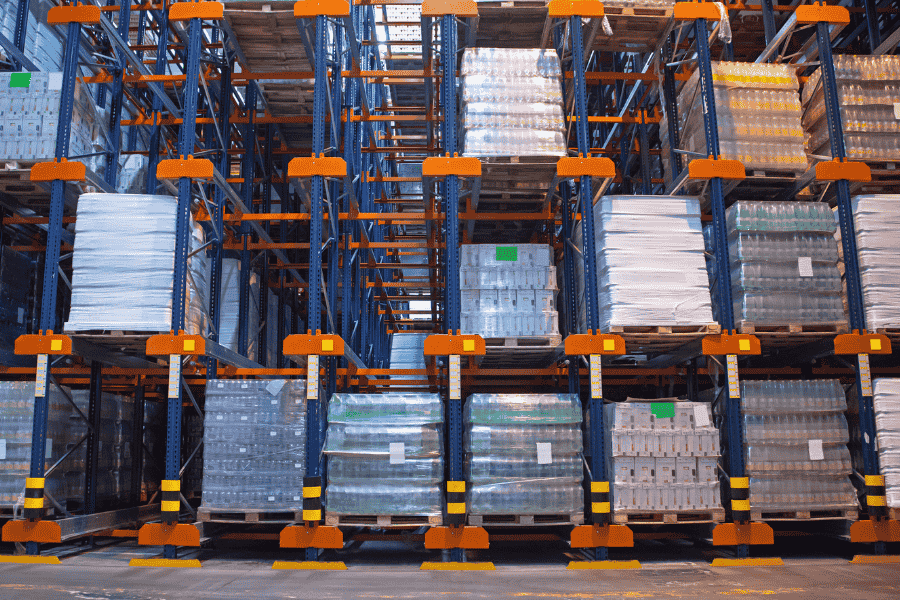
One-Stop Warehouse Solutions- Heavy Duty Racking Systems
The Fourth Big Benefit: Better Fit for Industrial Equipment and Traffic Patterns
A rack system is never used in isolation. It lives in constant interaction with forklifts, pallet trucks, staging lanes, replenishment routines, and operator decisions.
That means a heavy duty racking system must work with:
-
the type of trucks on site
-
the warehouse turning radius reality
-
the loading method
-
pallet condition and standardization
-
traffic intensity during busy windows
A rack that is technically strong but poorly matched to the equipment profile can still create slowdowns, damage risk, and daily inefficiency. That is why industrial buyers should never evaluate racking as if the metal structure alone defines success.
In real life, a rack succeeds only when it helps the equipment move better, not harder.
The Fifth Big Benefit: More Flexible Growth for Changing Inventory Profiles
Warehouse needs rarely stay fixed.
Businesses expand. Product ranges widen. pallet dimensions shift. order structures evolve. Some SKUs move faster than expected, while others take up more space than they deserve. A static storage system can quickly become a constraint if it was designed only for the present snapshot of the business.
A well-planned heavy duty racking system provides more growth flexibility by supporting:
-
adaptable beam levels
-
better reallocation of storage zones
-
clearer category grouping
-
easier extension of storage logic as volume grows
-
stronger control over long-term warehouse layout evolution
This is one reason heavy duty racking often becomes such a useful long-term investment. It is not just storage for today’s profile. It is part of the building’s future operational capacity.
The Sixth Big Benefit: Better Suitability for Regional Logistics Demands
Not every industrial warehouse runs under the same pressure conditions. Regional logistics realities can change the meaning of a “good” storage system dramatically.
That is why how Middle Eastern logistics hubs adopt heavy duty racking systems for sustainable growth is a meaningful angle. It highlights something many global buyers forget: the right storage solution depends not only on product weight and pallet count, but also on infrastructure pressure, climate, logistics rhythm, and regional growth patterns.
This matters because a heavy duty racking system may need to respond differently depending on:
-
heat and environmental conditions
-
site expansion limits
-
logistics hub intensity
-
port or distribution traffic pressure
-
labor and handling patterns
-
long-term regional growth expectations
A storage system that is intelligent in one market may need a different logic in another. Serious industrial buyers account for that early.
Common Buyer Mistakes When Choosing Heavy Duty Racking Systems
The biggest mistakes in this category usually come from oversimplifying the decision.
Mistake 1: Choosing by load number alone
A quoted load capacity is important, but it does not tell the whole story. Access behavior, traffic pattern, pallet turnover, and growth flexibility matter just as much.
Mistake 2: Designing only for average volume
Warehouses do not suffer most during average weeks. They suffer when demand spikes.
Mistake 3: Ignoring equipment behavior
A strong rack that creates difficult forklift movement is still a poor warehouse solution.
Mistake 4: Over-prioritizing density
More pallet positions can be useless if the resulting layout slows the operation or creates congestion.
Mistake 5: Treating the rack as a static purchase
Heavy duty racking is part of a warehouse system. It should be chosen for operational fit, not just procurement convenience.
Most long-term warehouse frustration starts with one of these five errors.
How to Evaluate the Right Heavy Duty Racking System
A better decision framework starts with operational truth instead of catalog comparison.
Step 1: Define your actual load profile
Do not use theoretical averages. Use real pallet weights, dimensions, turnover behavior, and category differences.
Step 2: Define warehouse movement logic
How do forklifts move? Where do pallets queue? Which areas experience the highest pressure?
Step 3: Define your peak-season risk
If volume jumps sharply, the rack system must support not just more storage, but more movement under strain.
Step 4: Define growth expectations
Will inventory expand? Will SKU mix become more complex? Will you need easier re-zoning later?
Step 5: Define operational priorities clearly
Is the main issue density, speed, resilience, flexibility, or a combination of them?
Once those answers are clear, the right heavy duty racking system becomes much easier to identify.
Why Akuros Fits This Conversation Well
Akuros makes sense in this category because the company’s positioning does not reduce warehouse systems to isolated components. Its approach consistently links storage structure to broader warehouse performance, which is exactly how industrial buyers should think.
That matters because a heavy duty racking system is not just about steel strength. It is about whether the warehouse can keep performing under real business pressure.
The broader value of Heavy Duty Racking System is that it supports industrial warehouses that need more than static pallet storage. It supports businesses that need scalability, structural confidence, and better operating logic across ordinary days and stressful peaks alike.
And when the discussion moves from general comparison to real layout, load, and project conditions, the smartest next step is to Contact Us. That is where storage theory becomes a usable warehouse plan.
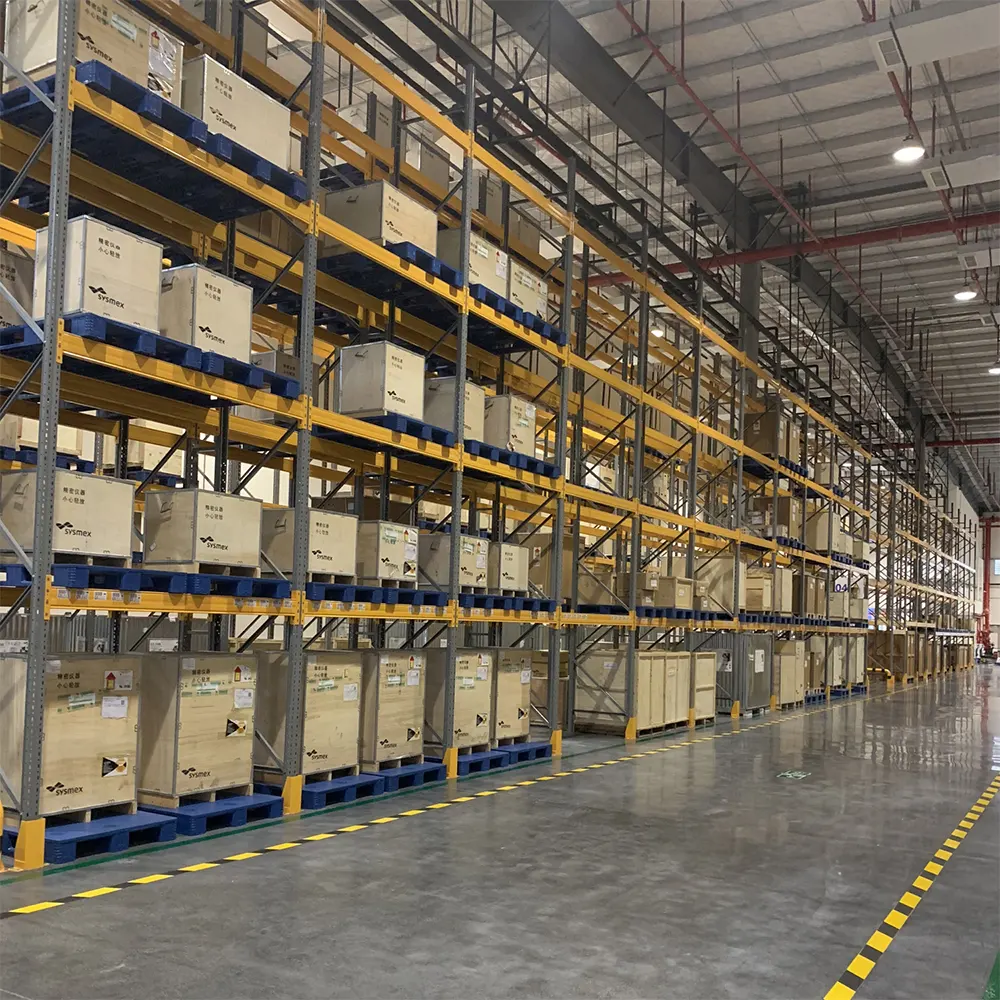
heavy duty racking system
A Practical Industrial Warehouse Scenario
Imagine an industrial parts warehouse that has grown quickly over the past two years. The company added inventory, expanded product lines, and increased outbound volume, but the storage system remained largely unchanged. At first, the operation still worked. Then peak season arrived.
Suddenly:
-
replenishment lanes clogged earlier in the day
-
forklift routes overlapped more often
-
overflow pallets started living in temporary areas
-
picking teams lost time around congested storage zones
-
managers began noticing that the warehouse felt “full” even when capacity on paper still existed
The issue was not simply that the warehouse needed more racks. It needed a better racking system—one matched to weight, volume pressure, traffic behavior, and future growth.
That is the kind of situation where a real heavy duty racking system proves its value. Not because it looks industrial, but because it restores order to the underlying storage logic.
FAQ
1. What is a heavy duty racking system?
A heavy duty racking system is a pallet storage system designed for industrial warehouses that handle heavier loads, denser stock profiles, and more demanding daily operating conditions. It is built to support stronger load requirements and more serious warehouse use than lighter storage systems.
2. What are the benefits of a heavy duty racking system?
It can improve storage capacity, strengthen load support, support better warehouse organization, improve peak-season resilience, and create a more scalable structure for industrial inventory operations.
3. How do I know if my warehouse needs heavy duty racking?
If your warehouse handles palletized industrial goods, experiences heavy traffic, faces storage pressure, or struggles with growth and peak-season congestion, a heavy duty racking system is often worth serious evaluation.
4. Is a heavy duty racking system only about storing heavier pallets?
No. Weight capacity is important, but the real value also includes better space use, stronger equipment compatibility, improved traffic flow, and better support for long-term warehouse efficiency.
5. How should I choose the right heavy duty racking system?
Start by evaluating real pallet loads, equipment behavior, peak-season pressure, growth expectations, and the warehouse’s actual movement pattern. The right system should match the operation, not just the load chart.
A Smarter Racking System Builds a Stronger Warehouse
A heavy duty racking system earns its value long before a pallet is placed on it.
Its real value comes from what it prevents and what it enables. It prevents congestion from becoming routine, prevents growth from turning into chaos, and prevents peak-season demand from exposing a weak storage structure. At the same time, it enables better load support, better movement, better space use, and better long-term warehouse performance.
That is the bigger point behind Heavy Duty Racking System: Ultimate Guide for Industrial Warehouses. The right system does not simply help an industrial warehouse store more. It helps the warehouse work better under real pressure.