

 English
  Russian
  French
  Spanish
  German
  Italian
  Portuguese
  Korean
  Japanese
  Arabic
  Turkish
  Indonesian
  Dutch
Dutch 

Forklifts, Racking & Automation (Project-Level Guide)
A cold storage warehouse is only as efficient as the equipment ecosystem supporting it. This article provides a practical equipment list covering forklifts, racking systems, automation, and key supporting components—helping project owners, engineers, and operators configure reliable, future-ready cold chain warehouses.
1. Why Cold Storage Equipment Must Be Selected as a System
Cold storage projects often fail not because of a single equipment issue, but because components are selected independently. Forklifts, racking, automation, and accessories interact continuously in frozen environments where margins for error are minimal.
Unlike ambient warehouses, cold rooms magnify:
-
Equipment downtime impact
-
Safety risks caused by reduced traction and visibility
-
Long-term rigidity once systems are installed
For this reason, cold storage projects should be planned as part of an end-to-end warehouse solution, rather than a collection of standalone purchases.
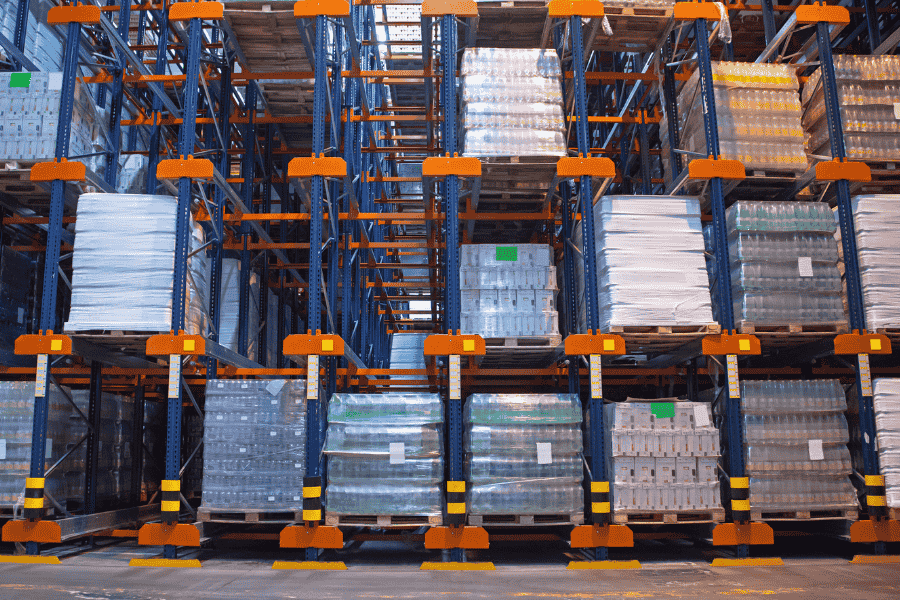
One-Stop Warehouse Solutions- Heavy Duty Racking Systems
2. Cold Storage Warehouse Equipment — Overview Table
Before reviewing individual categories in detail, the table below provides a project-level equipment checklist commonly used in cold storage warehouse planning.
📊 Cold Storage Warehouse Equipment Checklist
| Equipment Category | Typical Equipment | Primary Function | Key Selection Focus |
|---|---|---|---|
| Forklifts | Electric forklifts, reach trucks, order pickers | Vertical & horizontal handling | Low-temperature stability, battery performance |
| Racking Systems | Double deep, drive-in, VNA racking | High-density storage | Density vs selectivity balance |
| Automation | AGVs, hybrid automation systems | Repetitive transport | Workflow stability, integration |
| Pallet Handling | Pallet trucks, stackers | Short-distance movement | Maneuverability in cold rooms |
| Energy Systems | Forklift batteries | Power supply | Cold-rated discharge stability |
| Safety & Wear | Polyurethane tires, protective accessories | Traction & durability | Frozen-floor performance |
This table defines the full equipment ecosystem. The following sections explain how each category contributes to cold storage performance.
3. Forklifts: The Core of Cold Storage Operations
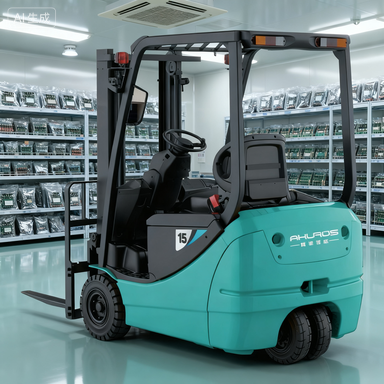
Forklifts are the most active and failure-prone assets in frozen warehouses. Equipment not engineered for low temperatures often experiences rapid battery degradation, condensation-related electronics failure, and reduced traction.
Cold storage operations typically rely on electric forklifts designed for cold environments, including reach trucks and order pickers, depending on racking geometry and picking intensity. Forklift selection should always align with aisle width, lift height, and throughput requirements defined during layout planning.
 4. Racking Systems: Defining Storage Density and Flow
Racking systems define how space is utilized and how forklifts move inside the cold room.
Common configurations include double deep racking systems for balanced density, drive-in racking systems for homogeneous bulk storage, and very narrow aisle racking systems for high selectivity and future automation readiness.
Because cold rooms are expensive to expand, racking selection should prioritize long-term flexibility rather than maximum pallet count alone.
5. Automation Systems: Where and When They Make Sense
Automation plays an increasing role in modern cold storage warehouses, particularly where labor availability and cost are major constraints.
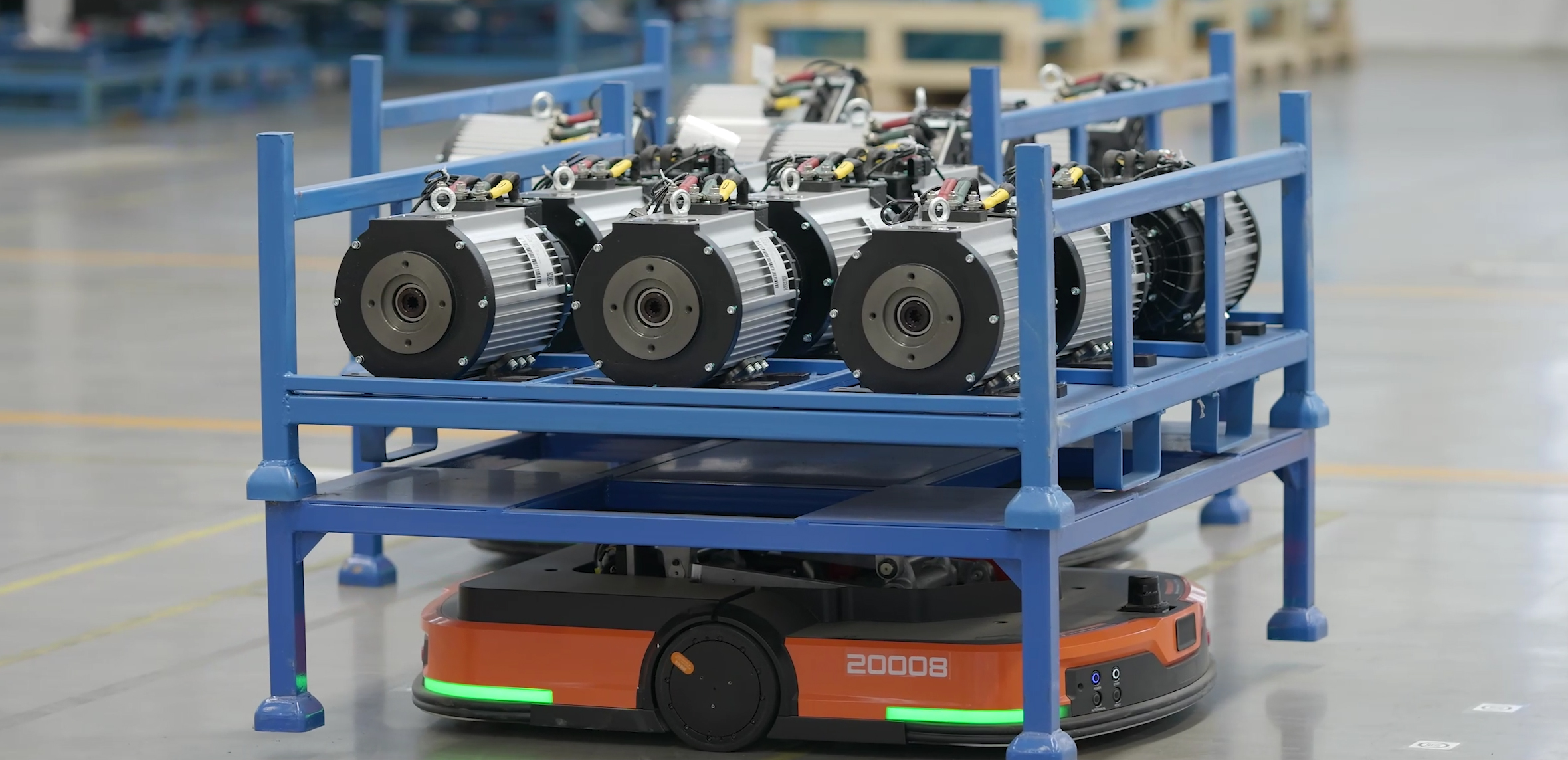
Facilities with stable, repetitive material flow often benefit from AGV-based automation systems, especially when integrated into broader automated warehouse solutions. However, automation should complement—not replace—manual equipment in areas requiring flexibility or exception handling.
 6. Pallet Handling Equipment for Cold Storage
Not all movement in a cold storage warehouse requires full-size forklifts. Electric pallet trucks and stackers are commonly used in staging areas, picking zones, and short-distance transfers.
When properly specified, these tools reduce congestion and improve overall workflow efficiency without introducing unnecessary complexity.
7. Energy, Tires, and Supporting Equipment
Supporting components are often overlooked during planning but have an outsized impact on reliability.
Cold storage forklifts depend heavily on cold-rated forklift battery systems to maintain consistent shift coverage. Similarly, polyurethane tire solutions are critical for traction and braking stability on frozen or damp floors.
Accessories such as protective guards and impact-resistant components further extend equipment lifespan in harsh environments.
8. Automation Readiness and Future Expansion
Even if automation is not implemented immediately, equipment selection should preserve future options. Layout geometry, forklift compatibility, and system interfaces all influence whether automation can be introduced later without major rework.
Projects that align equipment selection with automation-ready warehouse solutions consistently achieve smoother upgrades and stronger long-term ROI.
9. Common Equipment Planning Mistakes in Cold Storage
Recurring issues include:
-
Selecting forklifts without considering racking geometry
-
Prioritizing pallet count over operational flow
-
Ignoring battery and tire specifications
-
Treating automation as a bolt-on upgrade
In frozen warehouses, these mistakes often become permanent constraints rather than temporary inefficiencies.
10. Google Popular Topics (Contextual Answers)
What equipment is essential for a cold storage warehouse?
Forklifts, racking systems, automation (where applicable), pallet handling tools, batteries, and cold-rated tires.
Is automation necessary in all cold storage warehouses?
No. Automation works best in stable, repetitive workflows but is not mandatory for every facility.
What forklifts are best for frozen warehouses?
Electric forklifts engineered for low-temperature operation with cold-rated batteries and electronics.
How does racking selection affect equipment choice?
Racking geometry determines aisle width, lift height, and forklift type.
Should equipment planning consider future expansion?
Yes. Cold storage equipment should preserve flexibility for automation and layout changes.