

 English
  Russian
  French
  Spanish
  German
  Italian
  Portuguese
  Korean
  Japanese
  Arabic
  Turkish
  Indonesian
  Dutch
Dutch 

Introduction
In warehouse equipment planning, battery selection is often treated as a secondary specification behind truck capacity, mast height, or forklift brand. In reality, the battery choice directly affects daily uptime, charging rhythm, maintenance workload, operating cost, and fleet discipline. For many operations, the battery is not just a component. It is the energy system that shapes how the entire forklift fleet behaves.
That is why the forklift lead-acid battery category still matters. Although lithium solutions continue to gain attention, lead-acid technology remains widely used in electric forklifts and warehouse trucks, especially in environments where schedules are predictable, maintenance routines are established, and buyers want controlled initial investment. The current Akuros product page positions this battery exactly in that space: a proven and cost-controlled solution for standard warehouse operations, with flooded lead-acid technology, standard charging cycles, periodic watering and inspection, and suitability for single-shift or regular-duty indoor use. :contentReference[oaicite:1]{index=1}
This article explains why a warehouse forklift lead-acid battery is still commercially relevant, where it fits best, what buyers should check before ordering, and why “older technology” can still be the smarter operational choice when the warehouse conditions are right.
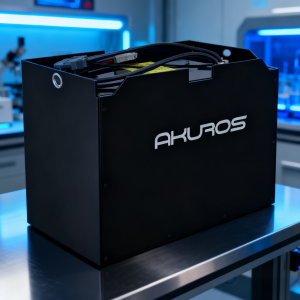
What a Lead-Acid Forklift Battery Is Designed to Do
Stable energy for routine electric forklift work
A lead-acid battery for electric forklift use is designed to deliver consistent power through structured charging and maintenance routines. In the Akuros configuration, the product is described as a flooded lead-acid solution compatible with electric forklifts and warehouse trucks, intended for stable and consistent output under standard charging cycles. :contentReference[oaicite:2]{index=2}
A battery system that assumes disciplined operations
Unlike some newer technologies marketed mainly around convenience, a lead-acid battery performs best when the operation follows defined procedures. Charging windows, watering schedules, inspection practices, and ventilation planning all matter. This is not a weakness by default. In many standardized warehouse environments, that discipline already exists, which is why lead-acid remains viable and widely used. The Akuros page explicitly notes periodic watering and inspection as part of the maintenance routine and identifies proper ventilation as an important operating condition. :contentReference[oaicite:3]{index=3}
Why it still competes well in the market
The main reason is simple: many warehouses do not need the fastest charging model or the most advanced battery platform. They need reliable forklift power at a manageable acquisition cost. For standard shifts and established charging rooms, the value logic of a forklift lead-acid battery remains strong. The current Akuros positioning specifically highlights lower initial investment and compatibility with existing charging infrastructure as central advantages. :contentReference[oaicite:4]{index=4}
Real Warehouse Scenario: Where Lead-Acid Still Wins
Consider a mid-sized warehouse running one main shift plus limited overtime during peak days. The site uses several electric forklifts and pallet trucks, has a designated charging area, and already employs technicians familiar with watering and inspection routines. The operation does not require aggressive opportunity charging during breaks, and battery replacement cycles are planned around normal maintenance windows.
In this scenario, switching to lithium may not create enough operational benefit to justify the higher upfront cost. A forklift battery for standard shift operations can still deliver excellent value if the charging rhythm is stable and the maintenance team is disciplined. This is exactly the kind of environment Akuros describes as suitable: single-shift or standard warehouse operations, indoor facilities, and businesses that prioritize reliability and controlled investment. :contentReference.
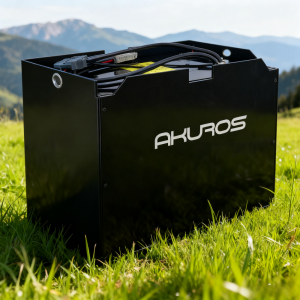
Why Lead-Acid Batteries Still Make Sense
1. Lower upfront investment
One of the strongest arguments for a warehouse forklift lead-acid battery is purchase cost. For cost-sensitive procurement strategies, lead-acid often provides a lower initial investment than lithium alternatives. The Akuros page states this advantage clearly and ties it to operations with defined shift schedules. :contentReference[oaicite:6]{index=6}
2. Predictable performance with familiar technology
Lead-acid remains attractive because its behavior is well understood. Technicians, warehouse managers, and fleet operators already know how to work with it. According to the Akuros product page, stable voltage characteristics and predictable service-life behavior are part of the value proposition, especially for existing fleets that do not want to redesign charging processes. :contentReference[oaicite:7]{index=7}
3. Compatibility with existing infrastructure
Many facilities already have charging rooms, electrical setups, maintenance tools, and routines built around flooded lead-acid batteries. Reusing that infrastructure can be economically smarter than replacing it. Akuros explicitly positions this battery as compatible with existing charging systems and standard charging cycles. :contentReference[oaicite:8]{index=8}
4. Clear maintenance logic
Maintenance is often presented as a disadvantage, but it can also be a strength when the warehouse is already organized for it. Watering, inspection, terminal checks, and ventilation procedures are established industry practices. The Akuros page highlights these routines as well-understood and manageable with minimal additional training when the site already has maintenance capability. :contentReference[oaicite:9]{index=9}
Where Lead-Acid Fits Best
Single-shift and standard-shift warehouses
The clearest fit is a site with predictable daily duty cycles. Akuros specifically identifies single-shift or standard warehouse operations as the typical application environment for this battery. :contentReference[oaicite:10]{index=10}
Facilities with existing charging rooms
If the warehouse already has dedicated charging space and ventilation planning, the case for lead-acid becomes much stronger. The current product page lists existing charging rooms as one of the common application scenarios. :contentReference[oaicite:11]{index=11}
Operations with maintenance teams already in place
A lead-acid system is easier to justify when there is already a team capable of periodic inspection, watering, and routine battery care. Akuros explicitly points to forklift fleets with established maintenance teams as a typical use case. :contentReference[oaicite:12]{index=12}
Cost-conscious forklift fleets
Where the key business objective is reliable forklift power without a large jump in acquisition cost, a forklift lead-acid battery remains commercially attractive. The Akuros page repeatedly frames the solution around cost-controlled operation and predictable performance. :contentReference[oaicite:13]{index=13}
Planning Table: What Buyers Should Check Before Ordering
| Planning Item | What to Confirm | Why It Matters | Risk If Ignored |
|---|---|---|---|
| Shift pattern | Single shift, standard shift, or multi-shift demand | Determines whether charging rhythm is practical | Battery downtime or weak utilization fit |
| Charging room setup | Space, power supply, and ventilation conditions | Lead-acid charging needs controlled environment | Unsafe or inefficient charging practice |
| Maintenance capability | Ability to perform watering and inspection | Essential for service life and performance | Reduced battery life and avoidable failures |
| Fleet compatibility | Battery dimensions, connectors, and charger matching | Ensures the battery works with existing forklifts | Installation mismatch or charger conflict |
| Total cost logic | Upfront price versus maintenance and operating routine | Supports the right economic decision | Overpaying for features the site does not need |
Lead-Acid Battery Versus Lithium for Warehouse Use
Where lead-acid keeps its advantage
Lead-acid remains strong where the operation values lower initial cost, known maintenance practices, and compatibility with existing systems. This is directly reflected in Akuros’s positioning for standard warehouse use and predictable duty cycles. :contentReference[oaicite:14]{index=14}
Where lithium may be better
Akuros itself notes that lithium offers faster charging and lower maintenance, while lead-acid keeps the advantage in lower upfront cost and proven reliability. That makes the comparison less about which technology is universally better and more about which one fits the shift pattern and management style of the warehouse. :contentReference[oaicite:15]{index=15}
Why the decision should be operational, not fashionable
Many buyers are influenced by technology trends. But battery selection should follow warehouse realities: charging room availability, maintenance culture, utilization intensity, and budget structure. A site with disciplined routines may get excellent value from a forklift lead-acid battery, while a more dynamic multi-shift site may benefit more from lithium convenience.
Comparison Table: Lead-Acid vs Lithium in Practical Warehouse Terms
| Comparison Factor | Lead-Acid Battery | Lithium Battery | Practical Meaning |
|---|---|---|---|
| Initial investment | Lower | Higher | Important for cost-controlled procurement |
| Charging speed | Standard charging cycles | Generally faster | Affects uptime flexibility |
| Maintenance | Requires periodic watering and inspection | Lower routine maintenance | Depends on site capability |
| Infrastructure compatibility | Often matches existing charging rooms | May require different battery strategy | Important for retrofit economics |
| Best fit | Standard shifts and disciplined operations | Higher-flexibility or intensive-duty operations | Selection should follow workflow, not trend |
Safety and Facility Considerations
A flooded forklift lead-acid battery must be selected and used with proper charging-room logic, ventilation, and inspection routines. The Akuros page explicitly identifies a venting system for gas release as part of the safety design and notes that proper ventilation is important in suitable environments. :contentReference[oaicite:16]{index=16}
For buyers, this means battery selection is not just a product purchase. It is also a facility management question. The battery room, charging procedure, watering schedule, and inspection standards must all support the technology. Warehouses that already have these disciplines in place often remain excellent candidates for lead-acid power.
Why This Product Direction Works for Akuros
The current Akuros page already has the right commercial logic: it does not try to argue that lead-acid is the answer for every forklift fleet. Instead, it frames the product as a practical fit for standard warehouse operations, existing charging systems, predictable duty cycles, and buyers who value proven technology. :contentReference[oaicite:17]{index=17}
That positioning opens up useful long-tail search intent around phrases such as forklift lead-acid battery, lead-acid battery for electric forklift, warehouse forklift lead-acid battery, flooded lead-acid forklift battery, forklift battery for standard shift operations, and cost effective forklift battery solution. Several of these themes are already reflected in the keyword cluster on the current product page. :contentReference.
Industry Logic: Why Lead-Acid Has Not Disappeared
Lead-acid remains in the market because many warehouse fleets still value reliability, predictability, and lower acquisition cost over maximum charging flexibility. Not every site runs intense multi-shift operations. Not every site wants to rebuild its charging strategy. In practical B2B buying, the battery that fits the operation usually beats the battery that attracts the most attention.
That is why lead-acid continues to matter in fleets with stable scheduling, clear maintenance routines, and cost discipline. In those environments, it is not outdated. It is simply matched to the operational model.
Conclusion
The Akuros forklift lead-acid battery remains a strong choice for standard warehouse operations that prioritize stable output, controlled upfront investment, and compatibility with existing charging and maintenance routines. Its value is clearest in single-shift or regular-duty environments where the site already understands how to manage battery care properly. :contentReference[oaicite:19]{index=19}
For buyers, the real question is not whether lead-acid is old or new. The real question is whether it fits the warehouse’s shift pattern, maintenance capability, and infrastructure. When those conditions are aligned, a lead-acid battery for electric forklift use can still be one of the most practical energy choices in the market.
FAQ
1. What type of warehouse is best suited to a forklift lead-acid battery?
It is best suited to warehouses with standard or single-shift operations, established charging routines, and maintenance teams that can handle periodic watering and inspection. Akuros identifies exactly these environments as typical applications. :contentReference[oaicite:20]{index=20}
2. Does a lead-acid battery require regular maintenance?
Yes. Periodic watering and inspection are required to maintain performance and service life. This is clearly stated on the current Akuros product page and should be treated as part of the normal operating routine. :contentReference[oaicite:21]{index=21}
3. Is a lead-acid forklift battery suitable for multi-shift use?
It can be used in multi-shift settings, but Akuros notes that lead-acid is best suited to single-shift or standard operations unless battery swapping is implemented. That means the workflow must be evaluated carefully before purchase. :contentReference[oaicite:22]{index=22}
4. Why do some buyers still choose lead-acid over lithium?
Because lead-acid usually offers lower upfront cost, proven reliability, and better fit with existing charging rooms and established maintenance routines. Akuros directly contrasts these strengths with lithium’s faster charging and reduced maintenance. :contentReference[oaicite:23]{index=23}
5. What should I prepare before asking for a quote?
You should confirm forklift model compatibility, battery dimensions, charger conditions, shift pattern, maintenance capability, and charging-room ventilation. These are the main practical factors behind a successful lead-acid battery selection.
Suggested Tags
forklift lead-acid battery, lead-acid battery for electric forklift, warehouse forklift battery, flooded lead-acid battery, forklift battery for standard shift operations, electric forklift battery, industrial battery solution, forklift charging system
Semantic Closure Block
How should buyers evaluate a lead-acid forklift battery today?
They should evaluate it against the real warehouse routine: shift pattern, charging room setup, maintenance skill, and total acquisition logic. The right battery is the one that fits daily operations, not the one that simply sounds more advanced.
Why does lead-acid still remain relevant?
Because many warehouse fleets still need stable power, lower upfront investment, and compatibility with infrastructure they already have. In those environments, lead-acid continues to offer practical commercial value.
What is the biggest mistake buyers make?
The biggest mistake is treating battery selection as a technology trend decision instead of an operating-model decision. The best battery is the one that matches the warehouse’s actual rhythm and discipline.
What does this mean for standard warehouse fleets?
It means a well-managed lead-acid battery system can still be one of the most rational choices for predictable forklift work, especially where the site is already set up for standard charging and routine maintenance.