

 Korean
  English
  Russian
  French
  Spanish
  German
  Italian
  Portuguese
  Japanese
  Arabic
  Turkish
  Indonesian
  Dutch
Dutch 

When Warehouse Space Becomes the Real Bottleneck
A warehouse rarely runs out of space overnight. It usually happens slowly. First, pallets start waiting in receiving zones longer than planned. Then slow-moving SKUs begin occupying valuable front-row storage. Forklift routes become tighter. Emergency floor stacking appears “just for today,” and somehow “today” becomes every day. At that point, the problem is no longer only storage capacity. It becomes labor efficiency, safety risk, inventory visibility, and order fulfillment pressure.
여기에서 더블 딥 랙 becomes a serious option for high-density pallet storage. Instead of storing one pallet position deep from the aisle, double deep systems store pallets two deep, allowing warehouses to reduce aisle count and increase pallet positions without immediately expanding the building footprint.
For warehouse owners, logistics operators, cold storage managers, and B2B procurement teams, the real question is not simply “Can we store more pallets?” The better question is: can the system increase storage density without damaging picking efficiency, safety, inventory control, and forklift workflow? A reliable warehouse racking manufacturer should help buyers evaluate layout, load capacity, forklift type, SKU strategy, and safety requirements before any installation decision is made. This is why many buyers first review a company’s engineering background and project capability before choosing a Double Deep Racking manufacturer.
더블 딥 랙
What Is Double Deep Racking?
Double deep racking is a pallet storage system where two pallet positions are stored back-to-back from the aisle side. In simple terms, one pallet sits in the front position and another pallet sits behind it. Compared with standard selective pallet racking, double deep racking reduces the number of aisles needed and increases storage density.
In standard selective racking, every pallet is directly accessible from the aisle. That makes it flexible, but it also consumes more aisle space. In double deep racking, direct access is reduced because the rear pallet is accessed through the front position. This means it works best when warehouses store multiple pallets of the same SKU or when batch movement is predictable.
A typical 이중 깊이 팔레트 랙 시스템 is used in food and beverage warehouses, cold storage facilities, manufacturing warehouses, 3PL logistics centers, retail distribution centers, and fast-moving consumer goods storage. It is especially useful when pallet volume is high but SKU variety is not too fragmented.
Double Deep Racking vs Selective Racking
| 팩터 | 2.5~3m | 더블 딥 랙 |
|---|---|---|
| Pallet Access | Direct access to every pallet | Rear pallet requires front position access |
| 스토리지 밀도 | Medium | 더 높음 |
| 통로 요구사항 | More aisles | Fewer aisles |
| Forklift Requirement | Standard counterbalance or reach truck | Reach truck or deep-reach forklift |
| 최상의 대상 | 높은 SKU 다양성 | Medium SKU variety and batch storage |
| Inventory Rotation | Easy FIFO control | Better for LIFO or grouped SKUs |
| 비용 효율성 | Flexible but lower density | Strong density improvement when applied correctly |
The biggest advantage is space utilization. Double deep systems can often improve pallet storage capacity by reducing aisle space, but the actual gain depends on warehouse dimensions, pallet size, aisle width, forklift type, beam levels, and safety clearances. A layout designed poorly can turn this advantage into daily frustration. More pallets are great; trapped pallets are not. Warehouses do not need storage puzzles with forklifts as the player.
Why High-Density Storage Matters More Than Ever
Warehouses are under pressure from every direction. E-commerce demand has increased SKU complexity. Retailers expect faster delivery. Manufacturers want lower buffer stock but better availability. Cold storage operators face high energy costs. Logistics providers need to maximize every square meter because facility expansion is expensive and slow.
This makes high-density warehouse racking a strategic investment, not just a storage upgrade. When a warehouse improves pallet density, it can delay expansion, reduce external storage costs, improve inventory grouping, and make better use of existing floor space.
However, density must be controlled. Too much density without operational planning causes congestion, poor visibility, slower picking, and safety risks. A double deep layout should be chosen only after evaluating SKU movement, pallet turnover, forklift capability, and warehouse management procedures.
Buyers comparing Double Deep Racking solutions should focus on whether the system fits their inventory profile. It is not ideal for every warehouse. It is excellent for the right warehouse.
Warehouse Scenarios Where Double Deep Racking Works Best
| Warehouse Type | Why Double Deep Works | Key Buyer Check |
|---|---|---|
| 식음료 유통 | Multiple pallets of same SKU | Batch rotation and expiry control |
| 콜드 스토리지 | Space and energy cost are high | Forklift compatibility in cold environment |
| 3PL Logistics Warehouse | Need flexible pallet density | SKU grouping and WMS control |
| Manufacturing Warehouse | Stores raw materials or finished goods in batches | Pallet size consistency |
| 소매 유통 | High pallet volume for popular SKUs | Replenishment frequency |
| Export Storage | Batch-based order preparation | Clear loading sequence |
If the warehouse handles many single-pallet SKUs with unpredictable picking, selective racking may be better. If the warehouse stores multiple pallets per SKU and moves goods in batches, 더블 딥 랙 becomes much more attractive.
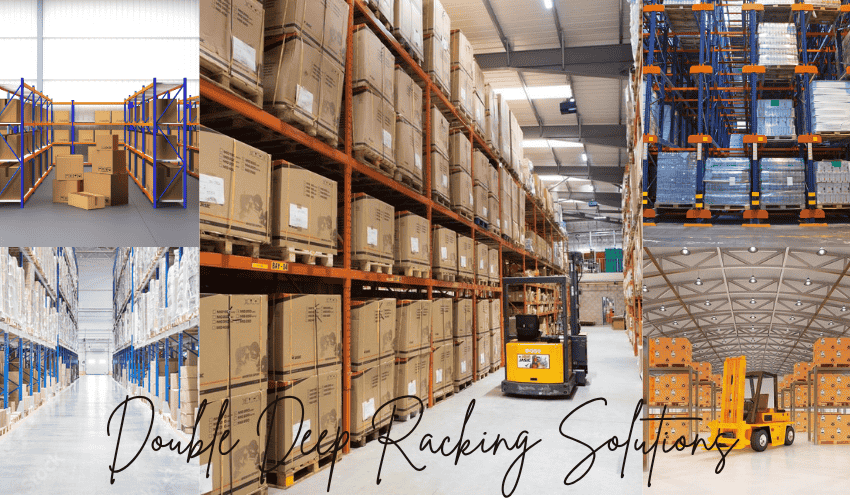
더블 딥 랙 솔루션
How Double Deep Racking Improves Space Utilization
The main space advantage comes from reducing aisle count. In selective racking, each rack row usually needs aisle access. In double deep layouts, two rows are placed back-to-back and accessed from one aisle side, reducing the total number of aisles required.
This can increase pallet positions significantly depending on warehouse geometry. In many practical warehouse layouts, double deep racking may increase storage capacity compared with selective racking, especially where aisle space occupies a large portion of the floor. But buyers should avoid generic promises. The exact gain must be calculated from real warehouse dimensions.
A useful approach is to compare three numbers:
Total floor area
Number of pallet positions
Pallet positions per square meter
This creates a more honest view of storage efficiency. A system with more pallet positions but slower handling may not always be better. The goal is not maximum density at all costs. The goal is useful density.
For buyers planning layout changes, a guide on how to optimize space with Double Deep Racking can support better decisions around aisle reduction, rack depth, forklift movement, and inventory grouping.
Example Capacity Comparison
| Storage Layout | Approximate Access Level | 스토리지 밀도 | Operational Suitability |
|---|---|---|---|
| Selective Racking | 매우 높다 | Medium | Best for high SKU variety |
| 더블 딥 랙 | Medium to high | 높음 | Best for grouped pallets |
| 드라이브 인 랙 | Low to medium | 매우 높다 | Best for low SKU variety and bulk storage |
| Pallet Shuttle System | Medium | 매우 높다 | Best for automated high-volume storage |
| Mobile Racking | 높음 | 매우 높다 | Best for cold storage and controlled access |
Double deep racking sits in the practical middle ground. It offers more density than selective racking while keeping better accessibility than drive-in systems. That balance is why it is widely considered by warehouses that need capacity improvement without jumping into a fully automated or highly restrictive system.
Key Structural Parameters Buyers Should Evaluate
A double deep system must be designed around pallet weight, pallet size, upright frame strength, beam capacity, floor condition, seismic zone, forklift reach depth, and safety accessories. Buyers should not choose a system only by price or rack height.
Important structural components include upright frames, beams, row spacers, pallet support bars, frame bracing, base plates, anchors, column protectors, and load signage. The system must be engineered for actual pallet loads, not guessed values.
Material and Design Parameter Table
| Parameter | Why It Matters | Buyer Recommendation |
|---|---|---|
| Upright Frame Capacity | Carries vertical pallet load | Confirm rated load per bay |
| Beam Capacity | Supports pallet weight at each level | Match beam size to pallet weight |
| Steel Grade | Affects structural strength | Ask for material specification |
| Rack Height | Influences capacity and forklift requirement | Match to ceiling height and lift truck reach |
| Pallet Depth | Controls rack depth and rear pallet access | Standardize pallet sizes where possible |
| 통로 폭 | Determines forklift movement | Confirm with truck turning radius |
| Floor Flatness | Affects rack stability and forklift safety | Inspect warehouse floor before installation |
| Safety Protection | Reduces impact damage | Use guards, protectors, and load signs |
For heavy duty applications, buyers should request engineering drawings, load charts, installation guidance, and compliance information. A rack system is not a decorative metal structure. It is a load-bearing storage system. If it fails, the warehouse does not just lose inventory. It may face safety incidents and operational shutdown.
Forklift Requirements: The Detail Many Buyers Underestimate
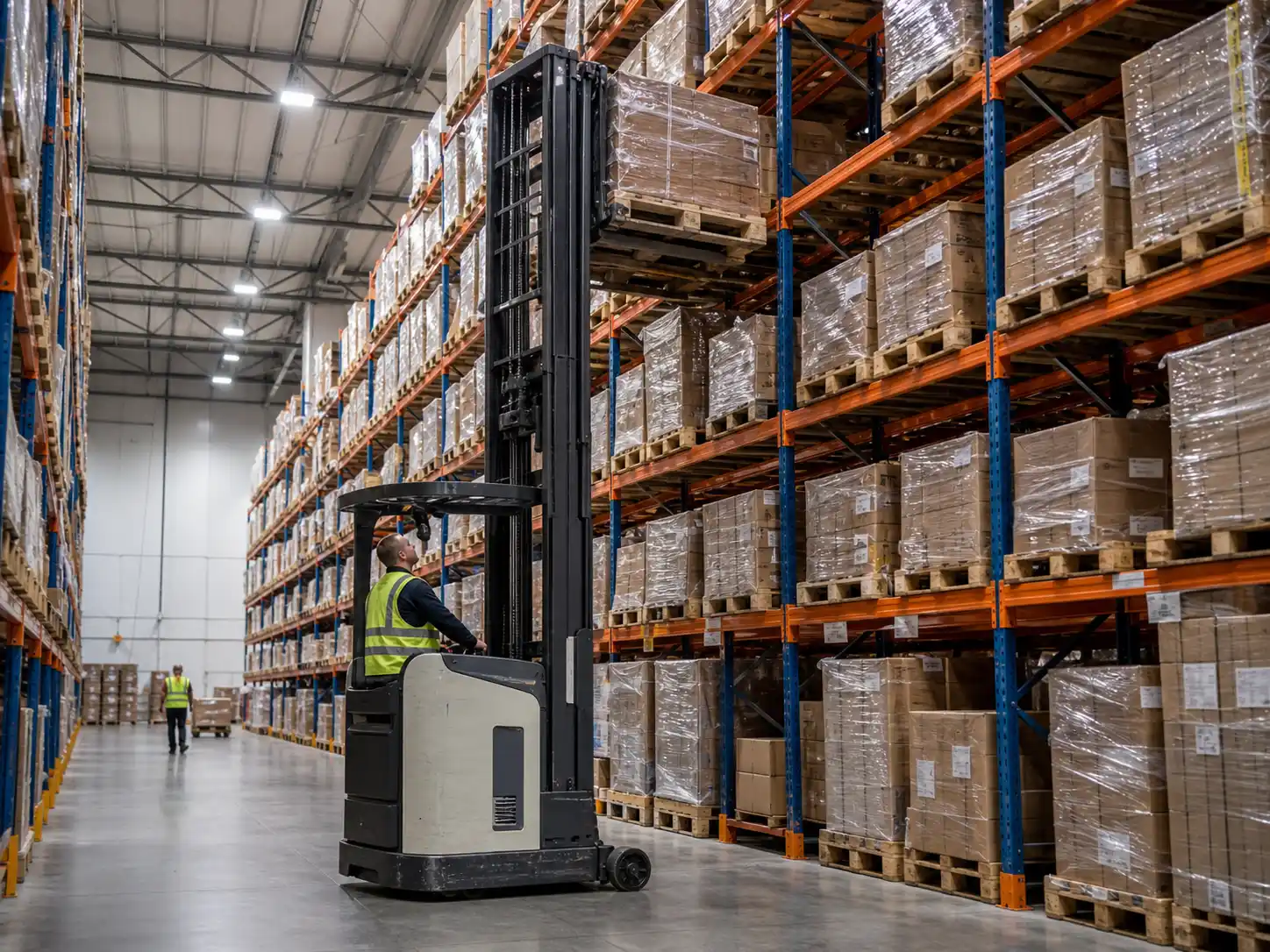
Double deep racking requires suitable handling equipment. A standard forklift may not access the rear pallet safely or efficiently. Many double deep systems require reach trucks, pantograph reach trucks, or deep-reach forklifts that can reach the second pallet position.
This requirement affects the entire project. If the warehouse already uses compatible reach trucks, the transition may be smoother. If not, the buyer must include forklift investment, operator training, aisle width adjustment, and maintenance planning in the project decision.
Forklift visibility also matters. Rear pallet handling requires more precision. Operators need training to place and retrieve pallets safely without damaging beams, uprights, or products. In high-volume warehouses, forklift productivity should be tested before final layout confirmation.
Forklift and Operation Fit Table
| Operation Factor | Why It Matters in Double Deep Racking | Buyer Action |
|---|---|---|
| Forklift Reach Depth | Needed to access rear pallet | Confirm truck specification |
| Operator Visibility | Affects placement accuracy | Train operators and use guide systems |
| 통로 폭 | Controls movement efficiency | Match aisle design to truck model |
| Pallet Quality | Poor pallets create handling risk | Standardize pallet condition |
| 하중 안정성 | Unstable loads are harder to store deep | Use proper wrapping and palletizing |
| WMS Control | Helps locate rear pallets | Use inventory rules for front/rear positions |
A good double deep project is not only a rack purchase. It is a rack-plus-forklift-plus-inventory-control decision.
Inventory Strategy: When Double Deep Racking Makes Sense
Double deep racking works best when warehouses store at least two pallets of the same SKU or product group. This reduces the problem of blocked access. If the rear pallet and front pallet are the same SKU or part of the same batch, handling becomes simpler.
The system is less suitable for warehouses with many slow-moving single-pallet SKUs, urgent random picking, or strict FIFO requirements unless supported by strong WMS logic and disciplined operation. In some cases, double deep can still work with controlled inventory rules, but buyers must understand the trade-off.
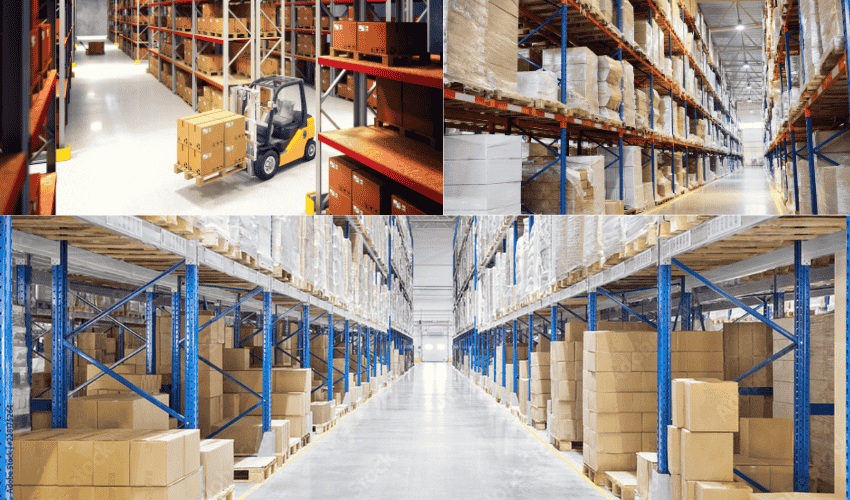
High-quality Double Deep Racking Solutions
SKU Suitability Table
| Inventory Profile | Double Deep Suitability | Reason |
|---|---|---|
| Multiple pallets per SKU | 높음 | Front and rear positions can store same SKU |
| Fast-moving batch inventory | 높음 | Efficient for grouped replenishment |
| Cold storage pallets | 높음 | Better space usage in expensive storage areas |
| Many single-pallet SKUs | Low to medium | Access may be blocked |
| Strict FIFO inventory | Medium | Requires careful WMS control |
| 혼합된 팔레트 크기 | Medium to low | Rack depth and handling become difficult |
If a warehouse frequently stores five, ten, or twenty pallets of the same SKU, 더블 딥 랙 can be a very strong option. If every pallet is different and urgent access is required, selective racking may remain better.
Safety, Regulations, and Compliance Considerations
Warehouse racking safety should never be treated as an afterthought. Double deep systems store heavy loads at height, with forklifts reaching deeper into the rack. This increases the importance of structural design, installation accuracy, operator training, and routine inspection.
Buyers should consider local regulations and industry guidance related to pallet racking design, warehouse safety, forklift operation, load signage, and workplace inspections. In many markets, racking systems should follow recognized standards such as EN 15512 in Europe, ANSI/RMI guidance in North America, and local building or seismic requirements where applicable.
Important safety practices include:
Displaying rated load capacity
Anchoring racks correctly
Using column protectors
Inspecting beam deflection
Checking upright damage
Training forklift operators
Keeping aisles clear
Avoiding overload
Maintaining pallet quality
Recording rack inspections
For buyers planning a broader warehouse upgrade, a turnkey warehouse storage solution can help align racking, layout, safety planning, forklift movement, and storage strategy into one system instead of treating each component separately.
Safety Risk and Prevention Table
| Safety Risk | Common Cause | Prevention Method |
|---|---|---|
| Rack overload | Wrong load calculation | Use rated load signage and engineering data |
| Forklift impact | Narrow aisles or poor operation | Add column guards and operator training |
| Beam deflection | Excessive pallet weight | Select correct beam capacity |
| Pallet fall | Poor pallet condition or wrong placement | Use pallet support bars where needed |
| Inventory blocking | Poor SKU strategy | Store same SKU in front and rear positions |
| Rear pallet damage | Poor visibility or reach control | Use trained operators and suitable forklifts |
Safety is not where buyers should “save a little.” Rack failure is not a small inconvenience. It is a warehouse event.
Common Buyer Mistakes When Choosing Double Deep Racking
The first mistake is chasing storage density without checking inventory flow. More pallet positions look impressive on paper, but if operators constantly move front pallets to reach rear pallets, productivity suffers.
The second mistake is ignoring forklift compatibility. The rack layout may be correct, but if the forklift cannot reach safely, the system fails in daily operation.
The third mistake is underestimating floor conditions. Uneven floors, weak concrete, or poor anchoring can reduce safety.
The fourth mistake is mixing too many SKU types in double deep lanes. This creates access problems and slows picking.
The fifth mistake is buying from a supplier without engineering support. A rack supplier should provide load data, layout planning, installation guidance, and after-sales support.
When buyers are unsure whether double deep is the right fit, the best move is to discuss warehouse dimensions, pallet sizes, SKU movement, forklift type, and load requirements with a technical team. A direct warehouse racking supplier contact page can help buyers prepare project details before requesting layout recommendations.
How to Choose a Double Deep Racking Manufacturer
A reliable Double Deep Racking factory should do more than fabricate steel beams and uprights. It should understand warehouse layout, pallet movement, forklift access, inventory logic, safety regulations, and installation accuracy.
Buyers should ask:
Can you provide rack layout drawings?
What standards does the system follow?
What is the load capacity per beam level?
What upright frame options are available?
What forklift type is required?
Can you design around existing warehouse dimensions?
Can you support seismic or special safety requirements?
Do you provide installation guidance?
Can you support future expansion?
What safety accessories are recommended?
For procurement teams comparing suppliers, the cheapest offer may not be the most economical option. A poorly designed system can reduce productivity, create forklift damage, and increase safety risk. The better decision is to compare lifecycle value, engineering support, production quality, and after-sales response.
Final Buyer Decision Guide
| Buyer Situation | Recommended Decision | Why |
|---|---|---|
| Need more pallet positions without moving facility | Choose Double Deep Racking | Improves density using existing space |
| Many pallets per SKU | Strong fit | Reduces access conflicts |
| High SKU variety with random picking | Use selective racking or mixed layout | Direct access may be more important |
| Cold storage operation | Consider double deep | Better use of expensive cold space |
| No suitable reach truck | Review forklift investment first | Handling equipment is essential |
| Strict FIFO requirement | Use careful WMS control or alternative system | Rear pallet access may affect rotation |
| Heavy loads | Request engineered design | Safety and beam capacity are critical |
Final Recommendation: Density Is Valuable Only When It Works
더블 딥 랙 is one of the most practical ways to increase pallet storage density without moving into fully automated systems or extremely restrictive storage layouts. It gives warehouses more capacity than selective racking while keeping better accessibility than drive-in racking.
However, it is not a universal solution. It works best when pallet volume is high, SKU variety is manageable, forklifts are compatible, and inventory rules are disciplined. For the right operation, it can reduce space pressure, improve storage economics, and delay costly facility expansion.
For buyers, the smartest next step is to collect warehouse dimensions, pallet specifications, load weights, SKU movement data, forklift information, ceiling height, floor condition, and operational goals before requesting a design. A qualified industrial warehouse racking supplier can then recommend whether double deep, selective, drive-in, shuttle, or a mixed system is the best fit.
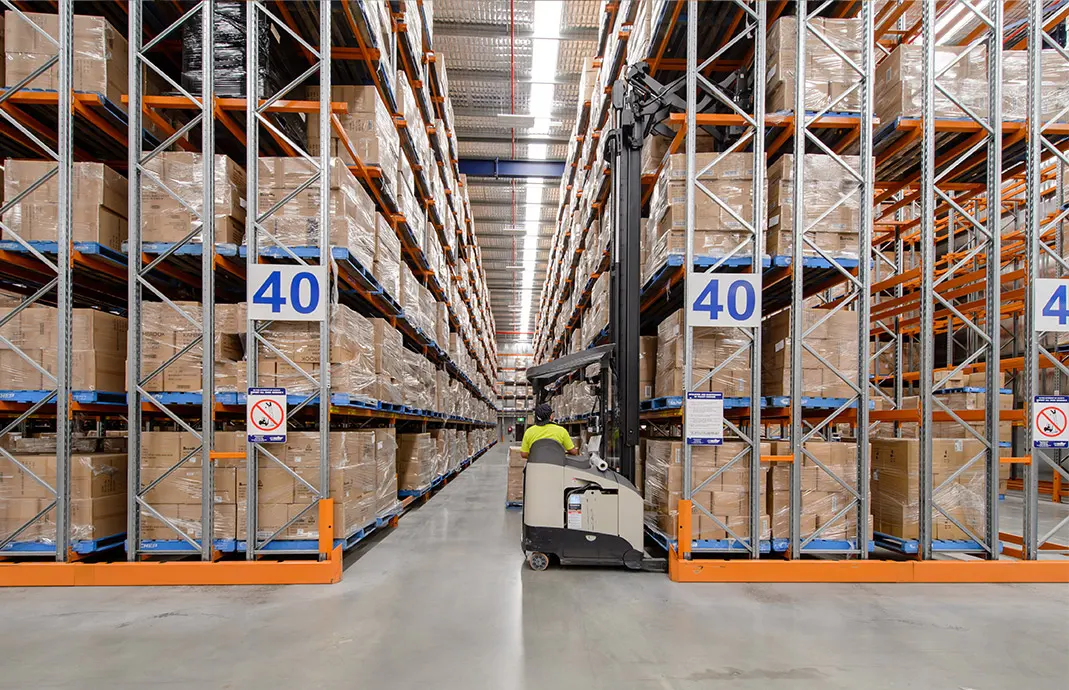
더블 딥 랙
자주 묻는 질문
1. What is Double Deep Racking?
Double Deep Racking is a pallet storage system that stores pallets two positions deep from the aisle side. It is similar to selective pallet racking but increases storage density by placing one pallet behind another. The front pallet usually needs to be moved before the rear pallet can be accessed. This system is suitable for warehouses with multiple pallets of the same SKU, batch storage needs, and operations using reach trucks or deep-reach forklifts.
2. What are the main advantages of Double Deep Racking?
The main advantages of Double Deep Racking include higher pallet storage density, fewer aisles, better use of warehouse floor space, and improved storage efficiency compared with standard selective racking. It is especially useful for warehouses with medium SKU variety and high pallet volume. It can help delay facility expansion, reduce external storage needs, and improve space utilization when the inventory profile and forklift equipment are suitable.
3. What type of forklift is needed for Double Deep Racking?
Double Deep Racking usually requires a reach truck, deep-reach forklift, or pantograph reach truck capable of accessing the rear pallet position. A standard counterbalance forklift may not be suitable for many double deep layouts. Buyers should confirm forklift reach depth, aisle width, lifting height, operator visibility, and load capacity before finalizing the racking design. Forklift compatibility is one of the most important factors in a successful double deep project.
4. Is Double Deep Racking suitable for FIFO inventory?
Double Deep Racking is not the easiest system for strict FIFO inventory because the rear pallet may be blocked by the front pallet. It is better suited for LIFO or grouped SKU storage where front and rear pallets are the same product or batch. However, FIFO control may still be possible with careful warehouse management system rules, disciplined pallet placement, and proper inventory planning. Buyers with strict expiry control should evaluate the layout carefully.
5. How do buyers choose a reliable Double Deep Racking supplier?
Buyers should choose a Double Deep Racking supplier by checking engineering capability, rack load data, steel specifications, layout design support, safety standards, forklift compatibility guidance, installation support, and after-sales service. A reliable supplier should evaluate warehouse dimensions, pallet sizes, pallet weights, SKU movement, floor condition, and operational goals before recommending a system. The best supplier helps design a safe and efficient storage solution, not just sell rack components.
참조
- “ANSI MH16.1: Specification for the Design, Testing and Utilization of Industrial Steel Storage Racks” — Rack Manufacturers Institute, MHI
- “EN 15512: Steel Static Storage Systems — Adjustable Pallet Racking Systems” — European Committee for Standardization
- “Warehousing and Storage: A Guide to Health and Safety” — Health and Safety Executive, HSE
- “Powered Industrial Trucks Standard” — Occupational Safety and Health Administration, OSHA
- “Storage Rack Safety Guidelines” — Canadian Centre for Occupational Health and Safety
- “Warehouse Space Optimization and Pallet Storage Strategy” — International Warehouse Logistics Association
- “Forklift Safety and Operator Training Guidance” — National Safety Council
- “Cold Storage Warehouse Design and Operation” — Global Cold Chain Alliance
How to Choose Double Deep Racking with Less Risk
What matters most: Double Deep Racking should be evaluated as a complete storage strategy, not only as a pallet rack system. Buyers should review pallet weight, SKU movement, forklift reach capability, aisle width, rack height, floor condition, load capacity, inventory rotation, and safety requirements before selecting a layout.
How buyers should decide: If the warehouse stores multiple pallets of the same SKU, double deep racking can improve storage density and reduce aisle space. If the warehouse has many single-pallet SKUs or frequent random picking, selective racking may remain more efficient. If the warehouse operates in cold storage, double deep racking may deliver stronger space value because every square meter is expensive to maintain.
Why mistakes happen: Many projects fail because buyers focus only on pallet position count. A layout with more storage can still perform poorly if the forklift cannot reach safely, if front pallets block rear pallets too often, if SKU grouping is weak, or if rack capacity is not engineered correctly. Storage density must be balanced with access, safety, and inventory control.
Option logic: Choose Double Deep Racking for batch storage, medium SKU variety, cold storage, and high pallet volume. Choose selective racking for high SKU variety and direct access. Choose drive-in racking for low SKU variety and very high density. Choose pallet shuttle systems when automation, throughput, and deep-lane storage justify the investment.
Final consideration: Before confirming a Double Deep Racking project, buyers should prepare warehouse drawings, pallet dimensions, pallet weights, SKU movement data, forklift models, floor condition, ceiling height, and safety requirements. A professional supplier can then design a safer, denser, and more practical warehouse pallet storage solution.