

 Italian
  English
  Russian
  French
  Spanish
  German
  Portuguese
  Korean
  Japanese
  Arabic
  Turkish
  Indonesian
  Dutch
Dutch 

Quick Summary: Choosing the Right Forklift for Warehouse Operations
Forklift Selection Is a Warehouse Efficiency Decision, Not Just an Equipment Purchase
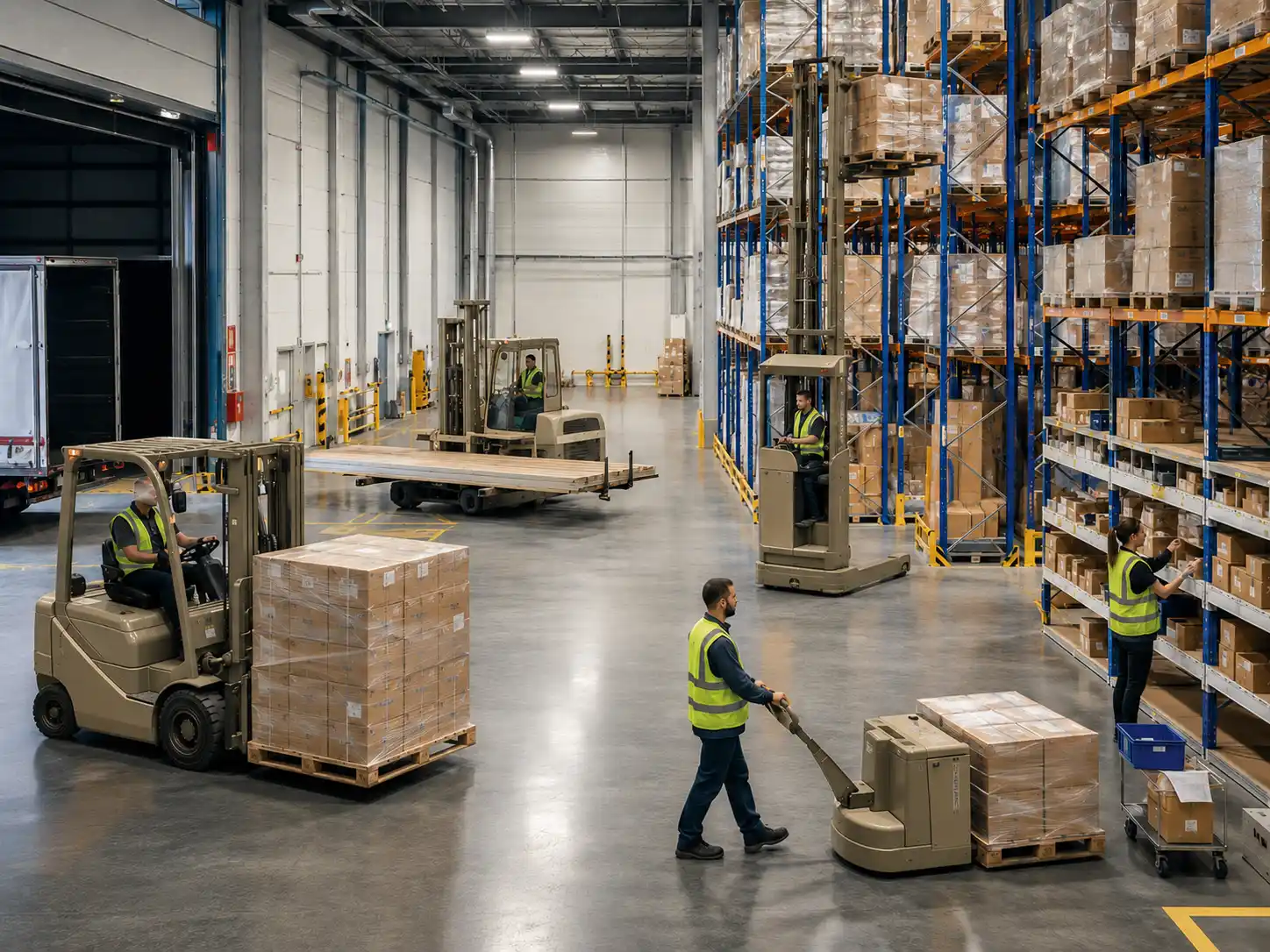
In warehouse operations, a Forklift is not just a machine that lifts pallets. It controls how fast goods move, how safely workers operate, how much racking space can be used, how often products are damaged, and how efficiently trucks are loaded or unloaded. The wrong forklift can make a warehouse slower, more dangerous, and more expensive to operate. That is not machinery procurement; that is buying a daily headache with wheels.
Many buyers start by asking, “How many tons can it lift?” That question matters, but it is not enough. A warehouse forklift must match aisle width, pallet size, rack height, floor surface, turning radius, power source, operator skill, charging or fueling plan, and maintenance support. If the forklift is too large, it wastes aisle space. If it is too small, it creates overload risk. If it cannot reach the top rack, vertical storage becomes useless.
For companies planning warehouse upgrades, logistics centers, cold storage, manufacturing plants, or material handling fleets, working with an experienced forklift supplier helps connect equipment selection with real workflow. The best choice is not always the strongest forklift. The best choice is the forklift that moves the right load, in the right aisle, at the right height, at the lowest safe operating cost.
Forklift supplier
What Is a Forklift?
Basic Definition of Forklift
A Forklift is a powered industrial truck used to lift, move, stack, load, unload, and transport pallets, crates, cartons, containers, raw materials, finished goods, and warehouse inventory. Forklifts are widely used in distribution centers, factories, ports, construction yards, retail warehouses, cold storage facilities, food processing plants, logistics hubs, and manufacturing workshops.
Forklifts may be powered by electric batteries, lithium batteries, LPG, diesel, gasoline, or hybrid systems. They may use cushion tires for smooth indoor floors, pneumatic tires for outdoor surfaces, or specialized tires for cold storage and rough terrain. Some forklifts are built for general pallet handling, while others are designed for narrow aisles, high racking, long materials, piece picking, dock staging, or outdoor heavy-duty work.
Why Forklift Selection Matters in Warehouse Operations
Forklift selection affects speed, safety, storage density, labor cost, product damage, and total cost of ownership. If a counterbalance forklift is used in a narrow-aisle warehouse, turning becomes slow and rack damage becomes more likely. If a pallet truck is used where high stacking is required, it cannot complete the job. If a diesel forklift is used indoors without proper ventilation, emissions and worker comfort become serious issues.
Buyers should think of a forklift as part of a larger warehouse system. Racks, aisles, docks, pallets, floors, operators, chargers, batteries, maintenance schedules, and safety routes all work together. If one element is wrong, the whole operation feels it.
Forklift Classes and Practical Warehouse Use
| General Class / Type | Common Equipment | Typical Warehouse Use |
|---|---|---|
| Electric motor rider trucks | Electric counterbalance forklift | Indoor pallet handling and clean warehouse use |
| Electric narrow aisle trucks | Reach truck, order picker, turret truck | High-density racking and narrow aisles |
| Electric hand or rider trucks | Pallet jack, electric pallet truck, walkie stacker | Short-distance pallet movement and dock staging |
| Internal combustion trucks | LPG, diesel, gasoline forklift | Outdoor or heavy-duty handling |
| Rough terrain forklifts | Pneumatic tire forklifts | Construction yards and uneven outdoor ground |
Top 5 Forklift Types Used in Warehouses
1. Counterbalance Forklift
The counterbalance Forklift is one of the most common forklift types in warehouse operations. It uses a rear counterweight to balance the load carried at the front forks. This simple structure makes it versatile for loading trucks, moving pallets, feeding production lines, unloading containers, and stacking goods in medium-height racking systems.
Counterbalance forklifts are available in electric, LPG, diesel, and gasoline models. Electric models are cleaner and quieter for indoor warehouses. LPG and diesel models are stronger for outdoor work, mixed environments, or heavier loads. In standard warehouse aisles, counterbalance forklifts are practical because they can move directly toward pallets without needing outriggers or reach mechanisms.
If your warehouse has standard aisles, dock-to-rack movement, moderate lift heights, and mixed pallet tasks, a counterbalance forklift is usually a strong choice. If the warehouse has high racking and narrow aisles, a reach truck may perform better. A practical article on the vantaggi dell’utilizzo di carrelli retrattili nei magazzini can help buyers understand why this type remains popular for general-purpose material handling.
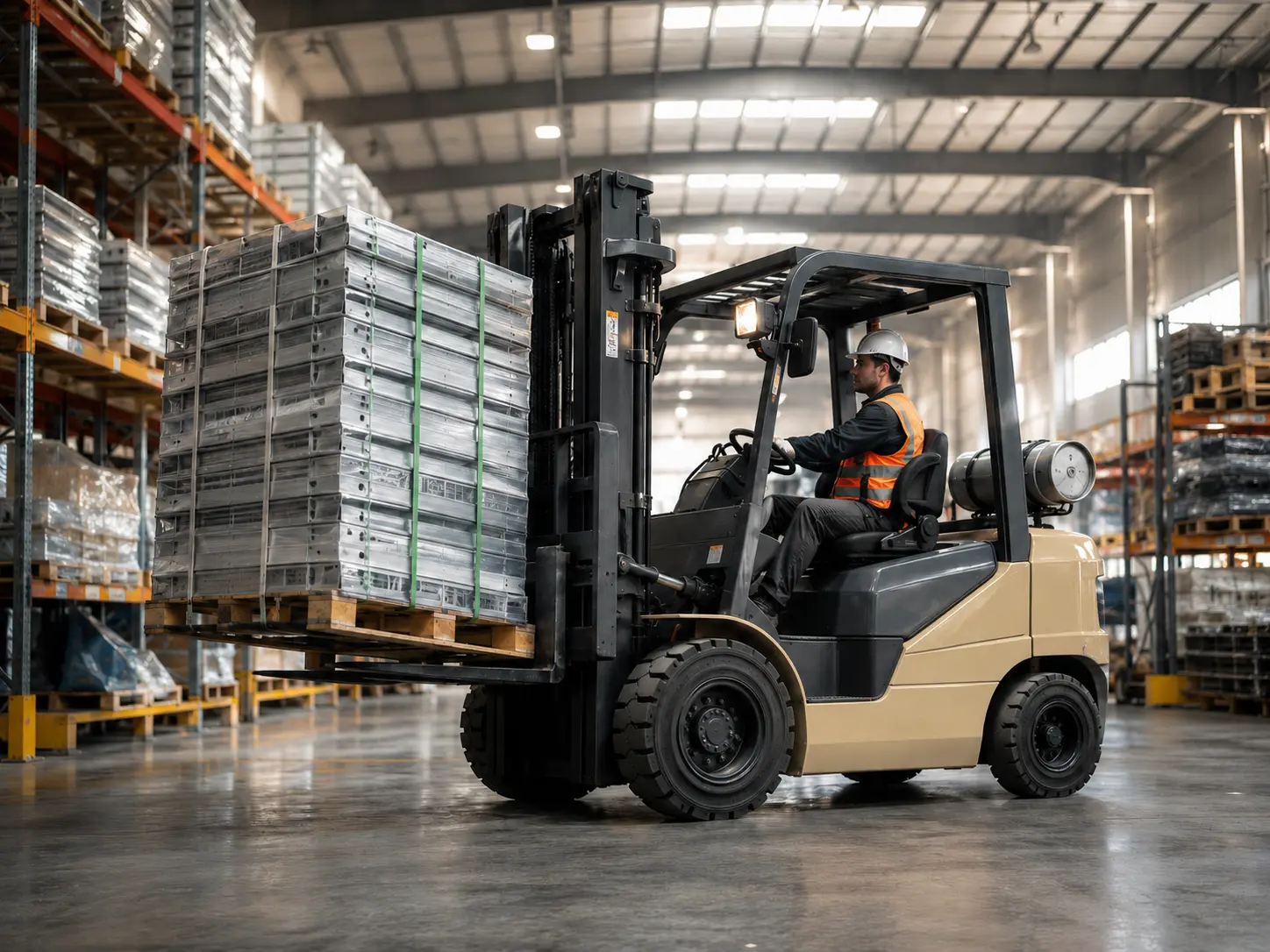
Counterbalance Forklifts
2. Reach Truck Forklift
A reach truck Forklift is designed for narrow aisles and high racking. Instead of moving the entire truck body close to the pallet, the mast or fork carriage extends forward to reach into the rack. This allows the truck body to stay compact, making it useful in warehouses where storage density is more important than outdoor versatility.
Reach trucks are widely used in distribution centers, cold storage warehouses, high-bay storage systems, retail logistics hubs, and pallet racking operations. They are usually electric and work best on smooth indoor floors. Their main advantage is the ability to access higher racks while requiring less aisle width than a counterbalance forklift.
The limitation is environment. Reach trucks are not ideal for rough outdoor yards, uneven floors, or frequent truck loading outside the warehouse. They also require trained operators because high lifting and narrow-aisle movement leave less margin for sloppy driving. If storage density is the main goal, choose a reach truck. If outdoor loading and rough floors matter more, choose counterbalance or rough terrain equipment.
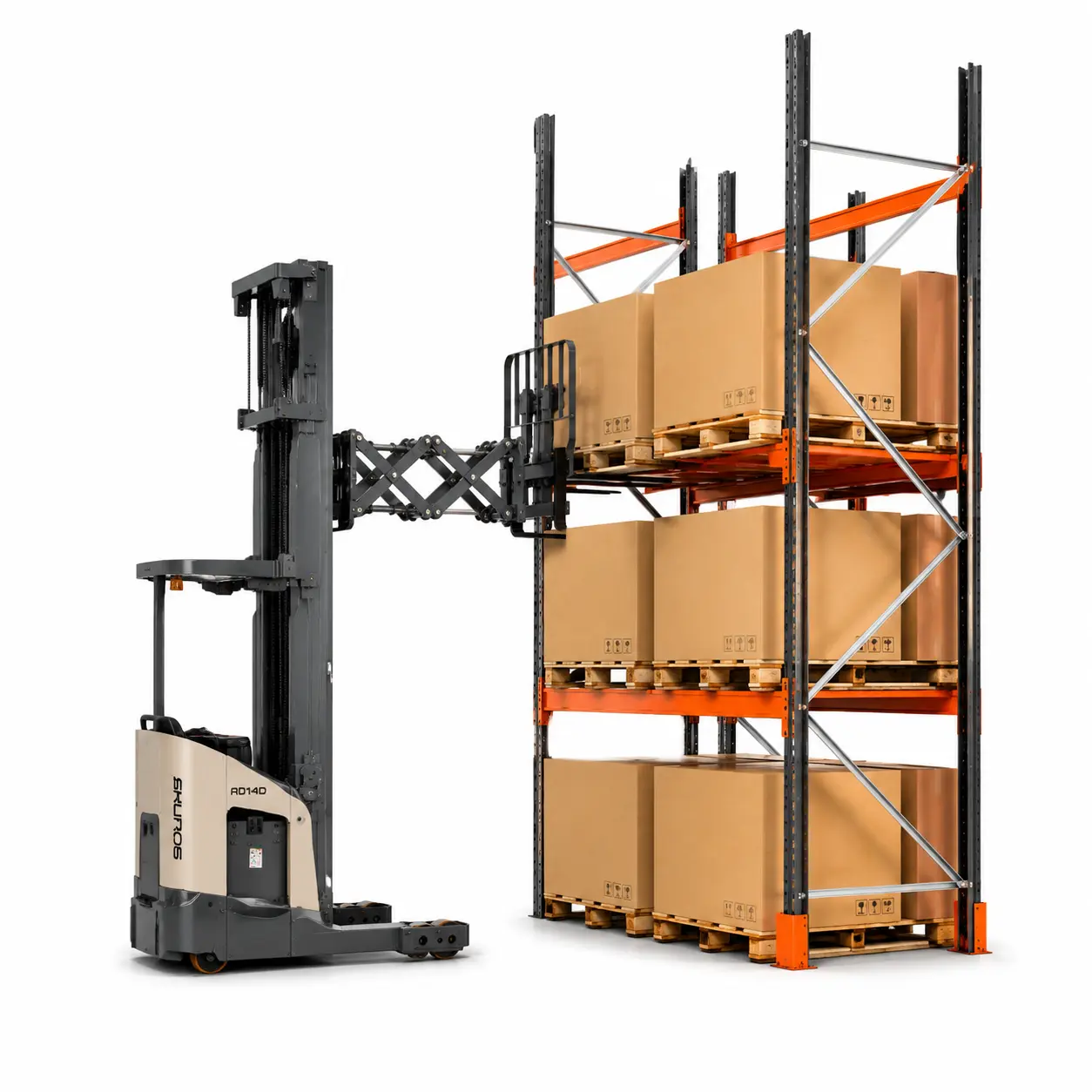
reach truck RD14-4
3. Pallet Jack / Electric Pallet Truck
A pallet jack, also called a pallet truck, is used for low-level pallet movement. Manual pallet jacks are simple, affordable, and common in small warehouses, retail stores, supermarkets, and delivery zones. Electric pallet trucks reduce operator fatigue and improve speed for longer travel distances, higher daily pallet volume, or dock staging tasks.
Pallet trucks are not designed for high racking. They lift pallets just enough to move them across the floor. That makes them excellent for loading docks, staging areas, production transfer, truck tailgate handling, and short-distance warehouse movement. If goods only need to move from truck to staging area, a pallet truck may be more efficient than a full-size forklift.
However, buyers should not use pallet trucks where stacking is required. If the job involves placing pallets into racks, choose a stacker, reach truck, or counterbalance forklift. For deeper selection logic, a guide on come scegliere il transpallet giusto per il vostro magazzino helps compare load capacity, fork length, travel distance, floor condition, and operator workload.
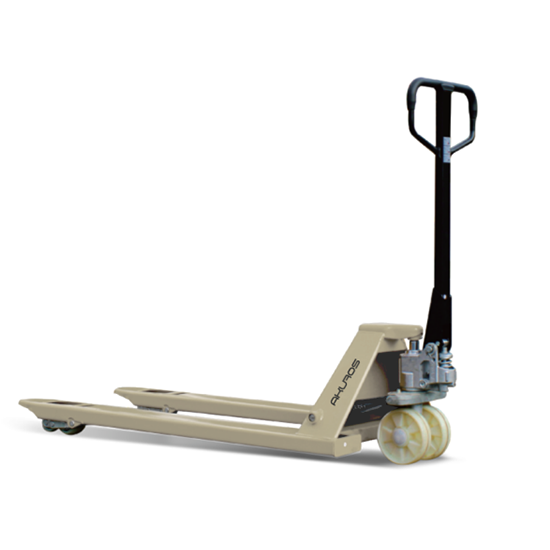 Hand Pallet Jacks |
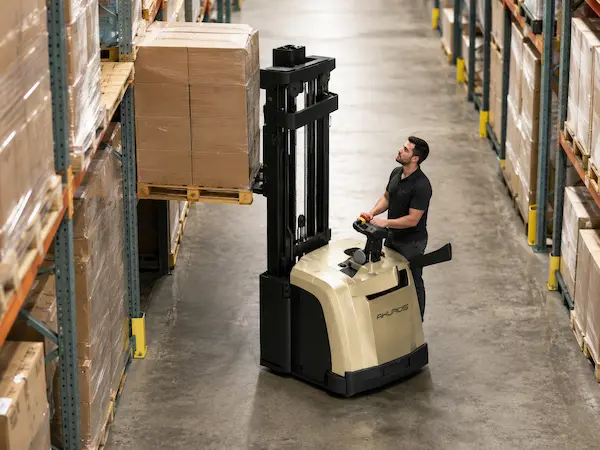 Akuros electric stacker truck lifting a pallet in a warehouse aisle |
4. Order Picker Forklift
An order picker Forklift is designed to lift the operator to the picking position so individual cartons, parts, or SKUs can be picked from shelves. It is not mainly used for moving full pallets. It is built for warehouses where accuracy, vertical picking, and SKU access matter more than bulk pallet transport.
Order pickers are common in e-commerce warehouses, spare parts distribution, retail fulfillment centers, pharmaceutical storage, small-package logistics, and SKU-heavy inventory systems. They allow workers to pick directly from high shelves, improving access to individual items without bringing full pallets down from racks.
The main limitation is load type. If your warehouse mostly moves full pallets, order pickers are not the first choice. If your warehouse picks individual cartons, components, or online orders, order pickers can greatly improve workflow. Operators must use proper fall protection, training, and picking procedures. One careless move at height can turn efficiency equipment into an incident report with paperwork attached.
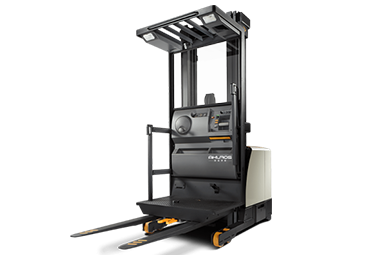
Picker per gli ordini
5. Side Loader Forklift
A side loader Forklift is built to handle long or bulky materials from the side. Instead of carrying the load in front, it lifts and transports materials along the side of the truck. This makes it useful for timber, steel pipes, aluminum profiles, PVC pipes, long panels, furniture boards, glass, and some stone or building material applications.
Side loaders are valuable when long materials would be difficult or dangerous to turn with a standard forklift. They reduce aisle turning problems and help operators move long loads through narrow warehouse lanes. Industries such as metal processing, lumber yards, panel manufacturing, and construction material storage often use side loaders or multidirectional forklifts.
The limitation is specialization. A side loader is not usually the best choice for standard pallet handling. It costs more, requires layout planning, and needs trained operators. If your warehouse stores long materials, choose a side loader. If your warehouse mainly handles standard pallets, choose counterbalance, reach truck, or pallet truck systems instead.
Forklift Type Comparison Table
| Tipo di carrello elevatore | Best Use | Typical Load Range | Best Environment | Main Limitation |
|---|---|---|---|---|
| Counterbalance Forklift | General pallet handling | 1.5–5 tons or more | Indoor or outdoor depending on model | Needs wider aisles |
| Carrello elevatore | High racking and narrow aisles | 1–2.5 tons | Indoor smooth floors | Not ideal outdoors |
| Pallet Jack / Electric Pallet Truck | Short pallet movement | 1.5–3 tons | Docks and small warehouses | Low lift height |
| Picker per gli ordini | Piece picking | Light to medium loads | E-commerce and SKU-heavy warehouses | Not for bulk pallet movement |
| Side Loader Forklift | Long materials | 2–8 tons or more | Warehouses and yards | Specialized use |
How to Choose the Right Forklift for Your Warehouse
Choose by Load Weight
Load capacity is the first technical parameter buyers check, but it must be read correctly. A forklift rated for 3 tons may not safely lift 3 tons at every height, with every attachment, and at every load center. The actual safe lifting capacity may be lower when the load is long, tall, uneven, or lifted to a high rack level.
If your standard pallet is under 1.5 tons, a light-duty electric forklift or electric pallet truck may work. If loads are commonly 2–3 tons, a standard counterbalance forklift may be suitable. If materials are long, heavy, or off-center, side loaders or custom forklift solutions may be required. Always include a safety margin. Buying exactly at the limit is like driving with the fuel light on every day. Technically possible, but not intelligent.
Choose by Aisle Width
Aisle width can decide the forklift type before load capacity even enters the discussion. A counterbalance forklift may be versatile, but it needs more turning space. Reach trucks need less aisle width and help increase storage density. Pallet trucks are compact for dock areas. Side loaders are useful where long materials must move through narrow lanes.
| Layout del magazzino | Recommended Forklift Type | Why It Works |
|---|---|---|
| Wide aisles | Counterbalance forklift | Versatile and easy to operate |
| Corridoi stretti | Reach truck | Better turning and storage density |
| Very narrow aisles | Turret truck or VNA truck | Maximizes pallet positions |
| Short dock area | Pallet jack or electric pallet truck | Compact and efficient |
| Long material aisles | Side loader forklift | Handles long loads safely |
Choose by Lift Height
Lift height affects mast type, stability, visibility, and residual capacity. A forklift that works well at ground level may lose capacity at higher lift heights. Reach trucks are usually better for high rack storage because they are designed for vertical warehouse systems. Counterbalance forklifts are better for moderate-height handling and truck loading.
Order pickers are different. They do not simply lift pallets; they lift the operator for SKU picking. If your warehouse has many small orders and high shelf locations, an order picker may be more valuable than a general forklift.
Choose by Floor and Environment
Indoor smooth concrete floors are very different from outdoor yards, uneven paving, cold rooms, or construction sites. Electric forklifts are usually better for clean indoor warehouses because they are quieter and produce no direct exhaust emissions during operation. Diesel forklifts are stronger for outdoor yards, rough surfaces, and heavy-duty tasks. Cold storage needs special attention to battery performance, hydraulic oil, condensation, and operator comfort.
For cold-chain operations, the forklift should match temperature, floor condition, door cycles, and battery runtime. A specialized article on how to choose the best forklift for cold storage warehouses can help buyers avoid equipment failure caused by low-temperature conditions, condensation, charging issues, and unsuitable tires.
Choose by Energy Type
| Tipo di alimentazione | Punti di forza | Limitation | Best Use |
|---|---|---|---|
| Elettrico | Clean, quiet, low emissions | Battery charging time | Indoor warehouses |
| LPG | Strong and flexible | Fuel storage and ventilation | Mixed indoor and outdoor use |
| Diesel | High torque and outdoor strength | Emissions and noise | Outdoor yards and heavy-duty use |
| Gasoline | Flexible fuel option | Less common in modern warehouses | General outdoor use |
| Batteria al litio | Fast charging and long cycle life | Higher upfront cost | High-use indoor operations |
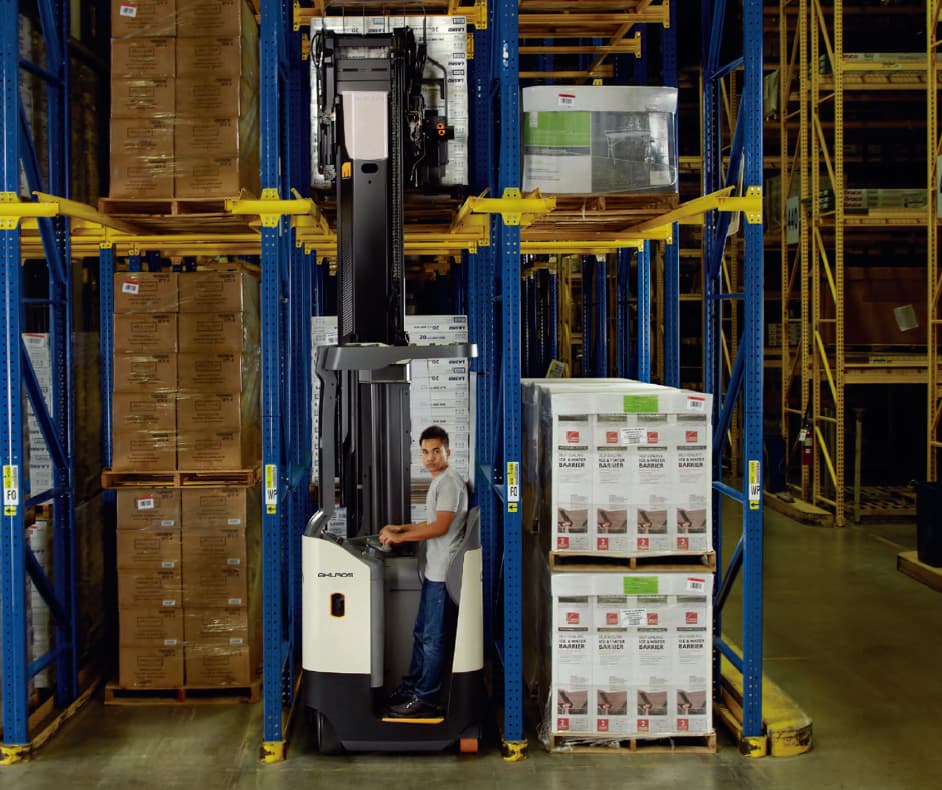
carrello elevatore akuros
Real Warehouse Scenarios and Recommended Forklift Choices
Small Warehouse with Standard Pallet Movement
For small warehouses with moderate pallet volume, an electric counterbalance forklift or electric pallet truck is often enough. If goods only move between dock, staging, and ground-level storage, a pallet truck may provide the best cost-performance balance. If stacking is required, a compact counterbalance forklift or walkie stacker may be better.
High-Bay Distribution Center
High-bay distribution centers usually need reach trucks for pallet racking and pallet jacks for dock staging. The goal is to maximize vertical storage while keeping movement efficient. Counterbalance forklifts may still be used for unloading trucks, but reach trucks usually handle rack storage more efficiently.
E-Commerce Fulfillment Warehouse
E-commerce warehouses often handle many SKUs, small cartons, and frequent picking tasks. Order pickers, pallet jacks, electric stackers, and narrow-aisle equipment are common. The best equipment mix depends on order profile, shelf height, pick face layout, and daily order volume.
Building Materials or Stone Warehouse
Building material warehouses often handle heavy, long, or irregular loads. Standard pallets may be mixed with panels, pipes, boards, and stone products. Counterbalance forklifts, side loaders, and specialized attachments may be required. Buyers should check load center, attachment weight, fork length, and stability carefully.
Warehouse Storage System Integration
A forklift works best when it is selected together with the storage system. Rack height, beam spacing, pallet position, aisle width, turning radius, and picking workflow all matter. If your warehouse is upgrading storage density, an innovative shelf rack system should be planned together with forklift selection, not after the equipment has already been purchased.
Common Mistakes When Buying a Forklift
Mistake 1: Buying Only by Maximum Load Capacity
Many buyers see “3-ton forklift” and assume it can safely lift every 3-ton load in every condition. That is not how forklifts work. Load center, lift height, attachment weight, mast type, and load shape all affect real capacity. Always check residual capacity, not only the number on the sales sheet.
Mistake 2: Ignoring Aisle Width
A forklift that cannot turn properly will slow the entire warehouse and increase rack damage. Measure actual aisle width, turning points, dock space, and rack clearance before choosing the model. The forklift should fit the warehouse, not force the warehouse to apologize every shift.
Mistake 3: Choosing Diesel for Indoor Clean Warehouses
Diesel forklifts are powerful, but indoor use requires serious attention to emissions, ventilation, noise, and worker comfort. For clean indoor warehouses, electric forklifts are usually more suitable.
Mistake 4: Forgetting Battery and Charging Planning
Electric forklifts need charging space, shift planning, charger compatibility, battery type selection, and sometimes backup batteries. Lithium forklifts may reduce charging downtime, but they require higher upfront investment and correct charging management.
Mistake 5: Not Training Operators Properly
Forklifts are safety-critical equipment. Operator training, daily inspection, speed control, pedestrian separation, and load stability should be part of warehouse management. Buying a forklift without training is like buying a sharp knife and handing it to someone blindfolded. Bad idea, fast.
Mistake 6: Ignoring Maintenance and Spare Parts
A cheaper forklift may become expensive if spare parts are hard to source, service is slow, or maintenance access is poor. Downtime affects loading, shipping, production, and customer delivery. Always consider total cost of ownership, not only purchase price.
Forklift Safety and Compliance Considerations
Formazione degli operatori
Forklift operators should be trained and evaluated before operating powered industrial trucks. Training should cover equipment type, load handling, travel speed, ramp operation, pedestrian safety, inspection, refueling or charging, and site-specific hazards. Different forklift types may require different training because a reach truck, counterbalance forklift, order picker, and rough terrain forklift do not behave the same way.
Daily Inspection
Operators should inspect tires, forks, mast, chains, hydraulics, brakes, horn, lights, steering, warning devices, battery or fuel system, and visible damage before use. Small defects can become major safety problems under load.
Load Stability
Loads should be centered, stable, and within rated capacity. Operators should avoid sudden turns, over-speeding, lifting while traveling, or carrying loads that block visibility without proper procedures. Attachments such as clamps, fork positioners, or rotators change the capacity calculation.
Pedestrian Safety
Forklifts and pedestrians should be separated wherever possible. Warehouses should use marked traffic lanes, mirrors, alarms, blue lights, speed limits, rack protection, and clear crossing zones. Safety is easier to design into the layout than to shout across a noisy warehouse later.
Technical Parameters Buyers Should Compare
| Parameter | Why It Matters | Domanda dell’acquirente |
|---|---|---|
| Rated capacity | Determines load ability | What is the maximum pallet weight? |
| Load center | Affects real lifting capacity | What pallet size and load shape are used? |
| Lift height | Matches rack height | What is the highest rack beam? |
| Raggio di sterzata | Affects aisle use | Can it turn safely in existing aisles? |
| Mast type | Affects visibility and lift height | Do you need duplex, triplex, or free lift? |
| Tire type | Matches floor condition | Cushion, pneumatic, or solid tire? |
| Power source | Affects emissions and cost | Electric, LPG, diesel, or lithium? |
| Allegati | Changes capacity and use | Clamps, side shifter, fork positioner? |
| Battery/runtime | Affects shift planning | Can it cover one or two shifts? |
| Maintenance access | Affects downtime | Are spare parts available? |
Forklift Attachments and When They Matter
Cambio laterale
A side shifter allows the forks to move left or right without repositioning the entire forklift. This improves pallet placement, reduces repeated movements, and helps operators align loads with racks or trucks more efficiently.
Posizionatore di forcella
A fork positioner adjusts fork spacing hydraulically. It is useful when handling different pallet widths, heavy loads, or mixed materials. It reduces manual fork adjustment and improves productivity.
Carton Clamp and Paper Roll Clamp
Carton clamps are used for palletless loads such as appliances, boxed goods, and logistics operations. Paper roll clamps are used in paper, printing, and packaging industries. These attachments improve handling efficiency but reduce residual capacity, so buyers must recalculate lifting limits.
Rotator
A rotator allows the forklift to rotate loads for dumping or special handling. It is used in food processing, recycling, waste handling, and manufacturing. It should be selected carefully because it changes center of gravity and safety requirements.
Stone Clamp or Slab Attachment
Stone, glass, and panel handling may require special clamps or attachments. These applications need extra attention to load shape, clamp pressure, surface protection, and forklift stability. Attachments can make a forklift more useful, but they also make capacity calculation more serious.
Electric Forklift vs Diesel Forklift: Which Is Better?
Electric Forklift Advantages
Electric forklifts are clean, quiet, and well suited for indoor warehouses. They are popular in food, pharmaceutical, retail, e-commerce, and clean manufacturing environments. They produce no direct exhaust emissions during operation, reduce noise, and often require less routine maintenance than internal combustion models.
Diesel Forklift Advantages
Diesel forklifts are strong for outdoor yards, rougher surfaces, heavy loads, and long operating periods. They are common in construction materials, timber yards, metal warehouses, ports, and heavy manufacturing. Their limitations include emissions, noise, ventilation requirements, and indoor restrictions.
Decision Logic
If your operation is indoors with clean air requirements, choose electric. If your operation is outdoors with heavy loads and rough ground, choose diesel or rough terrain models. If your work is mixed indoor and outdoor, LPG or electric may be evaluated depending on ventilation, load, duty cycle, and energy cost. For international buyers comparing supply options, the 2026 guide to sourcing industrial forklifts from China can help evaluate specifications, supplier capability, documentation, and procurement risk before ordering.
Buyer Decision Table: Which Forklift Should You Choose?
| Warehouse Need | Recommended Forklift | Key Advantage | Risk to Avoid |
|---|---|---|---|
| General pallet handling | Counterbalance forklift | Versatile and common | Too wide for narrow aisles |
| High racking | Reach truck | Better lift height and aisle efficiency | Outdoor misuse |
| Dock staging | Electric pallet truck | Compact and fast | Low lift height |
| E-commerce picking | Order picker | Better SKU access | Not for heavy pallets |
| Long materials | Side loader forklift | Handles long loads safely | Poor layout planning |
| Outdoor yard | Rough terrain forklift | Handles uneven ground | Indoor emissions |
| magazzini frigoriferi | Electric reach truck | Clean and narrow-aisle capable | Battery performance issues |
| Produzione pesante | Diesel or heavy-duty forklift | Strong lifting power | Emissions and floor damage |
How to Evaluate a Forklift Manufacturer or Supplier
Product Range
A professional forklift supplier should offer different solutions for standard pallet handling, narrow aisles, dock staging, cold storage, outdoor yards, long materials, and special attachments. If every problem receives the same equipment recommendation, the supplier is selling inventory, not solving your warehouse problem.
Customization Ability
Fork length, mast height, tire type, battery type, charger, cabin, lighting, fork positioner, side shifter, clamps, warning lights, and safety devices may need customization. A good supplier should help match the configuration to the actual warehouse rather than pushing the lowest-price model.
Assistenza tecnica
Before buying, buyers should provide warehouse layout, pallet dimensions, maximum load weight, rack height, aisle width, floor condition, operating hours, temperature environment, and power preference. A technical supplier can then calculate capacity, turning radius, lift height, attachment impact, and charging plan.
Spare Parts and After-Sales Support
Forklift downtime is expensive. Spare parts availability, service response, manuals, training support, warranty terms, and export documentation should be checked before purchase. For pallet-level warehouse operations, it is also helpful to understand Tutto quello che c'è da sapere sui transpallet, because many warehouses need both forklifts and pallet trucks working together.
Industry Trends in Warehouse Forklift Operations
Electrification
More warehouses are moving toward electric and lithium forklifts because of noise reduction, cleaner operation, lower direct emissions, and improved charging options. Lithium batteries are especially attractive for high-frequency warehouses that need opportunity charging and reduced battery maintenance.
Narrow-Aisle Storage Growth
Warehouse rent and land cost are rising, so companies are increasing storage density with higher racking, reach trucks, and very narrow aisle systems. This trend makes aisle width and lift height more important in forklift selection.
Automation and Fleet Monitoring
Telematics, usage tracking, collision alerts, access control, maintenance reminders, and fleet monitoring are becoming more common. These tools help managers reduce damage, control operator behavior, and schedule maintenance before breakdowns happen.
Safety-First Warehouse Design
Forklift selection is increasingly connected to pedestrian separation, rack protection, floor marking, mirrors, speed control, warning lights, and operator training. A safe warehouse is designed, not wished into existence.
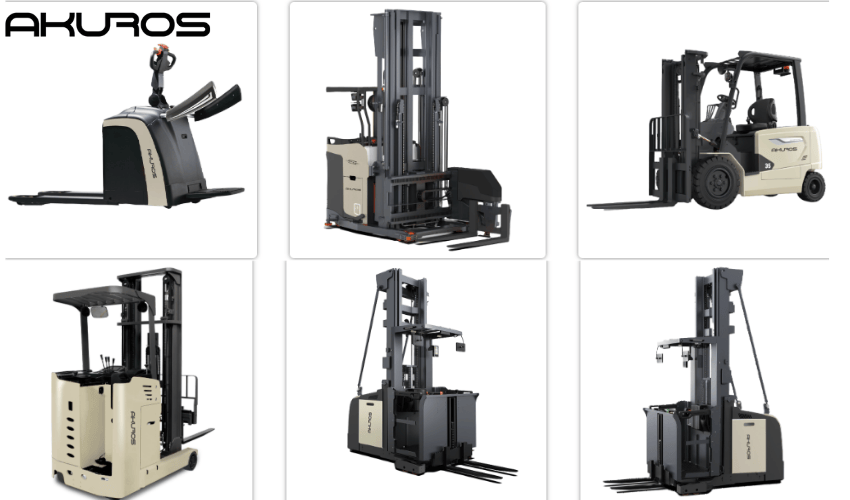
Warehouse Solutions Forklifts
Final Recommendation: Choose the Forklift by Workflow, Not by Habit
A Forklift is essential for warehouse operations, but the right type depends on load weight, aisle width, lift height, floor condition, material shape, energy source, and daily workflow. Counterbalance forklifts are versatile for general pallet handling. Reach trucks improve narrow-aisle storage. Pallet trucks move pallets efficiently at dock level. Order pickers support SKU-heavy operations. Side loaders handle long materials safely.
The best decision is not based on habit or the lowest price. It is based on the warehouse problem you need to solve. If your warehouse has wide aisles and mixed pallet movement, choose a counterbalance forklift. If storage density matters, choose a reach truck. If the job is short-distance movement, choose a pallet truck. If the operation is e-commerce picking, choose an order picker. If materials are long, choose a side loader.
Before purchasing, share your warehouse layout, pallet size, maximum load weight, rack height, aisle width, floor condition, operating hours, temperature environment, attachment needs, and preferred power source through a forklift project consultation. A project-based recommendation can reduce buying mistakes, improve safety, and protect long-term operating cost.
FAQ About Forklift Types and Warehouse Uses
1. What is the most common Forklift type in warehouses?
Counterbalance forklifts are among the most common Forklift types in warehouses because they are versatile and suitable for general pallet handling, truck loading, unloading, and medium-height stacking. They can be electric, LPG, diesel, or gasoline powered, depending on the warehouse environment. However, they require more aisle space than reach trucks, so buyers should check aisle width and turning radius before choosing them for high-density storage.
2. What Forklift is best for narrow aisles?
Reach trucks are usually the best Forklift choice for narrow aisles and high racking because they are compact and designed to reach into pallet racks without needing as much turning space as a counterbalance forklift. They are commonly used in indoor warehouses, distribution centers, and cold storage facilities with smooth floors. For very narrow aisles, turret trucks or VNA trucks may be considered, but they require more specialized layout planning and operator training.
3. What is the difference between a pallet jack and a Forklift?
A pallet jack is mainly used for low-level pallet movement over short distances, while a Forklift can lift loads higher and stack goods into racks. Manual and electric pallet jacks are useful for docks, staging areas, retail warehouses, and small storage spaces. A forklift is better when loads need to be lifted onto racks, loaded into trucks, moved across longer routes, or handled at higher elevations. Many warehouses use both machines for different workflow stages.
4. Should I choose an electric or diesel Forklift?
Choose an electric Forklift for indoor warehouses, clean environments, food storage, pharmaceutical facilities, retail distribution, and operations where low noise and low direct emissions are important. Choose a diesel Forklift for outdoor yards, rougher surfaces, heavier loads, and long operating hours where ventilation is not a major limitation. For mixed indoor and outdoor use, LPG or lithium electric models may also be evaluated depending on load weight, operating time, ventilation, charging plan, and energy cost.
5. How do I choose the right Forklift capacity?
To choose the right Forklift capacity, check the maximum load weight, load center, pallet size, load shape, lift height, attachment weight, and required safety margin. Do not choose only by the rated capacity label, because actual safe capacity can decrease at higher lift heights or when attachments are used. If the warehouse handles long, uneven, or off-center loads, buyers should request a technical capacity calculation from the supplier before purchasing.
Riferimenti
- “29 CFR 1910.178 Powered Industrial Trucks” — Occupational Safety and Health Administration — OSHA — General Industry Standards
- “Powered Industrial Trucks: Types and Fundamentals” — Occupational Safety and Health Administration — OSHA eTool — Powered Industrial Trucks Resource
- “Powered Industrial Trucks: Training Assistance” — Occupational Safety and Health Administration — OSHA eTool — Forklift Training Resource
- “ISO 3691-1 Industrial Trucks — Safety Requirements and Verification” — International Organization for Standardization — ISO — Industrial Truck Safety Standard
- “ANSI/ITSDF B56.1 Safety Standard for Low Lift and High Lift Trucks” — Industrial Truck Standards Development Foundation — ITSDF — Powered Industrial Truck Safety Standard
- “Forklift Safety: Reducing the Risk” — National Institute for Occupational Safety and Health — NIOSH — Workplace Safety Guidance
- “Forklift Operator Training and Safe Use Guidance” — Health and Safety Executive — HSE — Workplace Transport Resource
- “World Industrial Truck Statistics and Market Intelligence” — Industrial Truck Association — ITA — Industrial Truck Market Resource
Ready Buyer Insight for Forklift Selection
What should buyers understand first? A Forklift is not a one-size-fits-all warehouse machine. Different forklift types solve different warehouse problems, including pallet movement, high racking, narrow aisles, dock staging, piece picking, long material handling, cold storage, and outdoor operation.
Why does forklift type matter? Choosing the wrong forklift can reduce storage density, slow picking, damage racks, increase product loss, raise maintenance cost, create safety hazards, and waste warehouse space. The right forklift improves handling speed, operator safety, and material flow.
How should the right forklift be selected? If the warehouse has standard aisles and mixed pallet movement, choose a counterbalance forklift. If the warehouse has narrow aisles and high racks, choose a reach truck. If the job is short-distance pallet movement, choose a pallet truck. If the warehouse picks individual SKUs, choose an order picker. If the material is long, choose a side loader.
Option insight: Electric forklifts are better for clean indoor warehouses. Diesel forklifts are stronger for outdoor heavy-duty use. LPG forklifts may work for mixed environments. Lithium battery forklifts are useful for high-use indoor operations where fast charging matters.
Consideration insight: Buyers should not choose a Forklift by rated capacity alone. Important factors include load center, lift height, residual capacity, aisle width, turning radius, floor condition, tire type, mast type, power source, attachments, battery runtime, spare parts, and after-sales support.
Recommendation: Choose the Forklift by workflow, not by habit. For warehouse upgrades, cold storage, pallet handling, e-commerce picking, or heavy material handling, request a technical recommendation based on actual warehouse data before ordering.
If your warehouse is planning a new forklift purchase, prepare your load data, rack height, aisle width, floor condition, pallet size, operating hours, and power preference before contacting a supplier. A clear specification makes the buying decision faster, safer, and more cost-effective.