

 Italian
  English
  Russian
  French
  Spanish
  German
  Portuguese
  Korean
  Japanese
  Arabic
  Turkish
  Indonesian
  Dutch
Dutch 

Reliable Handling in -25°C Frozen Warehouses
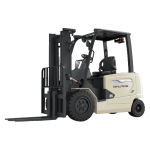
The E16 cold storage electric forklift is designed for stable, reliable operation in -25°C frozen warehouses. This article explains where the E16 performs best, how it should be deployed in cold storage environments, and why it is often selected for projects requiring consistent uptime rather than maximum lifting capacity.
1. Why Standard Electric Forklifts Fail in Cold Storage
Many electric forklifts that perform well in ambient warehouses experience rapid degradation once deployed in frozen environments. Common issues include:
-
Battery discharge instability
-
Condensation affecting controllers and wiring
-
Reduced traction and braking response
-
Increased downtime during peak periods
These failures are rarely visible during initial commissioning, but typically surface within months of operation.
The E16 cold storage carrello elevatore elettrico is designed specifically to address these low-temperature risks rather than adapting standard equipment.
 2. Typical Use Scenarios for the E16 in Cold Storage
The E16 is most commonly deployed in:
-
Frozen food warehouses operating at -18°C to -25°C
-
Seafood and protein cold storage facilities
-
Export-oriented cold chain distribution centers
-
Multi-temperature warehouses with dedicated frozen zones
In these environments, reliability and predictability are usually more valuable than maximum lifting capacity.
| Evaluation Dimension | E16 Cold Storage Electric Forklift | Standard Electric Forklift |
|---|---|---|
| Operating Temperature | Designed for stable operation at -18°C to -25°C | Performance degrades below -10°C |
| Battery Performance | Cold-rated battery with stable discharge under low temperature | Rapid voltage drop and reduced shift coverage |
| Electronics Protection | Enhanced sealing to reduce condensation-related failures | High risk of moisture-related faults |
| Traction & Braking | Predictable handling on frozen and damp floors | Inconsistent braking and increased slip risk |
| Typical Use Scenario | Frozen food, seafood, export-oriented cold storage | Ambient or lightly chilled warehouses |
| Lifecycle Reliability | Optimized for long-term use in frozen environments | Accelerated wear and frequent downtime |
| ROI Profile | Higher upfront cost, lower long-term operating cost | Lower purchase price, higher lifecycle cost |
3. Key Design Priorities of the E16 Cold Storage Forklift
Instead of focusing on headline specifications, the E16 is engineered around cold storage realities:
Cold-Environment Design Focus
-
Stable low-temperature battery performance
-
Enhanced sealing for electronics and connectors
-
Predictable braking and handling on frozen floors
-
Reduced sensitivity to temperature transitions
These design priorities directly address the most common causes of downtime in frozen warehouses.
4. Battery Performance Under -25°C Conditions
Battery performance is the single most critical factor for electric forklifts in cold storage.
The E16 is typically paired with cold-rated forklift battery systems designed to:
-
Maintain stable discharge at low temperatures
-
Reduce voltage drop under load
-
Support consistent shift coverage
This results in fewer mid-shift interruptions and more predictable daily throughput.
5. Traction, Tires, and Operator Safety
Frozen and occasionally damp floors significantly affect handling stability. The E16 is commonly equipped with polyurethane tire solutions optimized for cold environments.
Benefits include:
-
More consistent traction
-
Shorter braking distance under load
-
Reduced slip-related safety incidents
In cold storage, tire selection is a safety decision rather than a consumable choice.
6. How the E16 Fits into Cold Storage Layouts
The E16 is frequently used in:
-
Selective racking aisles
-
Double deep racking systems
-
Staging and dispatch zones
Its maneuverability and predictable handling make it suitable for facilities where forklift routes are frequent and repetitive.
7. E16 vs Higher-Capacity Forklifts in Cold Storage
In many cold storage projects, higher-capacity forklifts are selected by default. However, this often leads to:
-
Higher energy consumption
-
Reduced maneuverability
-
Lower effective utilization
For standard palletized frozen goods, the E16 often delivers better overall ROI by matching capacity to actual load profiles.
8. Common Deployment Mistakes
Typical mistakes when deploying E16 or similar forklifts include:
-
Using the same forklift across frozen and ambient zones
-
Ignoring battery charging strategy
-
Treating tires as a standard spare part
-
Oversizing forklift capacity “for safety”
Avoiding these mistakes significantly improves lifecycle performance.
9. When the E16 Is Not the Right Choice
The E16 may not be suitable for:
-
Extremely heavy or oversized pallets
-
Ultra-high bay storage requiring specialized reach trucks
-
Fully automated, driverless-only environments
Correct forklift selection should always follow task and layout analysis.
10. Google Popular Topics (Contextual Answers)
Is the E16 suitable for -25°C cold storage?
Yes, when equipped with cold-rated batteries and appropriate tires.
Can the E16 operate continuously in frozen warehouses?
Yes, with proper charging strategy and maintenance planning.
Is the E16 better than diesel forklifts for cold storage?
For indoor frozen warehouses, electric forklifts are safer and more efficient.
What industries commonly use the E16?
Frozen food, seafood, export cold chain, and 3PL cold storage.
Does the E16 support automation upgrades?
The E16 can be integrated into semi-automated workflows depending on project design.