

 Italian
  English
  Russian
  French
  Spanish
  German
  Portuguese
  Korean
  Japanese
  Arabic
  Turkish
  Indonesian
  Dutch
Dutch 

High-Bay Handling Without Compromising Stability
Cold storage reach trucks operate under extreme conditions where lift height, stability, and reliability must coexist. This article explains how reach trucks should be selected and deployed in -25°C high-bay cold storage warehouses, focusing on stability, battery performance, and long-term operational reliability rather than headline specifications.
1. Why Reach Trucks Are Critical in High-Bay Cold Storage
As cold storage land and construction costs rise, high-bay designs have become standard. Reach trucks are therefore structural equipment, not optional tools.
However, many reach trucks that perform adequately in ambient warehouses struggle in frozen environments due to:
-
Mast instability at low temperatures
-
Battery voltage drop under high lift loads
-
Condensation affecting sensors and controllers
-
Reduced braking predictability at height
In high-bay cold storage, reach truck failure is not just downtime—it is a safety risk.
This is why cold storage reach trucks must be selected as part of an integrated soluzione di magazzino, not adapted from standard models.
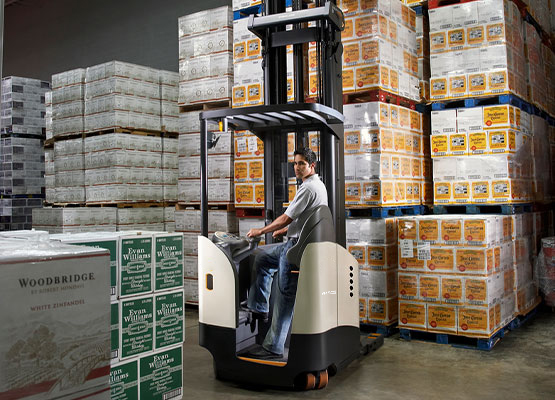 2. Typical Use Scenarios for Cold Storage Reach Trucks
Cold storage reach trucks are most commonly deployed in:
-
High-bay selective racking (10–13 m)
-
Double deep racking systems in frozen zones
-
Multi-temperature facilities with dedicated frozen aisles
-
Export-oriented cold chain distribution centers
In these scenarios, stability and predictability matter more than maximum theoretical lift height.
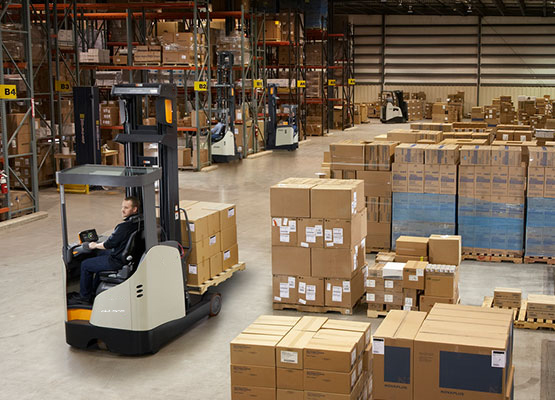
📊 Cold Storage Reach Truck — Application & Risk Comparison Table
This comparison highlights why reach trucks for cold storage must be engineered specifically for frozen environments rather than adapted from ambient designs.
 3. Lift Height vs Stability: The Core Trade-Off
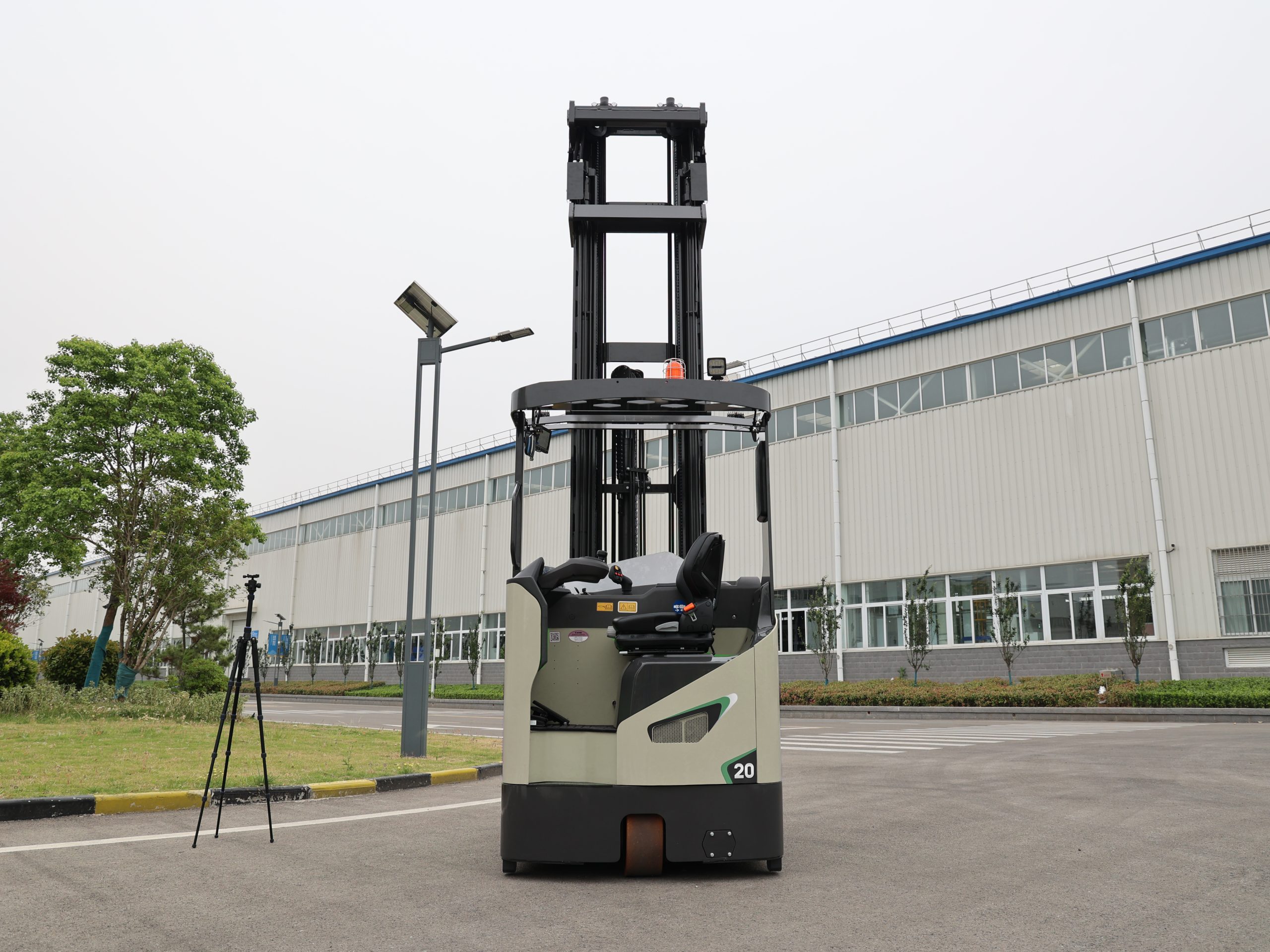
In cold storage, increasing lift height amplifies every weakness in the system:
-
Mast flex becomes more pronounced
-
Hydraulic response slows
-
Battery load spikes at maximum reach
Successful projects often prioritize stable handling at realistic operating heights over extreme lift specifications that are rarely used.
4. Battery Performance in High-Bay Frozen Operations
High-bay lifting places sustained load on the battery system, especially in frozen environments.
Cold storage reach trucks typically rely on cold-rated forklift battery systems designed to:
-
Maintain voltage stability under load
-
Reduce mid-cycle power loss
-
Support consistent lift speed at height
Battery selection directly affects cycle time and operator confidence.
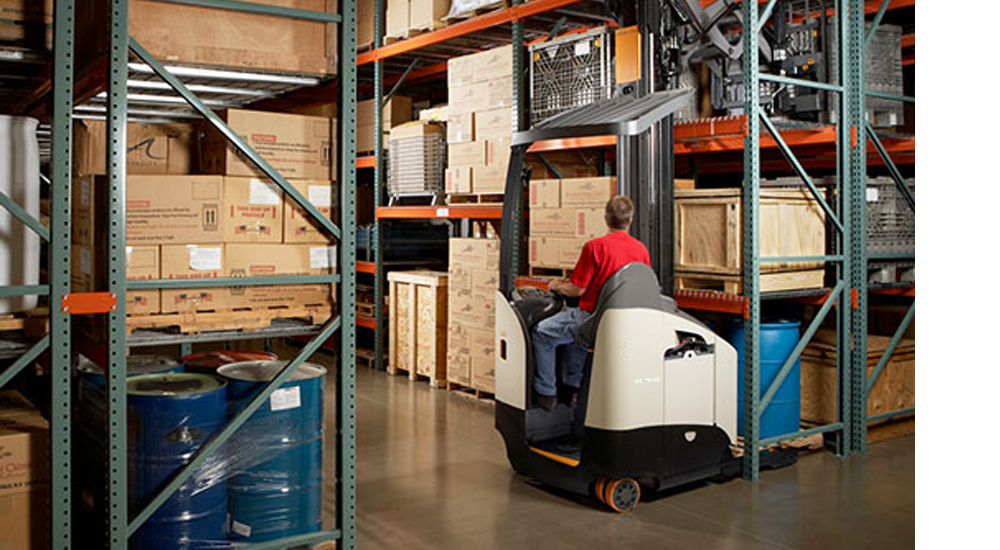
5. Reach Trucks and Racking Compatibility
Reach trucks must be matched precisely to racking geometry.
-
Very narrow aisle racking systems require precise steering and mast control
-
Double deep racking systems increase reach demand and load moment
Misalignment between racking design and reach truck capability often results in reduced throughput and increased rack damage.
 6. Operator Safety and Ergonomics in Cold Storage
Cold storage operators work under physically demanding conditions. Reach trucks that require excessive correction or induce mast sway increase fatigue and risk.
Cold storage–specific reach trucks emphasize:
-
Smooth control response
-
Clear visibility at height
-
Reduced vibration during lift and travel
These factors directly influence productivity and incident rates.
7. Common Mistakes When Selecting Reach Trucks for Cold Storage
Typical errors include:
-
Selecting based solely on maximum lift height
-
Ignoring battery performance under sustained load
-
Using the same reach truck for ambient and frozen zones
-
Underestimating mast behavior in low temperatures
These mistakes usually surface after commissioning, when correction costs are highest.
 8. When a Cold Storage Reach Truck Is Not the Right Choice
Cold storage reach trucks may not be suitable for:
-
Ultra-narrow aisles requiring guided VNA trucks
-
Fully automated AS/RS environments
-
Low-bay facilities where counterbalance forklifts suffice
Correct equipment selection always starts from task and layout analysis.
9. Google Popular Topics (Contextual Answers)
What lift height is practical for reach trucks in cold storage?
Typically 10–13 meters, depending on stability and battery performance.
Are standard reach trucks suitable for frozen warehouses?
Generally no, due to stability and condensation risks.
How does cold affect reach truck mast stability?
Low temperatures increase rigidity and slow hydraulic response, amplifying sway.
Can reach trucks operate continuously at -25°C?
Yes, if designed for cold storage and paired with proper battery systems.
Is reach truck selection linked to racking design?
Absolutely. Racking geometry directly determines reach truck requirements.