

 Indonesian
  English
  Russian
  French
  Spanish
  German
  Italian
  Portuguese
  Korean
  Japanese
  Arabic
  Turkish
  Dutch
Dutch 

Why Freezer Warehouses Need a Different Type of Electric Forklift
Many warehouse managers assume that any electric forklift can work in a cold room. In real operations, that assumption often leads to fast component aging, reduced battery efficiency, unstable traction on wet floors, fogging around the mast area, and operator fatigue. A standard warehouse truck may perform well at ambient temperature, but freezer warehouses usually operate at temperatures ranging from 0°C down to -25°C, and in some food logistics environments the transition area between dock and freezer creates repeated thermal shock.
Di sinilah tempat di mana E16 cold storage electric forklift becomes relevant. It is not simply a standard compact electric truck with a different label. It is a configuration logic built for low-temperature logistics, where waterproofing, anti-condensation design, component sealing, heating protection, mast stability, and tire grip matter as much as rated capacity.
In practical terms, freezer operators do not buy a forklift only for lifting. They buy uptime. They buy aisle efficiency. They buy predictable performance during long shifts. They buy precision when pallets are stacked in expensive, temperature-controlled storage locations. For this reason, a specialized electric forklift for freezer warehouse is usually evaluated not only on purchase price, but also on labor productivity, storage density, maintenance frequency, and risk reduction.
What the E16 Is Designed to Solve in Real Cold Chain Operations
Frequent Dock-to-Freezer Transfer
In many frozen food factories and cold chain distribution centers, forklifts move between loading docks, sorting areas, staging rooms, and deep freezer zones. These repeated temperature transitions accelerate condensation on metal parts, wiring, connectors, and exposed surfaces. The E16 is intended to reduce this operational stress by using a cold-storage-oriented configuration that supports more stable work in humid and freezing conditions.
Narrow Aisles and Tight Turning Space
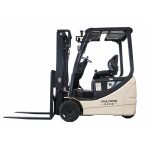
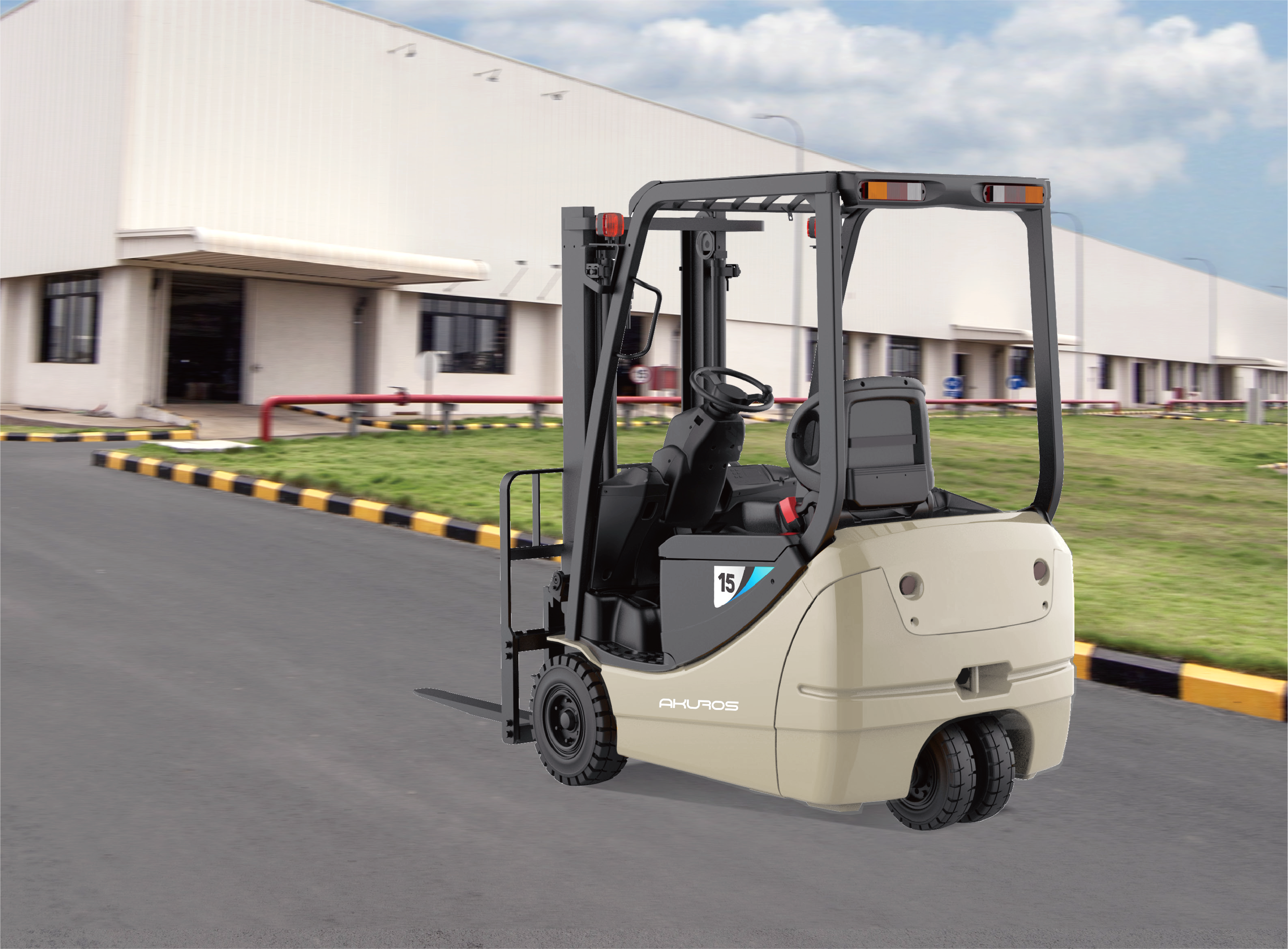
A freezer warehouse is expensive to build and expensive to run. Every extra square meter has a cost in insulation, refrigeration load, and energy consumption. As a result, operators often try to maximize racking density and minimize aisle width. A Forklift listrik 3 roda untuk gudang pendingin is attractive because it can usually maneuver better than a larger four-wheel model in confined spaces. The E16 is particularly suitable for this logic because compact turning directly contributes to more usable storage area.
High Precision at Medium and High Lift Heights
Frozen goods are often handled on standardized pallets, but the product value can still be high. Seafood, meat, dairy, prepared food, pharmaceutical cold chain items, and export-grade packaged foods all require accurate handling. The E16 focuses on controlled mast movement, clear forward visibility, and smooth hydraulic response, which reduces pallet damage and improves placement accuracy.
Technical Positioning of the E16 Cold Storage Electric Forklift
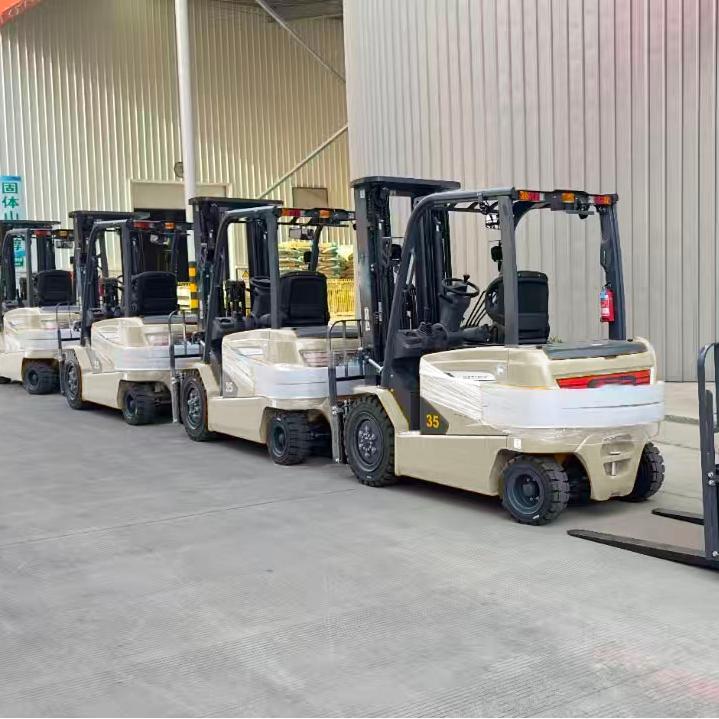
The E16 is generally positioned as a compact electric counterbalance forklift in the 1.6 ton class, often selected for cold storage, food processing logistics, frozen product distribution, and material movement in moisture-heavy working conditions. In many application cases, the machine is favored where a combination of the following is needed:
- Rated capacity around 1.6 tons
- Compact chassis for aisle flexibility
- Low-temperature electrical protection
- Water-resistant structure for condensation-prone areas
- Stable mast control for stacking accuracy
- Electric drive for indoor, low-emission, low-noise operation
Typical Material and Configuration Priorities for Cold Storage Use
When buyers compare models from a cold storage forklift factory, they often focus only on battery brand or lifting height. In reality, cold storage suitability is a systems issue. Several material and component priorities are far more important than they first appear.
Sealing and Electrical Protection
Moisture ingress is one of the most common causes of premature failure in cold storage equipment. Connectors, controllers, switches, and harness interfaces should be protected against water intrusion and condensation. This is especially important in facilities where forklifts move from ambient zones into low-temperature rooms many times per shift.
Corrosion-Resistant Metal Components
Low-temperature warehouses, seafood processing plants, and food-grade environments often expose machines to salt, washdown conditions, or persistent humidity. Surface treatment quality matters. Coated metal parts, anti-corrosion fasteners, and protected exposed components can extend service life and preserve appearance.
Cold-Resistant Rubber and Contact Materials
Rubber hardness changes with temperature. Seals, hoses, tires, and handle contact materials must retain usable properties in freezer conditions. If materials become brittle or lose elasticity, equipment reliability decreases quickly.
Battery and Thermal Logic
Battery chemistry and low-temperature management affect runtime directly. In many cold logistics applications, operators compare lead-acid and lithium systems. Lithium can offer charging flexibility and lower maintenance, while correctly configured lead-acid systems may still provide a cost-effective solution for fixed routines. What matters most is that the battery system, charger strategy, and work schedule are matched to freezer reality.
Scientific Data: Why Cold Temperature Changes Forklift Performance
Cold storage equipment buyers increasingly want quantified reasoning. The table below summarizes the operational impact of freezer conditions on typical electric forklift systems.
| Operating Factor | Ambient Warehouse | Freezer Warehouse | Prioritas Desain & Peralatan |
|---|---|---|---|
| Battery efficiency | Baseline | Can drop noticeably at low temperature | Shorter runtime if not cold-configured |
| Condensation risk | Low to moderate | High during temperature transitions | Higher risk to connectors and electronics |
| Floor traction | Stabil | Can decline on wet or icy surfaces | Greater need for proper tires and control |
| Hydraulic responsiveness | Normal | May slow if fluid and seals are not matched | Lower handling precision |
| Kenyamanan operator | Normal | Higher fatigue risk | Potential decline in productivity and safety |
Although exact values depend on battery chemistry, duty cycle, and facility conditions, it is common knowledge across industrial energy systems that cold temperature reduces electrochemical efficiency. This means a forklift built for freezer work must be evaluated as a full low-temperature package, not just by nominal battery size.
E16 Versus a Standard Electric Forklift
Turning Radius and Space Utilization
The E16 has a major advantage in compact environments. Compared with larger counterbalance forklifts, a properly configured E16 can reduce wasted aisle space and improve rack accessibility. In facilities where every aisle width decision affects storage revenue, this can be commercially significant.
Moisture and Condensation Tolerance
A general-purpose electric forklift may work indoors, but not all indoor spaces are equal. Freezer warehouse conditions create heavy moisture stress. The E16 is better suited when the working environment includes condensation, wet floors, and repeated temperature change.
Precision for Stacking and Retrieval
In cold chain logistics, placement accuracy is not just about neat storage. Misalignment increases product damage risk, rack contact risk, and retrieval delays. The E16 is positioned to provide smoother response and better micro-control than low-spec entry-level machines.
| Comparison Item | E16 Cold Storage Electric Forklift | Standard Indoor Electric Forklift |
|---|---|---|
| Low-temperature suitability | High when configured for freezer use | Often limited |
| Maneuverability in narrow aisles | Strong | Varies by model size |
| Condensation resistance | Improved | Often basic |
| Food and cold chain use logic | Well aligned | Not always optimized |
| Stacking precision | Tinggi | Sedang hingga tinggi |
 Real Application Scenarios for the E16
Frozen Food Distribution Centers
In a frozen food DC, operators often move pallets from inbound staging to storage positions, then from pick faces back to shipping areas. The E16 works well where travel paths include tight corners, repetitive pallet cycles, and medium-height stacking. The compact body reduces turning burden while electric drive supports clean indoor operation.
Seafood and Meat Processing Facilities
In seafood and meat environments, floors may remain wet for long periods and washdown routines can be frequent. Equipment used in these settings needs durable surface protection and stable control. The E16 is a suitable option for facilities that want a compact truck with better low-temperature reliability than standard indoor models.
Cold Storage Logistics for Third-Party Warehousing
Third-party logistics providers need equipment flexibility because client SKUs, pallet heights, and throughput patterns change. A compact freezer warehouse forklift manufacturer solution like the E16 offers a practical balance between storage density, handling speed, and operator training simplicity.
Energy Efficiency and Throughput Economics
Cold storage economics are shaped by both refrigeration cost and labor cost. If a forklift can complete more cycles per hour in a tighter operating envelope, it can contribute to lower per-pallet handling cost. In some warehouse studies, even a small reduction in travel distance per cycle can produce meaningful annual labor savings when multiplied across thousands of pallet movements.
For example, assume one forklift saves 8 seconds per handling cycle because of better turning performance and easier pallet entry. At 900 cycles per week, that equals 7,200 seconds saved, or 2 hours per week. Over 50 working weeks, that becomes 100 labor hours. In a multi-truck operation, the productivity effect becomes more meaningful.
Regulatory and Compliance Considerations
Buyers who source from an electric forklift manufacturer for export markets should also evaluate compliance readiness. While exact requirements vary by destination, cold storage forklifts commonly need support for documentation, electrical conformity, safety labeling, operator manuals, and maintenance records. Many international buyers also care about CE-related documentation, battery transport documentation, and traceability of core components.
For food-related environments, material handling equipment should also align with housekeeping and contamination-control expectations. This does not mean the forklift itself becomes a food-contact machine, but it should be easy to clean, resistant to corrosion, and suitable for hygienic warehouse discipline.
Industry Trend: Why Compact Electric Forklifts Are Growing in Cold Chain Warehouses
The cold chain sector is expanding due to frozen food demand, pharmaceutical temperature control, e-commerce grocery distribution, and stricter freshness requirements. At the same time, warehouse developers are under pressure to improve cubic storage efficiency. That creates demand for more agile electric equipment.
Three trends make the E16 especially relevant:
- Higher warehouse land and construction cost are driving narrower operating footprints.
- Labor shortages are increasing the value of operator-friendly controls and easier maneuverability.
- Energy management is pushing facilities toward electric fleets and more efficient equipment selection.
How Buyers Should Evaluate an E16 Before Purchase
Check Working Temperature Range
Do not stop at the words “cold storage ready.” Ask for the recommended working temperature range and whether the truck is designed for long-duration freezer use or intermittent entry into low-temperature rooms.
Match Aisle Width to the Real Pallet Dimension
Always calculate aisle width using actual pallet size, load overhang, fork length, and turning method. A compact truck creates value only when matched to the racking layout.
Confirm Battery and Charger Strategy
Ask whether the solution supports your available power supply, charging window, shift structure, and maintenance policy. Runtime in freezer work should be verified conservatively.
Review Service Parts Availability
Downtime in a cold warehouse can be expensive. Buyers should ask about controllers, sensors, hoses, wear parts, seals, tires, and lead times for replacement components.
Kesimpulan
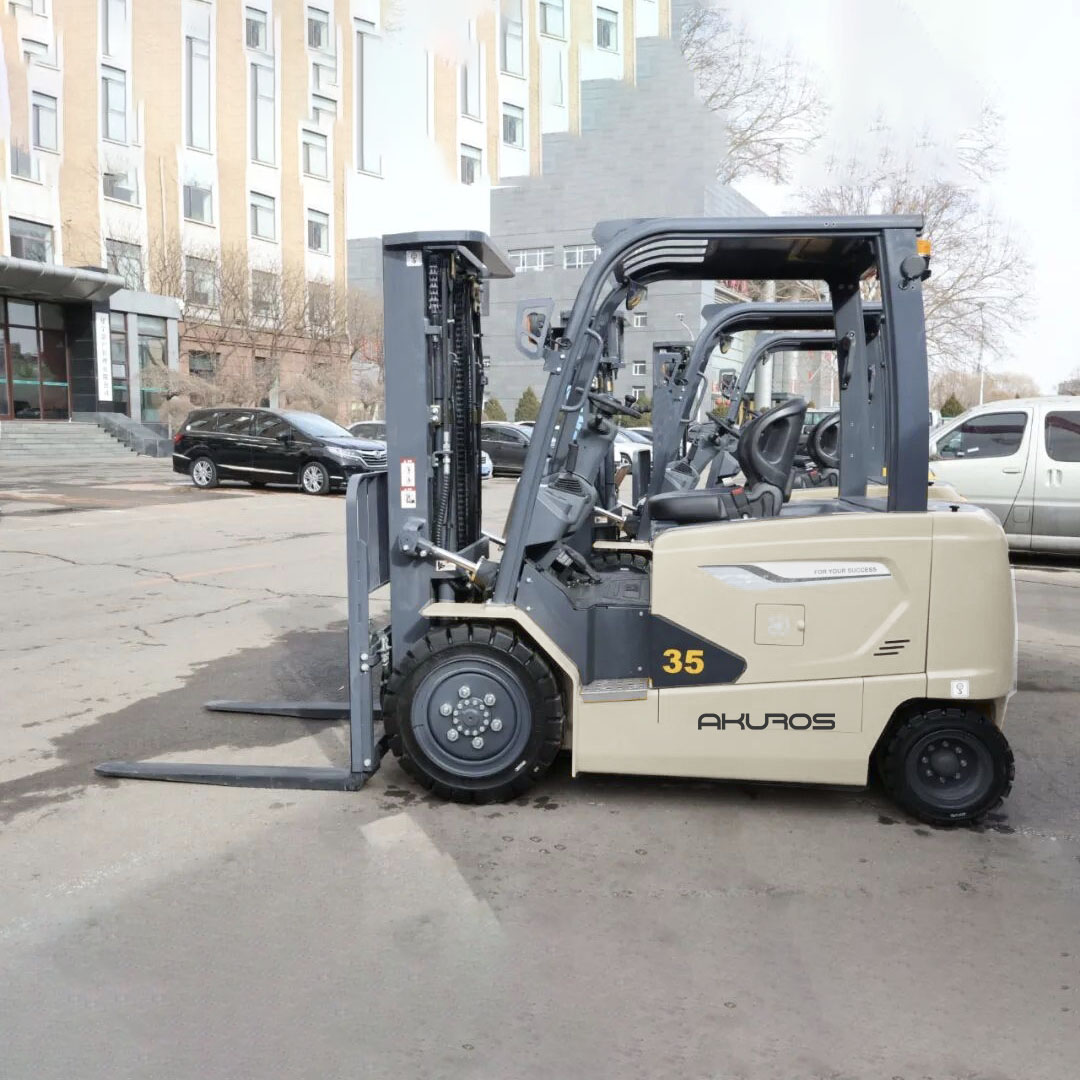
The E16 cold storage electric forklift is not just a smaller electric truck. It is a practical equipment choice for warehouses that need precision, compact movement, and reliable freezer performance. For operators comparing a Forklift listrik 3 roda untuk gudang pendingin, sourcing from a freezer warehouse forklift manufacturer, or evaluating offers from a cold storage forklift factory, the E16 is attractive because it addresses the real combination of cold resistance, maneuverability, safety, and productivity.
In cold chain logistics, equipment selection affects more than handling. It influences storage density, maintenance burden, labor rhythm, and product safety. That is why a well-configured E16 can become a high-value tool in modern freezer warehouse design.
PERTANYAAN YANG SERING DIAJUKAN
1. What makes an E16 cold storage electric forklift different from a standard electric forklift?
Sebuah E16 cold storage electric forklift is designed for low-temperature use where condensation, wet floors, and repeated temperature transitions can damage standard equipment. It typically emphasizes moisture protection, anti-corrosion treatment, stable electrical performance, and compact maneuverability for freezer warehouse work. This makes it more suitable for frozen food, seafood, meat logistics, and other cold chain applications.
2. Is a 3 wheel electric forklift for cold storage better than a 4 wheel model?
A Forklift listrik 3 roda untuk gudang pendingin is often better when aisle width is limited and operators need tighter turning performance. A 4 wheel model may offer different stability characteristics, but in many freezer warehouses the compact steering advantage of a 3 wheel truck creates better space efficiency. The right choice depends on load type, floor condition, stacking height, and aisle design.
3. Can the E16 work in freezer warehouses below -20°C?
That depends on the exact cold storage configuration, battery strategy, sealing level, and component specification. Many cold storage forklifts are designed for deep-freeze environments, but buyers should verify continuous working temperature, not just short-entry capability. It is important to confirm how the forklift performs during long shifts, repeated temperature transitions, and heavy humidity exposure.
4. What industries commonly use an E16 cold storage electric forklift?
The E16 is commonly used in frozen food distribution, seafood processing, meat handling, dairy logistics, food ingredient warehousing, and third-party cold chain logistics. It is a practical choice where operators need compact electric handling equipment that supports both productivity and reliability in cold environments.
5. How do I choose a reliable freezer warehouse forklift manufacturer?
When choosing a freezer warehouse forklift manufacturer, buyers should review low-temperature configuration details, export documentation support, battery and charger matching, service parts availability, mast stability, operator ergonomics, and experience in real cold chain projects. A reliable supplier should explain not only specifications, but also how the machine will perform in your actual warehouse workflow.
Referensi
- Cold Chain Logistics Market Overview, International Institute of Refrigeration, Industry Publication
- Battery Performance at Low Temperature, U.S. Department of Energy, Technical Resource
- Industrial Truck Safety and Maintenance Guidance, Occupational Safety and Health Administration, Safety Publication
- Electric Forklift Fundamentals, Industrial Truck Association, Technical Industry Guide
- Food Cold Chain and Warehouse Efficiency, FAO, Technical Background Paper
- Warehouse Design and Materials Handling Optimization, Tompkins Solutions, Industry Insight
- Corrosion and Moisture in Industrial Equipment, NACE International, Engineering Resource
- Refrigerated Warehouse Operations, Global Cold Chain Alliance, Industry Best Practice Material
Semantic Insight Block
How does the E16 create value beyond lifting capacity?
The value of the E16 is not limited to a 1.6 ton rating. Its real contribution is the combination of compact turning, low-temperature suitability, and stable handling in moisture-heavy operations. For a cold warehouse operator, that means fewer compromises between storage density and daily handling efficiency.
Why is compact design strategically important in freezer warehouses?
Freezer warehouses are capital-intensive facilities. If a compact truck allows narrower aisles or smoother turning, the result can be more rack positions in the same building. That means the forklift decision can affect the economic value of the entire warehouse layout, not only the transport task.
What kind of buyer should seriously consider this model?
This model is most relevant for frozen food factories, seafood processors, meat logistics operators, and third-party cold chain warehouses that need a reliable, compact, electric truck. It is especially suitable when the warehouse combines freezer access, humid transition zones, and medium to high storage density.
What options matter most before placing an order?
Buyers should focus on battery chemistry, low-temperature package details, mast selection, visibility requirements, charger compatibility, and service parts planning. A good supplier should explain how these options affect runtime, maintenance intervals, and real workflow reliability.
What should buyers consider from a long-term trend perspective?
The long-term trend in cold chain logistics is clear: more automation, more energy control, higher storage density, and greater pressure on labor productivity. A forklift like the E16 fits this transition because it supports efficient indoor electric handling while remaining practical for facilities that are not ready for full automation.