

 Indonesian
  English
  Russian
  French
  Spanish
  German
  Italian
  Portuguese
  Korean
  Japanese
  Arabic
  Turkish
  Dutch
Dutch 

How Many Forklifts Do You Really Need?
Overestimating forklift quantity increases capital and operating costs, while underestimating fleet size creates bottlenecks that disrupt cold storage operations. This article explains how to plan the right forklift fleet for cold storage warehouses—balancing throughput, reliability, and lifecycle cost under low-temperature conditions.
1. Why Forklift Fleet Planning Is a Cost-Critical Decision in Cold Storage
In cold storage warehouses, forklifts are not interchangeable assets. Each unit represents:
-
Capital investment
-
Konsumsi energi
-
Maintenance burden
-
Throughput capacity
Unlike ambient warehouses, forklift downtime in frozen environments has an amplified impact. A single unavailable forklift during peak periods can disrupt picking, loading, and temperature control simultaneously.
This is why forklift fleet size must be planned as part of an terintegrasi solusi gudang, not estimated using generic rules of thumb.
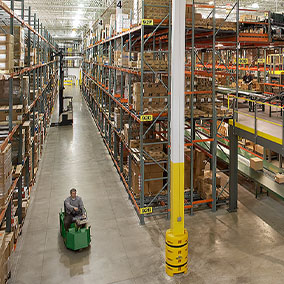 2. Forklift Fleet Planning Challenges — Overview Table
Before calculating quantities, the table below summarizes the key factors that influence forklift fleet size in cold storage operations.
📊 Forklift Fleet Planning Factors in Cold Storage
| Planning Factor | Impact on Fleet Size | Why It Matters in Cold Storage |
|---|---|---|
| Throughput peaks | Higher buffer required | Peaks are harder to absorb |
| Temperature level | Reduced utilization | Battery & electronics stress |
| Layout & travel distance | More units needed | Longer cycle times |
| Task diversity | Specialized forklifts | Less cross-coverage |
| Maintenance allowance | Spare units required | Repair time is longer |
Cold storage forklifts deliver less effective uptime per unit than ambient forklifts.
3. Step 1: Define Peak Throughput, Not Average Volume
The most common planning error is sizing forklift fleets based on average daily volume. In cold storage, peak demand defines fleet adequacy.
Planning should begin by identifying:
-
Maximum pallets moved per hour during peak
-
Peak inbound and outbound overlap
-
Seasonal or promotional spikes
Forklift fleets sized for averages inevitably become bottlenecks during peaks, leading to congestion and missed dispatch windows.
 4. Step 2: Map Forklift Tasks and Specialization
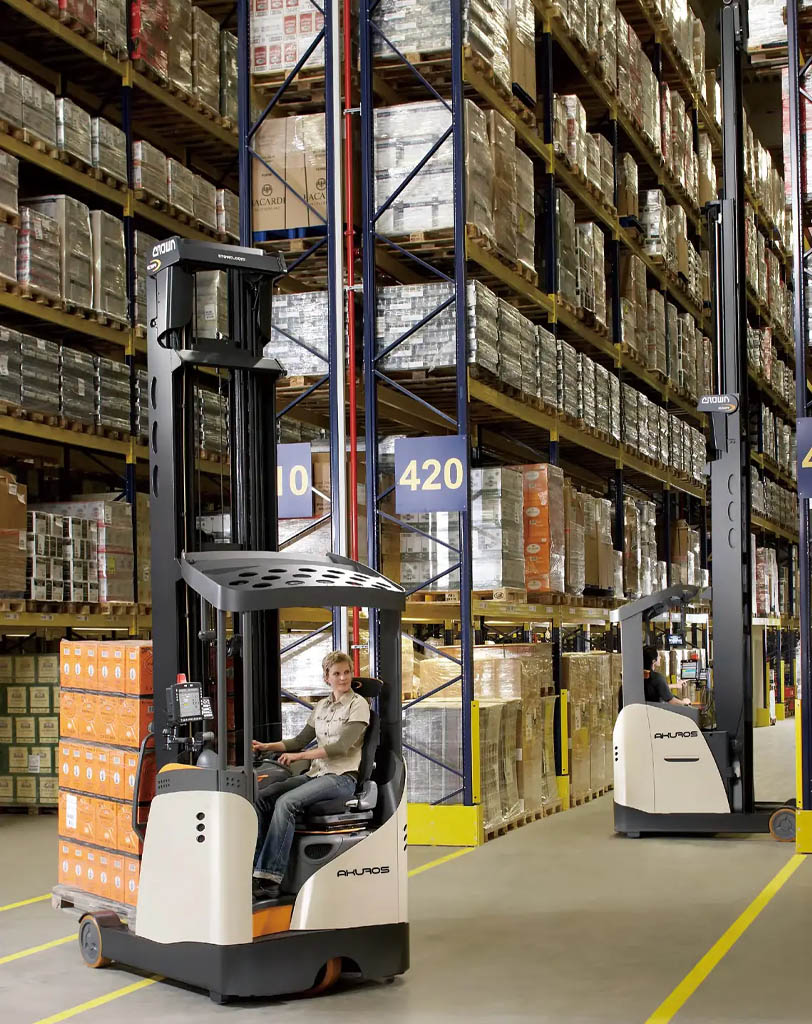
Not all forklifts perform the same tasks. Effective fleet planning separates forklifts by function rather than treating them as a single pool.
Typical task categories include:
-
Storage put-away
-
Retrieval and feeding picking zones
-
Dock staging and loading
-
Cross-zone transfers
Cold storage warehouses often require dedicated electric forklifts for frozen zones, with separate units assigned to chilled or ambient areas to reduce thermal shock and condensation risk.
5. Step 3: Account for Reduced Utilization in Low Temperatures
Forklifts operating at -18°C to -25°C experience:
-
Reduced battery discharge efficiency
-
Slower travel and handling speeds
-
Increased downtime for charging and inspection
As a result, one cold storage forklift rarely equals one ambient forklift in effective output. Planning must include realistic utilization assumptions rather than nameplate capacity.
6. Step 4: Include Maintenance and Redundancy Buffers
Maintenance cycles in cold storage are longer and less predictable due to environmental stress on components.
Fleet planning should include:
-
A defined maintenance reserve
-
Backup forklifts for critical tasks
-
Flexibility to reassign tasks during failures
Underestimating redundancy often results in emergency rentals or overtime costs that far exceed the cost of one additional forklift.
7. Step 5: Align Fleet Size with Layout and Racking Design
Layout geometry and racking systems directly affect forklift cycle time.
Facilities using:
-
Sistem rak lorong yang sangat sempit typically require more specialized forklifts with limited cross-coverage.
-
Double deep racking systems balance density and access but still increase retrieval cycle time compared to selective racking.
Fleet size must reflect these structural constraints rather than assuming ideal travel paths.
8. Step 6: Evaluate Automation as a Fleet Multiplier
Automation does not always reduce forklift count, but it can stabilize fleet requirements.
Sistem kendaraan berpemandu otomatis integrated into solusi gudang otomatis are effective for:
-
Repetitive pallet transport
-
Reducing manual forklift hours
-
Smoothing peak workloads
Automation often allows a smaller forklift fleet to deliver consistent throughput by removing variability from predictable tasks.
9. Common Forklift Fleet Planning Mistakes
Frequent errors include:
-
Planning for average volume instead of peaks
-
Treating all forklifts as interchangeable
-
Ignoring reduced cold-environment utilization
-
Excluding maintenance and downtime buffers
-
Adding forklifts instead of optimizing flow
In cold storage, these mistakes manifest quickly as congestion and rising operating cost.
10. Topik Populer Google (Jawaban Kontekstual)
How many forklifts does a cold storage warehouse need?
It depends on peak throughput, layout, temperature, and task specialization rather than warehouse size alone.
Why do cold storage warehouses need more forklifts than expected?
Because battery performance, travel speed, and downtime reduce effective utilization.
Should forklift fleets be specialized by zone?
Yes. Dedicated forklifts reduce wear and improve reliability.
Can automation reduce forklift fleet size?
Yes, when applied to stable, repetitive tasks.
What is the biggest risk in forklift fleet planning?
Underestimating peak demand and cold-environment constraints.