

 Indonesian
  English
  Russian
  French
  Spanish
  German
  Italian
  Portuguese
  Korean
  Japanese
  Arabic
  Turkish
  Dutch
Dutch 

Compliance, Energy Efficiency & Sustainable Operations
European cold storage warehouses operate under some of the world’s strictest regulatory and sustainability frameworks. This article explains how cold storage facilities in Europe should be designed and equipped to meet compliance requirements, control energy cost, and remain operationally flexible—without sacrificing throughput or long-term competitiveness.
1. Why Europe Cold Storage Follows a Different Set of Rules
Cold storage warehouses in Europe are shaped by a unique combination of factors that go beyond pure operational efficiency:
-
Strict workplace safety and environmental regulations
-
Aggressive energy efficiency and carbon reduction targets
-
High urban density limiting expansion options
-
Increasing pressure for traceability and auditability
In this environment, compliance and sustainability are not optional features. Warehouses that fail to integrate these requirements into design and equipment selection often face rising operating costs, regulatory risk, and reputational exposure.
This is why European projects must be planned within a system-level solusi gudang, rather than optimized solely for short-term cost or density.
 2. Europe Cold Storage Challenges — Overview Table
Before exploring design and equipment strategies, the table below summarizes the most common challenges faced by European cold storage operators and the corresponding priorities.
📊 Europe Cold Storage Challenges & Design Priorities
| Regional Challenge | Operational Impact | Design Priority |
|---|---|---|
| Regulatory compliance | Audit & penalty risk | Standardized processes |
| High energy cost | Margin pressure | Energy-efficient systems |
| Sustainability targets | ESG exposure | Low-emission equipment |
| Limited expansion space | Capacity constraint | Vertical utilization |
| Labor protection rules | Productivity limits | Ergonomic, safe layouts |
In Europe, compliance and energy efficiency shape every major cold storage decision.
3. Layout Design Under European Compliance Standards
European cold storage layouts emphasize predictability, safety, and auditability. Clear traffic segregation, standardized operating zones, and well-defined pedestrian pathways are essential to meet regulatory expectations.
Unlike markets where density is the primary driver, European facilities often favor layouts that:
-
Reduce accident risk
-
Simplify operator training
-
Support consistent inspection and documentation
Designing layout as part of an integrated solusi gudang ensures compliance requirements are embedded into daily operations rather than managed reactively.
4. Racking Systems Favored in European Cold Storage
Racking selection in Europe reflects a balance between density, selectivity, and long-term flexibility.
-
Very narrow aisle racking systems are widely adopted in Europe due to limited land availability and strong vertical utilization requirements.
-
Double deep racking systems are commonly used where a balance between density and accessibility is required, particularly in retail and food distribution.
Highly restrictive systems that limit selectivity are less favored due to operational rigidity and audit complexity.
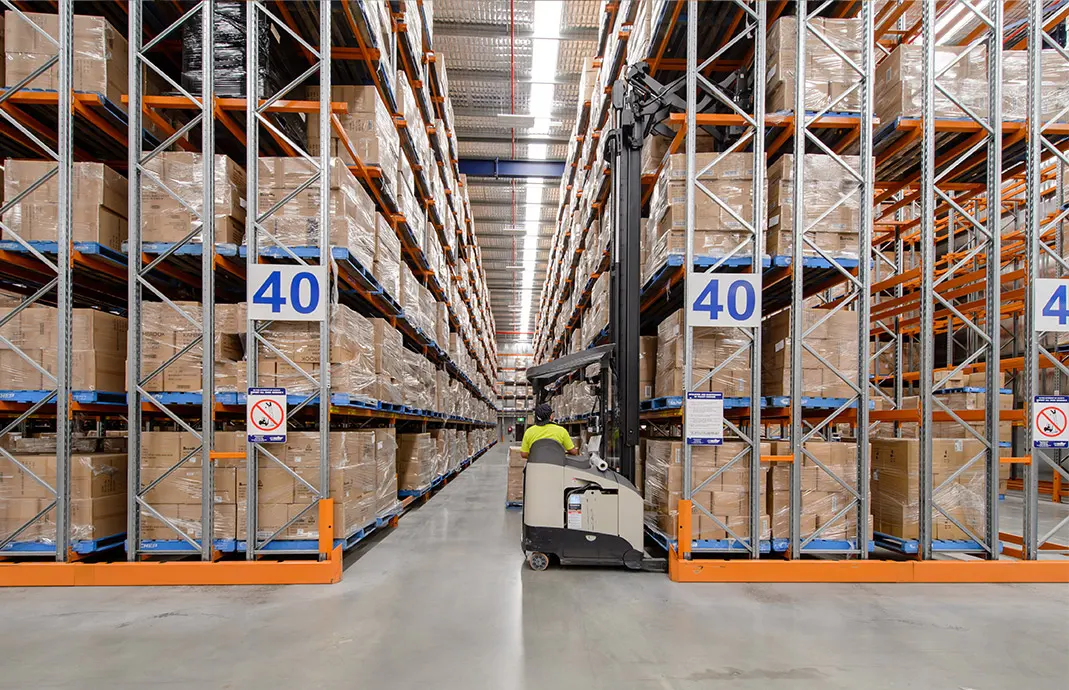
Rak Dalam Ganda
5. Forklifts and Handling Equipment for European Operations
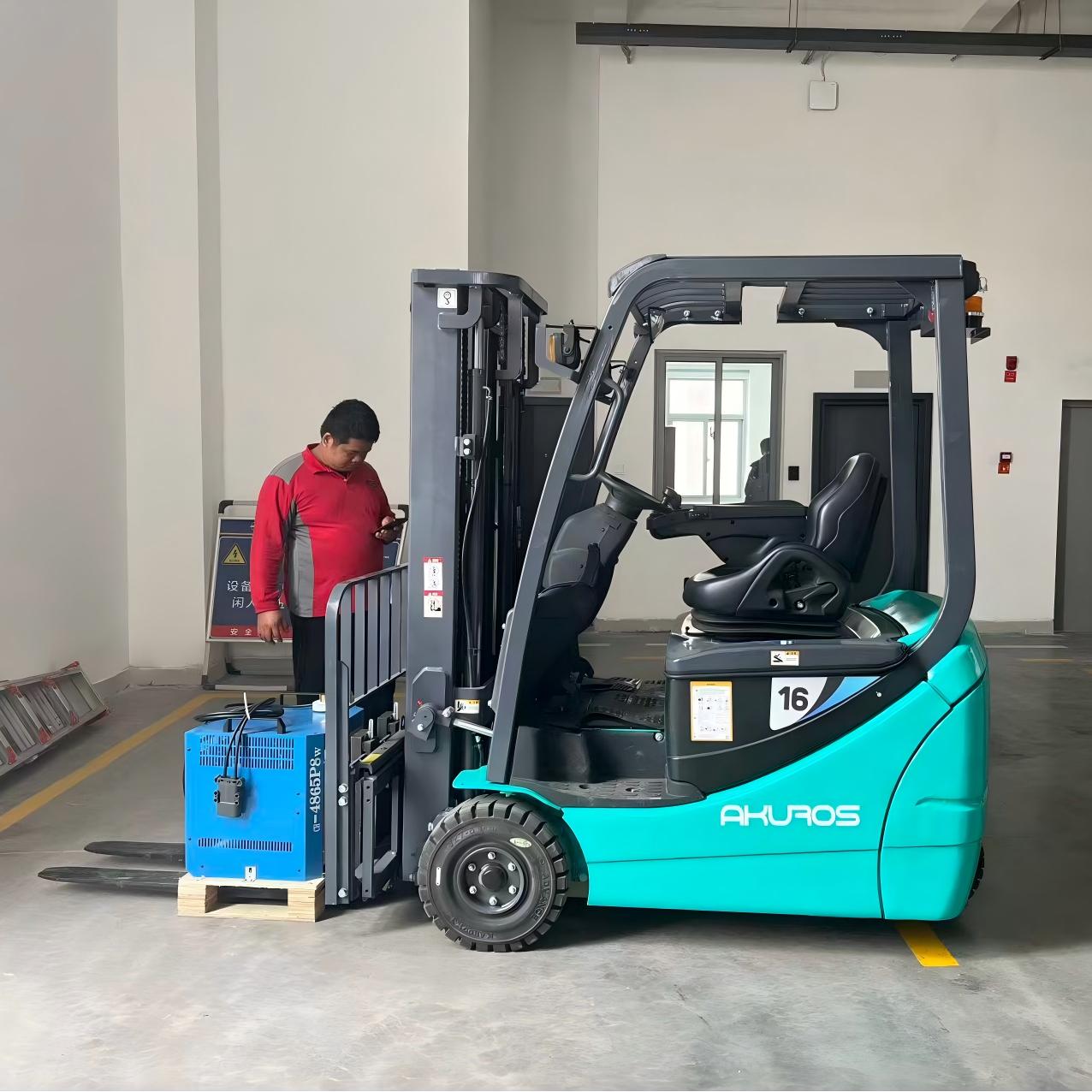
Forklift selection in Europe places strong emphasis on safety, ergonomics, and emissions.
European cold storage warehouses typically rely on:
-
Zero-emission electric forklifts for indoor operation
-
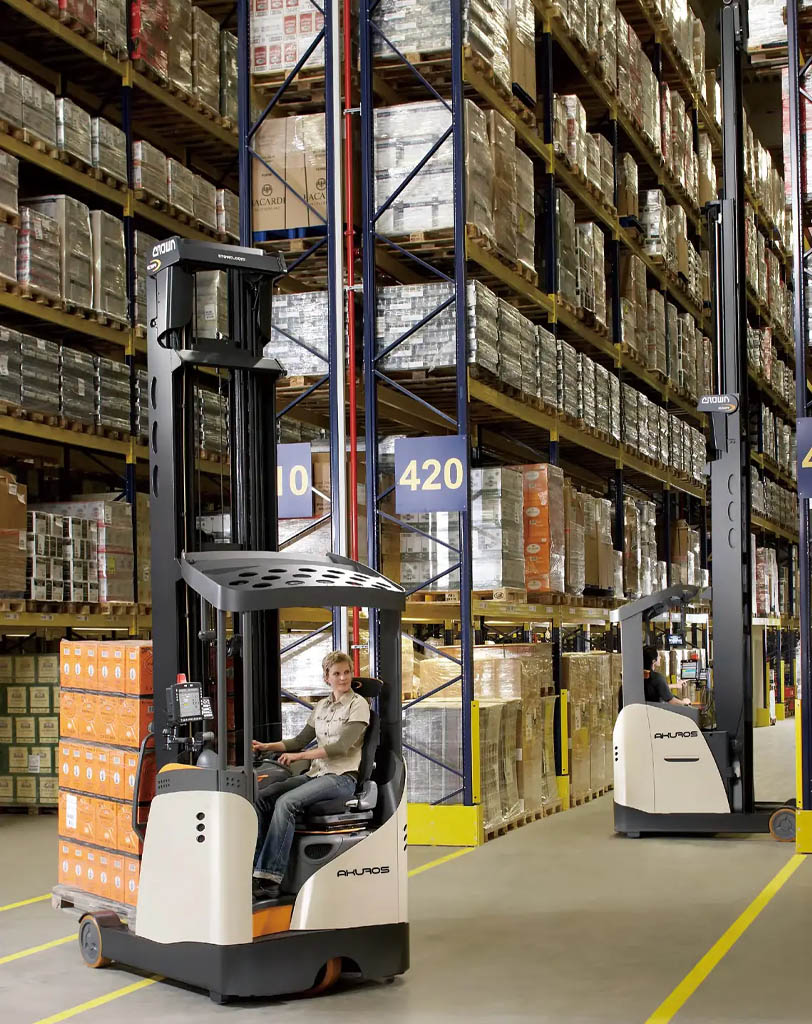
Reach trucks for high-bay selective and double deep storage
-
Order pickers in high-frequency picking environments
Equipment stability, visibility, and operator comfort are critical, as regulations limit working hours and emphasize accident prevention.
 6. Automation and Digital Readiness in Europe
Automation in European cold storage is driven as much by sustainability and standardization as by labor efficiency.
Facilities increasingly deploy Sistem kendaraan berpemandu otomatis as part of broader automated warehouse solutions to:
-
Reduce repetitive manual tasks
-
Improve process consistency
-
Support traceability and reporting
Automation strategies are typically incremental and tightly integrated with WMS and compliance reporting systems.
7. Energy Efficiency and Sustainability Considerations
Energy cost and carbon footprint are central concerns in Europe. Cold storage warehouses are under pressure to reduce energy consumption while maintaining performance.
Key strategies include:
-
Energy-efficient handling equipment
-
Cold-rated forklift battery systems that reduce charging losses
-
Optimized traffic flow to minimize door-open time
Sustainability-driven equipment selection often delivers both regulatory compliance and lower total cost of ownership.
8. Common Mistakes in Europe Cold Storage Projects
Recurring issues include:
-
Treating sustainability as a reporting task rather than a design principle
-
Over-optimizing density at the expense of safety and auditability
-
Delaying automation integration until after commissioning
-
Selecting equipment that meets performance needs but fails compliance standards
In Europe, these mistakes often surface through regulatory findings rather than operational breakdowns.
9. How Successful European Cold Storage Facilities Are Designed
High-performing European cold storage facilities share several characteristics:
-
Compliance-first layout design
-
Energy-efficient equipment fleets
-
Gradual, well-integrated automation
-
Lifecycle cost and ESG alignment
These outcomes are best achieved through an end-to-end warehouse solution approach that integrates design, equipment, automation, and compliance.
10. Google Popular Topics (Contextual Answers)
Why is compliance so important in European cold storage?
Because regulatory enforcement is strict and violations carry financial and reputational risk.
Which racking systems are popular in Europe cold storage?
VNA and double deep racking are widely used due to space and flexibility requirements.
Is automation common in European cold storage warehouses?
Yes, especially where it supports standardization, safety, and traceability.
What forklifts are preferred in European cold rooms?
Electric forklifts with strong safety and ergonomic features.
How can European cold storage reduce energy cost?
By combining efficient layout design with low-emission, energy-efficient equipment.