

 French
  English
  Russian
  Spanish
  German
  Italian
  Portuguese
  Korean
  Japanese
  Arabic
  Turkish
  Indonesian
  Dutch
Dutch 

Introduction
Many warehouse buyers begin with a simple question: should we continue using manual pallet trucks, or is it time to upgrade to an chariot gerbeur électrique? At first glance, the answer seems obvious. Manual pallet trucks are cheaper, familiar, and easy to maintain. An chariot gerbeur électrique, by contrast, requires a higher initial investment and introduces batteries, charging, and a more advanced operating system. For that reason, some managers delay the upgrade decision longer than they should.
However, in real warehouse operations, the difference between these two equipment types is not just about budget. It is about workflow design. A manual pallet truck is mainly a horizontal movement tool. It is suitable for moving pallets over short distances on flat floors, especially where stacking is not required. By contrast, an electric pallet stacker for warehouse use is designed not only to move pallets, but also to raise, position, and stack them in a more organized and efficient way.
This distinction becomes more important as warehouses face higher throughput expectations, labor shortages, tighter indoor layouts, and pressure to use vertical storage more effectively. In these conditions, equipment is no longer just a tool. It becomes part of the warehouse operating model. A well-selected chariot gerbeur électrique can reduce manual strain, improve pallet positioning, support faster put-away, and help smaller sites behave more like professionally optimized operations.
This article compares the chariot gerbeur électrique and the manual pallet truck from a practical warehouse perspective. It explains where each tool works best, what technical and commercial differences buyers should evaluate, and why many indoor operations ultimately decide that a powered stacking solution offers better long-term value than a low-cost manual option.
What Each Machine Is Designed to Do
What a manual pallet truck does well
A manual pallet truck is one of the simplest tools in warehouse handling. It is designed to lift a pallet just enough to move it off the floor and transport it horizontally. It has no powered drive, no battery system, and no real stacking capability. In low-volume operations or short transfer tasks, it remains a practical solution because the purchase cost is low and the equipment is easy to use.
What an electric stacker truck does differently
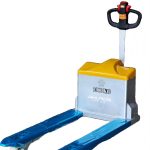
Un chariot gerbeur électrique performs a broader role. It can transport pallets over short indoor distances, but it also provides powered lifting for stacking and rack-side positioning. This means it supports both movement and storage organization. In many growing warehouses, that difference is the dividing line between a simple transfer tool and a true warehouse productivity asset.
Why this distinction matters operationally
If a warehouse only needs to move pallets from one point to another at floor level, the manual option may still be enough. But if the operation needs to place pallets on lower rack beams, improve staging order, support replenishment, or reduce labor intensity, the chariot gerbeur électrique becomes far more valuable. The equipment changes not only how pallets move, but how the warehouse uses its available space.
Real Warehouse Scenario: When Manual Handling Stops Being Enough
Imagine a food ingredient warehouse with about 800 pallet positions and two main operators handling receiving, put-away, and dispatch staging. At first, the site runs mainly on manual pallet trucks because the travel distances are short and budgets are tight. That works when pallet volume is low and most loads stay at floor level. But over time, the warehouse starts using more vertical storage, daily inbound deliveries increase, and operators spend more time repositioning pallets by hand while waiting for one shared forklift to perform all stacking tasks.
In this kind of scenario, the manual tool is not failing mechanically. It is failing operationally. The warehouse has evolved beyond what manual handling can support efficiently. This is the point at which a compact chariot gerbeur électrique often delivers a measurable improvement. One operator can stage and stack loads independently, forklift bottlenecks are reduced, labor strain decreases, and the rack area becomes more organized. The site may not need a fleet of large forklifts. It may simply need one correctly matched powered stacker.
Core Performance Differences
1. Horizontal transport versus vertical stacking
The biggest difference is functional scope. A manual pallet truck supports only horizontal transport. An chariot gerbeur électrique adds vertical lift and stacking capability. That means it can serve both as a movement tool and as a storage workflow tool.
2. Operator effort
Manual trucks depend heavily on physical effort, especially when the floor is uneven, pallets are heavy, or the daily cycle count is high. A powered stacker reduces manual pushing and lifting effort, helping operators maintain a more consistent pace throughout the day.
3. Storage density impact
A manual pallet truck does not improve vertical storage usage. It only helps move loads at floor level. By contrast, an electric pallet stacker for warehouse use allows a business to make better use of available rack height and staging order, which can significantly improve usable storage density in smaller sites.
4. Workflow speed
When the operation involves repetitive put-away and replenishment, a manual truck can become a slow link in the process. A powered stacker supports faster pallet positioning and fewer interruptions, particularly when one forklift would otherwise need to handle every stacking task.
5. Labor sustainability
As warehouse labor becomes harder to recruit and retain, businesses increasingly look for equipment that reduces unnecessary physical strain. This is one of the hidden drivers behind the growing demand for the chariot gerbeur électrique category in indoor facilities.
Comparison Table: Electric Stacker Truck vs Manual Pallet Truck
| Comparison Factor | Chariot élévateur électrique | Transpalette manuel | Commercial Meaning |
|---|---|---|---|
| Main Function | Horizontal movement plus pallet lifting and stacking | Mainly horizontal floor-level pallet movement | Determines whether the warehouse can support vertical storage efficiently |
| Power Source | Electric drive and lift system | Manual hydraulic lifting and manual pulling | Affects labor effort, runtime planning, and charging needs |
| Labor Intensity | Lower operator effort | Higher operator effort | Important where cycle count or pallet weight is high |
| Stacking Capability | Oui | No real rack stacking capability | Key factor in space optimization decisions |
| Indoor Suitability | Very suitable for indoor warehouse use | Suitable for simple indoor transfers | Depends on workflow complexity |
| Investissement initial | Plus élevé | Vitesse du ROI | Needs to be evaluated against productivity gains |
| Long-Term Productivity | Higher in stacking operations | Limited in growing warehouses | Important for expanding operations |
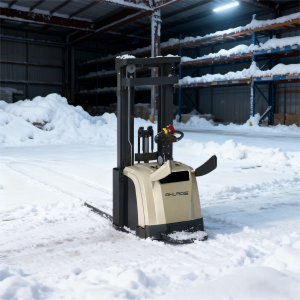
Cost Analysis: Cheap to Buy Is Not Always Cheap to Operate
Initial price versus operational value
The manual pallet truck usually wins the first-price comparison. That is obvious and easy to understand. But warehouse equipment should not be judged only by initial acquisition cost. It should also be evaluated by labor savings, workflow speed, forklift dependency reduction, pallet damage risk, and how much usable storage value it unlocks.
A simple productivity logic
If an operator using manual equipment spends extra minutes repositioning loads, waiting for a forklift, or repeating floor-level shuffling because stacking cannot be done directly, those minutes accumulate quickly across the month. In a site with frequent rack-side activity, one chariot gerbeur électrique can remove enough manual delay to justify its price much faster than expected.
Where the powered option pays back faster
The commercial payback tends to improve when the warehouse has moderate daily throughput, repeated short-cycle stacking work, labor constraints, or limited forklift availability. In those conditions, the powered stacker is not a luxury upgrade. It is a workflow correction.
Technical Parameters Buyers Should Check Before Choosing Either Option
Load weight and pallet condition
If pallet loads are light, stable, and moved only occasionally, manual equipment may still be acceptable. If pallets are heavier, less stable, or handled many times per day, a powered solution becomes more attractive. Buyers should confirm average load weight and real operating frequency before deciding.
Lift height requirement
This is often the decisive parameter. If the warehouse needs no lift beyond floor transfer, manual trucks remain viable. If the warehouse needs organized storage stacking, replenishment to rack positions, or staged vertical placement, a manual truck cannot solve the job. An chariot gerbeur électrique can.
Aisle width and warehouse layout
A compact powered stacker is often a strong fit for narrow to standard indoor aisles. However, buyers should review not only aisle width but also approach angle, pallet size, floor transitions, and clearance margins. The smallest machine is not always the best if the pallet geometry creates positioning challenges.
Cycle count per shift
Operations with low daily movement can tolerate slower manual handling. Operations with frequent pallet moves, repeated staging, or multiple replenishment cycles benefit much more from a powered stacker. The higher the daily cycle count, the stronger the case for electric equipment.
Safety Considerations and Compliance Logic
Even compact indoor warehouse equipment must be selected with safety in mind. In the United States, powered industrial truck use is governed by OSHA 29 CFR 1910.178, which includes operator training and truck-specific workplace use requirements. That matters directly when a warehouse upgrades from manual tools to a powered stacker, because the management system must evolve with the equipment. A machine upgrade also means a training upgrade.
From an international perspective, pallet-stacking truck categories also sit within broader industrial truck safety frameworks such as ISO 3691-1. For buyers comparing a battery powered stacker manufacturer, documentation quality, operator instructions, safety labeling, and compliance readiness should all be part of the evaluation, not an afterthought.
Industry Trend: Why More Warehouses Are Moving Beyond Manual Tools
The broader warehouse industry is under pressure to do more with limited labor and limited space. That is one reason equipment categories between manual tools and large forklifts are receiving more attention. Warehouses are not always jumping directly to automation. Many are first upgrading the most labor-intensive parts of their workflow. Stacking and short-range pallet handling are often among the first targets.
For that reason, long-tail commercial searches such as electric stacker truck manufacturer, electric stacker truck wholesale, walkie stacker factoryet electric pallet stacker supplier are becoming more relevant in B2B sourcing. Buyers are actively looking for machines that support professional indoor handling without the cost and complexity of a full forklift-centered model.
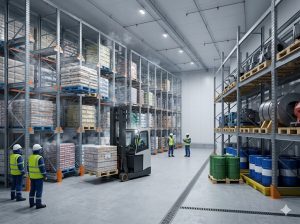
Heavy Duty Storage Solutions
Why Akuros Electric Stacker Truck Is a Strong Fit in This Comparison
Akuros is already positioning this product as a compact, practical, and cost-efficient indoor stacking solution for small and medium warehouse environments. That is a commercially sound direction because the strongest reason to upgrade from manual tools is rarely “we want a more advanced machine.” The stronger reason is “our workflow has outgrown manual handling.”
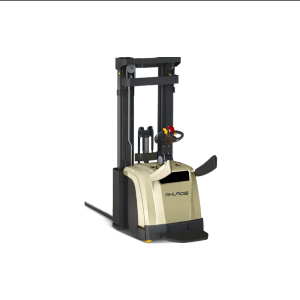
In that context, the Akuros chariot gerbeur électrique fits well because it answers the exact transition point many warehouses face. It offers powered pallet handling without forcing buyers into a much larger equipment class. For operations that need vertical stacking, cleaner indoor operation, and better workflow independence from a shared forklift, it becomes a logical next step.
Scientific Planning Table for a Real Upgrade Decision
| Warehouse Condition | Manual Pallet Truck Still Works | Electric Stacker Truck Becomes Better | Reason |
|---|---|---|---|
| Mainly floor-level transfers | Oui | En option | No stacking requirement yet |
| Frequent lower-rack stacking | Non | Oui | Powered lift is needed |
| High daily cycle count | Weak fit | Strong fit | Labor savings become meaningful |
| One shared forklift causes delays | Non | Oui | Independent stacker improves workflow |
| Warehouse wants more vertical storage use | Non | Oui | Manual tool cannot support organized stacking |
| Very low budget and very low usage | Oui | Possibly later | Manual equipment may still be commercially reasonable |
Conclusion
The decision between a manual pallet truck and an chariot gerbeur électrique is not only a price comparison. It is a comparison between two different warehouse operating models. One supports simple floor-level movement. The other supports stacking, storage efficiency, lower labor strain, and a more scalable workflow.
For warehouses with very low usage and no vertical storage requirement, manual pallet trucks still have a place. But once the operation starts relying on rack-side work, repeated pallet positioning, and more structured indoor handling, the manual option often becomes a hidden constraint. In that environment, an chariot gerbeur électrique does more than move pallets. It improves the warehouse’s ability to function efficiently as a storage and handling system.
That is why many growing facilities eventually decide that the better question is not “why is the powered machine more expensive?” but “how long can we afford to operate without it?”
FAQ
1. Is an electric stacker truck always better than a manual pallet truck?
No. It depends on the warehouse task. If the operation only requires occasional floor-level pallet movement, a manual pallet truck may still be enough. But if the warehouse needs vertical stacking, better labor efficiency, and more organized pallet handling, an chariot gerbeur électrique is usually the better long-term choice.
2. When should a warehouse upgrade from manual pallet trucks to a powered stacker?
The upgrade point usually comes when daily pallet volume increases, vertical storage becomes more important, or manual handling starts creating delays and operator fatigue. In many cases, the trigger is not equipment failure. It is workflow inefficiency.
3. What is the main benefit of an electric pallet stacker for warehouse use?
The biggest benefit is that it combines short-distance pallet movement with powered lifting and stacking. This allows the warehouse to improve vertical storage use and reduce reliance on manual effort or constant forklift support.
4. Is a manual pallet truck cheaper in the long run?
Not always. It is cheaper to buy, but in a growing warehouse it can create higher labor effort, slower pallet positioning, and more forklift dependency. Over time, those inefficiencies may cost more than the price difference between manual and powered equipment.
5. What should I send to a battery powered stacker manufacturer before asking for a quote?
You should provide pallet size, maximum load weight, required lift height, aisle width, floor condition, daily working frequency, and charging conditions. These details help the supplier recommend the correct model and configuration.
Références
- Powered Industrial Trucks, Occupational Safety and Health Administration, U.S. Department of Labor, regulatory guidance.
- ISO 3691-1 Industrial Trucks Safety Requirements and Verification, International Organization for Standardization, standard overview.
- Annual Industry Reports, MHI, supply chain investment and technology trend reporting.
- Warehouse Operations and Equipment Trends, Modern Materials Handling, industry analysis.
- Walkie Stacker Product Category Specifications, Toyota Material Handling, benchmark data.
- Pedestrian Stacker Product Specifications, Jungheinrich, benchmark data.
- Warehouse Productivity and Labor Challenges, materials handling trade reporting, industry context.
- Industrial Truck Safety and Training Assistance, Occupational Safety and Health Administration, operator training framework.
Suggested Tags
electric stacker truck, manual pallet truck, electric pallet stacker, warehouse material handling, battery powered stacker, pallet stacking equipment, indoor warehouse equipment, walkie stacker
Semantic Closure Block
How should a warehouse choose between these two options?
The answer depends on whether the site mainly needs simple pallet transfer or a more complete indoor stacking workflow. If horizontal movement is enough, manual tools still have value. If the operation needs lift, storage order, and faster rack-side handling, the chariot gerbeur électrique becomes the more capable solution.
Why does this comparison matter more now than before?
Warehouses are under greater pressure to improve productivity without increasing building size or labor headcount. This makes the gap between manual handling and powered stacking much more important than it used to be.
What should buyers look at beyond purchase price?
They should evaluate labor intensity, daily cycle count, storage density, forklift dependency, operator fatigue, and the supplier’s ability to recommend the right configuration. The most economical machine is not always the one with the lowest quotation.
What is the strategic value of a compact stacker?
A compact powered stacker allows a warehouse to become more structured and scalable without immediately jumping to a larger forklift fleet or a full automation plan. It is often the most practical step in warehouse equipment upgrading.