

 French
  English
  Russian
  Spanish
  German
  Italian
  Portuguese
  Korean
  Japanese
  Arabic
  Turkish
  Indonesian
  Dutch
Dutch 

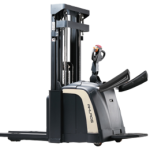
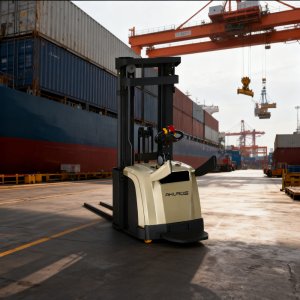
That is where the chariot gerbeur électrique sits in a strategically valuable middle position. A well-matched electric stacker truck for indoor warehouses gives operators the ability to move, raise, position, and stack loads with more precision than manual tools and with less complexity than a large forklift platform. This makes it especially attractive for food distribution rooms, retail stock areas, spare parts warehouses, workshop storage zones, cold-chain staging areas, and growing distribution centers where every meter of floor space matters.
The Akuros product positioning aligns with exactly this operational need. Its current product page already frames the machine as a compact, reliable, and cost-conscious pallet stacking solution for small and medium warehouse environments, especially where vertical handling matters more than large-truck flexibility. That positioning is commercially strong because it answers a very specific buyer problem: how to improve pallet stacking performance indoors without overspending on equipment that is too large for the application.:contentReference[oaicite:1]{index=1}
This article explains why the chariot gerbeur électrique category is growing in importance, how buyers should evaluate a serious supplier or electric pallet stacker manufacturer, what technical parameters matter in real projects, and why a compact warehouse machine can often outperform larger equipment when the workflow is mainly indoor pallet stacking rather than long-distance transport.
What an Electric Stacker Truck Actually Solves in an Indoor Warehouse
The gap between horizontal transport and true stacking
Many first-time buyers describe their need as “we need something stronger than a pallet jack.” That statement is directionally correct but incomplete. The more precise need is usually this: the warehouse now requires reliable vertical lift, consistent pallet placement, low-emission indoor operation, and better control in constrained aisles. A pallet jack can move loads, but it does not solve shelving, staging, upper-level pallet placement, or repeated rack-side work. A forklift can solve those problems, but it may not be the most efficient answer if the site is relatively compact and the truck does not need to travel long distances outdoors.
The operational sweet spot
Un moderne chariot gerbeur électrique works best in a workflow where the warehouse handles palletized goods, performs frequent short-range moves, and needs moderate lift height rather than very heavy tonnage. The machine is especially useful when the site wants to improve storage density through better use of vertical space. In practical terms, that means using the second or third rack beam more efficiently, staging inbound pallets more neatly, and reducing the manual strain associated with repetitive low-to-mid lift work.
A real-world warehouse scenario
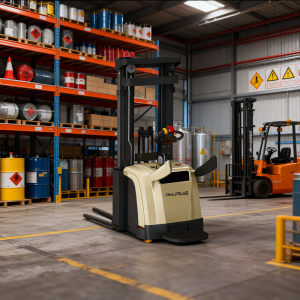
Consider a spare-parts warehouse with 1,200 to 1,800 pallet positions, inbound deliveries arriving throughout the week, and operators working in narrow interior aisles between shelving rows. The warehouse currently uses manual pallet trucks and one shared forklift. The forklift becomes a bottleneck because every simple rack placement requires waiting for the same truck and operator. A compact battery powered stacker changes the workflow immediately: one operator can handle staging and low-to-mid rack put-away without pulling the forklift away from heavier tasks. The result is better throughput, lower idle time, and less disruption to the floor.
Why the Market Is Paying More Attention to Electric Stacker Trucks
Labor pressure is reshaping equipment choices
Warehouse leaders are under pressure to raise output even when hiring and retention remain difficult. Recent industry reporting has consistently linked warehouse equipment investment to labor shortages, e-commerce service expectations, and the need to use warehouse space more efficiently. MHI has reported that 55% of supply chain leaders are increasing technology and innovation investments, while Modern Materials Handling has highlighted labor shortages, e-commerce demand, and space optimization as major drivers of warehouse automation and equipment upgrades.:contentReference[oaicite:2]{index=2}
Not every operation responds by buying full automation. Many facilities adopt selective mechanization first. In that transition path, the chariot gerbeur électrique becomes a highly rational purchase because it addresses repetitive physical work, reduces time lost in manual handling, and improves storage discipline without requiring a major redesign of the building.
Indoor environments favor electric equipment
Indoor warehouses increasingly prefer electric equipment because it eliminates on-site exhaust emissions, reduces noise, and aligns with cleaner working conditions in enclosed spaces. That matters not only for operator comfort but also for compliance, especially in facilities handling packaged food, pharmaceutical materials, electronics, or consumer goods where indoor air quality and cleanliness standards influence equipment strategy.
Smaller facilities still need professional-grade handling
One of the biggest misconceptions in the market is that only large automated distribution centers need specialized equipment. In reality, smaller warehouses often gain proportionally more from compact handling solutions because space constraints hit them harder. A large site may absorb inefficiency through scale. A smaller site cannot. When aisle width is limited and the same team manages receiving, put-away, replenishment, and dispatch, a compact walkie stacker factory solution can offer disproportionate operational value.
Technical Parameters Buyers Should Review Before They Compare Quotes
1. Rated capacity at actual load center
Many buyers compare stackers by nominal capacity alone. That is not enough. The meaningful question is how much load the machine can safely handle at the actual load center used in the warehouse. A nominal rating can look attractive on a brochure, but once the pallet dimensions, load height, and mast configuration change, practical capacity can be different. Buyers should confirm the load center assumption and ask whether the expected loads are uniform, high, unstable, or wrapped.
2. Lift height and lowered mast height
A stacker must fit the warehouse in two directions: up and down. It needs enough lift height to reach the rack beam being targeted, but it also needs a lowered mast height that can pass under doors, mezzanines, or sprinkler-protected openings. In many real projects, lowered mast height is the overlooked dimension that creates installation headaches.
3. Aisle width and turning behavior
The machine may technically fit in a nominal aisle, but real operation includes steering correction, pallet entry, visibility, and pedestrian coexistence. Buyers should not compare only brochure aisle figures. They should also examine turning radius, tiller ergonomics, fork-over or straddle-leg design, and how the truck behaves when approaching a rack face at a slight angle.
4. Battery platform and charging strategy
One shift and two shifts are different economic models. A warehouse running one daily shift may accept slower charging and lower battery reserve. A site with peak-hour replenishment cycles may need lithium charging flexibility, opportunity charging, or battery sizing that protects uptime. Charging infrastructure, input voltage, and shift rhythm all matter when selecting an electric stacker truck supplier.
5. Wheel material and floor condition
Indoor stackers often run on polyurethane or similar wheel materials because they support lower noise and smooth warehouse travel. But wheel choice should be discussed alongside floor flatness, transitions, ramps, dock plates, and cold-room conditions. A machine that performs well on polished concrete may behave differently on damaged expansion joints or uneven transfer points.
Scientific and Practical Planning Tables for Buyers
Table 1. Buyer-side planning matrix for a typical electric stacker truck project
| Planning Item | Pourquoi cela importe | Typical Buyer Checkpoint | Commercial Risk If Ignored |
|---|---|---|---|
| Rated capacity | Determines safe pallet handling under real load center conditions | Confirm actual pallet weight range and load shape | Under-specification, instability, or rejected loads |
| Lift height | Controls whether pallets can be placed at target beam level | Measure top usable beam, not only nominal rack height | Truck cannot serve intended storage level |
| Lowered mast height | Affects doorway, ceiling, and sprinkler clearance | Check all bottleneck passages on the route | Machine fits the rack but not the building |
| La largeur des allées | Determines maneuverability and actual rack approach behavior | Measure loaded aisle, turning approach, and clearance margin | Slow operations and rack contact risk |
| Battery platform | Shapes runtime, charging rhythm, and maintenance burden | Match to shifts, charger input, and peak-hour demand | Unexpected downtime and charger mismatch |
| Wheel and floor interface | Influences stability, noise, and wear | Inspect ramps, joints, dock plates, and floor condition | Excess wear, poor traction, and operator complaints |
Table 2. Typical comparative planning ranges seen in pedestrian and compact stacker projects
| Reference Metric | Lower Practical Range | Upper Practical Range | Notes for Buyer Evaluation |
|---|---|---|---|
| Nominal load capacity | 1,000 kg | 2,000 kg+ | Common market range varies by model class and chassis design |
| Battery voltage | 24 V | 48 V | Often linked to duty cycle, truck class, and charging strategy |
| Lift height | 1.9 m | 5.0 m+ | Buyer should distinguish nominal mast data from real application height |
| Travel speed | Approximately 5 km/h | Project-dependent | Indoor safety and aisle congestion can matter more than headline speed |
| Aisle strategy | Standard aisle | Confined aisle | Truck geometry must be reviewed with pallet dimensions included |
These planning ranges reflect what buyers commonly see across established stacker categories from major manufacturers. For example, Toyota’s walkie stacker line is marketed around roughly 2,000 to 2,500 lb lift capacity and lift heights up to 143 inches, Jungheinrich publishes pedestrian stackers at 24 V with 1,000 kg class models, and Yale positions electric walkie stackers for confined-space applications in the 2,000 to 3,000 lb range.:contentReference[oaicite:3]{index=3}
Electric Stacker Truck Versus Other Warehouse Options
Electric stacker truck versus manual pallet truck
A manual pallet truck wins on acquisition cost, simplicity, and minimal maintenance. But once the operation needs repeatable lift, shelf-level positioning, and faster cycle times, the manual tool quickly becomes a bottleneck. A stacker adds vertical productivity, reduces physical strain, and improves placement accuracy. For an operation doing daily put-away into rack positions, the difference in workflow control is substantial.
Electric stacker truck versus counterbalance forklift
A counterbalance forklift brings greater travel flexibility, outdoor compatibility, and often higher load handling potential. However, it also usually needs more operating space, more operator skill, and a stronger business case when the warehouse tasks are mostly indoor and short-range. If the application is mainly rack-side stacking in confined space, a compact gerbeur électrique d'entrepôt can deliver better space efficiency and lower complexity.
Electric stacker truck versus reach truck
A reach truck is a stronger answer for high-density racking, higher lift heights, and more advanced warehouse layouts. But it generally represents a different level of investment and infrastructure logic. Many small and medium facilities are not yet at that point. They need controlled stacking, not necessarily a full VNA or high-bay strategy. The chariot gerbeur électrique often becomes the more economical first step.
Safety and Regulatory Requirements Buyers Cannot Ignore
OSHA requirements in the United States
For buyers serving the U.S. market or operating facilities in the United States, powered industrial trucks fall under OSHA 29 CFR 1910.178. The rule covers design, maintenance, use, and training considerations for electric and other powered trucks. Operator training is not optional; OSHA states that operators must be trained and certified by their organizations, and the training must be specific to the truck type and workplace conditions.:contentReference[oaicite:4]{index=4}
International safety standards
ISO 3691-1 is highly relevant to this category because it explicitly covers self-propelled industrial trucks including pallet-stacking trucks. For any serious electric pallet stacker manufacturer, alignment with applicable safety requirements and verification methods is not a marketing extra; it is part of what professional buyers expect when evaluating risk, export readiness, and long-term compliance.:contentReference[oaicite:5]{index=5}
European market implications
For the European market, the Machinery Regulation (EU) 2023/1230 replaces the older Machinery Directive framework and has an application date in January 2027. That matters for exporters, distributors, and OEM partners because documentation, conformity, technical files, and machine safety expectations are tightening. Suppliers that want to sell seriously into Europe should already be preparing product documentation and compliance workflows accordingly.:contentReference[oaicite:6]{index=6}
What this means for the buyer
When a buyer compares stacker suppliers, it is not enough to ask for price, lead time, and photos. The buyer should also ask about operator manual quality, training support, parts traceability, control system safety logic, nameplate clarity, CE-related documentation where applicable, and how the supplier supports safe use in the intended application. The market is increasingly rewarding suppliers who can explain compliance cleanly, not just quote aggressively.
How Akuros Can Position Itself More Strongly in This Category
From generic product listing to application-led solution
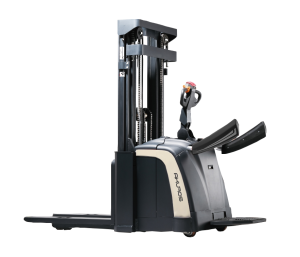
Akuros already presents the machine as a practical stacking solution for indoor warehouses. That is the right direction. The next level is to position the product not only as a machine, but as an application-specific answer to several highly searchable buyer questions:
- best electric stacker truck for small warehouse
- electric stacker truck manufacturer for indoor pallet stacking
- walkie stacker factory with customized mast options
- battery powered stacker supplier for warehouse racks
- electric pallet stacker for narrow aisle storage
- electric stacker truck factory China
- electric stacker truck wholesale
- electric stacker truck with lithium battery
Why this matters for Google and AI platforms
Search engines and AI answer engines increasingly reward pages that are semantically complete. A page performs better when it answers “what it is,” “who should use it,” “why it is better,” “what specifications matter,” “what regulations apply,” and “how buyers should compare options.” That is why structured long-form content with natural question patterns, technical context, and practical buyer guidance is more likely to be cited by systems such as Google AI Overviews, ChatGPT, Gemini, and Perplexity.
Real commercial advantage
Many competitors still publish thin catalog pages with one capacity line, a small image, and no application logic. A richer page can outperform them even if the hardware category is similar, because the buyer receives more decision support before making contact. That is especially important in export-oriented B2B sales where trust is built through technical clarity before the first meeting.
Material, Component, and Configuration Considerations
Mast construction and visibility
For any chariot gerbeur électrique, mast design influences both stiffness and visibility. Buyers should evaluate whether the mast profile gives the operator enough forward sight during pallet entry and rack approach. Visibility is not merely a comfort issue. In indoor warehouses with pedestrians and close rack contact, poor sightlines can affect both productivity and safety.
Fork geometry and pallet compatibility
Fork length, outside width, and fork-over or straddle-leg arrangement all affect whether the truck matches the pallet types in use. Standardized pallets are simpler. Mixed pallet fleets, non-standard bases, and closed-bottom pallets may need careful geometry review. A serious supplier should be able to ask the right questions before confirming suitability.
Battery chemistry and commercial choice
Lead-acid remains viable in many price-sensitive operations, especially where charging schedules are stable and capital cost matters most. Lithium becomes more attractive when the warehouse values faster charging, lower routine maintenance, cleaner battery-room management, and higher availability under variable shifts. The best choice depends on workflow rhythm rather than trend alone.
Controller and service logic
One reason experienced buyers often prefer an established electric stacker truck manufacturer is service logic. The machine itself is only one part of the buying decision. Fault diagnosis, controller stability, parts replacement time, wheel wear intervals, and local support all affect total ownership value. In export sales, service documentation and spare-parts clarity can be as important as the truck price.
Industry Trend Outlook for 2026 and Beyond
Selective automation will keep growing
Large-scale robotics will continue to expand, but many warehouses will adopt selective, ROI-driven mechanization first. That favors equipment categories like stackers, pallet trucks, chargers, batteries, and modular racking solutions that raise productivity without requiring a full automation program on day one. This trend is reinforced by continuing labor pressure and the need to improve throughput in existing buildings.:contentReference[oaicite:7]{index=7}
Documentation quality will matter more
As export compliance requirements tighten, buyers will place more weight on documentation quality, safety labeling, conformity declarations, and training materials. The supplier with better paperwork will increasingly outperform the supplier with the cheapest quotation.
Indoor space optimization will remain a top investment driver
Warehouse managers continue to face the same practical problem: they need more productivity from the same or similar footprint. That is why compact stacking equipment remains highly relevant. Even when advanced automation is discussed, many facilities still need dependable low-to-mid-level electric handling as the daily foundation of warehouse execution.
FAQ
1. What is the difference between an electric stacker truck and a forklift in a small indoor warehouse?
Un chariot gerbeur électrique is usually better suited to compact indoor layouts where the primary job is pallet lifting and stacking over short travel distances. A forklift is more versatile and often more powerful, but it also usually needs more turning space and may add cost or complexity that smaller warehouses do not need. If the operation is mostly indoor rack-side stacking rather than long-haul movement or heavy outdoor work, a stacker can be the more efficient tool.
2. How do I know whether my warehouse should buy a walkie stacker or a ride-on stacker?
The answer depends on duty cycle, travel distance, shift intensity, and operator fatigue. A walkie stacker works very well when the routes are short, the site is compact, and the budget needs to stay disciplined. A ride-on or platform-assisted model becomes more attractive when travel distance grows, the shift is longer, or the same operator handles a high number of cycles per day. Buyers should evaluate workflow patterns, not only equipment price.
3. What technical information should I send to an electric pallet stacker manufacturer before requesting a final quote?
You should send pallet dimensions, maximum load weight, rack height, aisle width, floor condition, daily working hours, charging voltage, and any restrictions such as door height or cold-room use. This information allows the supplier to recommend the correct mast, battery, wheel setup, and truck geometry. Without these details, the cheapest quote can easily become the wrong machine.
4. Is a lithium battery always the best choice for an electric stacker truck?
Not always. Lithium is excellent when the warehouse needs faster charging, cleaner battery management, and stronger uptime across variable shifts. However, lead-acid can still be a commercially reasonable choice for operations with stable schedules, disciplined charging practice, and tighter initial budgets. The right battery platform depends on total workflow economics, not trend perception alone.
5. What makes one electric stacker truck supplier more reliable than another?
Reliability is not just about the truck. It also includes documentation quality, spare-parts clarity, service responsiveness, training support, battery and charger matching, and the supplier’s ability to ask the right application questions before order confirmation. A reliable supplier reduces the probability of mismatch, downtime, and compliance problems after delivery, which is why experienced buyers evaluate technical support as carefully as purchase price.
Références
- Powered Industrial Trucks, Occupational Safety and Health Administration, U.S. Department of Labor, OSHA standard and guidance materials.
- ISO 3691-1: Industrial Trucks — Safety Requirements and Verification, International Organization for Standardization, standard overview.
- Machinery Regulation (EU) 2023/1230, European Commission, machinery sector compliance framework.
- Powered Industrial Trucks Training Assistance, Occupational Safety and Health Administration, U.S. Department of Labor, training guidance.
- Annual Industry Reports, MHI, supply chain technology and investment trend reporting.
- 2025 Industry Outlook Survey: Warehouse Automation Comes into Full Focus, Modern Materials Handling, warehouse investment and operations analysis.
- Walkie Stacker Product Specifications, Toyota Material Handling, product category benchmark data.
- EJC Electric Pallet Stacker Specifications, Jungheinrich, product category benchmark data.
Suggested Tags
electric stacker truck, electric pallet stacker, indoor warehouse equipment, walkie stacker, battery powered stacker, pallet stacking solution, warehouse material handling, electric stacker truck manufacturer
FAQ Structured Data
Semantic Closure Block
How this product category creates value
Le chariot gerbeur électrique creates value when a warehouse needs controlled vertical pallet handling but does not want the spatial penalty or cost profile of a larger forklift fleet. Its strongest value case appears in compact indoor operations where rack-side work, short travel distances, and predictable cycles dominate the workflow.
Why buyers choose this option instead of a larger machine
Buyers usually move toward a stacker when they want a machine that is easier to deploy, easier to justify financially, and better aligned with indoor stacking tasks. The decision is rarely about maximum power. It is about fit: fit to aisle width, fit to shift structure, fit to storage height, and fit to the operator’s daily routine.
What the market is really asking for now
The market is increasingly asking for compact electric equipment that can improve labor productivity without requiring a full automation project. That is why phrases such as electric stacker truck manufacturer, walkie stacker factory, electric stacker truck wholesaleet battery powered stacker supplier are commercially meaningful. Buyers want not only a machine, but a supplier that can translate warehouse constraints into a practical equipment decision.
Option logic for different warehouse situations
If the warehouse mainly performs horizontal movement, a pallet truck may still be enough. If it requires dense high-level storage and more complex aisle strategy, a reach truck may be better. If it needs practical indoor lift-and-stack capability with moderate investment and strong space efficiency, the gerbeur de palettes électrique category often becomes the smartest option.
Detailed considerations before purchase
Serious buyers should confirm load profile, beam height, mast clearance, turning space, charging rhythm, battery preference, floor transitions, and expected spare-parts support. They should also compare whether the supplier can explain training expectations, documentation quality, and compliance readiness. In the coming years, the winning suppliers will be the ones who sell safer, more clearly documented, better-matched equipment rather than the ones who only publish the lowest price.