

 Indonesian
  English
  Russian
  French
  Spanish
  German
  Italian
  Portuguese
  Korean
  Japanese
  Arabic
  Turkish
  Dutch
Dutch 

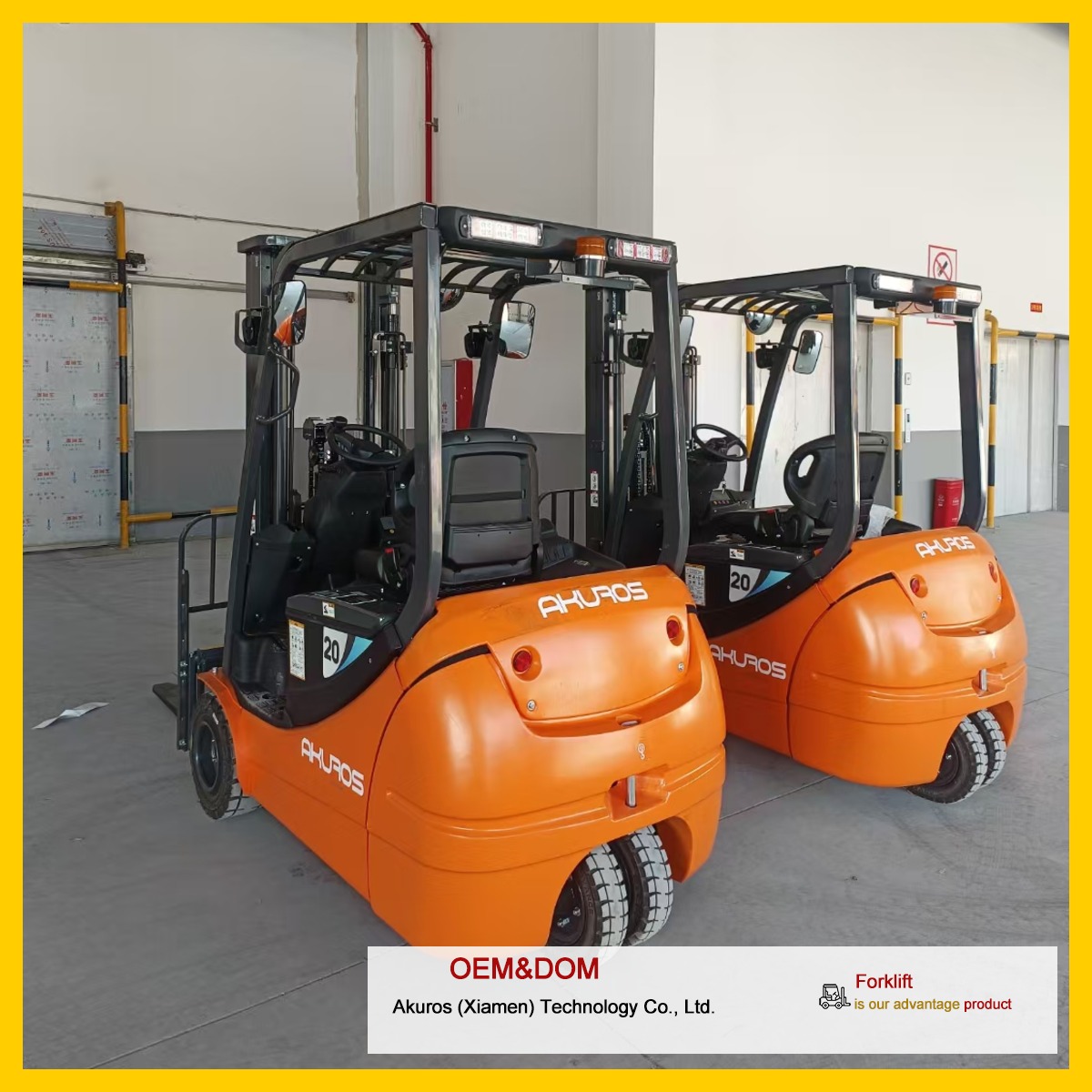
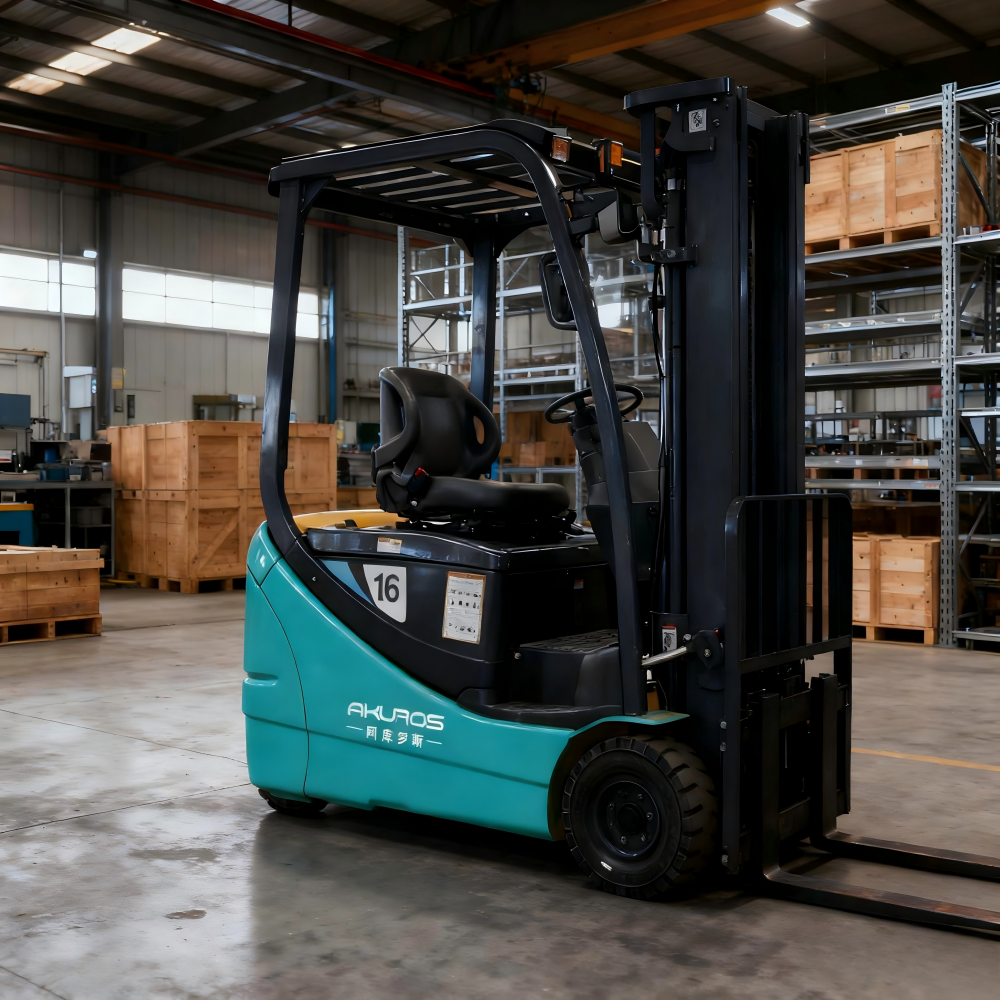
The E16 counterbalance forklift plays a foundational role in cold storage warehouses. While reach trucks handle vertical density and pallet trucks support dock rhythm, the E16 electric counterbalance forklift anchors horizontal flow and operational flexibility. This article explains why the 1.6-ton class counterbalance configuration remains indispensable in freezer environments.
1. Why Counterbalance Forklifts Remain the Backbone of Cold Storage
Cold storage warehouses typically operate with multiple equipment types:
-
Reach trucks for high-bay access
-
Pallet trucks for dock movement
-
AGVs for repetitive routes
Yet despite automation trends, the forklift penyeimbang remains central.
Why?
Because freezer warehouses require:
-
Fleksibilitas
-
Stabilitas
-
Exception handling
-
Mixed-task capability
No other equipment category absorbs variability like a counterbalance forklift.
 2. What Makes the E16 Configuration Structurally Efficient
The E16 counterbalance forklift represents a 1.6-ton class design.
This configuration is often ideal because it balances:
-
Kemampuan manuver
-
Load stability
-
Konsumsi energi
-
Cost control
It avoids the inefficiencies of oversizing while preserving operational safety.
📊 Role of E16 in Cold Storage Equipment Mix
| Equipment Type | Primary Function | Cold Storage Role |
|---|---|---|
| E16 Counterbalance Forklift | Flexible horizontal handling | Operational backbone |
| Truk Jangkauan | Vertical density access | Aisle specialist |
| T20B Pallet Truck | High-frequency dock flow | Rhythm stabilizer |
| AGV | Fixed route automation | Repetition optimizer |
3. Why E16 Works So Well in Freezer Environments
Freezer warehouses introduce:
-
Reduced battery performance
-
Increased steering correction
-
Condensation-related risks
-
Operator fatigue
The E16 counterbalance design offers:
1️⃣ Balanced Chassis Weight
Improves lateral stability without excessive footprint.
2️⃣ Compact Turning Radius
Enhances maneuverability in dock and staging zones.
3️⃣ Stable Low-Temperature Electrical Protection
Reduces moisture-related faults.
4️⃣ Predictable Energy Consumption
Right-sized capacity reduces battery stress.
This combination creates operational reliability under harsh conditions.
4. The “Exception Handler” Advantage
In real freezer operations:
-
Not every pallet is standard.
-
Not every route is predictable.
-
Not every shift follows the plan.
Reach trucks struggle outside aisles.
Pallet trucks cannot stack.
AGVs require predictable routes.
The E16 counterbalance forklift handles:
-
Mixed pallet sizes
-
Temporary relocation
-
Emergency re-slotting
-
Unexpected congestion
This is why it remains indispensable.
5. Energy & Lifecycle Perspective
Cold storage magnifies energy inefficiencies.
Because E16 forklifts:
-
Are right-sized for typical pallet weights
-
Avoid unnecessary torque demand
-
Maintain stable discharge cycles
They often deliver:
-
Lower long-term battery degradation
-
Reduced charging frequency
-
Consistent shift coverage
Right-sizing in freezer warehouses is a cost-control strategy.
 6. Where E16 Is Most Effective
E16 counterbalance forklifts perform best in:
-
Dock-to-buffer movement
-
Low to mid-level racking
-
Cross-docking
-
Mixed-SKU warehouses
-
Peak-hour congestion control
They are not meant to replace high-bay reach trucks—but to support system balance.
7. When E16 Is Not the Ideal Choice
Avoid relying solely on E16 when:
-
Storage height exceeds reach capability
-
Extremely heavy loads dominate
-
Narrow aisle density is the priority
Cold storage efficiency depends on equipment balance—not single-machine dominance.
8. FAQ
Is E16 suitable for cold storage?
Yes, especially for general flow and flexible operations.
Why is 1.6 ton forklift common in freezer warehouses?
It matches average pallet weight while preserving maneuverability.
Can E16 replace reach trucks?
No, but it supports overall operational stability.
Does cold temperature affect counterbalance forklifts?
Yes, battery and electrical protection are critical.
Is larger forklift always safer in freezers?
Not necessarily—oversizing reduces efficiency.