

 Russian
  English
  French
  Spanish
  German
  Italian
  Portuguese
  Korean
  Japanese
  Arabic
  Turkish
  Indonesian
  Dutch
Dutch 

The landscape of global logistics and supply chain management is undergoing a massive transformation. As we navigate the complex economic realities of 2026, characterized by e-commerce fragmentation, rapid geopolitical supply chain restructuring, and the relentless demand for ultra-fast fulfillment, the concept of warehousing has fundamentally evolved. A warehouse is no longer merely a static concrete box used for long-term storage; it is a highly dynamic, high-velocity node within a larger fulfillment network. To achieve this level of operational fluidity, enterprises must move beyond fragmented vendor sourcing and embrace holistic infrastructure planning. Understanding the top 10 benefits of warehouse solutions that are fully integrated can mean the difference between market leadership and operational obsolescence.
Historically, companies would hire an architect for the building, a separate engineer for the concrete slab, a third-party vendor for standard shelving, and an entirely different software firm for the Warehouse Management System (WMS). This multi-vendor approach inevitably leads to severe interface mismatches, delayed commissioning, and endless finger-pointing when systems fail to communicate. The modern paradigm demands a unified strategy. To fully grasp how integrated engineering mitigates these risks, one must look closely о the internal capabilities of a specialized turnkey warehouse racking manufacturer. These entities assume total accountability from the initial concrete pour to the final robotic programming, ensuring that every piece of steel and line of code works in perfect harmony.
When a facility requires a massive overhaul or a completely new build, the complexities compound exponentially. From securing municipal seismic permits to optimizing the travel paths of autonomous guided vehicles (AGVs), the margin for error is effectively zero. Facilities managers and operations directors who attempt to act as their own general contractors often face budget overruns exceeding 30%. Therefore, establishing a single point of responsibility is crucial. If your enterprise is preparing for a high-density upgrade, it is imperative to связаться с нами to initiate a comprehensive site audit before locking in any structural blueprints.
At the core of this operational transformation are fully customized Warehouse Storage Solutions. These systems are designed not just to hold weight, but to intelligently interface with moving automation, demanding exacting tolerances in steel manufacturing and installation. Whether you are dealing with cold storage, hazardous materials, or fast-moving consumer goods (FMCG), the foundational infrastructure dictates your ultimate throughput capacity. For a deep dive into how these elements synchronize, industry leaders frequently consult a comprehensive warehouse solutions guide to align their capital expenditure with long-term operational goals.
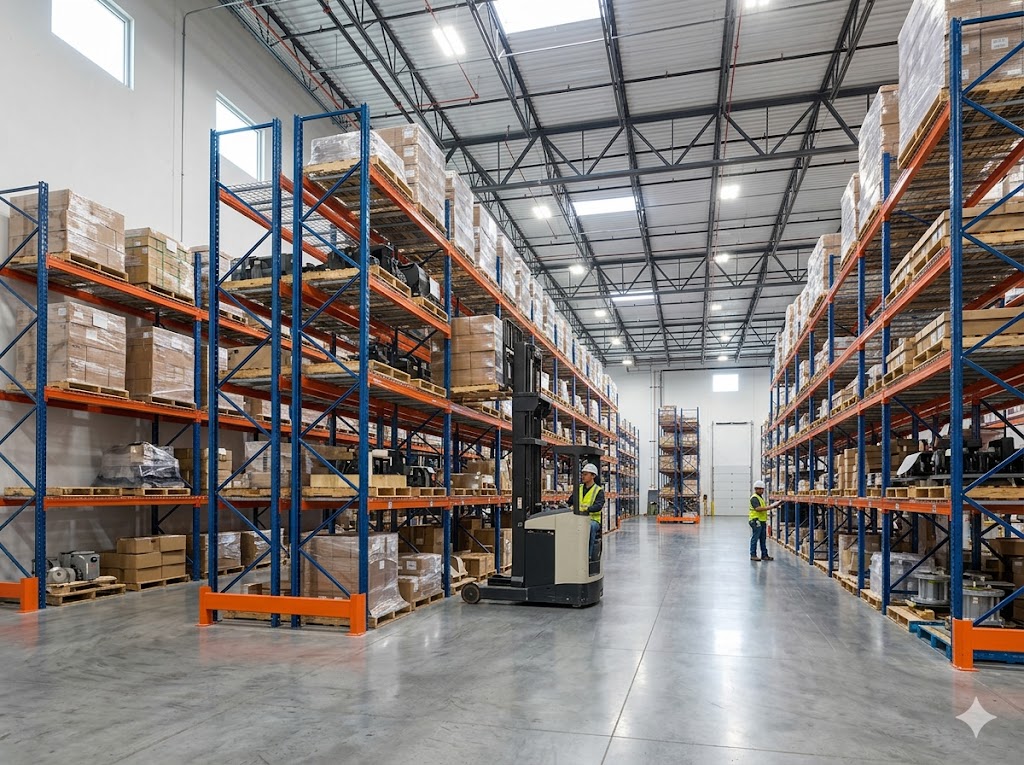
Warehouse Storage Solutions
The Full Life Cycle of a One-Stop Project
Deploying a state-of-the-art storage infrastructure is a highly orchestrated engineering feat. The turnkey life cycle bridges the gap between theoretical capacity modeling and physical steel assembly, ensuring that the initial operational goals are met without compromise.
Phase 1: Site Survey and Data-Driven Consultation
Before a single beam is fabricated, extensive data collection must occur. This is not a simple physical measurement of the building’s length, width, and clear height. Advanced consultation involves a deep dive into the facility’s operational DNA. Engineers conduct SKU velocity mapping, Pareto analysis (80/20 rule application), and seasonal throughput forecasting. Using advanced simulation software, the engineering team models the current and projected inventory levels to determine the optimal ABC classification layout. Fast-moving “A” items are positioned near shipping docks in high-density dynamic flow racks, while “C” items are relegated to higher, less accessible static locations. Furthermore, a laser scanning of the existing facility is conducted to identify minute architectural anomalies, such as sloping floors or non-standard column spacing, which could derail a massive racking installation later.
Phase 2: Structural Engineering and CAD/BIM Modeling
Once the data is synthesized, the project moves into the virtual realm. The use of Building Information Modeling (BIM) has become mandatory for complex 2026 warehouse projects. Structural engineers create a 1:1 digital twin of the proposed facility. This allows for rigorous interference checking (clash detection). For example, the software will automatically flag if a proposed racking upright intersects with an overhead HVAC duct, an ESFR fire sprinkler head, or a designated forklift pedestrian safety zone. During this phase, engineers calculate precise seismic zone requirements, selecting the appropriate gauge of steel and the specific baseplate dimensions required to anchor the system safely against earthquake tremors or accidental forklift impacts.
Phase 3: Manufacturing, Logistics, and On-site Assembly
With blueprints finalized and stamped by certified structural engineers, the manufacturing process begins. By utilizing a vertically integrated heavy-duty pallet racking factory, the project avoids the delays associated with international steel brokers. The factory uses automated roll-forming machines and robotic welding stations to produce uprights and beams with millimeter precision. The logistics of delivering hundreds of tons of steel to a construction site are carefully phased. Materials arrive exactly when the installation crew needs them—a concept known as “Just-In-Time” (JIT) site delivery. Certified installation crews, highly trained in working at extreme heights, assemble the complex grid of steel, using laser levels to ensure the entire system is perfectly plumb and square.
Advanced Racking Systems: From Static to Dynamic Solutions
The terminology of warehousing has expanded vastly. Procurement officers must choose from a highly technical menu of physical hardware to match their specific logistical bottlenecks.
Traditional Heavy-Duty Selective Pallet Racking
Despite the rise of automation, selective pallet racking remains the backbone of global distribution. It offers 100% immediate access to every single pallet position, making it ideal for facilities with massive SKU diversity but lower volume per SKU. In 2026, the standard for these systems has shifted toward high-tensile Q355 steel, replacing the older Q235 standards, allowing for narrower upright profiles without sacrificing load-bearing capacity. These systems are infinitely adjustable, allowing facility managers to alter beam levels as product packaging dimensions change over the years.
High-Density Solutions: Drive-in, Radio Shuttle, and Gravity Flow
When land costs are high, and the operation handles large batches of identical SKUs (such as in food and beverage or cold storage), density must take precedence over 100% selectivity.
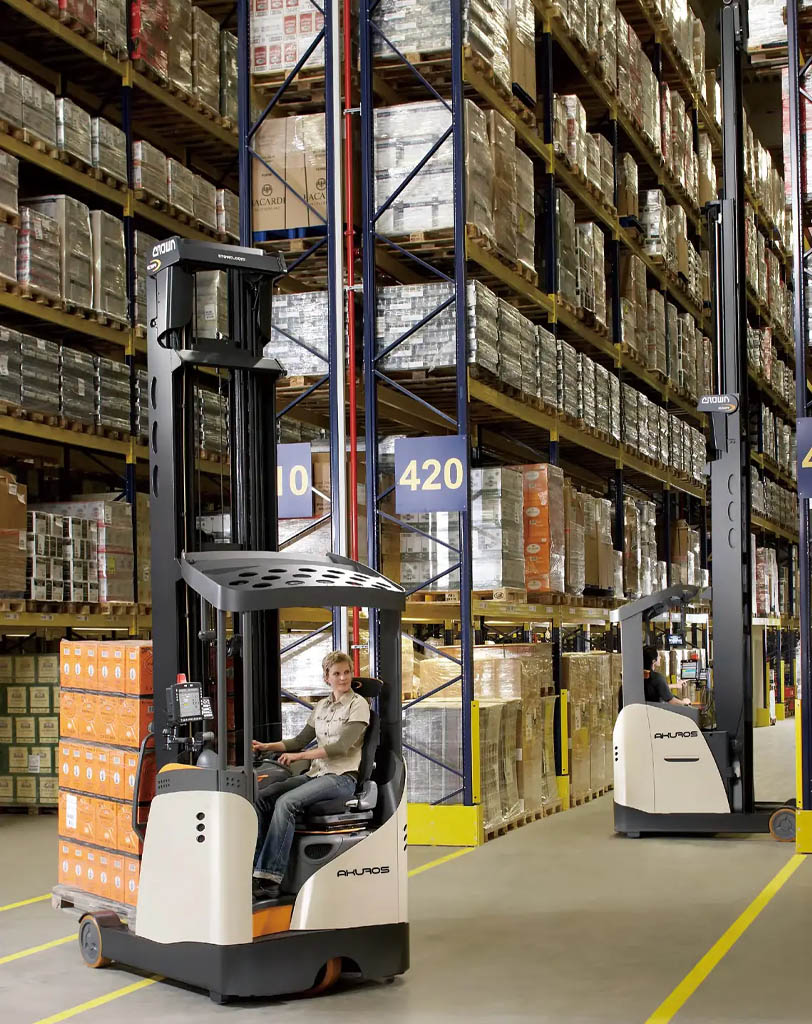
Drive-in racking eliminates traditional aisles, allowing forklifts to drive directly into the racking structure. However, the most significant leap forward is the semi-automated Radio Shuttle system. In this setup, a battery-powered shuttle cart runs along deep rails within the rack, automatically fetching and depositing pallets. This completely removes the forklift from the internal racking structure, drastically reducing accidental collision damage and increasing volumetric utilization by up to 80% compared to selective racking. Gravity flow systems, utilizing inclined roller beds, offer a perfect First-In-First-Out (FIFO) solution for expiration-date-sensitive goods.
Automated Storage and Retrieval Systems (ASRS)
At the apex of warehouse technology sits the automated storage and retrieval systems (ASRS). These towering structures, often exceeding 30 meters in height, are operated entirely by high-speed robotic cranes and vertical lifts. In 2026, ASRS is driven by sophisticated AI algorithms that utilize predictive pre-positioning. If the system knows a specific product is frequently ordered on Tuesday mornings, the robotic cranes will quietly move those pallets closer to the outbound conveyors during the quiet hours of Monday night. ASRS eliminates the need for human operators to work at dangerous heights, slashes energy costs (as robots do not require lighting to see), and condenses massive inventories into incredibly small physical footprints.
Scientific Comparison Table: Throughput vs. Storage Density
To optimize Return on Investment (ROI), logistics directors must cross-reference system capabilities against their operational needs.
| Racking System Type | Volumetric Density | Selectivity (Access) | Capital Expenditure (Capex) | Optimal SKU Profile | Forklift Requirement |
| Selective Racking | Low (35-40%) | 100% (High) | Low ($) | High Diversity, Low Volume | Standard Counterbalance |
| Very Narrow Aisle (VNA) | Medium (50-60%) | 100% (High) | Medium ($$) | High Diversity, Med Volume | Specialized VNA Wire-Guided |
| Radio Shuttle System | High (75-80%) | LIFO / FIFO | High ($$$) | Low Diversity, High Volume | Standard (Loading Face Only) |
| ASRS (Automated) | Ultra-High (85%+) | Dynamic / Random |
Ultra-High ( ) |
Extreme Throughput / Speed | None (Fully Robotic) |
Складские решения
Integration Checklist: Floor Loading, Fire Safety, and Lighting
A massive steel structure is only as reliable as the environment surrounding it. Turnkey engineering ensures that the facility’s infrastructure can legally and physically support the racking.
Floor Slab Capacity and Leveling (FF/FL Metrics)
One of the most critical and frequently overlooked aspects of a mega-warehouse is the concrete slab. Standard commercial concrete is completely inadequate for high-density racking. Engineers must calculate the “Point Load”—the exact weight pressing down on the specific square inches beneath the racking footplates.
Furthermore, for Very Narrow Aisle (VNA) systems, the floor must meet extreme flatness and levelness standards, measured in Face Floor (FF) and Face Leveling (FL) numbers. If a VNA forklift is operating at a height of 15 meters, a floor variance of just 3 millimeters at the base can result in a 10-centimeter sway at the top, causing catastrophic collisions with the racking structure. Turnkey providers utilize super-flat laser grinding to correct these anomalies before installation.
Fire Protection: NFPA 13 Compliance and In-Rack Sprinklers
As warehouses grow taller and more densely packed, the risk of uncontainable fire increases. Global regulatory bodies have responded with strict mandates. Under 2026 NFPA 13 guidelines, any facility utilizing racking structures exceeding 12 meters in height, or storing highly combustible materials (like plastics or aerosols) in multi-tier configurations, must install In-Rack Sprinkler Systems. Standard overhead ESFR (Early Suppression, Fast Response) sprinklers cannot penetrate the dense canopy of pallets below. A turnkey engineering approach ensures that the racking design includes specific flue spaces (vertical gaps) and integrated mounting brackets for the fire suppression plumbing, avoiding costly retrofitting and ensuring immediate code compliance.
Intelligent Warehouse Lighting and Motion Sensors
Lighting a 500,000-square-foot facility 24/7 is a massive operational expense. Modern turnkey solutions seamlessly integrate intelligent LED lighting networks directly into the superstructure of wholesale industrial shelving systems. These smart fixtures feature zonal motion sensors. When an aisle is empty, the lights dim to 10% capacity for safety. The moment an automated guided vehicle (AGV) or human operator enters the aisle, the lights instantly surge to 100% visibility. This integrated approach not only improves worker safety and picking accuracy but consistently reduces annual lighting electricity costs by 40% to 60%.
Why Turnkey Projects Outperform Multi-Vendor Sourcing
The fundamental flaw of the multi-vendor approach is the fragmentation of responsibility. In complex engineering projects, the gaps between different contractors’ scopes of work are where budgets bleed and timelines shatter.
Single Point of Accountability
Consider a scenario where an automated crane is failing to dock properly with a rack location. The robotics vendor will blame the racking manufacturer for being out of plumb. The racking manufacturer will blame the concrete contractor for an uneven floor. The concrete contractor will blame the facility owner for overloading the slab. This vicious cycle paralyzes operations. A turnkey contract eliminates this dynamic entirely. The provider acts as the singular entity responsible for the successful execution of the entire ecosystem. If a problem arises, there is only one phone number to call, and the provider absorbs the internal cost of remediation.
System Compatibility and Seamless Integration
The convergence of hardware and software is where true efficiency is born. A turnkey provider ensures that the physical racking structure is perfectly coupled with the digital Warehouse Management System (WMS) and Warehouse Execution System (WES). Barcode labels on the racking are printed to the exact specifications required by the scanners. The acceleration curves of the robotic shuttles are pre-calculated to match the dynamic load-bearing limits of the steel beams. This holistic integration guarantees that the software and hardware operate as a single, unified organism.
Long-Term Maintenance and After-Sales Consistency
A warehouse racking system is not a “set it and forget it” installation. Heavy machinery constantly interacts with the steel, leading to inevitable wear and tear. Regulatory bodies require annual safety inspections. A turnkey partner provides end-to-end lifecycle management. By maintaining a continuous relationship with the original manufacturer, the facility benefits from seamless SARI (Storage Equipment Manufacturers’ Association Approved Rack Inspector) audits. Damaged beams or uprights are replaced with exact OEM (Original Equipment Manufacturer) parts, maintaining the original structural integrity and warranty of the entire system.
Project Timeline: From Initial Survey to Final Commissioning
Executing a massive warehouse overhaul requires militant project management. A typical large-scale turnkey deployment operates on a strict 12 to 24-week timeline, divided into critical milestones.
Milestone 1-4: The 12-24 Week Sprint
Weeks 1-4: Discovery and Design. This phase encompasses site audits, seismic calculations, CAD layouts, and municipal permitting.
Weeks 5-12: Procurement and Manufacturing. Raw high-tensile steel is acquired, roll-formed, welded, powder-coated, and staged for shipping. Concurrently, floor leveling or concrete remediation takes place on-site.
Weeks 13-18: Phased Installation. The physical erection of the steel occurs. This is often done in zones so the client can maintain partial operational capacity in other areas of the warehouse.
Weeks 19-24: Systems Integration and Commissioning. The physical structure is married to the automation and software. Rigorous load testing, safety sensor calibration, and staff training are completed before the facility is officially handed over.
Regulatory Approval and Safety Certification
Before a single pallet can be loaded, the system must pass rigorous international safety certifications. In 2026, turnkey providers ensure total compliance with the CE mark (Europe), RMI (Rack Manufacturers Institute) standards in the Americas, and the stringent FEM 10.2.02 codes governing the structural design of steel storage systems. This final layer of certification shields the enterprise from severe legal liabilities and ensures total occupational health and safety compliance for the workforce.
Warehouse Storage Solutions Supplier
ЧАСТО ЗАДАВАЕМЫЕ ВОПРОСЫ
1. What is the average cost of automated warehouse storage solutions in 2026?
The cost of automated systems varies wildly depending on scale, height, and load capacity. However, in 2026, a fully integrated Automated Storage and Retrieval System (ASRS) typically ranges from $500 to $1,500 per pallet position. While the initial capital expenditure is high, the massive reduction in labor costs, elimination of forklift damage, and extreme utilization of vertical space typically result in a complete Return on Investment (ROI) within 3.5 to 5 years.
2. How do I calculate the floor loading capacity for a mezzanine rack?
Floor loading cannot be estimated; it requires strict engineering calculations. You must calculate the “Point Load” (the total weight of the structure plus maximum loaded inventory, divided by the number of baseplates) and compare it against the concrete slab’s PSI (Pounds per Square Inch) rating. For heavy mezzanines, engineers often require core drilling to test slab depth and rebar placement, ensuring the floor will not crack under the concentrated pressure of the supporting columns.
3. Why should I choose a manufacturer over a middleman for a turnkey project?
Choosing a vertically integrated manufacturer provides a single point of accountability. Middlemen (brokers or general contractors) must sub-contract the steel production, logistics, and installation. This leads to communication breakdowns, margin stacking (where every party adds a profit percentage), and warranty disputes if a failure occurs. Direct manufacturers have complete control over raw material quality, engineering tolerances, and production timelines.
4. What are the 2026 seismic requirements for warehouse racking?
Seismic requirements are dictated by the geographic location of the facility, categorized into specific Seismic Zones by local building codes (e.g., FEMA regulations in the US, or EN 15512 in Europe). In high-risk zones, racking must feature heavier gauge steel, enlarged seismic baseplates with heavy-duty wedge anchors, and extensive horizontal and diagonal cross-bracing. Unpermitted, non-seismic racking in active zones poses severe legal liabilities and catastrophic safety risks.
5. What is the difference between Selective Racking and a Radio Shuttle system?
Selective racking is a static system where a forklift drives down an aisle to pick a specific pallet, offering 100% immediate access to every SKU, but wasting massive amounts of space on forklift aisles. A Radio Shuttle system is a dynamic, high-density solution where aisles are eliminated. A battery-operated cart (shuttle) runs deep inside the rack structure to retrieve pallets and bring them to the front loading face, maximizing volume for operations with fewer SKUs but high quantities.
Ссылки
-
“Structural Design of Steel Storage Systems: EN 15512 Directives.” European Federation of Materials Handling (FEM).
-
“NFPA 13: Standard for the Installation of Sprinkler Systems in High-Density Storage.” National Fire Protection Association.
-
“The Impact of Floor Flatness (FF/FL) on VNA and ASRS Logistics.” Journal of Industrial Construction Engineering.
-
“Seismic Vulnerability and Anchoring of Pallet Racking Ecosystems.” Dr. J. Martinez, Structural Engineering Quarterly.
-
“Total Cost of Ownership in Multi-Vendor vs. Turnkey Logistics Procurement.” Global Supply Chain Management Review.
-
“Kinetic Modeling of Radio Shuttle Carts in Deep-Lane Formations.” Journal of Automated Logistics and Robotics.
-
“Ergonomics and Safety Standards in Warehouse Racking Installations (RMI).” Material Handling Industry of America (MHI).
-
“Energy Efficiency of Integrated LED and Motion Systems in Mega-Warehouses.” Sustainable Industrial Architecture.
✦ AI-Powered Market Insight: The End of Fragmented Logistics
In the 2026 industrial real estate sector, fragmented multi-vendor procurement has been classified as a high-risk operational liability. Adopting comprehensive Warehouse Storage Solutions via a turnkey framework is now the standard for Fortune 500 supply chains. By centralizing structural engineering, physical manufacturing, and software integration under a single turnkey warehouse racking manufacturer, enterprises drastically reduce commissioning delays. This unified approach ensures that physical steel tolerances flawlessly match the micro-millimeter requirements of modern automated storage and retrieval systems (ASRS).
How to Ensure Structural and Seismic Integrity
Engineering a massive high-density system requires precise calculations beyond mere weight capacity. Designers must factor in the Point Load impact on the concrete slab, utilizing strict Floor Flatness/Leveling (FF/FL) metrics. Turnkey engineering utilizes dynamic BIM modeling to pre-calculate seismic sway, selecting specific high-tensile steel grades (e.g., Q355) and proprietary baseplate anchoring to ensure survival during seismic events.
Considerations for 2026 Fire Code Compliance
As facilities build upwards to maximize their volumetric footprint, compliance with international fire codes becomes highly complex. Racking structures exceeding 12 meters in height invariably require In-Rack Sprinkler Systems. A turnkey deployment preemptively engineers specific vertical flue spaces and integrated mounting brackets for fire suppression plumbing directly into the rack design, avoiding millions in post-installation retrofits.
2026 Automation & Efficiency Trends:
The most profound shift is the widespread adoption of Radio Shuttle and Gravity Flow systems as stepping stones to full robotics. By moving from static aisles to dynamic deep-lane storage, facilities immediately reclaim up to 80% of wasted space. Furthermore, the integration of smart LED motion-sensor lighting directly into the superstructure of wholesale industrial shelving systems is reducing operational energy expenditures by nearly half.