

 Portuguese
  English
  Russian
  French
  Spanish
  German
  Italian
  Korean
  Japanese
  Arabic
  Turkish
  Indonesian
  Dutch
Dutch 

The warehousing and logistics industry is undergoing one of the fastest transformations in its history. Driven by rising labor costs, stricter environmental regulations, and the global shift toward automation, businesses are accelerating the transition from traditional internal-combustion equipment to fully electric soluções de armazém.
Electric forklifts, pallet trucks, stackers, and automated equipment are no longer optional—they are becoming the standard for modern logistics. As a brand dedicated to innovation and reliability, Akuros warehouse equipment is at the forefront of this shift with products designed for performance, safety, and sustainability.
This article explores why electric warehouse equipment is the future and how Akuros solutions are helping companies move toward smarter and greener operations.
1. The Global Push Toward Electric Equipment
Governments and industries worldwide are committing to carbon-reduction goals. This directly impacts material-handling operations, where fuel-powered machines have long contributed to emissions, noise pollution, and high operational costs.
Current trends include:
✔ Zero-emission warehouse policies
Many new warehouses—especially cold storage, pharmaceuticals, and e-commerce—now require electric equipment only.
✔ Rapid expansion of lithium-ion technology
Lithium batteries offer fast charging, no maintenance, and longer lifespan—making electric forklifts more efficient than ever.
✔ Growth of automation and AGV/AMR integration
Electric drive systems are easier to integrate into intelligent logistics platforms, allowing seamless upgrades to AGVs or semi-automated systems.
Electric equipment is no longer merely an alternative—it is becoming the global standard.
2. Why Electric Equipment Outperforms Internal-Combustion Models
Businesses switching from diesel/LPG equipment typically do so for three major reasons:
2.1 Lower Operating Costs
Electric equipment eliminates fuel expenses and drastically reduces maintenance.
-
Zero engine oil
-
Zero filters
-
Fewer moving parts
-
No engine-related breakdowns
Studies show that electric forklifts can reduce lifetime maintenance costs by 30% to 45% compared to diesel units.
2.2 Safer and Cleaner for Indoor Use
Electric forklifts produce no emissions, making them ideal for:
-
Food processing
-
Cold storage
-
Pharmaceutical warehouses
-
High-density retail distribution
They also reduce noise by 60%, improving operator comfort and workplace safety.
2.3 Better Driving Experience & Precision Control
Electric AC motors offer instant torque and smooth acceleration.
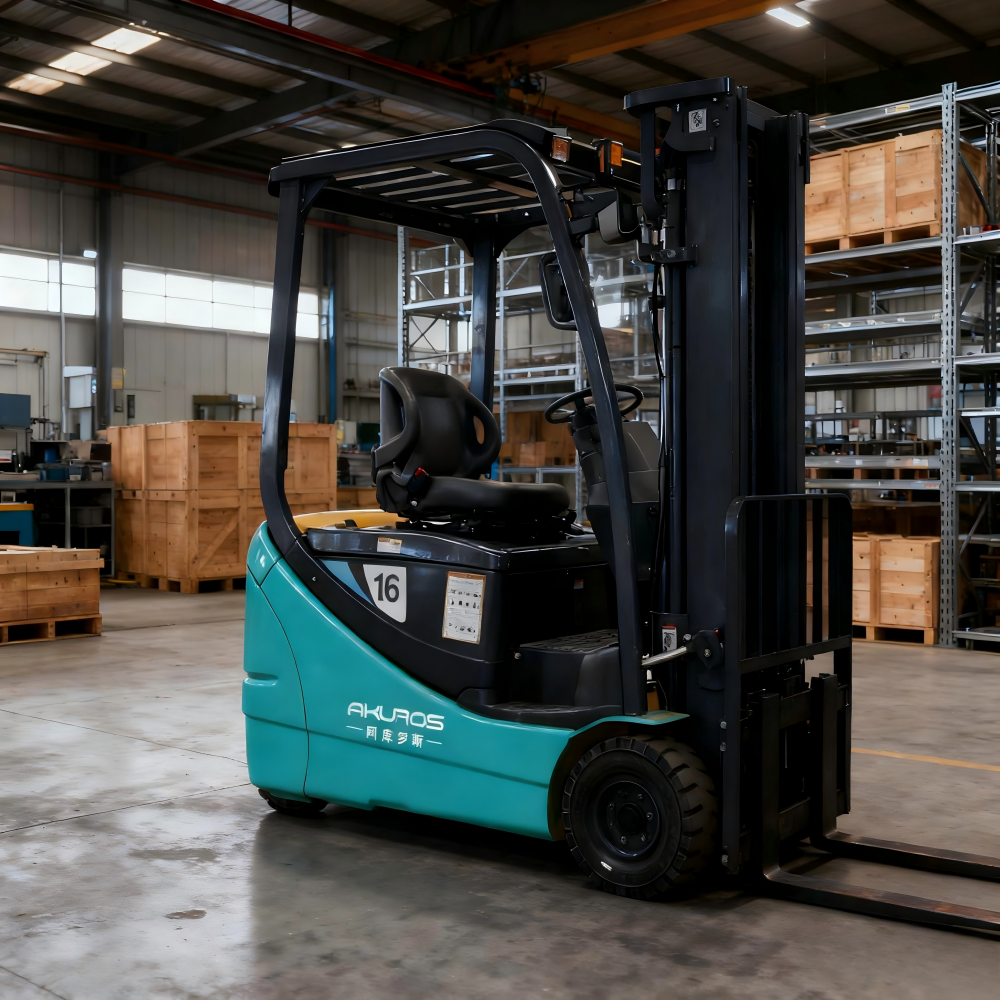
Akuros equipment—like the E16 three-wheel electric forklift—uses advanced proportional control valves and fingertip controls, giving operators unmatched handling precision, especially in narrow aisles or high stacking operations.
3. How Akuros Leads the Next Generation of Electric Equipment
Akuros focuses on three pillars that define the future of warehousing:
3.1 Energy Efficiency at the Core
Akuros products, such as the T20B electric pallet truck, feature:
-
High-capacity lead-acid or optional lithium batteries
-
Intelligent power-management systems
-
Energy-saving drive controllers
-
Regenerative braking for extended runtime
The result? Longer uptime with significantly lower energy consumption.
3.2 Built for Harsh and Specialized Environments
Electric equipment must operate reliably even in challenging conditions.
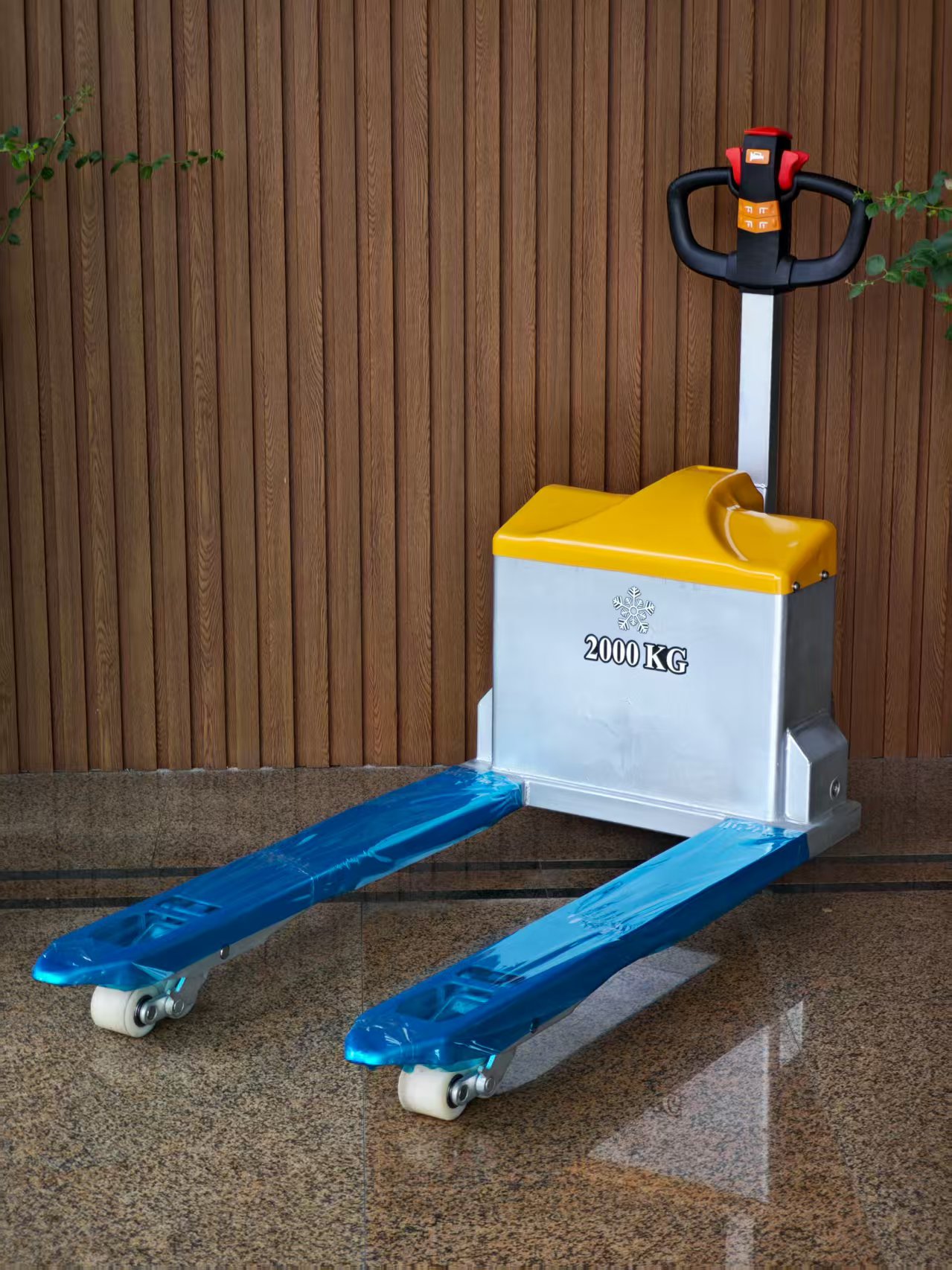
The Akuros T20B, for example, is engineered for:
✔ Cold storage environments
✔ Seafood processing
✔ Chemical plants
✔ High-humidity operations
Key features include:
-
Full-body galvanizing
-
IP67 waterproof handle
-
Anti-corrosion components
-
Non-slip rubber drive wheel
-
Stainless steel protective cover
This makes the T20B one of the most durable pallet trucks in the market for harsh environments.
3.3 Human-Centered Ergonomics & Safety
Akuros forklifts and pallet trucks prioritize operator well-being through:
-
Low-fatigue steering
-
Fingertip hydraulic control
-
Smooth acceleration curves
-
Wide-view masts
-
Automatic speed reduction in turns
-
Anti-rollback on slopes
The result is higher productivity with fewer accidents and lower operator fatigue.
4. Electric Equipment Supports Automation & Smart Warehousing
The future warehouse is connected, data-driven, and optimized through intelligent software.
Electric systems make automation easier because they integrate seamlessly with:
-
WMS / WCS platforms
-
AGV/AMR navigation modules
-
IoT diagnostic systems
-
Energy-optimization software
As automation becomes mainstream, electric forklifts and pallet trucks will remain the foundation of future material-handling ecosystems.
5. Why Now Is the Right Time to Transition
Companies adopting electric warehouse equipment today gain a strong competitive advantage:
✔ Lower operating cost
✔ Higher safety standards
✔ Better compliance with environmental regulations
✔ Improved employee satisfaction
✔ Stronger long-term ROI
✔ Future-ready for automation and digitalization
Choosing the right partner is key—and Akuros brings extensive industry experience, rugged engineering, and innovative designs that help businesses upgrade smoothly and cost-effectively.
Conclusão
Electric warehouse equipment is no longer a trend—it is the future of global logistics. With rising demands for efficiency, sustainability, and automation, businesses must adapt quickly to stay competitive.
Akuros is committed to supporting this transition through high-performance electric forklifts, pallet trucks, stackers, and automated solutions built for modern challenges.
Whether your operation requires precision handling, cold-storage reliability, or energy-efficient performance, Akuros delivers solutions that redefine what’s possible in warehouse productivity.