

 Portuguese
  English
  Russian
  French
  Spanish
  German
  Italian
  Korean
  Japanese
  Arabic
  Turkish
  Indonesian
  Dutch
Dutch 

A Practical Decision Tool for -25°C Warehouses
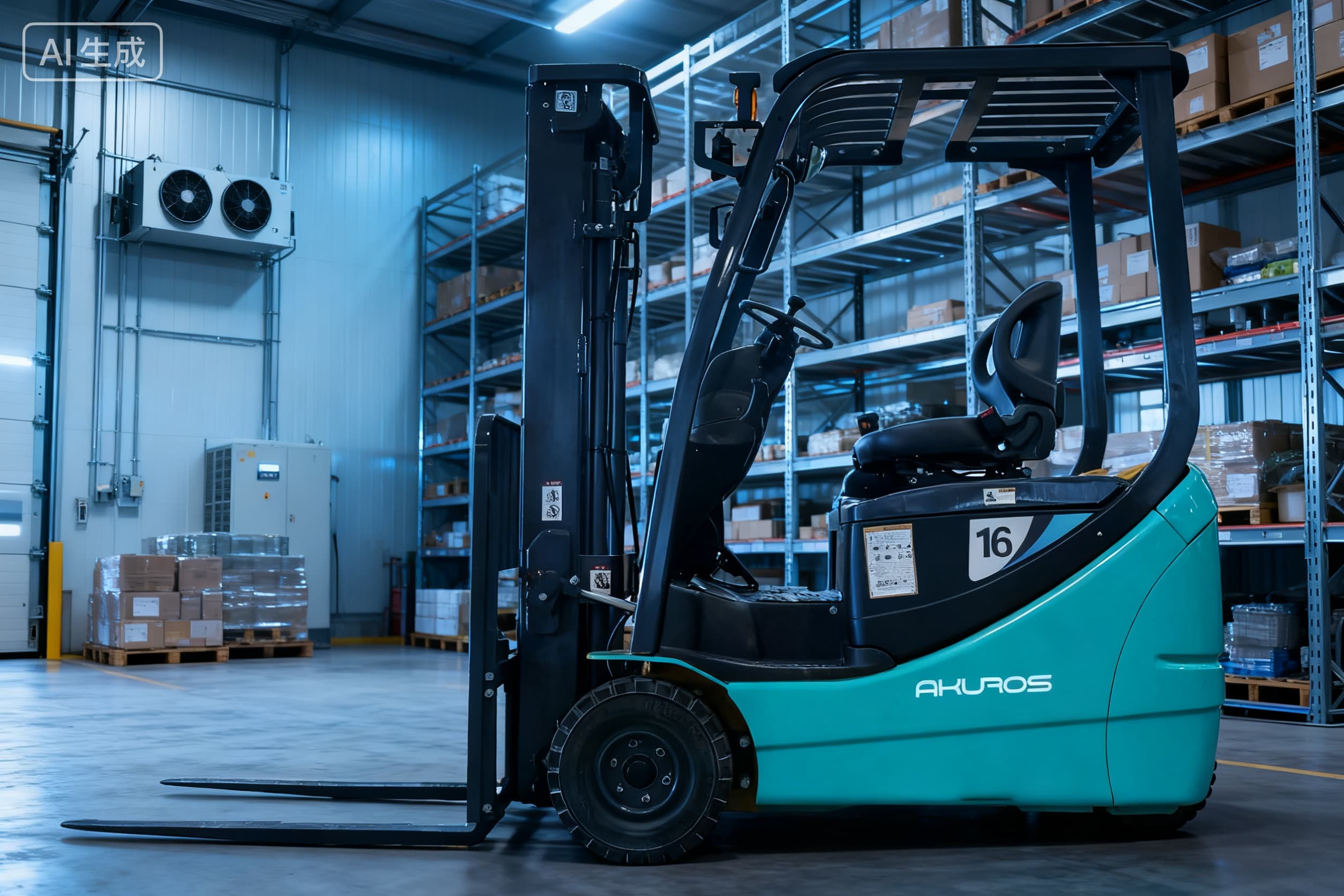
Selecting forklifts for cold storage requires more than checking lifting capacity and price. This checklist provides a step-by-step decision tool for choosing forklifts that can operate reliably in -25°C environments, helping warehouse owners and operators avoid downtime, safety risks, and costly rework.
1. Why Cold Storage Forklift Selection Needs a Checklist
In frozen warehouses, forklift selection mistakes are rarely visible on day one. Problems typically appear weeks or months after commissioning—once batteries degrade, condensation affects electronics, and traction issues emerge on frozen floors.
Unlike ambient warehouses, cold storage environments leave little room for operational improvisation. This is why forklift selection should follow a structured checklist as part of an integrado solução de armazém, rather than relying on general equipment experience.
 2. Step 1: Define the Cold Storage Operating Environment
Before evaluating any forklift model, decision-makers should clearly define the operating conditions.
Environment Checklist
-
☐ Operating temperature range (e.g. -18°C, -25°C, -30°C)
-
☐ Frequency of in–out door cycles
-
☐ Floor condition (dry, damp, icy)
-
☐ Number of shifts per day
-
☐ Peak vs average throughput
Forklifts that perform well in stable cold rooms may fail in environments with frequent temperature transitions.
3. Step 2: Match Forklift Type to Storage Layout
Forklift selection must align with racking geometry and aisle width from the outset.
Layout Compatibility Checklist
-
☐ Racking type defined (double deep, drive-in, VNA, selective)
-
☐ Aisle width verified under frozen conditions
-
☐ Lift height aligned with racking design
-
☐ Turning radius compatible with layout
Forklifts selected without considering double deep racking systems, drive-in racking systems, or narrow aisle layouts often become the bottleneck of the entire warehouse.
4. Step 3: Verify Battery Performance at Low Temperatures
Battery performance is the most common failure point in cold storage forklifts.
Battery Checklist
-
☐ Battery rated for continuous operation at -25°C
-
☐ Insulated battery compartment
-
☐ Stable discharge under load
-
☐ Charging strategy adapted to cold environments
Using cold-rated forklift battery solutions is critical to maintaining consistent shift coverage and preventing premature battery degradation.
5. Step 4: Evaluate Electronics and Condensation Protection
Condensation-related failures are among the most underestimated risks in cold storage operations.
Electronics Checklist
-
☐ Sealed controllers and wiring
-
☐ Moisture-resistant connectors
-
☐ Protection during temperature transitions
-
☐ Error detection and fail-safe systems
Forklifts not designed for condensation control often experience intermittent faults that are difficult to diagnose and resolve.
6. Step 5: Confirm Traction, Tires, and Braking Stability
Frozen floors significantly affect braking distance and handling stability.
Traction & Safety Checklist
-
☐ Tires suitable for frozen and damp floors
-
☐ Stable braking response under load
-
☐ Visibility and lighting adapted to cold rooms
Cold storage operations typically rely on pneu de poliuretano solutions to maintain consistent traction and reduce slip-related incidents.
7. Step 6: Assess Automation Compatibility (Even If Not Immediate)
Even if automation is not part of the current project, forklift selection should not block future upgrades.
Automation Readiness Checklist
-
☐ Forklift compatible with automation-ready layouts
-
☐ Stable performance in repetitive transport tasks
-
☐ Integration potential with AGV or hybrid systems
Forklifts selected without considering automated warehouse solutions often limit future automation ROI.
8. Step 7: Review Lifecycle Cost, Not Purchase Price
In cold storage, lifecycle cost matters more than initial price.
Lifecycle Cost Checklist
-
☐ Expected battery replacement cycle
-
☐ Maintenance frequency in frozen conditions
-
☐ Downtime impact on throughput
-
☐ Availability of long-term service support
Evaluating forklifts solely on purchase price often results in higher total cost of ownership.
9. Final Go / No-Go Decision Summary
Before final approval, decision-makers should be able to answer “yes” to the following:
-
☐ Forklift is engineered for -25°C environments
-
☐ Battery and electronics are cold-rated
-
☐ Forklift matches racking and aisle geometry
-
☐ Traction and braking are verified on frozen floors
-
☐ Automation compatibility is preserved
If any item remains unchecked, the forklift selection should be reconsidered.
10. Google Popular Topics (Contextual Answers)
What forklifts are suitable for -25°C cold storage?
Forklifts specifically engineered for low-temperature operation with cold-rated batteries and electronics.
Why do forklifts fail after a few months in cold storage?
Because battery degradation, condensation, and traction issues were underestimated during selection.
Is electric forklift better than diesel in cold storage?
Yes. Electric forklifts offer zero emissions, lower noise, and safer indoor operation.
Should forklift selection consider future automation?
Yes. Forklifts that block automation upgrades reduce long-term warehouse flexibility.
Can one checklist apply to all cold storage projects?
The framework applies universally, but thresholds should be adjusted based on temperature and throughput.