

 Korean
  English
  Russian
  French
  Spanish
  German
  Italian
  Portuguese
  Japanese
  Arabic
  Turkish
  Indonesian
  Dutch
Dutch 

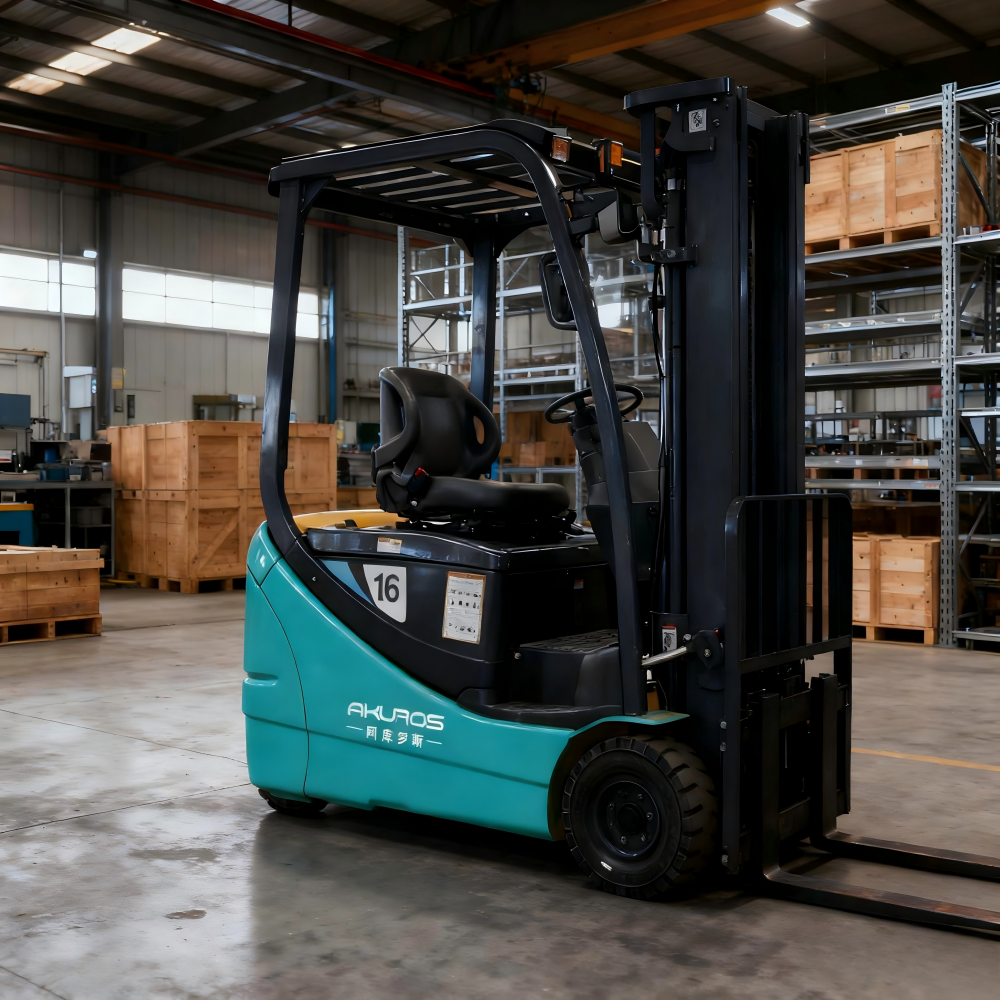
As global logistics become increasingly complex and customer expectations for fast, accurate fulfillment continue to rise, the forklift—once considered a simple lifting tool—has evolved into a core component of modern warehouse intelligence. Today’s electric forklifts represent an integration of engineering innovation, digital connectivity, safety enhancement and ergonomic design. Companies like 아쿠로스 are modernizing traditional material-handling equipment, turning forklifts into smart, energy-efficient systems that directly improve warehouse performance and cost structure.
This in-depth article explores the technological transformation of forklifts, compares electric and internal-combustion models, and highlights how future-ready electric forklifts support automation, sustainability, and high-precision operations across global supply chains.
1. Why Electric Forklifts Are Becoming the Global Standard
Over the past decade, electric forklifts have rapidly overtaken internal-combustion models across manufacturing, retail logistics, pharmaceutical storage, food distribution, and e-commerce fulfillment. This shift is not a trend—it is an operational evolution driven by measurable economic, environmental, and safety benefits.
1.1 Significantly Lower Operating Costs
Electric forklifts eliminate fuel expenses and reduce maintenance by up to 40% thanks to fewer moving parts—no engine oil, no spark plugs, fewer belts, no exhaust system.
Companies typically achieve:
-
30–50% lower energy cost vs diesel
-
다운타임 감소 due to simplified service requirements
-
Longer component lifespan, especially with lithium-ion technology
For large fleets, these savings dramatically improve long-term cost efficiency.
1.2 Zero Emissions and Cleaner Working Environments
Electric forklifts produce zero on-site emissions, making them ideal for:
-
Cold storage and food-grade facilities
-
Pharmaceutical warehouses
-
Indoor manufacturing plants
-
High-traffic distribution centers
With increased global regulatory pressure on carbon emissions, electric forklifts also support ESG compliance and green-warehouse goals.
1.3 Better Handling, Precision, and Responsiveness
Advanced AC drive systems give electric forklifts smoother power delivery, faster acceleration, and more precise speed control. Operators experience:
-
Controlled low-speed maneuvering
-
Instant response to lift commands
-
Better stability on inclines
-
Seamless directional changes
This level of control is essential in narrow aisles, high racking, and fast-picking operations.
 2. Human-Centered Design: Comfort as a Productivity Multiplier
Electric forklifts are no longer judged only on performance. Operator comfort and fatigue reduction are now recognized as critical productivity factors—especially in multi-shift operations.
2.1 Cabin Ergonomics That Reduce Operator Fatigue
Modern forklifts incorporate ergonomic designs such as:
-
Adjustable suspension seats with lumbar support
-
Low-vibration chassis
-
Soft-touch hydraulic fingertip controls
-
Intuitive instruments with real-time status displays
-
Optimized pedal layout and low steering resistance
Improved operator comfort leads to:
-
Fewer errors during long shifts
-
Higher hourly productivity
-
Reduced physical strain and long-term injuries
-
Greater job satisfaction and retention
2.2 Enhanced Visibility and Safety Controls
Electric forklifts integrate visibility-optimized masts, LED lighting, panoramic overhead guards, and 360° fields of view.
Many modern systems add:
-
Pedestrian detection sensors
-
Dynamic speed limiters
-
Auto-park and brake-assist systems
-
Cornering speed control
-
Stability-assist technologies
These features reduce common accident causes such as tip-overs, collisions, and load instability.
3. Precision & Stability: The Engineering Behind Safe Handling
For warehouses operating at high-density storage and narrow aisles, load accuracy is as important as lifting capacity.
3.1 Proportional Hydraulic Control for Smooth Load Handling
High-precision proportional valves allow operators to execute millimeter-level adjustments in:
-
Lift height
-
Tilt angle
-
Fork carriage side shift
-
Mast positioning
This ensures stability when handling fragile materials, long loads, or heavy pallets stacked at height.
3.2 Improved Stability Through Intelligent Control Systems
Modern forklifts use control algorithms that automatically adjust torque, wheel speed, and hydraulic pressure based on:
-
Load weight
-
Forklift tilt angle
-
Turn radius
-
Speed
-
Floor conditions
This dramatically reduces tipping risks and improves safety in fast-paced environments.
 4. The Rise of Smart Forklifts: Connectivity, Data & Fleet Intelligence
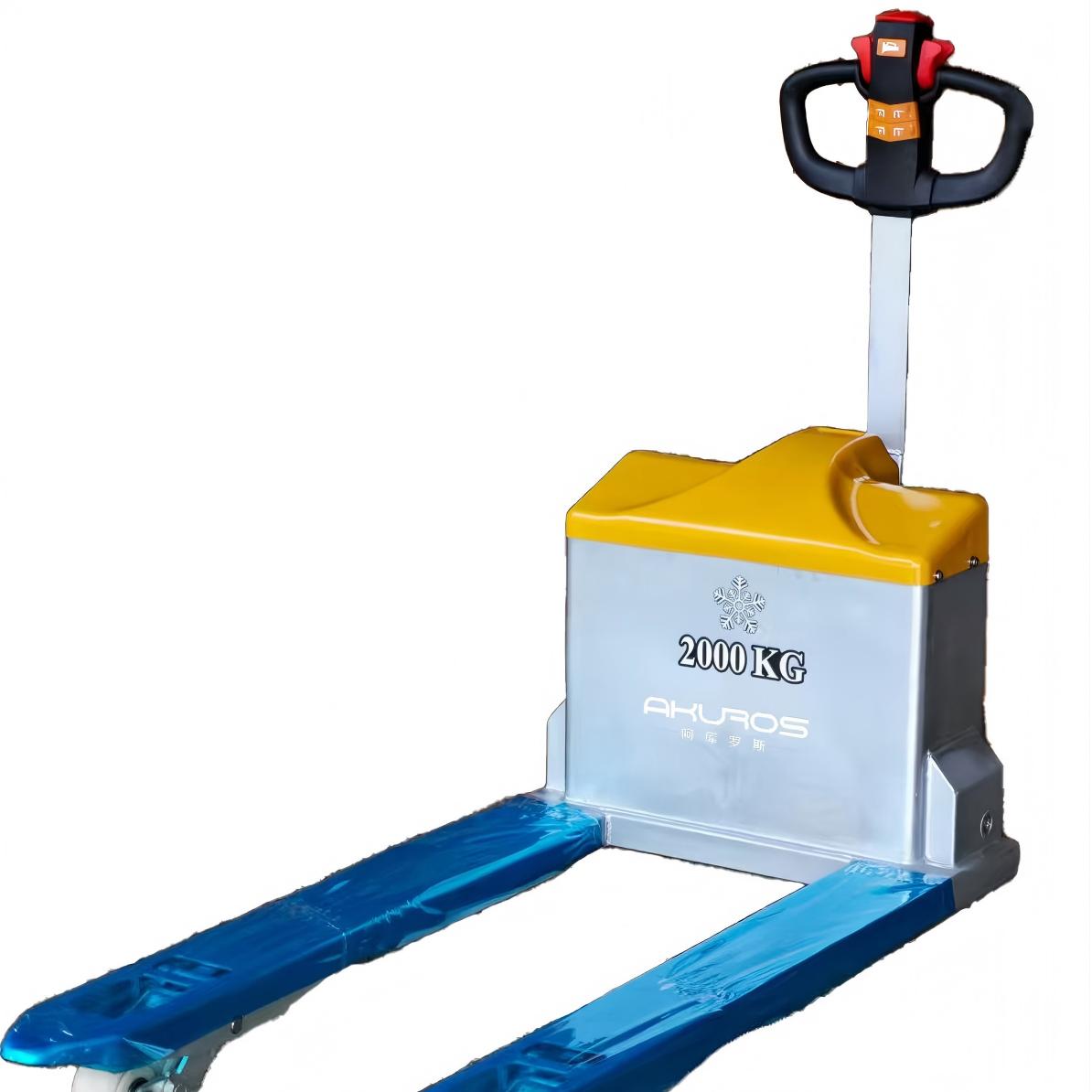
Forklifts are becoming connected devices. Leading manufacturers—including Akuros—are integrating IoT and digital fleet-management capabilities.
4.1 Real-Time Monitoring for Predictive Maintenance
Connected forklifts can track and report:
-
Battery health
-
Motor temperature
-
Hydraulic pressure
-
Impact events
-
Fault codes
-
Operating hours
This data enables predictive maintenance, reducing downtime and extending equipment lifespan.
4.2 Fleet Optimization with Data Analytics
Fleet-analytics platforms help businesses:
-
Identify underutilized forklifts
-
Balance traffic flow across work areas
-
Assign tasks based on real-time availability
-
Implement dynamic charging strategies
-
Reduce idle time and improve throughput
This transforms forklift operations into intelligent, data-driven systems.
5. Built for Every Environment: From Dry Warehouses to Extreme Cold Storage
Electric forklifts are now engineered to perform reliably in specialized environments where IC forklifts are limited.
5.1 Cold Storage (–25°C and below)
Cold-chain logistics demands equipment with:
-
Low-temperature hydraulic oils
-
Waterproof electrical systems
-
Anti-condensation protection
-
Stainless-steel or galvanized components
-
Anti-slip traction systems
-
Heated battery compartments
Electric forklifts—especially models like the Akuros E-series—are now widely used in:
-
Seafood processing
-
Frozen food distribution
-
Ice cream and dairy logistics
-
Pharmaceutical cold-chain storage
5.2 Food, Chemical & Pharmaceutical Facilities
Specialized variants offer:
-
IP65+ waterproof components
-
Stainless-steel bearings
-
Anti-corrosion coatings
-
Explosion-proof designs
-
Anti-static systems
These ensure long-term reliability and regulatory compliance in demanding industries.
6. Lower Total Cost of Ownership (TCO): A Strategic Advantage
The adoption of electric forklifts is increasingly driven by long-term economic benefits.
6.1 Energy & Maintenance Savings
Compared with IC forklifts:
-
Electric forklifts cost 30–70% less per operating hour
-
Require fewer replacements of consumables
-
Experience reduced mechanical wear
-
Offer longer operational lifespan
6.2 Lithium-Ion Technology Extends Runtime
Battery benefits include:
-
Opportunity charging—no downtime
-
Longer runtime per shift
-
Greater lifespan than lead-acid
-
No water maintenance
-
Stable performance across environments
6.3 Higher Fleet Uptime
Smart diagnostics, predictive maintenance, and simplified mechanics minimize unplanned downtime—directly improving warehouse throughput.
7. Preparing for the Autonomous Warehouse of the Future
Forklifts are evolving to integrate seamlessly into hybrid or fully automated warehouse ecosystems.
7.1 Compatibility with AGVs, AMRs & Shuttle Systems
Modern electric forklifts include:
-
Precision positioning sensors
-
Laser/vision navigation options
-
Advanced collision-avoidance systems
-
Digital communication protocols with WMS/ERP
7.2 Semi-Automated Forklift Functions
Emerging features include:
-
Auto-pallet centering
-
Assisted stacking
-
Intelligent load recognition
-
Auto slow-down zones
-
Smart-route assist
These innovations improve accuracy and reduce operator workload.
Conclusion: Forklifts Are Now Intelligent Systems, Not Just Lifting Machines
The forklift industry is undergoing a generational transformation. Electric forklifts—enhanced with smart control systems, ergonomic design, advanced safety technology, and data connectivity—are redefining warehouse efficiency around the world.
For businesses aiming to modernize their operations, improve safety, reduce energy costs, and prepare for automation, investing in next-generation forklifts like the Akuros E16 and E-series models is no longer optional—it is a strategic advantage.