

 Korean
  English
  Russian
  French
  Spanish
  German
  Italian
  Portuguese
  Japanese
  Arabic
  Turkish
  Indonesian
  Dutch
Dutch 

Forklift Selection, Traffic Flow & Equipment Strategy
Multi-temperature cold storage facilities introduce operational complexity far beyond single-temperature warehouses. Different temperature zones impose distinct demands on forklifts, traffic flow, batteries, and equipment reliability. This article explains how to design multi-temperature cold storage warehouses with the right forklift strategy—minimizing downtime, safety risk, and long-term operating cost.
1. Why Multi-Temperature Cold Storage Is a Different Class of Project
Multi-temperature cold storage facilities typically combine:
-
Ambient zones
-
Chilled zones (0°C to +4°C)
-
Frozen zones (-18°C to -25°C or below)
While this configuration improves operational flexibility, it dramatically increases equipment stress and coordination complexity, especially for forklifts moving between zones.
Unlike single-temperature warehouses, forklift selection errors in multi-temperature facilities surface quickly through:
-
Condensation-related failures
-
Battery instability
-
Increased safety incidents
-
Workflow bottlenecks at temperature boundaries
This is why multi-temperature projects must be designed as an integrated warehouse solution, not a collection of independent cold rooms.
 2. Multi-Temperature Cold Storage Challenges — Overview Table
Before examining design strategies in detail, the table below summarizes the key challenges specific to multi-temperature facilities and their operational implications.
📊 Multi-Temperature Cold Storage Challenges & Forklift Priorities
| Challenge | Operational Impact | Forklift & Equipment Priority |
|---|---|---|
| Temperature transitions | Condensation, electronics failure | Sealed & protected forklifts |
| Mixed workflows | Congestion at zone boundaries | Clear traffic separation |
| Battery performance variance | Reduced shift coverage | Cold-rated battery systems |
| Floor condition changes | Traction & braking risk | Appropriate tire selection |
| Zone-specific utilization | Equipment under use | Task-based forklift assignment |
In multi-temperature facilities, forklifts are the most stressed assets in the system.
3. Layout Design Built Around Forklift Traffic, Not Just Storage
In multi-temperature cold storage, layout design must prioritize forklift traffic logic over pure pallet density.
Key layout principles include:
-
Minimizing unnecessary cross-zone forklift movement
-
Creating buffer zones between temperature areas
-
Separating high-frequency forklift routes from low-frequency storage aisles
Layouts that ignore forklift movement patterns often experience congestion, safety risks, and accelerated equipment wear.
Designing layout within a warehouse solution framework ensures forklift flow, temperature management, and throughput are aligned.
4. Forklift Selection Strategy for Multi-Temperature Operations
No single forklift configuration fits all temperature zones. Successful facilities adopt task-based forklift deployment.
Typical strategies include:
-
Dedicated 전동 지게차 for frozen zones with full cold protection
-
Separate forklifts for chilled or ambient areas to reduce thermal shock
-
Reach trucks assigned to high-bay selective or double deep storage
Attempting to use one forklift fleet across all temperature zones often leads to higher maintenance cost and downtime.
5. Racking Systems and Forklift Compatibility Across Zones
Racking selection directly affects forklift utilization in multi-temperature facilities.
-
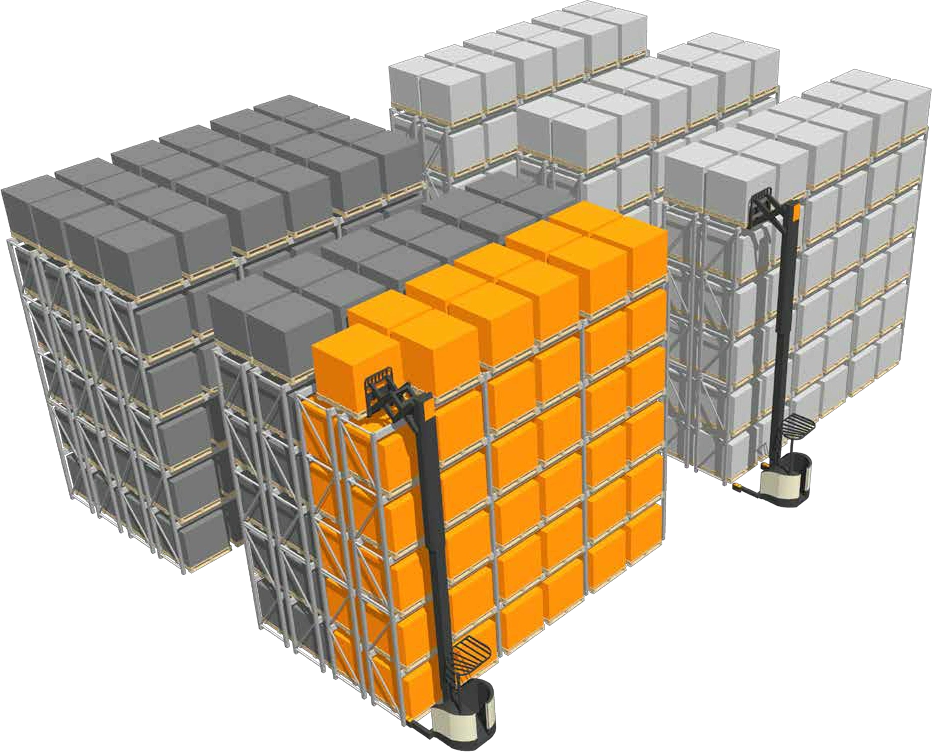
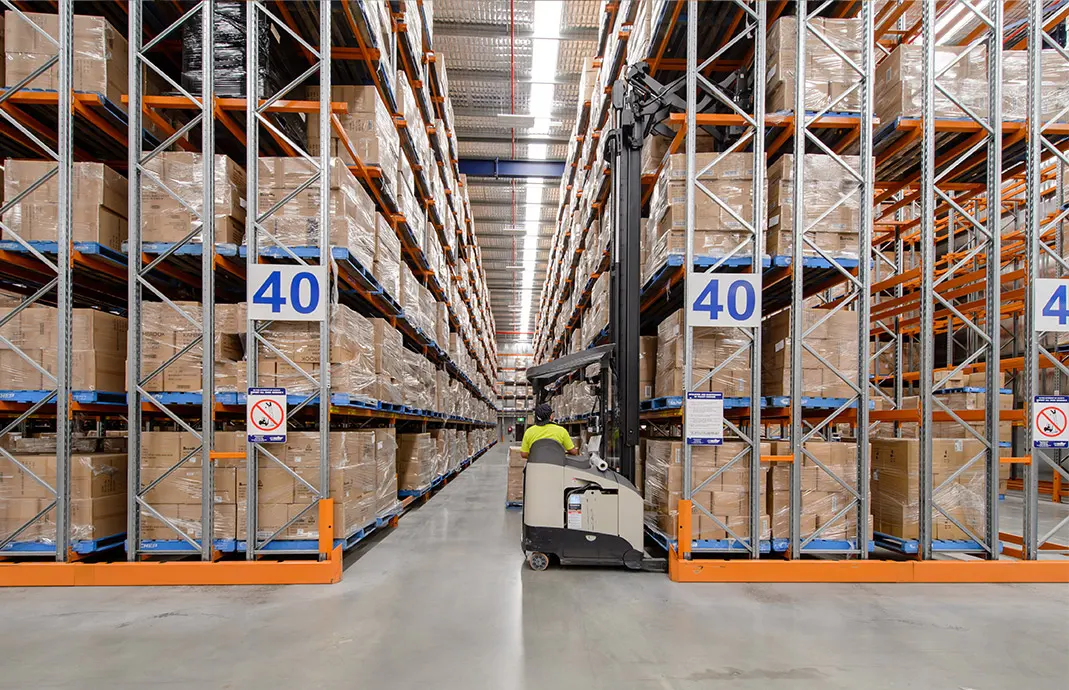
매우 좁은 통로 랙 시스템 are commonly used in chilled zones with high SKU diversity and picking intensity.
-
Double deep racking systems are often applied in frozen zones where batch storage is dominant.
Forklift maneuverability, lift height, and stability must be evaluated separately for each temperature zone rather than averaged across the facility.
더블 딥 랙
6. Battery Performance and Charging Strategy
Battery management is one of the most underestimated risks in multi-temperature cold storage.
Forklifts operating in frozen zones experience:
-
Reduced battery discharge efficiency
-
Longer charging times
-
Accelerated degradation if charging is poorly managed
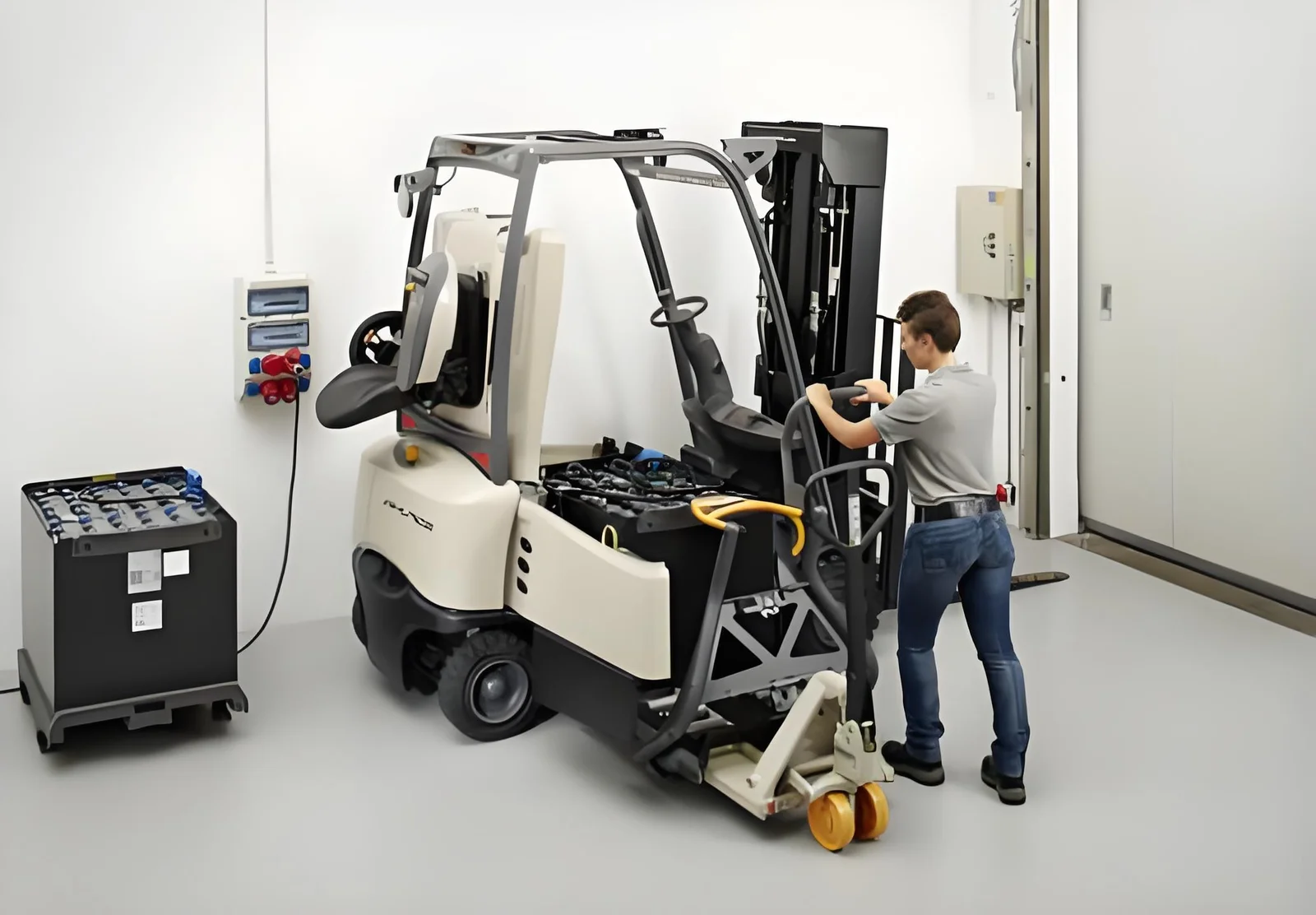
Using cold-rated forklift battery systems, combined with zone-specific charging strategies, significantly improves fleet availability and lifecycle cost.
 7. Tires, Traction, and Safety at Temperature Boundaries
Temperature transitions often coincide with changes in floor condition—from dry to damp to icy.
Forklifts crossing these boundaries require:
-
Predictable traction behavior
-
Stable braking response
-
Tires suited for frozen and transitional floors
Selecting appropriate polyurethane tire solutions is critical to maintaining safety and reducing accident risk in multi-zone environments.
8. Automation in Multi-Temperature Cold Storage
Automation in multi-temperature facilities must account for temperature compatibility and workflow stability.
AGV 시스템 integrated into broader 자동화된 창고 솔루션 are most effective when:
-
Assigned to single-temperature zones
-
Used for repetitive transport tasks
-
Isolated from complex, mixed-temperature routes
Overextending automation across multiple temperature zones often increases complexity rather than reducing it.
9. Common Mistakes in Multi-Temperature Cold Storage Projects
Frequent issues include:
-
Using a single forklift fleet across all zones
-
Ignoring condensation effects during temperature transitions
-
Designing layout based on storage, not movement
-
Treating battery and tire selection as secondary decisions
In multi-temperature environments, these mistakes quickly translate into downtime and safety incidents.
10. Google 인기 주제(문맥에 맞는 답변)
What forklifts are suitable for multi-temperature cold storage?
Forklifts engineered for cold storage with sealed electronics and cold-rated batteries, deployed by task and zone.
Should forklifts move between frozen and ambient zones?
Only when necessary. Dedicated forklifts reduce condensation and wear.
How does battery performance change across temperature zones?
Battery discharge efficiency drops significantly in frozen environments.
Is automation practical in multi-temperature facilities?
Yes, when automation is limited to stable, single-temperature workflows.
What is the biggest risk in multi-temperature cold storage design?
Underestimating the impact of temperature transitions on forklifts and batteries.