


 Korean
  English
  Russian
  French
  Spanish
  German
  Italian
  Portuguese
  Japanese
  Arabic
  Turkish
  Indonesian
  Dutch
Dutch 

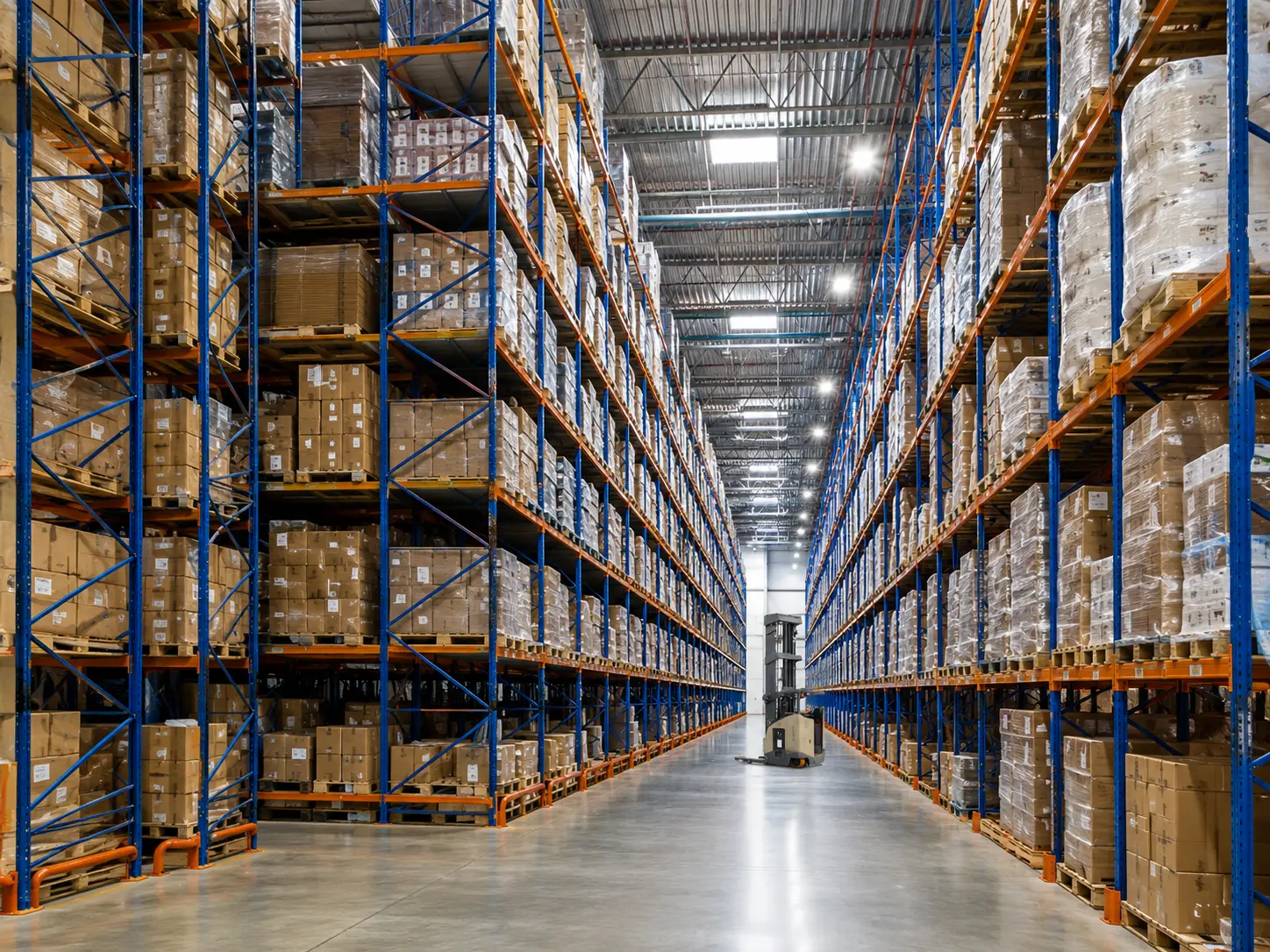
High-Bay Pallet Warehouses
Useful when a warehouse has enough clear height and needs more pallet positions without expanding the building.
Akuros helps warehouses increase storage density and improve vertical space utilization with VNA racking, very narrow aisle forklifts and practical warehouse layout planning.
VNA warehouse solutions are designed for high-bay warehouses that need to reduce aisle width while keeping direct pallet access. Akuros helps customers plan very narrow aisle racking, VNA forklift selection, lift height, residual capacity, floor flatness, guidance method, battery configuration and warehouse workflow based on actual pallet data and storage targets.
A VNA warehouse solution uses very narrow aisle racking and specialized VNA forklifts to reduce aisle width and increase pallet storage capacity. Compared with standard warehouse layouts, VNA systems allow more rack rows to fit into the same floor area while still maintaining direct access to each pallet position.
This solution is suitable for warehouses that need both high storage density and better pallet accessibility. It is often used in distribution centers, industrial warehouses, cold storage facilities, spare parts warehouses, manufacturing warehouses and high-bay pallet storage operations.
Unlike simple racking selection, a VNA warehouse solution must be planned as a complete system. The rack layout, forklift type, aisle width, floor flatness, guide system, pallet size, load weight and lift height must all match properly.
VNA systems reduce aisle width and make better use of clear height, helping warehouses increase pallet positions without expanding the building.
In many warehouses, aisle width consumes a large part of usable floor area. Standard counterbalance forklift layouts may require wide aisles, while reach truck layouts can reduce aisle width to some extent. VNA systems go further by allowing very narrow aisle operation, which can significantly improve storage density.
VNA solutions are especially valuable when the warehouse has enough clear height and needs to increase pallet positions without expanding the building. By combining narrow aisles and high racking, the warehouse can make better use of both floor space and vertical space.
Akuros helps customers evaluate whether VNA is practical based on aisle width, rack height, pallet weight, daily handling frequency, floor condition and investment level.
Use these image positions as temporary Akuros site placeholders. You can replace them later with VNA layouts, forklift operation images or real project photos.
High-bay VNA racking layout
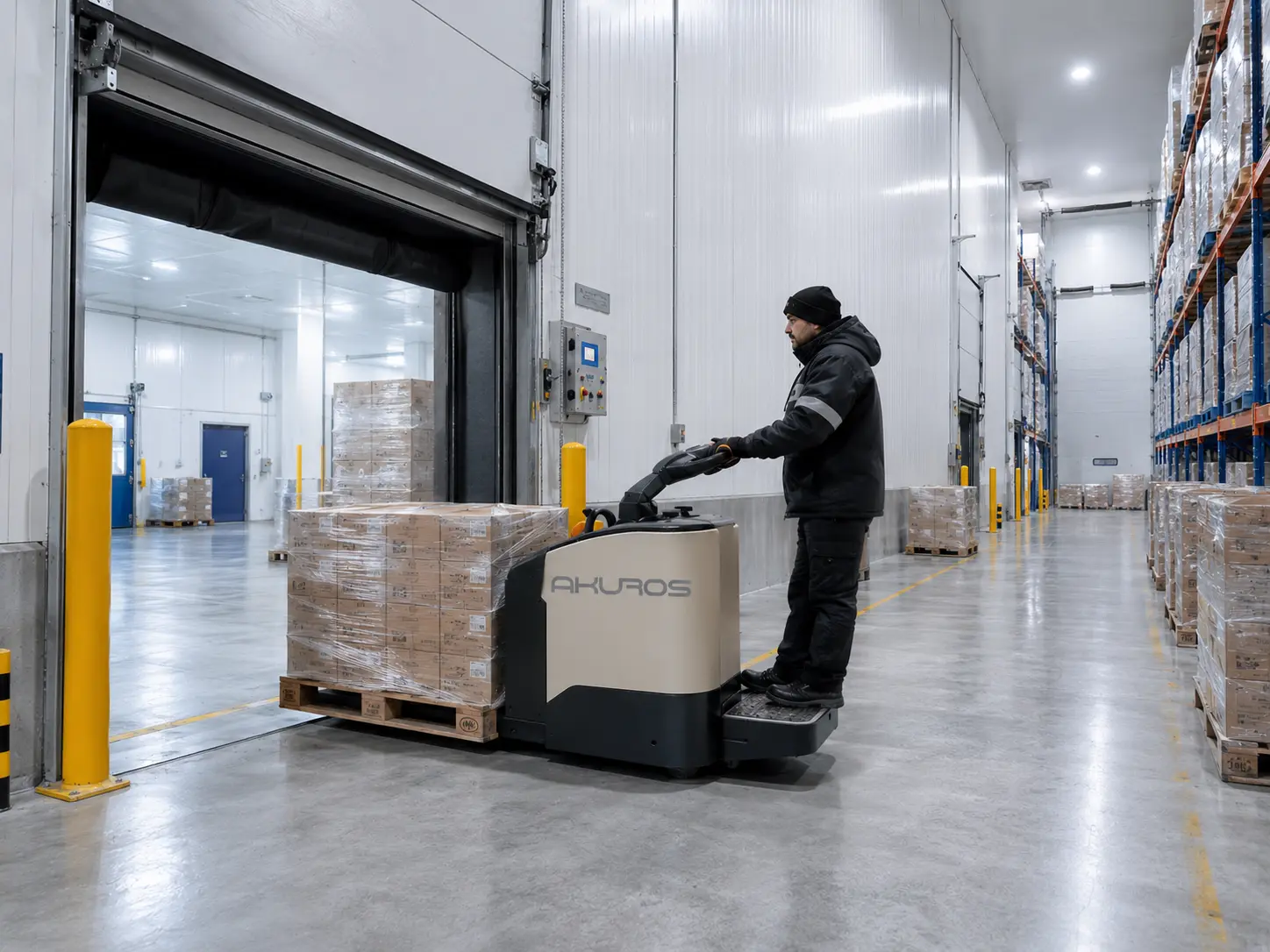
Very narrow aisle forklift movement
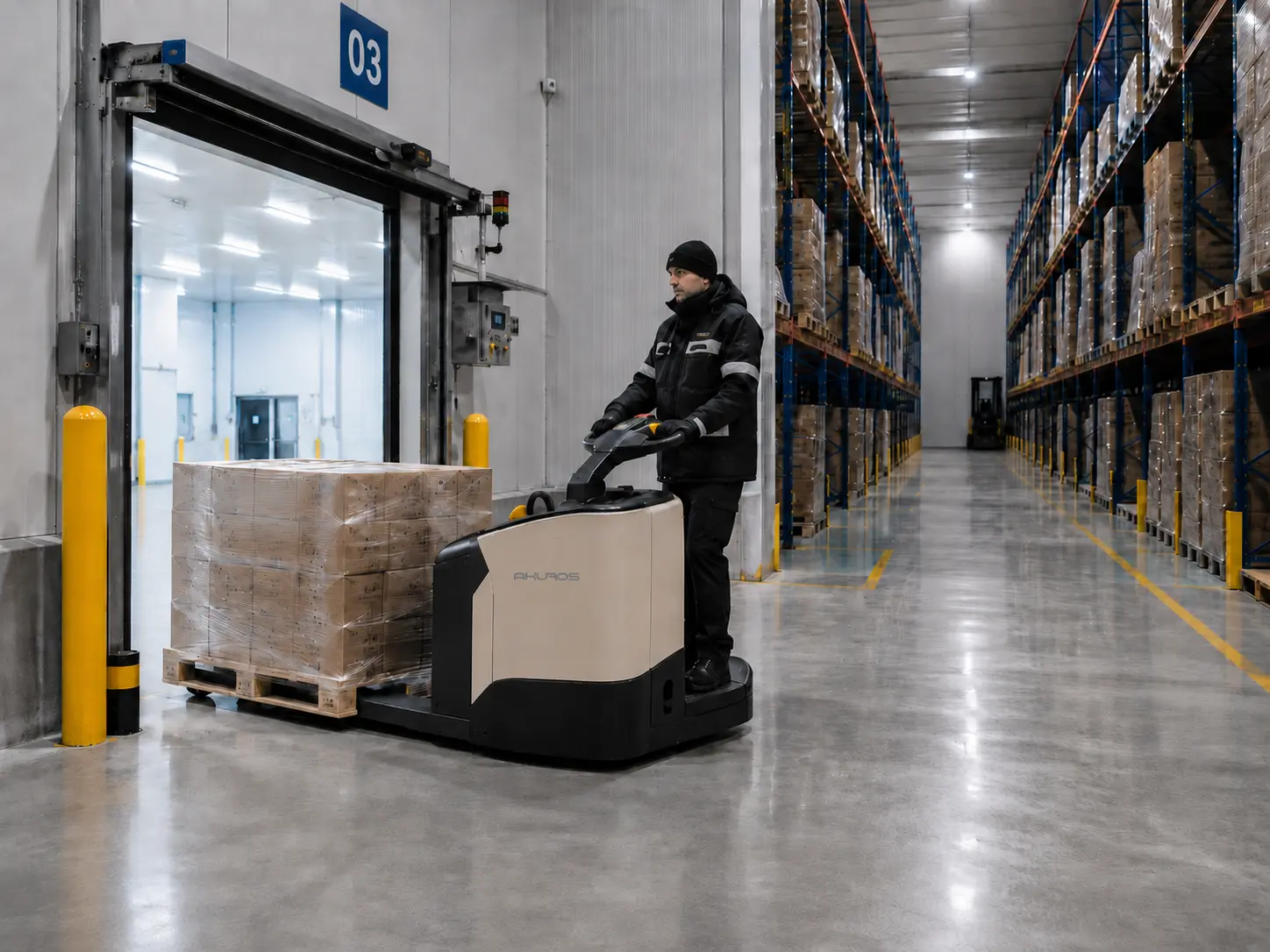
Forklift and racking matching
Floor and guidance planning
Pallet access and SKU flow
Warehouse workflow coordination
VNA warehouse solutions are suitable for operations that need high storage density and direct pallet access.
Useful when a warehouse has enough clear height and needs more pallet positions without expanding the building.
Supports operations that need storage density, SKU access and daily pallet movement across multiple customer inventories.
Helps industrial storage sites reduce aisle waste while keeping access to individual pallet positions.
Suitable for factories that need compact storage for finished goods, materials or production-side pallet inventory.
Can support refrigerated or freezer operations when floor condition, battery system and rack layout are properly planned.
A practical choice for higher SKU variety where direct pallet access remains important.
Helps distribution centers increase storage density while keeping better pallet accessibility than deep-lane systems.
VNA is suitable when customers want better space utilization but still need access to individual pallet positions.
To evaluate whether VNA is suitable for your warehouse, Akuros usually needs the following information:
With this data, Akuros can help determine whether VNA, selective racking, double deep racking or another storage system is more suitable.
A VNA warehouse system uses racking rows with very narrow aisles to increase storage density.
The VNA forklift operates within the aisle and handles pallets from both sides through turret forks, articulated handling or dedicated VNA lifting systems depending on the truck type.
The forklift may use wire guidance, rail guidance, magnetic guidance or manual steering assistance depending on project requirements.
The goal is to keep operation accurate and safe inside narrow aisles.
Floor flatness, rack alignment, guide system, pallet overhang, load center and forklift residual capacity must be confirmed before installation.
A VNA system must connect rack layout, forklift movement, pallet access and daily workflow as one coordinated warehouse solution.
These advantages come directly from VNA planning logic: narrow aisles, direct pallet access, high-bay utilization and coordinated forklift-racking matching.
VNA systems reduce aisle width and allow more racking rows in the same warehouse footprint. This helps increase pallet positions without expanding the warehouse building.
Unlike double deep, drive-in or some dense storage systems, VNA racking can provide direct access to each pallet position, depending on the rack layout.
VNA systems are suitable for high-bay warehouses. When matched with the right forklift and rack height, they help use warehouse clear height more effectively.
Because pallet positions remain directly accessible, VNA can be suitable for warehouses with higher SKU variety compared with many deep-lane storage systems.
VNA is a practical solution when a warehouse needs more pallet positions, but does not want to sacrifice pallet accessibility too much.
Akuros helps connect rack height, aisle width, forklift type, battery system, pallet weight and floor condition into one coordinated solution.
VNA can improve storage density, but it also requires more careful planning and usually higher equipment investment than standard racking systems.
In these cases, selective racking, reach truck racking, double deep racking or shuttle racking may be more suitable.
VNA systems require more attention to site conditions than standard warehouse layouts. Since the forklift operates in narrow aisles and often lifts loads to high levels, the floor must support safe and stable operation.
For cold storage projects, temperature, condensation, airflow, lighting and refrigeration equipment position should also be reviewed together with the VNA layout.
The forklift is one of the most important parts of a VNA solution. A standard counterbalance forklift or reach truck usually cannot perform true VNA operation. The warehouse needs a suitable VNA forklift, articulated forklift or narrow aisle truck depending on the application.
Akuros helps review these factors before recommending a VNA forklift or racking layout.
Compare VNA with selective racking, double deep racking, drive-in racking and shuttle racking before deciding your warehouse layout.
Selective racking is flexible and simple, but usually needs wider aisles and lower storage density. VNA keeps direct pallet access while reducing aisle width and improving space utilization.
Explore warehouse solutions →Double deep racking increases storage density by storing pallets two-deep, but pallet accessibility is reduced. VNA can maintain direct access to pallets while improving storage density through narrow aisles.
Explore warehouse solutions →Drive-in racking is suitable for fewer SKUs and batch storage, but pallet access and operating efficiency are limited. VNA is better for warehouses that need access to many SKUs.
Explore warehouse solutions →Shuttle racking can provide very high density and semi-automated operation, but it requires shuttle equipment and clear batch management. VNA is more suitable when direct pallet access and high-bay storage are priorities.
Explore warehouse solutions →Akuros understands that VNA is not only about narrow aisles. A successful VNA warehouse depends on correct coordination between racking layout, forklift performance, floor condition, pallet data, lift height, battery configuration and daily workflow.
We help customers avoid common risks such as aisle width mismatch, insufficient residual capacity, unsuitable floor condition, rack alignment issues and unrealistic handling expectations.
For cold storage, logistics, manufacturing and high-bay warehouse projects, Akuros can help build a VNA warehouse solution that balances storage density, pallet accessibility, safety and long-term operating efficiency.
Send Your Warehouse Data
These visible FAQ questions and answers match the FAQPage structured data below.
A VNA warehouse solution uses very narrow aisle racking and specialized VNA forklifts to increase storage density while maintaining direct pallet access.
VNA aisle width depends on forklift type, pallet size, load weight and guidance method. In many projects, VNA aisles are much narrower than standard forklift aisles, but the exact width must be confirmed based on equipment and layout.
Yes. VNA can be suitable for cold storage warehouses when the floor condition, forklift configuration, battery system and rack layout are properly planned for low-temperature operation.
Yes, VNA racking can provide direct access to each pallet position, which makes it suitable for warehouses with higher SKU variety compared with many deep-lane storage systems.
A VNA warehouse normally requires a VNA forklift, articulated forklift or specialized narrow aisle truck. Standard counterbalance forklifts and standard reach trucks are usually not suitable for true VNA operation.
The main advantages include higher storage density, reduced aisle width, better vertical space utilization and direct pallet accessibility.
VNA systems usually require specialized forklifts, better floor flatness, accurate rack installation and higher project planning standards. They may not be suitable for warehouses with poor floor conditions or frequent layout changes.
Yes. Akuros can help evaluate pallet data, aisle width, rack height, floor condition, forklift type, battery configuration and storage targets to recommend a practical VNA warehouse solution.