

 Korean
  English
  Russian
  French
  Spanish
  German
  Italian
  Portuguese
  Japanese
  Arabic
  Turkish
  Indonesian
  Dutch
Dutch 

Why Narrow Aisle Warehouses Need Smarter Handling Equipment
A warehouse reaches a painful growth point when the floor looks full, the racks are crowded, and every new pallet feels like a puzzle. The sales team wants more inventory. The warehouse manager wants better flow. The finance team does not want to rent another building. Then someone asks the important question: “Can we store more without expanding?”
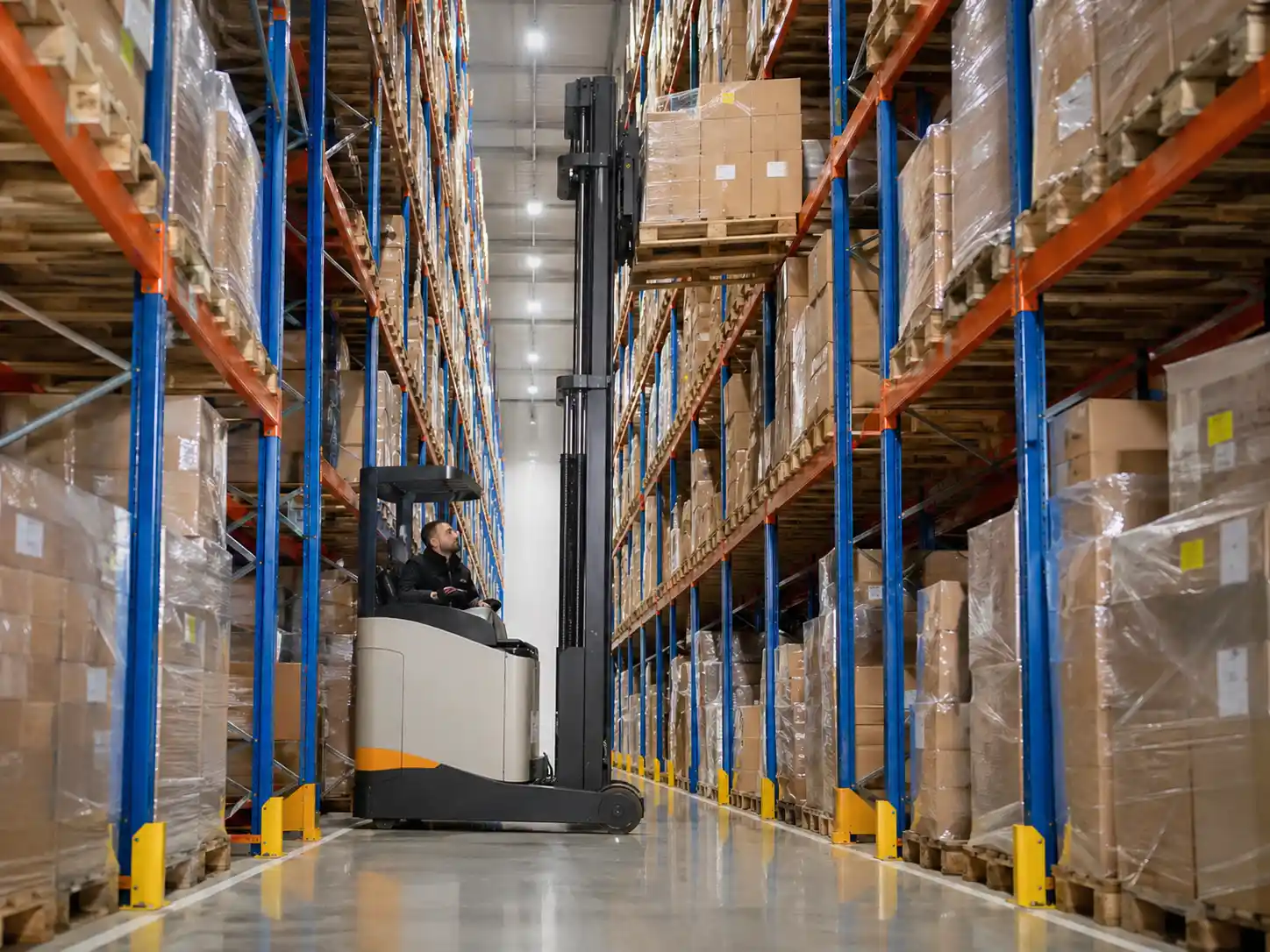
That is exactly where a 도달 트럭 becomes valuable. Unlike a standard counterbalance forklift that needs wider turning space, a reach truck is designed to work in narrow aisles and high pallet racking systems. Its mast and fork carriage can extend forward into the rack and then retract the load closer to the truck body, allowing operators to handle pallets in tighter spaces.
For companies evaluating warehouse equipment, the supplier’s background matters because a reach truck is not a standalone purchase. It must match the racking layout, aisle width, pallet size, battery plan, operator skill, and service support. Reviewing an experienced warehouse equipment manufacturer helps buyers understand whether the supplier can support equipment selection, warehouse planning, safety guidance, and after-sales service.
The core benefit is not only “narrower aisles.” The real benefit is better space economics. Every meter saved from aisle width can become more racking, more pallet positions, better inventory control, and less pressure to expand the building.
도달 트럭
What Is a Reach Truck and How Does It Work?
A reach truck is an electric warehouse truck mainly used for pallet storage and retrieval in narrow aisle and high-rack environments. It is usually operated indoors on smooth, level floors. Instead of carrying a large load far in front like a counterbalance forklift, the reach mechanism allows the forks to extend into the rack, pick or place the pallet, and retract the load back toward the truck for stable travel.
This makes a 도달 트럭 especially suitable for warehouses where pallet racking height and storage density matter more than outdoor versatility. It is commonly used in distribution centers, retail warehouses, manufacturing warehouses, food storage, cold storage, third-party logistics, and e-commerce fulfillment.
| Main Component | 기능 | Why Buyers Should Care |
|---|---|---|
| Reach Mast / Pantograph | Extends forks into the rack | Allows pallet handling in narrower aisles |
| Electric Drive System | Powers travel and lifting | Affects energy use, maintenance, and indoor operation |
| Mast Height | Determines maximum lift level | Must match top beam height |
| Battery System | Provides power for the shift | Affects runtime, charging, and downtime |
| 부하 용량 | Defines safe handling weight | Must match real pallet loads |
| Residual Capacity | Capacity at actual lift height | Critical for high-rack safety |
| Side Shift | Adjusts fork position left or right | Improves pallet alignment |
| Operator Compartment | Standing or seated control area | Affects comfort and productivity |
The buyer mistake is choosing only by rated capacity. A reach truck may have a rated capacity at low height, but its safe lifting ability decreases at higher mast positions. For high-bay racking, residual capacity matters more than brochure capacity.
Space Utilization: The Biggest Benefit in Narrow Aisles
The main reason warehouses choose reach trucks is space utilization. In a conventional layout, counterbalance forklifts often require wider aisles to turn and handle pallets. When aisle width is reduced safely, the warehouse can add more rack rows and increase pallet positions without renting or building additional space.
This is not a small improvement. In many facilities, storage capacity is limited not by the building volume, but by aisle design and equipment choice. A reach truck helps warehouses use both horizontal and vertical space more effectively.
| Warehouse Layout Factor | Counterbalance Forklift Layout | Reach Truck Layout | Buyer Impact |
|---|---|---|---|
| 통로 폭 | Usually wider | Narrower, depending on model and pallet size | More space for racking |
| 스토리지 밀도 | Lower | 더 높음 | More pallet positions |
| Rack Height Use | Often limited by truck type | Better high-rack access | Improved cube utilization |
| Travel Space | More turning area required | More compact movement | Better floor efficiency |
| Best Environment | General handling, wider aisles | Indoor pallet racking | Higher warehouse density |
A reach truck is not the only equipment used in warehouse operations. Pallet trucks still play an important role for loading, short-distance movement, staging, and ground-level handling. For buyers designing a complete fleet, pallet trucks in modern warehouses can help clarify where pallet trucks fit beside reach trucks, stackers, order pickers, and counterbalance forklifts.
The practical lesson is simple: use the right equipment for the right task. Reach trucks are for narrow aisle rack storage and retrieval. Pallet trucks are for short horizontal movement. Counterbalance forklifts are for general handling. VNA trucks are for very high-density systems. Mixing these roles blindly creates inefficiency.
High-Rack Access and Better Vertical Storage
A reach truck is designed to help warehouses use height. This is especially important in facilities where land and floor space are expensive. If the building has available vertical clearance but the current equipment cannot safely reach higher levels, the warehouse is wasting cube capacity.
Reach trucks can access higher racking than many basic warehouse forklifts, but buyers must check lift height and residual capacity carefully. A truck that can physically reach the top beam may not be able to lift the actual pallet weight safely at that height.
| 사양 | Why It Matters | 저온에서의 런타임 |
|---|---|---|
| Maximum Lift Height | Must match top racking level | Can the truck reach the highest beam safely? |
| Residual Capacity | Capacity decreases at height | What can it lift at actual top level? |
| Load Center | Affects stability | Does it match the pallet/load size? |
| 마스트 유형 | Affects height and visibility | Is the mast suitable for the warehouse? |
| Floor Flatness | More important at high lift | Is the floor smooth enough? |
| Operator Visibility | Affects pallet placement | Are visibility aids needed? |
| Rack Condition | Impacts safe operation | Are beams and uprights inspected? |
A reach truck is powerful in the right warehouse, but it is not magic. If the floor is uneven, the rack is damaged, the load is unstable, or the operator is poorly trained, high-rack handling becomes risky.
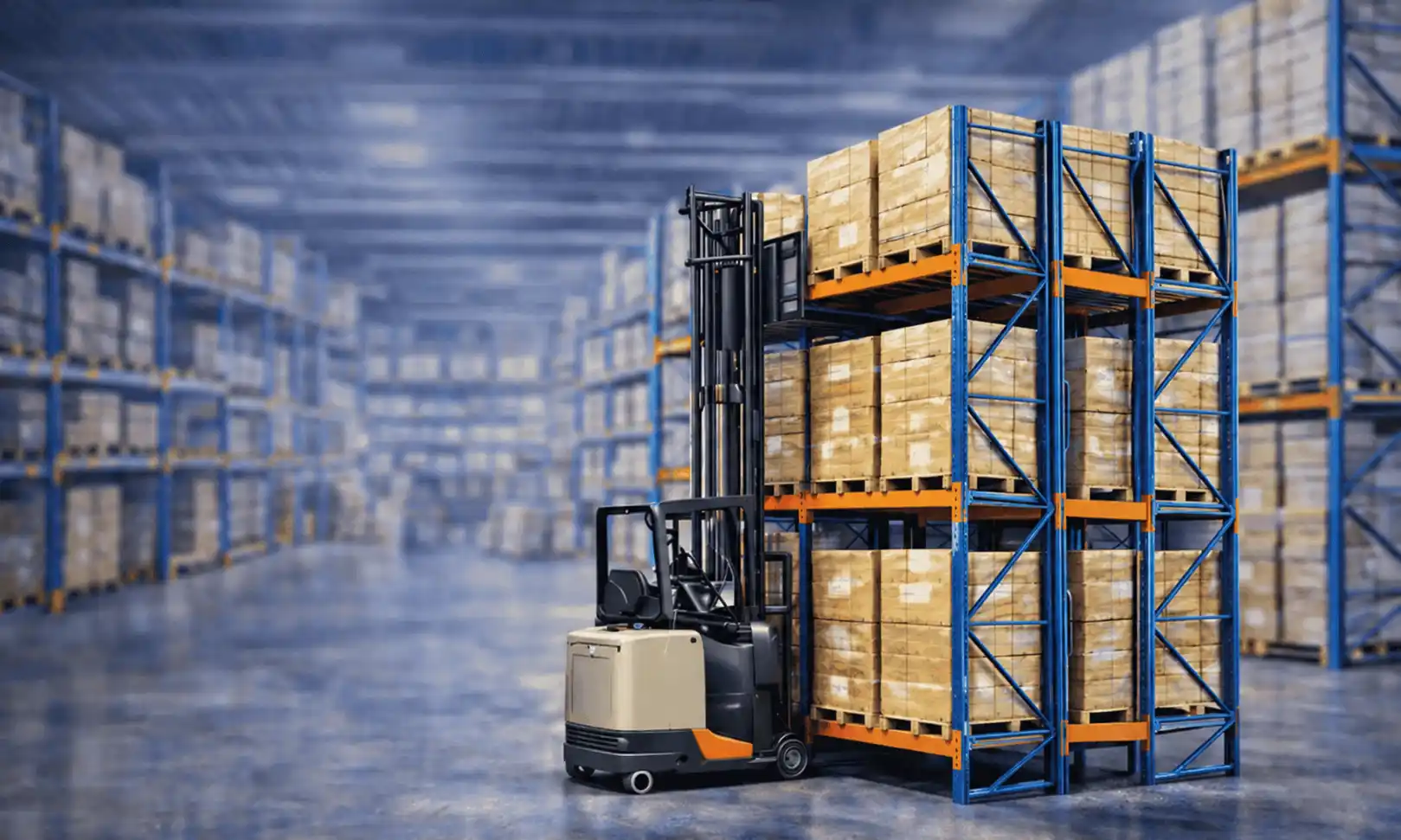
Reach Trucks in Cold Storage
Reach Trucks in Cold Storage and Freezer Warehouses
Cold storage warehouses create extra equipment stress. Low temperatures affect batteries, hydraulic systems, visibility, operator comfort, traction, and condensation control. A standard truck that works well in a normal indoor warehouse may perform poorly in freezer operations if it is not configured for that environment.
This is why buyers should be cautious when using standard forklifts in cold facilities. Understanding why standard forklifts fail in freezer warehouse operations helps procurement teams avoid a painful mistake: buying equipment based on general warehouse conditions when the actual operating environment is much harsher.
In cold storage, the reach truck should be evaluated for battery performance, temperature rating, hydraulic oil suitability, anti-condensation protection, traction, operator visibility, and maintenance schedule. If the truck moves between cold and warm zones, condensation can become another problem. Door cycles, charging area location, and shift patterns should all be considered before purchase.
| Cold Storage Factor | Risk If Ignored | Buyer Checkpoint |
|---|---|---|
| Low Temperature | Battery capacity may drop | Confirm cold-room compatibility |
| 결로 | Electrical and visibility issues | Check transition procedures |
| Floor Ice / Moisture | Reduced traction | Confirm tire and floor conditions |
| 운전자 편의 | Lower productivity | Review cabin or protective equipment |
| Hydraulic Performance | Slower response | Confirm low-temperature fluid suitability |
| Charging Location | Downtime and battery stress | Plan charging outside freezing zones when suitable |
For cold warehouse buyers, a reach truck may still be a strong solution, but only when selected for the environment rather than simply chosen from a standard catalog.
Choosing the Best Forklift Type for Cold Storage and Narrow Aisles
A reach truck is often excellent for indoor pallet racking, but it is not always the only answer. Cold storage operations may involve unloading docks, staging zones, deep storage aisles, and high racks. Some areas may need reach trucks. Some may need pallet trucks. Some may still require counterbalance forklifts.
A more complete approach is to evaluate the full handling route: receiving, put-away, replenishment, picking, staging, and outbound loading. For buyers operating refrigerated or frozen facilities, choosing the best forklift for cold storage warehouses can help compare reach trucks with counterbalance forklifts, pallet trucks, and other equipment types.
| Operation Area | Better Equipment Direction | Reason |
|---|---|---|
| Narrow aisle pallet racking | 도달 트럭 | Efficient high-rack storage |
| Dock loading | Counterbalance forklift or pallet truck | Better for loading flow |
| Short-distance pallet movement | Pallet truck | Simple and efficient |
| Very high-density storage | VNA truck | Maximum aisle reduction |
| Cold storage rack handling | Cold-rated reach truck | Better vertical storage |
| Mixed indoor/outdoor tasks | Counterbalance forklift | More versatile |
The right answer may be a fleet combination, not one machine. Warehouses often perform best when reach trucks handle high racks, pallet trucks handle staging, and forklifts handle loading zones.
Battery Planning: Lead-Acid vs Lithium Reach Trucks
Battery planning can make or break reach truck productivity. A truck with the right mast but the wrong battery plan may still create downtime during peak shifts. The best battery option depends on shift length, charging habits, labor availability, operating temperature, and total ownership logic.
Lead-acid batteries are mature and widely used. They are familiar, available, and often suitable for single-shift operations. However, they may require maintenance, longer charging time, and charging room planning. Lithium batteries support opportunity charging, faster charging, and lower daily maintenance, but they require proper charger compatibility and planning.
For buyers comparing battery systems, forklift lead-acid battery vs lithium is directly relevant because reach truck uptime depends heavily on charging strategy.
| Battery Type | 주요 장점 | Buyer Consideration |
|---|---|---|
| Lead-Acid | Mature and widely available | Requires maintenance and charging planning |
| Lithium-Ion | 빠른 충전 및 기회 충전 | Higher planning requirement for charger compatibility |
| Maintenance-Free Battery | Easier daily use | Check cycle life and warranty |
| Spare Battery System | Supports long operations | Needs battery changing process |
| Cold Storage Battery Setup | Designed for low-temperature performance | Must match operating environment |
If the warehouse runs one shift, lead-acid may be enough. If the operation runs multiple shifts or peak-season long hours, lithium may reduce downtime. If the truck works in cold storage, battery performance should be checked under actual temperature conditions, not room-temperature assumptions.
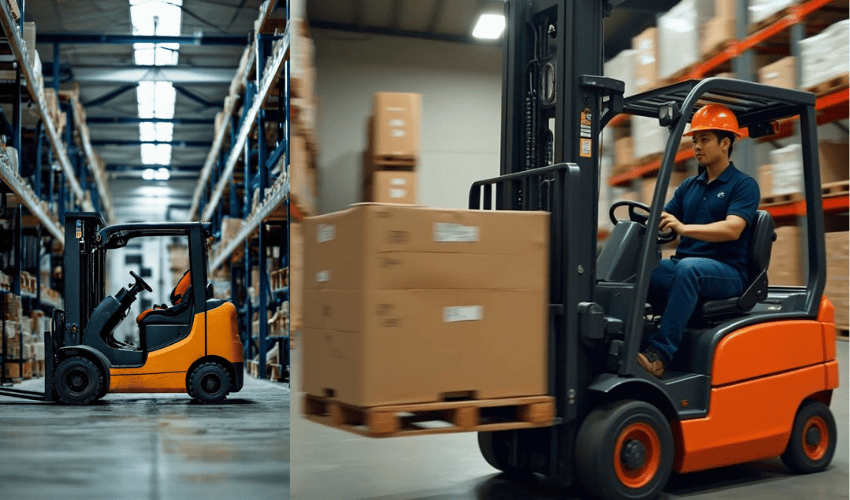
창고용 리치 트럭
Reach Truck vs Counterbalance Forklift
The comparison between a reach truck and a counterbalance forklift is one of the most common buyer questions. The answer depends on warehouse layout.
A counterbalance forklift is more versatile. It can work indoors and outdoors depending on tire type, surface, and configuration. It is useful for loading, unloading, yard movement, and general material handling. However, it usually needs wider aisles when working in pallet racking.
A reach truck is more specialized. It is mainly designed for indoor narrow aisle pallet racking. It allows better storage density and higher rack access but is less suitable for uneven outdoor yards or rough surfaces.
| 팩터 | 도달 트럭 | 카운터 밸런스 지게차 |
|---|---|---|
| Best Environment | Indoor warehouse | Indoor and outdoor, depending on model |
| 통로 폭 | Narrower | Wider |
| Main Strength | High-rack pallet handling | General material handling |
| Floor Requirement | Smooth and level | More flexible |
| Outdoor Use | Usually limited | Better suited |
| 스토리지 밀도 | 더 높음 | Lower |
| Operator Skill | Specialized narrow aisle operation | Standard forklift operation |
| Best Use | Pallet racking | Loading, yard, and mixed handling |
Choose a reach truck when storage density, rack height, and aisle efficiency are the priorities. Choose a counterbalance forklift when flexibility, outdoor handling, and dock work matter more.
Reach Truck vs VNA Truck
A reach truck is a strong narrow aisle solution, but very narrow aisle operations may need VNA trucks or turret trucks. VNA systems can work in even tighter aisles, but they usually require more specialized warehouse design, guidance systems, floor quality, and investment planning.
| 팩터 | 도달 트럭 | VNA / Turret Truck |
|---|---|---|
| Aisle Type | 좁은 통로 | Very narrow aisle |
| 유연성 | 더 높음 | Lower |
| Setup Complexity | 보통 | 더 높음 |
| Guidance System | Usually not required | Often rail or wire guided |
| Investment Level | 보통 | 더 높음 |
| Best Use | General narrow aisle warehouses | Maximum-density warehouse layouts |
| Operator Skill | Specialized | Highly specialized |
For many warehouses, the reach truck is the practical first upgrade from wide aisle forklifts. VNA systems become more attractive when the business needs maximum storage density and has the discipline to redesign the warehouse around specialized equipment.
Safety and Regulatory Requirements Buyers Cannot Ignore
Reach trucks are powered industrial trucks, so safety requirements matter. OSHA’s powered industrial truck standard covers training, operation, maintenance, and safe use of powered industrial trucks. Employers must ensure operators are properly trained and evaluated for the equipment and workplace conditions.
A reach truck works close to racking, often at height, and often in tight spaces. This makes operator training essential. Daily inspections should check brakes, forks, mast, battery, steering, warning devices, controls, and visible damage. Aisles should be clear, floor conditions should be maintained, and pedestrian traffic should be controlled.
| Safety Area | What to Check |
|---|---|
| 운영자 교육 | Certified and site-specific training |
| Daily Inspection | Brakes, mast, forks, battery, controls |
| 부하 용량 | Rated and residual capacity |
| Aisle Rules | Traffic flow and pedestrian separation |
| Rack Condition | Beam and upright damage |
| Floor Condition | Smooth, level, clean surfaces |
| Battery Charging | Ventilation, electrical safety, charger match |
| 가시성 | Lights, mirrors, camera systems where needed |
The main risk in reach truck operations is not only collision. It is a combination of wrong truck selection, poor rack condition, unstable loads, insufficient training, and careless aisle control.
Reach Trucks as Part of Turnkey Warehouse Storage Solutions
A reach truck should not be selected separately from the warehouse system. Racking layout, aisle width, pallet type, load weight, lift height, dock flow, staging area, battery charging, and operator routes must work together. If one piece is wrong, the whole system becomes inefficient.
For buyers planning a full warehouse upgrade, 턴키 창고 저장 솔루션 can help connect reach trucks with racking, storage density, pallet flow, safety planning, and equipment selection.
| Warehouse System Factor | Why It Matters |
|---|---|
| Rack Layout | Determines aisle width and pallet positions |
| Truck Selection | Must match aisle and lift height |
| Battery Area | Affects charging and uptime |
| Floor Quality | Supports safe high-lift operation |
| Traffic Flow | Reduces congestion and collision risk |
| Pallet Type | Affects fork length and handling |
| Load Weight | Determines capacity requirement |
| 운영자 교육 | Protects safety and productivity |
A warehouse is not just a storage room. It is a system. The reach truck is one important tool inside that system.
Common Mistakes When Buying Reach Trucks
The first mistake is measuring aisles incorrectly. Buyers sometimes measure the aisle but forget pallet overhang, rack protection, turning clearance, or operational comfort. A truck that technically fits may still be slow or unsafe.
The second mistake is ignoring residual capacity. The truck may lift the load at low level but not safely at the top rack. This is one of the most dangerous buying mistakes.
The third mistake is buying before checking floor condition. Reach trucks need smooth, level indoor surfaces. Uneven floors become more serious at higher lift heights.
The fourth mistake is ignoring battery infrastructure. Without correct charging plans, trucks sit idle during peak demand.
The fifth mistake is using reach trucks for outdoor yard work. Most reach trucks are not designed for rough outdoor conditions.
The sixth mistake is weak operator training. Narrow aisle work requires accuracy, discipline, and site-specific training.
Final Recommendation: Use Reach Trucks Where Density and Height Matter
A Reach Truck is one of the most effective upgrades for warehouses that need more pallet positions without expanding the building. It helps narrow aisle warehouses improve space utilization, access higher racking, reduce wasted aisle space, and support cleaner electric indoor handling.
However, a reach truck is not right for every site. It works best in smooth indoor warehouses with pallet racking, trained operators, proper aisle design, suitable battery infrastructure, and safe racking conditions. It may not be the best answer for outdoor yards, uneven floors, heavy mixed handling, or operations where a counterbalance forklift is more flexible.
The smartest buyer should check aisle width, lift height, residual capacity, load center, floor condition, racking safety, battery plan, operator training, and service support before purchasing. For project evaluation, warehouse layout discussion, or equipment selection support, buyers can contact a reach truck supplier with aisle dimensions, rack height, pallet weight, shift schedule, and operating environment. A professional supplier should help match the truck to the warehouse, not just sell a machine.
 대용량 리치 트럭 |
 도달 트럭 |
자주 묻는 질문
1. What is a Reach Truck used for?
A Reach Truck is used for pallet storage and retrieval in indoor warehouses, especially where narrow aisles and high pallet racking are required. It allows operators to extend the forks into the racking, pick or place pallets, and then retract the load closer to the truck body for travel. Reach trucks are commonly used in distribution centers, e-commerce warehouses, manufacturing warehouses, food storage, cold storage, retail logistics, and third-party logistics operations where storage density and vertical access are important.
2. How wide does an aisle need to be for a Reach Truck?
The aisle width required for a Reach Truck depends on the truck model, pallet size, load dimensions, rack layout, turning radius, and operating clearance. Reach trucks generally work in narrower aisles than counterbalance forklifts, but buyers should never estimate aisle width by eye. The correct approach is to confirm the truck’s technical data, pallet size, rack depth, load overhang, and working clearance before finalizing the warehouse layout or purchasing the equipment.
3. Is a Reach Truck better than a counterbalance forklift?
A Reach Truck is better than a counterbalance forklift when the warehouse is indoors, aisles are narrow, pallet racking is high, and storage density is the main priority. A counterbalance forklift is better for outdoor yards, dock loading, uneven surfaces, and general material handling. The best choice depends on the warehouse environment. Many operations use both: reach trucks for high-rack storage and counterbalance forklifts for loading, unloading, and mixed handling tasks.
4. Can Reach Trucks be used in cold storage warehouses?
Reach Trucks can be used in cold storage warehouses when they are properly configured for low-temperature environments. Buyers should check battery performance, hydraulic system suitability, condensation protection, traction, operator comfort, and maintenance requirements. Standard warehouse trucks may not perform well in freezer conditions without cold-storage preparation. For refrigerated or frozen facilities, the truck should be matched to the actual temperature range, shift pattern, and movement between cold and warm zones.
5. What should buyers check before purchasing a Reach Truck?
Before purchasing a Reach Truck, buyers should check aisle width, rack height, pallet weight, load center, maximum lift height, residual capacity, floor flatness, battery type, charging plan, racking condition, operator training, and service support. They should also evaluate whether the operation is mainly indoor pallet racking or requires outdoor and mixed handling. A reach truck delivers the best value when it fits the warehouse layout, load profile, shift schedule, and safety system.
참조
- “Powered Industrial Trucks Standard 29 CFR 1910.178,” Occupational Safety and Health Administration, OSHA Regulations.
- “Powered Industrial Trucks eTool: Narrow Aisles,” Occupational Safety and Health Administration, OSHA Warehouse Safety Resource.
- “ANSI/ITSDF B56.1 Safety Standard for Low Lift and High Lift Trucks,” Industrial Truck Standards Development Foundation, ANSI/ITSDF Standards.
- “Warehousing and Storage: A Guide to Health and Safety,” Health and Safety Executive, HSE Guidance.
- “Forklift Safety: Guide to Pedestrian and Operator Safety,” Toyota Material Handling, Toyota Material Handling Resource Center.
- “Narrow Aisle Forklifts and Warehouse Space Utilization,” Raymond Corporation, Warehouse Solutions Resource.
- “Battery Maintenance for Electric Forklifts,” Crown Equipment Corporation, Crown Safety and Maintenance Guide.
- “Cold Storage Warehouse Operations and Material Handling Considerations,” MHI Industry Group, Material Handling Industry Resource.
Reach Truck Benefits and Warehouse Buying Logic
What makes a Reach Truck valuable in narrow aisle warehouses?
A Reach Truck helps warehouses improve storage density by reducing aisle space and allowing better access to high pallet racking. It is especially valuable when a warehouse has limited floor area but available vertical storage height.
Why is a Reach Truck different from a counterbalance forklift?
A reach truck is designed mainly for indoor narrow aisle pallet racking, while a counterbalance forklift is more versatile for loading, unloading, outdoor yards, and mixed handling. The reach mechanism allows the forks to extend into racking and retract the load, making it better for dense storage layouts.
How should buyers know whether a Reach Truck is the right choice?
Buyers should choose a reach truck when the warehouse has smooth indoor floors, pallet racking, limited aisle space, and a need for high storage density. If the operation requires outdoor work, uneven surfaces, or general yard handling, a counterbalance forklift may be more suitable.
What specifications matter most before purchasing?
Buyers should check aisle width, maximum lift height, residual capacity, load center, battery type, mast visibility, fork length, floor condition, racking condition, and operator training. Rated capacity alone is not enough because lifting capacity changes at height.
What risks should buyers avoid?
Common risks include measuring aisles incorrectly, ignoring residual capacity, using reach trucks outdoors, overlooking floor flatness, failing to plan battery charging, and deploying operators without narrow aisle training. These mistakes can cause low productivity, rack damage, downtime, and safety incidents.
Final buyer insight: A Reach Truck delivers the best value when it is selected as part of a complete warehouse system. The truck, racking, aisle layout, battery plan, safety rules, and operator training should all work together. When matched correctly, a reach truck can improve storage capacity, handling efficiency, and warehouse ROI without requiring building expansion.