

 Korean
  English
  Russian
  French
  Spanish
  German
  Italian
  Portuguese
  Japanese
  Arabic
  Turkish
  Indonesian
  Dutch
Dutch 

익숙하게 느껴지는 월요일 아침의 병목 현상
“왜 항상 마감 직전에 출고가 막히는 거죠?” 운영 담당자가 대시보드를 바라보며 물었습니다.
“입고가 또 늦고, 피킹 경로가 겹치며, 충전도 콘센트를 두고 싸우니까요.”라고 감독이 답했습니다.
“그럼 출고를 고쳐야 하나요?”
“시스템을 고쳐야 합니다. 출고는 단지 고통이 드러나는 지점일 뿐이에요.”
That’s the practical case for a 원스톱 창고 approach: most bottlenecks aren’t single failures. They’re coordination failures—small issues stacked across receiving, storage, replenishment, picking, packing, and power management until the entire building behaves like a traffic jam.
In Southeast Asia and Europe alike, the pressure is now structural. Industry research (MHI and Deloitte supply chain outlooks, plus multiple university logistics labs) repeatedly highlights the same pattern: when demand volatility rises, the “cost” of fragmentation rises faster than labour or rent. In plain English: separate tools and separate vendors don’t just add complexity—they multiply delays.
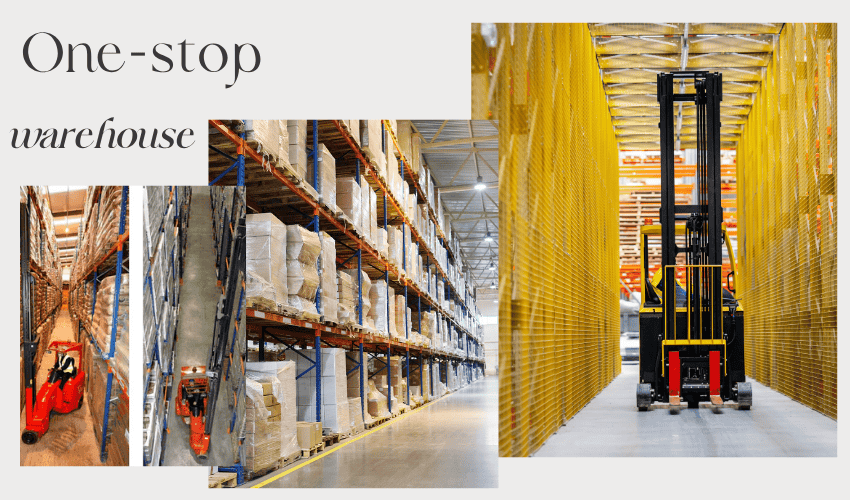 원스톱 창고 |
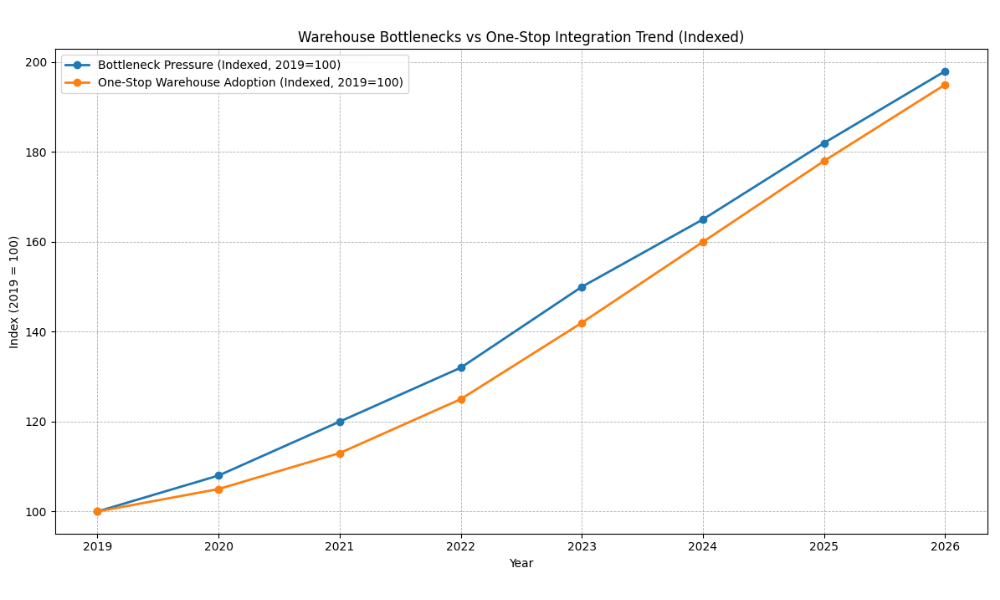 One-Stop Warehouse Trend |
Bottlenecks Don’t Live in One Place: Map the “Delay Chain” First
A common mistake is treating bottlenecks like a whack-a-mole game. You speed up picking, then returns explode. You add labour to packing, then inbound clogs your docks. A One-Stop Warehouse approach starts with a delay-chain map.
Step 1: Identify your bottleneck type (not just location)
Use a simple classification before you change anything:
-
Flow bottleneck: congestion at docks, cross-aisles, or pack lines.
-
Inventory bottleneck: stockouts, mis-slots, slow replenishment, poor cycle-count discipline.
-
Equipment bottleneck: not enough trucks, poor uptime, charging conflicts, maintenance delays.
-
Data bottleneck: WMS lag, unclear priorities, no real-time exception handling.
-
People bottleneck: training gaps, inconsistent SOPs, unclear ownership.
Step 2: Instrument the floor with “bottleneck KPIs”
You don’t need fancy automation to measure like a pro. Track:
-
Dock-to-stock time (receiving → putaway completed)
-
Pick path travel time per order line
-
Replenishment response time (trigger → restock completed)
-
Pack queue time and rework rate
-
Equipment availability (uptime, charging time, battery swap time)
-
Exception rate (damage, missing items, short picks)
Industry studies commonly show travel and search time dominate picking effort, which is why the biggest gains often come from layout + slotting + discipline—not from “more people.”
Step 3: Start with the most overlooked accelerator: internal movement
If your internal movement is slow, everything else becomes theatre. That’s why standardising 팔레트 트럭 and short-distance handling rules often creates immediate relief. A practical mid-warehouse education tool is this guide on 팔레트 트럭—because many bottlenecks begin with small handling friction: inconsistent pallet profiles, poor staging etiquette, and the wrong equipment for the floor condition.
Build the One-Stop Warehouse “Backbone” (Process + Equipment + Data + Power)
One-stop doesn’t mean “one mega-vendor for everything no questions asked.” It means one integrated operating backbone where each layer supports the others.
The four-layer backbone
A One-Stop Warehouse design works best when these layers are aligned:
-
Process layer: SOPs for inbound, putaway, replenishment, picking, packing, returns.
-
Equipment layer: MHE matched to aisle widths, load types, throughput, safety rules.
-
Data layer: WMS logic that reflects reality (slotting, wave planning, exception workflows).
-
Power layer: charging strategy, energy discipline, maintenance cadence.
If any one layer is missing, your bottleneck simply migrates.
Why power planning is now a bottleneck category
Warehouses increasingly run on electric fleets. When charging is ad-hoc, you create hidden downtime—equipment queues at the wall become the new choke point.
A practical starting point is understanding forklift energy behaviour and charging discipline through 지게차 배터리 planning: shift-based charge windows, battery health checks, safe ventilation, and clearly assigned ownership. Multiple industrial engineering programs have shown that predictable charging routines reduce emergency swaps, which reduces “random pauses” that destroy pick waves.
Industry-Specific Bottlenecks Need Industry-Specific Solutions
The fastest way to break a warehouse is to copy a global template into a local operation. Different industries bottleneck differently because products behave differently.
Which industries benefit most from one-stop thinking
When you compare industries, bottlenecks correlate with product traits:
-
Cold chain: temperature discipline + dock speed + packaging integrity
-
Pharma/health: traceability + compliance workflows + quarantine zones
-
Automotive parts: SKU complexity + kitting + mistake-proofing
-
전자상거래: velocity peaks + returns + wave discipline
If you want a clean overview of where integrated design wins fastest, this resource on 원스톱 창고 서비스 is useful because it frames the “why” by sector rather than by buzzword.
A simple “fit check” table
Use this before choosing solutions:
| Warehouse profile | Typical bottleneck | One-stop fix that works |
|---|---|---|
| High SKU, high velocity | Pick congestion + errors | Slotting rules + wave design + exception workflows |
| Low SKU, high volume | Space + replenishment timing | Dense storage + disciplined replenishment lanes |
| Temperature-sensitive | Dock delay + spoilage risk | Climate zoning + fast cross-dock + traceability |
| Regulated goods | Holds + audit friction | Controlled zones + digital checkpoints + SOP rigor |
What “Akuros-Style” One-Stop Warehouse Execution Looks Like
At a recent ESTA logistics forum, a recurring theme was that “integration beats isolated automation”—and integrated projects were praised for delivering reliability, not just speed. That’s where a One-Stop Warehouse approach becomes more than theory: it becomes a delivery method.
A practical way to describe this approach is: one system owns the whole picture, from inbound rules to fleet uptime. In that spirit, 아쿠로스 positions one-stop design around operational fit—matching equipment, layout, and service workflows so each decision reduces downstream friction.
What changes when you go one-stop
Instead of separate initiatives, you get a single operating logic:
-
Inbound appointments reflect dock capacity (not wishful thinking)
-
Putaway priorities reflect SKU velocity (not “first come, first served”)
-
Replenishment is proactive (triggered by consumption patterns)
-
Picking paths are protected from cross-traffic (less conflict, fewer pauses)
-
Fleet uptime is treated as a KPI (not “maintenance will handle it”)
How to Reduce Bottlenecks: A Practical Implementation Sequence
This is where most warehouses either win or stall: sequence.
Phase 1: Stabilise flow before you “speed up”
-
Define staging rules (where loads wait, how long, who owns them).
-
Enforce lane discipline (one-way rules, crossing minimisation, visibility).
-
Fix slotting for top velocity SKUs (reduce travel first).
-
Create a replenishment lane and protect it (no interruptions).
Phase 2: Standardise equipment + safety + energy
-
Match equipment to floor reality (turn radius, load height, aisle width).
-
Standardise handling tools for short moves vs long moves.
-
Implement charging windows, accountability, and battery health checks.
-
Train on “collision prevention behaviours” (not just forklift rules).
Phase 3: Make data operational (not decorative)
-
Move from “reporting” to “exceptions” (what must be acted on now).
-
Build a simple escalation ladder (who fixes what, how fast).
-
Tie KPIs to behaviour: dock discipline, cycle counts, replenishment speed.
For a more complete blueprint of integrated facility design, a structured 창고 솔루션 approach typically frames the system as a set of interlocking modules—storage design, MHE selection, process workflow, and implementation support—rather than a single equipment purchase.

One-Stop Warehouse for E-commerce
Mini Case Snapshots: What Bottleneck Reduction Looks Like in Practice
Below are realistic patterns observed across multi-site operations. These are written as “field patterns” rather than confidential client disclosures, but they mirror the logic used in integrated projects.
Case 1: E-commerce cutoffs (Jakarta-style peak volatility)
Problem: pick waves collapsed due to replenishment delays.
Fix: protected replenishment lane + slotting by velocity bands + wave timing rules.
Result pattern: fewer “urgent replenishments,” smoother pack queues, fewer late carts.
Case 2: Cold chain (Bangkok-style dock pressure)
Problem: inbound congestion created temperature risk and pack-line chaos.
Fix: dock appointment logic + fast cross-dock lanes + stricter staging discipline.
Result pattern: less dwell time, fewer exceptions, cleaner traceability.
Case 3: Multi-SKU industrial parts (Ho Chi Minh kitting complexity)
Problem: kitting errors caused rework and late dispatch.
Fix: process checkpoints + mistake-proofing + clearer exception workflow.
Result pattern: fewer rework loops, higher first-pass accuracy.
If you want to translate your bottleneck map into a scoped plan, the fastest path is to 문의하기 with your SKU profile, peak patterns, dock constraints, and fleet setup—because bottlenecks are context-dependent, and a good one-stop plan starts with your operating promise (cutoff targets, compliance, service levels).
And if you need to align internal stakeholders first (procurement, ops, finance), referencing 약 helps clarify the “system owner” concept—who is accountable for the full workflow, not just a single purchase.
자주 묻는 질문
1) What is a One-Stop Warehouse approach?
프로세스 설계, 자재 처리, 데이터 워크플로우, 에너지 계획이 하나의 조율된 시스템으로 구축되는 통합 운영 모델입니다—따라서 병목 현상이 단순히 한 부서에서 다른 부서로 이동하는 일이 없도록 합니다.
2) What is the quickest bottleneck to fix first?
보통 내부 이동: 슬롯팅, 스테이징 규율 및 보충 타이밍입니다. 이러한 변화는 이동과 대기 시간을 줄여, 종종 인원을 추가하지 않고도 용량을 확보할 수 있게 합니다.
3) Do I need automation to reduce bottlenecks?
항상 그런 것은 아닙니다. 많은 시설에서는 검증된 제약 조건을 자동화하기 전에 흐름을 안정화하고 SOP를 표준화하며 장비 가동 시간을 개선하는 것이 더 큰 이익을 얻을 수 있습니다.
4) Why do forklift charging routines matter so much?
예측할 수 없는 충전은 숨겨진 가동 중단 시간을 초래하고 피킹 웨이브를 방해합니다. 계획된 에너지 관행은 차량 대기 가능성을 운영상의 돌발 상황이 아닌 관리 가능한 KPI로 전환합니다.
5) How do I know if one-stop is worth it for my operation?
If you have frequent cutoff misses, recurring congestion at the same time daily, high exception rates, or “multi-vendor blame loops,” you’re likely paying the fragmentation tax—and one-stop integration can reduce it.
The Bottleneck Isn’t Dispatch—It’s Fragmentation
If your team keeps asking why dispatch misses cutoffs, the honest answer is usually that dispatch is only where the problem becomes visible. A 원스톱 창고 approach reduces bottlenecks by eliminating the coordination gaps that create delay chains: mismatched handling tools, unmanaged charging behaviour, weak staging rules, and data that reports problems instead of preventing them.
The most effective warehouses don’t chase isolated speed. They build reliability—a system where inbound timing, storage logic, replenishment discipline, and fleet uptime all pull in the same direction. That’s exactly why recent ESTA discussions increasingly praise integrated, system-owned implementations: the win isn’t just faster output; it’s fewer surprises.
So the fix is not “work harder at dispatch.” The fix is to make the warehouse behave like one business, one rhythm, one accountable system. When that happens, bottlenecks stop migrating—and cutoffs stop being a weekly drama.