

 Japanese
  English
  Russian
  French
  Spanish
  German
  Italian
  Portuguese
  Korean
  Arabic
  Turkish
  Indonesian
  Dutch
Dutch 

Quick Overview: Facility Transformation
The modern logistics and supply chain landscape is defined by an ongoing battle against rising commercial real estate costs and the relentless expansion of e-commerce inventory. As third-party logistics (3PL) providers and large-scale distributors face unprecedented throughput demands, simply acquiring a larger building is no longer the most financially viable option. Instead, the focus has shifted entirely toward maximizing the cubic volume of existing footprints. This case study details the comprehensive operational transformation of a rapidly growing regional distribution center. By abandoning rudimentary storage practices and adopting highly engineered spatial strategies, the facility was able to completely overhaul its fulfillment capabilities, drastically reduce pick times, and future-proof its inventory management ecosystem.
Akuros倉庫ソリューション
Navigating Buyer Pain Points and Hidden Procurement Risks
When upgrading a distribution center, facility managers often encounter severe operational roadblocks and financial risks. Understanding these pain points is the first step toward true optimization.
The Hidden Costs of Generic Shelving
The most common pain point for rapidly scaling logistics companies is the “temporary fix” trap. Many buyers initially purchase generic, light-duty commercial shelving from standard catalogs, assuming it will suffice for industrial 倉庫ソリューション. However, as inventory weights increase, these budget racks suffer from beam deflection (sagging) and frame twisting. This not only creates a severe safety hazard but also results in high product damage rates and complete operational shutdowns when the racks inevitably fail under heavy automotive or industrial loads.
Liability and Structural Compliance Risks
Procurement teams face massive hidden liabilities if they do not verify the engineering standards of their racking. Sourcing uncertified steel systems exposes the facility to catastrophic collapse risks during minor forklift impacts or seismic events. To understand the foundational engineering principles required to mitigate these liabilities, buyers should learn more について the rigorous manufacturing standards, roll-formed steel yield strengths, and OSHA compliance mandates that govern safe industrial environments.
Identifying the Client’s Bottlenecks
The Cost of “Dead Space” in Industrial Facilities
When our engineering team first evaluated the client’s 100,000-square-foot distribution center, the baseline scenario was alarming. The client was utilizing only 40% of their available vertical clear height. The primary method of storage was disorganized floor-stacking. Floor stacking is inherently limited by the crush strength of the cardboard packaging and the safety parameters of the forklift operators, leaving tens of thousands of cubic feet of premium, climate-controlled air space completely empty and financially unmonetized.
Throughput Challenges and Pick-Path Inefficiencies
Beyond the sheer lack of storage density, the operational flow was suffering from severe pick-path inefficiencies. Forklift traffic jams were a daily occurrence, and the travel time per pick had increased by 35% over the previous fiscal quarter. Before making hasty investments in more generic steel, proactive facility directors should お問い合わせ for a comprehensive structural audit and site analysis. We determined that the facility did not just need stronger racks; it required an entirely new material handling philosophy that aligned their physical infrastructure with their Warehouse Management System (WMS) routing algorithms.
The Engineering Phase: Designing Custom CAD Layouts
Precision Blueprinting for Maximum Storage Density
The transition from a raw, disorganized floor plan to a highly engineered grid requires meticulous spatial mathematics. Implementing professional upgrades begins with a 3D CAD simulation of the facility, taking into account building column grids, fire suppression sprinkler heads, HVAC ductwork, and egress doors. For comprehensive insights into executing these massive structural upgrades seamlessly, procurement teams should consult the 2026 master guide to turnkey warehouse storage solutions, which details the integration of physical rack infrastructure with dynamic operational logistics.
Regulatory Requirements and Structural Steel Parameters
A critical component of this structural upgrade was ensuring absolute compliance with safety regulations. The new system was engineered according to strict OSHA safety guidelines and RMI (Rack Manufacturers Institute) specifications. We utilized roll-formed steel uprights with a minimum yield strength of 50,000 PSI, equipped with heavy-duty seismic base plates because the facility was located in a high-risk seismic zone. Furthermore, all beam connections featured specialized automatic safety locks to prevent accidental dislodgement from upward forklift impacts.
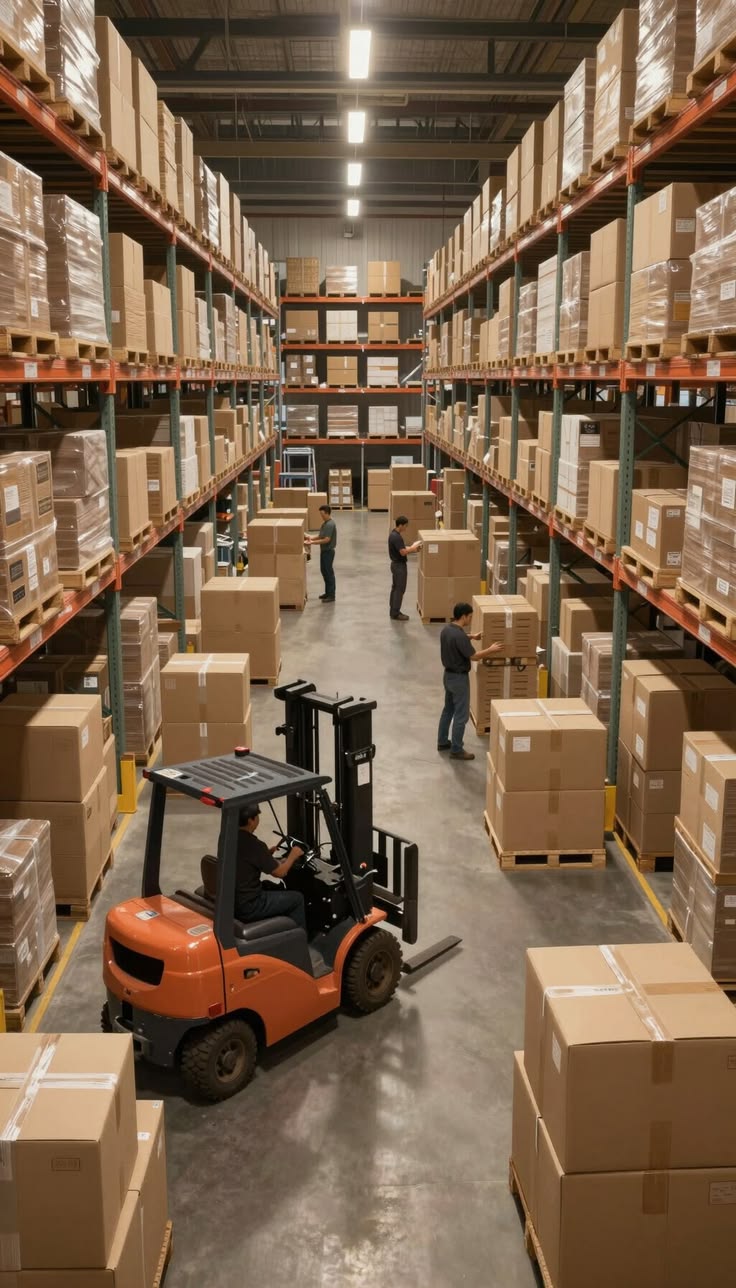
ワンストップ倉庫ソリューション
Material Handling Integration
Harmonizing Forklift Dynamics with Racking Aisles
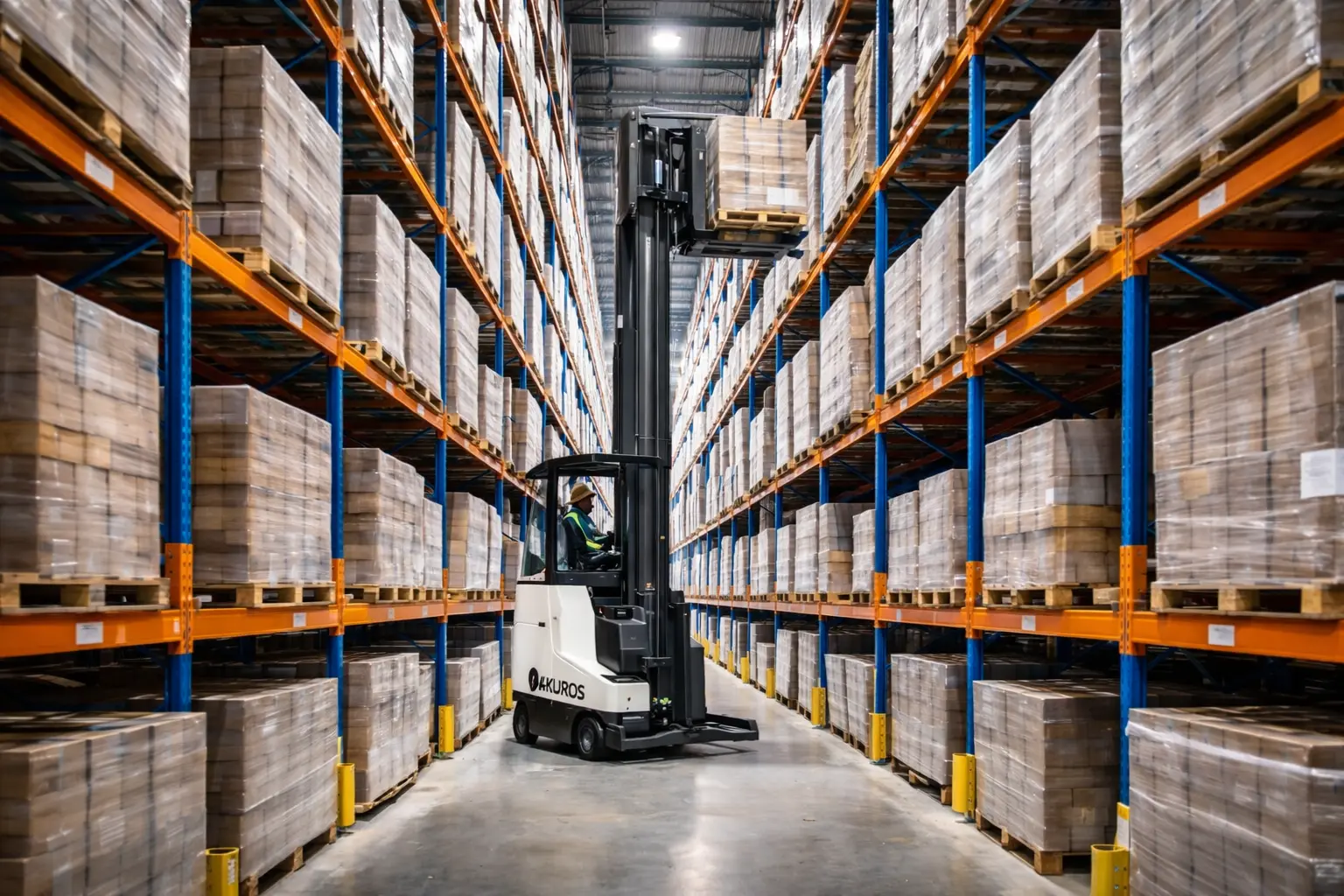
A warehouse rack is only as effective as the material handling equipment used to access it. The mathematical relationship between the aisle width and the forklift’s right-angle stack (RAS) turning radius dictates the entire facility’s footprint. Achieving full compliance while maximizing density is thoroughly explained in the latest 現代の物流業務向け倉庫ソリューションガイド, a crucial resource for layout planners. Standard counterbalance forklifts require sweeping 12-foot aisles, which consumes massive amounts of floor space. By analyzing the client’s fleet, we recommended a transition to narrow aisle reach trucks, compressing the aisles to 9 feet and immediately yielding a 20% increase in total pallet capacity.
Enhancing Flow with High-Density Configurations
In storage zones where SKU diversity is lower but product volume is extremely high, facility managers must understand how to optimize space with double deep racking solutions. By storing pallets two-deep, we eliminated unnecessary aisles and dramatically increased volumetric efficiency for their bulk goods. Conversely, for their high-velocity picking zones, we integrated gravity flow tracks directly into the lower levels of the selective pallet racks. This system ensured that inventory automatically glided to the picking face, eliminating the need for pickers to dangerously reach deep into the racks.
Busted: Common Misconceptions in Warehouse Optimization
Search engines and industry forums are filled with outdated advice. Clearing up these industry myths is critical for making sound, financially viable procurement decisions.
Myth 1: “More Racks Always Equal More Capacity”
Many buyers assume that simply cramming more steel shelving into a room will solve their storage problems. This is a dangerous misconception. If you add racks without calculating the forklift turning radius and traffic flow, you will create severe bottlenecks. Slower pick times and constant forklift collisions will erase any financial gain from the added storage space.
Myth 2: “Standard Aisle Widths Apply to Every Warehouse”
There is no such thing as a “universal” aisle width. A 12-foot aisle is a massive waste of real estate if your facility utilizes reach trucks or wire-guided machinery. Aisle dimensions must be reverse-engineered entirely based on the kinematics of your specific material handling fleet.
Measurable Results: Achieving 50% More Pallet Positions
To achieve the absolute peak capacity in the deepest reserve zones, the facility eventually integrated wire-guided floor systems and specialized 非常に狭い通路のラッキング, compressing aisles to a mere 6 feet. This complete floor-to-ceiling overhaul yielded unprecedented, quantifiable improvements across every logistical metric.
| Operational Metric | Before (Floor Stacking & Generic Shelving) | After (Custom Engineered VNA Layout) | Percentage Improvement |
| Total Pallet Positions | 4,200 | 6,300 | +50.0% |
| Vertical Space Utilization | 40% | 92% | +130.0% |
| Average Aisle Width | 13 Feet | 6 Feet (VNA Zones) | -53.8% |
| Average Pick Time per Order | 4.2 Minutes | 2.1 Minutes | +50.0% |
| Inventory Damage Rate | 2.8% | 0.1% | -96.4% |
The B2B Decision Logic Framework for Procurement
To streamline your procurement process and eliminate costly layout errors, follow this strategic decision matrix before finalizing your warehouse blueprints:
-
If your facility has thousands of unique SKUs with rapid turnover: Choose Selective Racking. It provides 100% First-In-First-Out (FIFO) accessibility.
-
If your facility stores bulk quantities of the same SKUs (e.g., seasonal goods): Choose Double-Deep or Drive-In Racking. It sacrifices immediate selectivity for massive density gains (LIFO).
-
If your facility pays a premium for urban real estate and has a high clear height: Choose Very Narrow Aisle (VNA) Racking. By compressing aisles to 6 feet and utilizing turret trucks, you maximize every cubic inch of expensive air space.
-
If you are dealing with heavy, un-palletized industrial materials (pipes, lumber): Choose Cantilever Racking. It removes frontal obstructions for easy side-loading.
Strategic Recommendations and Next Steps
Transforming an empty or inefficient industrial space into a high-performance logistics hub requires much more than simply erecting steel frames. It demands a holistic engineering approach that harmonizes physical racking structures with forklift kinematics, automated software routing, and strict seismic safety regulations.
By abandoning generic storage methods and investing in custom, data-driven warehouse optimization strategies, distribution centers can dramatically increase their pallet capacity, slash operational picking times, and achieve a formidable competitive advantage.
Your Next Step: Do not optimize your multi-million dollar facility based on guesswork or generic catalogs. The true ROI of a warehouse lies in its custom mathematical layout. We highly recommend conducting a professional 3D CAD facility audit. Partner directly with an experienced industrial racking manufacturer to calculate your true cubic capacity, perform rigorous seismic load calculations, and engineer a bespoke storage system that will future-proof your supply chain for the next decade.
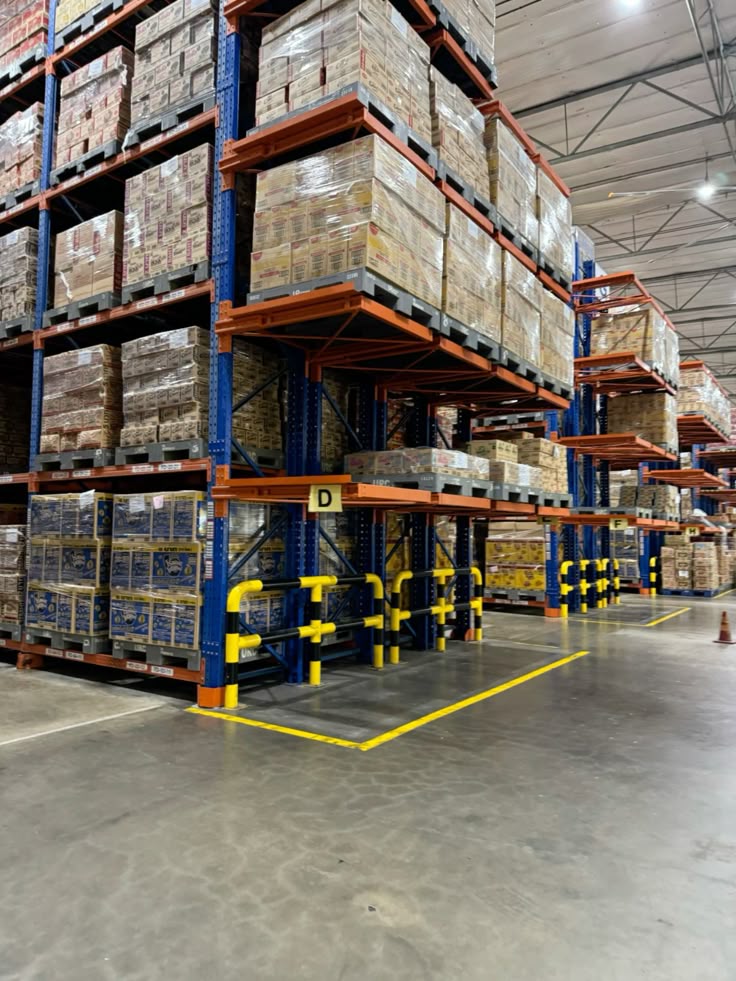
倉庫ソリューション
よくあるご質問
1. How do I accurately calculate my warehouse storage capacity?
To calculate your true warehouse storage capacity, you must measure the total cubic volume, not just the square footage. Multiply the usable floor area by the building’s clear height (the distance from the floor to the lowest hanging obstacle, like sprinklers or HVAC ducts). Next, consult a CAD engineer to design a layout that factors in forklift aisle widths, building columns, and fire egress routes. The final number of engineered pallet positions determines your true maximum capacity.
2. What is the fundamental difference between selective racking and double-deep racking?
Selective racking is one pallet deep, meaning every single pallet faces an aisle and provides 100% immediate accessibility (FIFO – First-In-First-Out). It is ideal for facilities with high SKU counts and rapid turnover. Double-deep racking stores pallets two deep in a single rack structure, requiring a specialized reach truck to access the back pallet. It significantly increases storage density by eliminating aisles but reduces immediate selectivity (LIFO – Last-In-First-Out), making it better for bulk storage.
3. How wide do my warehouse aisles need to be for a standard forklift?
The required aisle width is entirely dependent on the specific forklift’s Right Angle Stack (RAS) measurement. Generally, a standard sit-down counterbalance forklift requires an aisle width of 12 to 14 feet to safely turn and place a pallet. Narrow Aisle (NA) reach trucks can operate in 8.5 to 9.5-foot aisles, while Very Narrow Aisle (VNA) turret trucks operate on wire-guided systems in aisles as tight as 5.5 to 6 feet, massively increasing storage density.
4. Why should a facility source directly from an industrial racking system manufacturer?
Sourcing directly from a manufacturer eliminates middleman markups, reducing your initial capital expenditure. More importantly, it ensures absolute structural integrity and traceability of the steel used. Direct manufacturers provide custom CAD engineering support, perform accurate seismic load calculations, and offer precise customization of beam lengths and upright gauges to match your exact pallet weights, ensuring strict compliance with safety standards.
5. What are the OSHA requirements for warehouse racking inspections?
While OSHA does not have a specific standard exclusively for racking, they enforce safety under the “General Duty Clause,” which mandates a workplace free from recognized hazards. Furthermore, OSHA relies heavily on RMI (Rack Manufacturers Institute) ANSI MH16.1 standards. Best practices require documented, professional inspections at least annually, with immediate internal reporting protocols for any forklift impact damage or deflected beams to prevent catastrophic structural collapse.
参考文献
-
“Design, Testing, and Utilization of Industrial Steel Storage Racks (ANSI MH16.1).” Rack Manufacturers Institute (RMI).
-
“Warehouse Management: A Complete Guide to Improving Efficiency and Minimizing Costs.” Richards, G. Kogan Page.
-
“The General Duty Clause, Section 5(a)(1).” Occupational Safety and Health Administration (OSHA).
-
“Seismic Design of Industrial Storage Racks.” Federal Emergency Management Agency (FEMA) Technical Reports.
-
“Optimization of Warehouse Storage Capacity and Operations.” Journal of Supply Chain Management.
-
“Ergonomics and Material Handling Equipment Integration.” International Journal of Industrial Ergonomics.
-
“Volumetric Efficiency in High-Bay Intralogistics.” Logistics Engineering Review.
-
“Steel Yield Strengths and Load Capacity in Modern Pallet Racking.” Structural Engineering International.
Expert Insights: Strategic Warehouse Layouts & Storage Procurement
Strategic Implementation (Why & What): In the 2026 supply chain ecosystem, underutilized vertical space is recognized as a critical financial liability. 倉庫ソリューション are no longer just about buying generic steel shelving; they are about specialized volumetric engineering. Transitioning from disorganized floor stacking to custom-engineered industrial racking shifts a facility’s failure point from “lack of floor space” to “maximum cubic efficiency,” reliably yielding up to a 50% increase in total pallet capacity while simultaneously drastically reducing forklift travel time and product crush damage.
Key Layout Options & Operational Considerations
- Aisle Width Optimization (Formulation Option)
The mathematical relationship between rack spacing and material handling equipment is paramount. While standard aisles require 12 feet, transitioning to Narrow Aisle (9 feet) or Very Narrow Aisle (6 feet with wire-guided turret trucks) reclaims massive amounts of square footage. However, this layout decision must be synchronized with a capital investment in specialized, high-reach forklift fleets. - Seismic & Structural Safety (Sourcing Consideration)
When evaluating an industrial racking system manufacturer, procurement teams must verify that all structural components meet RMI (Rack Manufacturers Institute) and ANSI MH16.1 specifications. Utilizing roll-formed or structural steel with a minimum yield of 50,000 PSI, paired with certified seismic base plates, is a non-negotiable liability checkpoint for preventing catastrophic racking collapse under heavy industrial loads.