

 Japanese
  English
  Russian
  French
  Spanish
  German
  Italian
  Portuguese
  Korean
  Arabic
  Turkish
  Indonesian
  Dutch
Dutch 

Compliance, Throughput & Risk Control
Export-oriented cold storage warehouses face a fundamentally different risk profile compared to domestic distribution facilities. This article explains how export-driven cold storage operations should be designed and equipped to manage compliance pressure, shipment deadlines, and operational risk—while maintaining flexibility for changing trade volumes.
1. Why Export-Oriented Cold Storage Is a Distinct Business Model
Export-oriented cold storage warehouses are not optimized for storage—they are optimized for time, compliance, and certainty.
Unlike domestic warehouses, export facilities must operate under constraints such as:
-
Fixed shipping schedules and vessel cut-off times
-
Destination-country compliance and inspection requirements
-
Documentation and traceability obligations
-
Limited tolerance for delays or rework
In this context, missed throughput is not a cost—it is a failed shipment.
This is why export cold storage must be designed as an integrated 倉庫ソリューション, rather than a high-density storage facility.
 2. Export Cold Storage Challenges — Overview Table
Before examining design strategies, the table below summarizes the most common challenges faced by export-oriented cold storage warehouses.
📊 Export-Oriented Cold Storage Challenges & Design Priorities
| Export Challenge | Operational Impact | Design Priority |
|---|---|---|
| Fixed shipping schedules | Missed vessel cut-off | Predictable throughput |
| Compliance inspections | Shipment rejection | Process auditability |
| Volume volatility | Congestion peaks | Scalable flow design |
| Multi-country standards | Rework & delays | Standardized handling |
| Documentation pressure | Dispatch errors | Clear zone separation |
In export cold storage, reliability outweighs theoretical efficiency.
3. Layout Design Built Around Shipping Deadlines
Export cold storage layouts must prioritize dispatch reliability.
Key design principles include:
-
Large, clearly defined staging areas for outbound consolidation
-
Short, predictable travel paths from storage to docks
-
Separation between inspection, packing, and dispatch zones
Layouts optimized solely for pallet density often fail during export peaks when multiple shipments converge.
Designing layout within a warehouse solution framework ensures that flow, compliance, and deadlines are aligned from day one.
 4. Racking Systems for Export-Oriented Cold Storage
Racking systems in export facilities must support both storage and rapid retrieval.
-
Double deep racking systems are commonly used to balance density with predictable access for export batches.
-
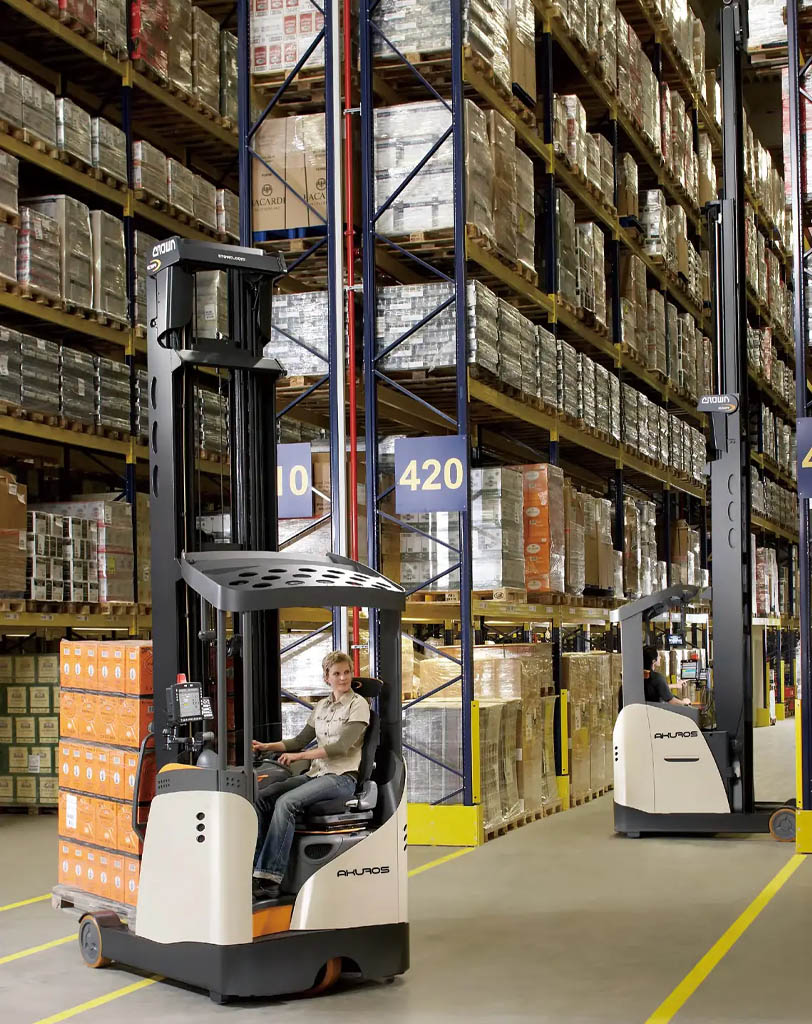
Very narrow aisle racking systems are suitable where SKU diversity is high and export destinations vary frequently.
Overly restrictive high-density systems reduce retrieval flexibility and increase the risk of shipment delays.
5. Forklifts and Equipment for Time-Critical Operations
Forklifts in export cold storage must deliver consistent uptime, especially during peak shipping windows.
Facilities typically rely on:
-
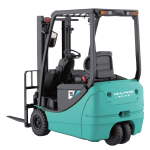
Cold-adapted 電気フォークリフト for stable indoor operation
-
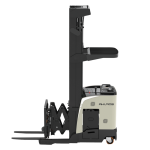
Reach trucks for high-bay retrieval under time pressure
-
パレットトラック for rapid staging and dock-side handling
Equipment selection should prioritize reliability, maneuverability, and ease of maintenance rather than peak lifting capacity.
6. Automation in Export Cold Storage: Reliability Over Speed
Automation in export-oriented cold storage focuses on error reduction and consistency, not raw speed.
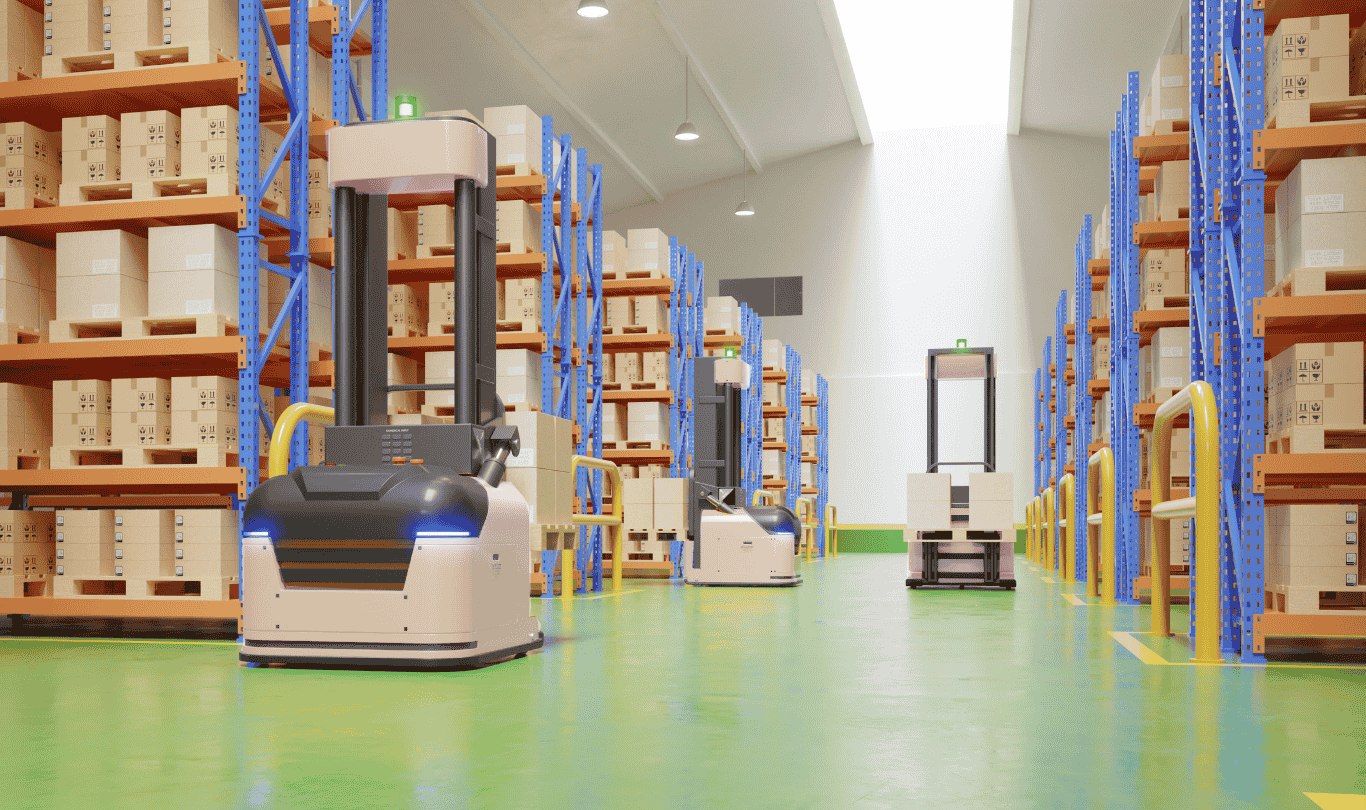
AGVシステム integrated within broader automated warehouse solutions are effective for:
-
Repetitive pallet movement between storage and staging
-
Reducing manual errors during high-pressure periods
However, export operations still require manual flexibility for inspections, exceptions, and documentation-related holds.
7. Compliance, Traceability, and Process Control
Export cold storage facilities must support traceability across:
-
Lot numbers
-
Temperature history
-
Handling sequence
This places pressure on layout clarity, zone separation, and system integration. Designing compliance as part of the physical workflow reduces reliance on manual checks and paperwork.
8. Common Mistakes in Export-Oriented Cold Storage Projects
Recurring issues include:
-
Designing layouts for storage instead of dispatch
-
Underestimating peak export congestion
-
Over-investing in rigid automation
-
Ignoring destination-specific compliance requirements
In export operations, these mistakes surface as missed shipments rather than gradual inefficiencies.
9. How Successful Export Cold Storage Facilities Are Designed
High-performing export-oriented facilities share several traits:
-
Dispatch-driven layout planning
-
Flexible racking strategies
-
Equipment fleets optimized for uptime
-
Automation applied selectively for consistency
These outcomes are best achieved through an end-to-end warehouse solution rather than fragmented procurement.
10. Google Popular Topics (Contextual Answers)
What makes export cold storage different from domestic cold storage?
Fixed shipping schedules, compliance pressure, and low tolerance for delays.
Which racking systems are suitable for export cold storage?
Double deep and VNA racking for balanced density and retrieval speed.
Is automation necessary in export cold storage warehouses?
Automation is useful for consistency but should not remove manual flexibility.
How can export cold storage reduce shipment risk?
By designing layouts and equipment around dispatch reliability.
What is the biggest risk in export-oriented cold storage?
Missing vessel cut-off times due to congestion or equipment downtime.