


 Italian
  English
  Russian
  French
  Spanish
  German
  Portuguese
  Korean
  Japanese
  Arabic
  Turkish
  Indonesian
  Dutch
Dutch 

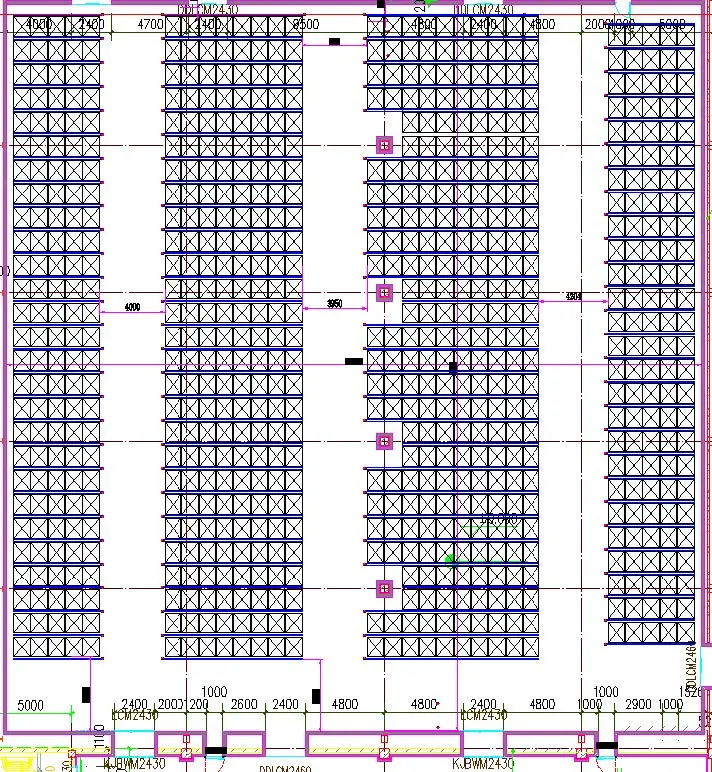

High Space Utilization
Drive-in racking reduces the number of working aisles and uses deep storage lanes to increase pallet capacity. This makes it suitable for warehouses where maximizing storage density is more important than direct access to every pallet.

Bulk Storage
This system is ideal for storing large quantities of the same product. By assigning each lane to one SKU or batch, the warehouse can achieve higher storage capacity with a relatively simple rack structure.

Low SKU Friendly
Drive-in racking works best when SKU variety is limited and each SKU has a high pallet quantity. It is especially practical for products with stable inventory flow and batch-based storage requirements.

Dense Lane Storage
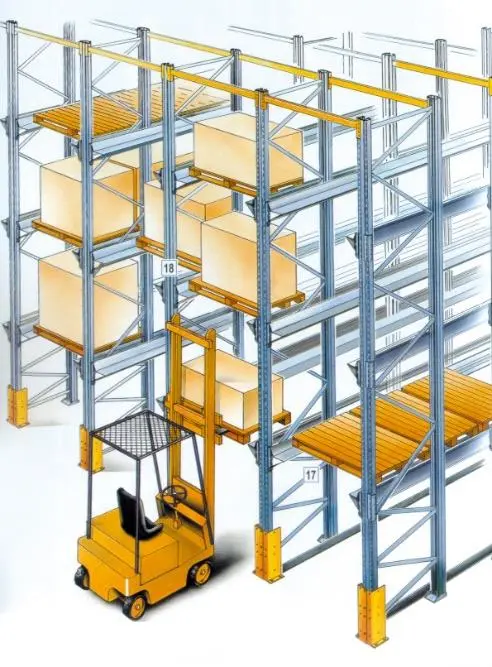
Multiple pallets can be stored deep in a single rack lane. This allows the warehouse to reduce aisle space, improve storage density and lower storage cost per pallet position.

SKU Concentration
Drive-in racking is most suitable when each SKU has a high pallet quantity. If SKU variety is too high, the warehouse may lose efficiency because different products cannot be accessed independently.

FIFO / LIFO Requirement
Drive-in racking normally works on a LIFO basis. It is not the best choice when strict FIFO operation is required. If FIFO is important, drive-through racking or pallet shuttle racking may be more suitable.

Product Turnover
This system is suitable for low to medium product turnover and batch-based inventory movement. It is less suitable for operations that require frequent random pallet picking.

Impact Protection
Because forklifts enter the rack structure, column guards, upright protectors and careful driving procedures are important. Proper protection helps reduce rack damage and improve warehouse safety.

Lane Depth
Lane depth should be designed according to SKU quantity, batch size, pallet quality and operating frequency. Very deep lanes can increase storage density, but they may also reduce operational flexibility.

Food Products
Drive-in racking is suitable for food warehouses that store large quantities of the same product or batch. It helps improve storage density for palletized food inventory with stable turnover.

Beverage & Drinks
Beverage warehouses often store large volumes of similar SKUs. Drive-in racking can reduce aisle space and increase pallet capacity for drinks, bottled products and bulk beverage inventory.

Industria chimica
For chemical and industrial materials stored in batch quantities, drive-in racking provides dense pallet storage. Proper safety planning, pallet quality and load stability should be confirmed before use.

Raw Materials
Manufacturing warehouses can use drive-in racking for raw materials that are stored in bulk and moved by batch. It helps reduce warehouse footprint while maintaining organized stock lanes.

Carrello elevatore a contrappeso
Counterbalanced forklifts are commonly used with drive-in racking systems because they can handle pallet movement in loading areas and enter rack lanes for storage and retrieval. The forklift size, lifting height, turning radius and load capacity should be matched with the rack lane width, pallet weight and warehouse operating conditions.
Carrello elevatore
Reach trucks can be used in certain drive-in racking layouts, especially in indoor warehouses where aisle space is limited and higher lifting height is required. The final selection depends on rack depth, pallet size, floor condition and operating method.