

 French
  English
  Russian
  Spanish
  German
  Italian
  Portuguese
  Korean
  Japanese
  Arabic
  Turkish
  Indonesian
  Dutch
Dutch 

In cold storage warehouses, forklifts and racking systems must be selected as a unified system rather than independent components. This article explains the practical matching logic between racking types and forklift solutions in frozen environments, helping operators avoid throughput bottlenecks, safety risks, and long-term structural inefficiencies.
1. Why Forklift–Racking Matching Is Critical in Cold Storage
Cold storage warehouses operate under constraints that do not exist in ambient facilities: limited aisle space, reduced visibility, frozen floors, and high cost per cubic meter. Under these conditions, mismatches between racking systems and forklifts quickly become structural problems, not operational inconveniences.
Many cold chain projects underperform because forklifts are selected after racking installation, or racking layouts are designed without considering forklift maneuverability in -25°C environments. Once operations begin, these mismatches are difficult and costly to correct.
This is why forklift selection must be aligned with racking design as part of an integrated solution d'entrepôt, rather than treated as a downstream equipment decision.
 2. Forklift & Racking Matching Overview (Cold Storage)
Before examining each scenario in detail, the table below provides a high-level decision framework showing how common racking systems align with different forklift types in cold storage warehouses.
📊 Forklift and Racking Matching Matrix for Cold Storage
| Racking System | Compatible Forklift Types | Aisle Requirement | Operational Focus | Typical Cold Storage Use Case |
|---|---|---|---|---|
| Rayonnage à double profondeur | Reach trucks, cold-adapted electric forklifts | Moyen | Balanced density & flexibility | Frozen food distribution centers |
| Drive-In Racking | Counterbalanced forklifts | Minimal | Maximum pallet density | Bulk frozen storage, homogeneous SKUs |
| Rayonnage VNA | Guided VNA trucks, specialized reach trucks | Very narrow | High selectivity & throughput | High-turnover cold warehouses |
| Selective / Shelf Racking | Electric pallet trucks, stackers | Wide | Flexibility & manual access | Cold picking and staging zones |
This table offers a strategic overview. Real-world performance depends on cold-room operating conditions, forklift stability, and long-term automation strategy.
3. How to Interpret the Matching Table (Important)
The matrix above does not imply that one forklift type is universally superior. Instead, it highlights how storage geometry, aisle width, and pallet access logic determine forklift suitability in cold storage environments.
Key principles include:
-
High-density racking reduces aisle width tolerance and increases equipment precision requirements
-
Narrow aisles magnify the impact of frozen floors and visibility constraints
-
Forklift stability becomes more critical than nominal lifting capacity in cold rooms
With this framework established, the following sections examine each racking–forklift combination in more detail.
 4. Double Deep Racking and Reach Truck Logic
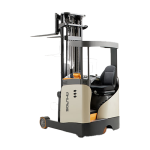
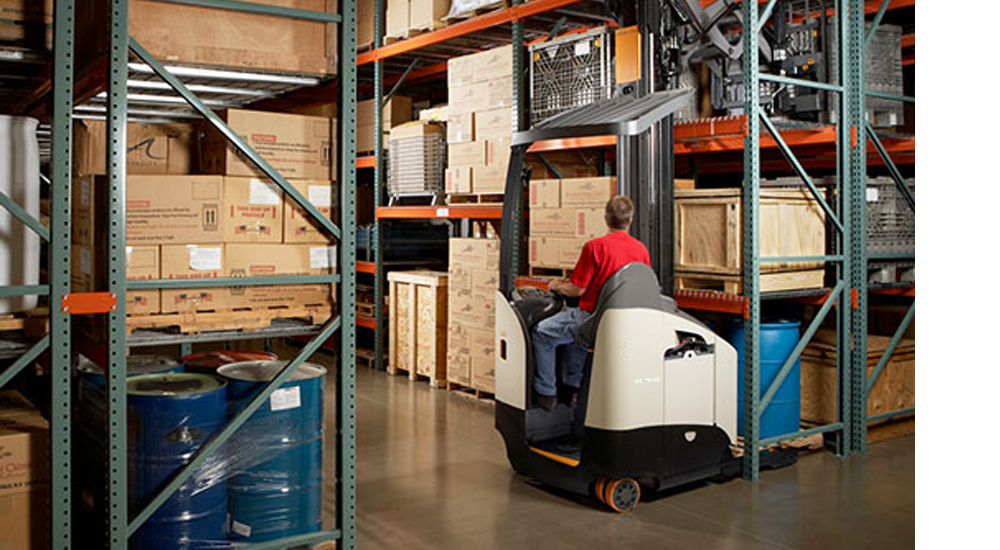
In cold storage facilities using double deep racking systems, forklifts must balance reach capability with maneuverability. Reach trucks and cold-adapted electric forklifts are commonly selected because they can access the second pallet position while maintaining controlled movement in confined aisles.
This combination works best when SKU variety is moderate and throughput requirements are steady rather than highly volatile. Poorly matched forklifts in double deep systems often lead to reduced pick rates and increased rack contact incidents.
5. Drive-In Racking and Counterbalanced Forklifts
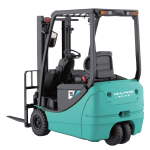
Drive-in racking systems demand forklifts capable of entering the rack structure safely and repeatedly. In frozen environments, counterbalanced forklifts are typically used because of their stability and visibility.
However, drive-in operations in cold storage place significant stress on both equipment and operators. Frozen floors, limited lighting, and tight clearances amplify collision risk if forklift performance and operator ergonomics are not properly specified.
6. VNA Racking and Guided Forklift Systems
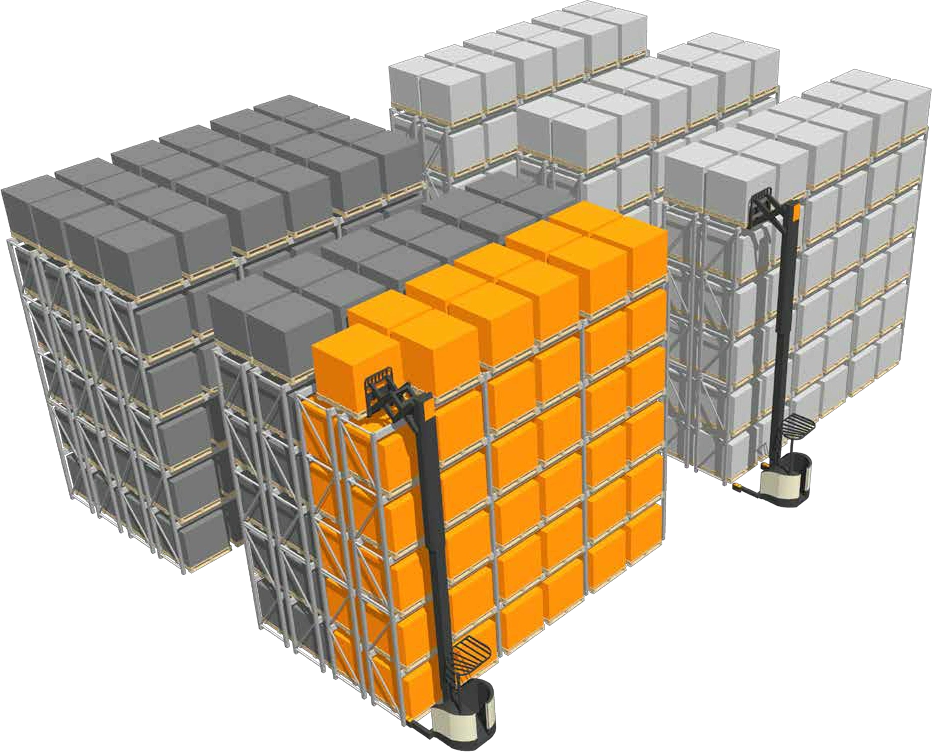
Very narrow aisle racking systems prioritize selectivity and vertical space utilization. In cold storage, VNA layouts require guided forklifts or specialized reach trucks capable of operating accurately within minimal aisle tolerances.
This configuration is particularly suitable for cold storage warehouses with high SKU diversity and frequent order picking. While VNA systems involve higher upfront planning requirements, they offer superior long-term flexibility and automation readiness.
7. Supporting Equipment in Cold Storage Operations
Forklift–racking compatibility extends beyond the primary truck selection. Supporting equipment plays a critical role in maintaining safety and efficiency in frozen environments.
Cold storage operations often rely on:
-
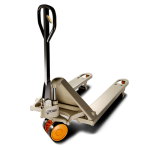
Electric pallet trucks for horizontal movement in staging and dispatch zones
-
Empileurs for light-duty handling in cold picking areas
When properly integrated, these tools reduce congestion and improve flow between primary storage and outbound operations.
8. Automation and Future-Proofing Considerations
As cold storage warehouses evolve toward higher automation levels, forklift–racking matching must consider long-term system compatibility. Layouts optimized solely for manual operations often limit future automation options.
Facilities that align racking geometry, forklift selection, and automated warehouse solutions from the outset consistently achieve smoother automation transitions and stronger ROI.
9. Common Mistakes in Forklift–Racking Matching
Recurring mistakes in cold storage projects include:
-
Selecting forklifts based on lifting capacity alone
-
Ignoring frozen-floor traction and braking behavior
-
Designing racking layouts without future automation in mind
-
Treating forklifts and racking as separate procurement items
In frozen warehouses, these mistakes often result in permanent throughput limitations and elevated safety risks.
10. Google Popular Topics (Contextual Answers)
Why is forklift–racking matching more critical in cold storage than ambient warehouses?
Because frozen environments amplify safety risks, visibility issues, and maneuverability constraints.
Can one forklift type serve all racking systems in cold storage?
No. Different racking geometries impose different requirements on forklift stability and reach.
Is VNA racking suitable for cold storage automation?
Yes. VNA layouts provide a strong foundation for guided forklifts and future automation.
What forklifts are best for drive-in racking in frozen warehouses?
Counterbalanced forklifts with cold-rated stability and visibility enhancements.
Does forklift choice affect long-term warehouse flexibility?
Yes. Forklift–racking compatibility directly influences throughput, safety, and automation readiness.