

 Spanish
  English
  Russian
  French
  German
  Italian
  Portuguese
  Korean
  Japanese
  Arabic
  Turkish
  Indonesian
  Dutch
Dutch 

The High-Stakes Engineering of Modern Industrial Storage
The global logistics landscape is undergoing a radical transformation driven by the exponential growth of cold chain pharmaceuticals, perishable food distribution, and heavy manufacturing. In these sectors, standard shelving is no longer a viable option; it is a structural risk. The demand for Heavy Duty Storage Solutions has shifted from simple “space-saving” to complex “load-bearing engineering.” Modern warehouses must now operate as high-velocity ecosystems where structural steel must withstand massive static loads while remaining resilient to the dynamic impacts of heavy machinery.
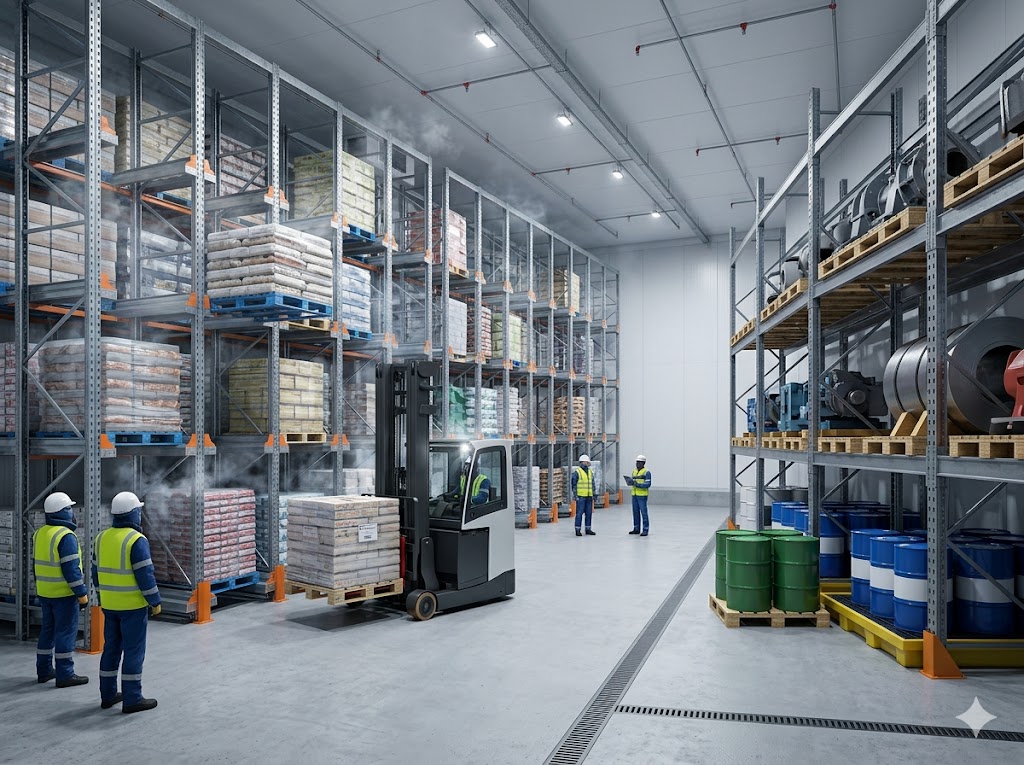
For procurement officers and warehouse managers, the challenge is twofold: maximizing cubic storage density while ensuring uncompromising safety standards. This requires a holistic approach to facility design, starting from the foundation and extending to the specialized forklift attachments and accessories used to navigate narrow aisles. Every component, from the baseplate to the topmost beam, must be calibrated to the specific thermal and chemical profile of the stored inventory.
Heavy Duty Storage Solutions
Specialized Coatings for Cold Storage Environments (-30°C)
Cold storage facilities represent the most hostile environments for industrial steel. When temperatures drop to -30°C, carbon steel undergoes a physical phenomenon known as the ductile-to-brittle transition. Standard steel becomes prone to “embrittlement,” where it can snap like glass under sudden impact. Furthermore, the high humidity levels and constant thaw-and-freeze cycles during loading and unloading create an accelerated corrosive environment.
To combat this, engineering firms prioritize Hot-Dip Galvanization (HDG) or specialized epoxy-polyester powder coatings. HDG provides a metallurgical bond between the zinc and the steel, offering a self-healing protective layer that prevents rust even if the surface is scratched by a forklift mast. As an industry-leading provider of innovative warehouse storage solutions, it is essential to utilize coatings that maintain flexibility at sub-zero temperatures. Without these specialized finishes, the protective layer will crack, leading to internal oxidation that compromises the load-bearing capacity of the entire upright frame.
Scientific Table: Protective Coating Performance in Cold Storage
| Coating Type | Application Method | Avg. Thickness (µm) | Temp. Resilience (°C) | Corrosion Rating |
| Standard Powder | Electrostatic | 50-60 | -5 to 45 | Moderado |
| Cold-Room Epoxy | Multi-layer Bake | 80-100 | -35 to 40 | Alta |
| Hot-Dip Galvanized | Molten Bath (450°C) | 100-120 | -50 to 100 | Extreme |
Establishing a relationship with a global leader in industrial engineering ensures that the steel grades used—such as Q355B or ASTM A36—are specifically batch-tested for impact resistance at low temperatures. This level of material expertise prevents the catastrophic failures often associated with sub-standard, low-cost alternatives.
High-Density Racking for Cold Chain Efficiency (Drive-in & Shuttle)
In the cold chain, every cubic meter of refrigerated air costs significant energy expenditure. To maximize ROI, facilities must adopt high-density configurations that minimize “wasted” aisle space. Two dominant architectures lead the market: Drive-in Racking and Radio Shuttle Systems. Drive-in systems offer a cost-effective LIFO (Last-In, First-Out) solution by allowing forklifts to enter the racking lanes. However, this increases the risk of collision in visibility-challenged frozen environments.
The modern trend is shifting toward semi-automated Radio Shuttle systems. These use a remote-controlled platform to move pallets within the racking channels, keeping forklifts out of the structure and reducing energy loss from open bay doors. For organizations planning to upgrade, the first step should be to request a customized warehouse audit to determine the optimal balance between initial CAPEX and long-term energy savings. Reducing the heat signature introduced by material handling equipment is a critical component of “Green Warehousing” strategies.
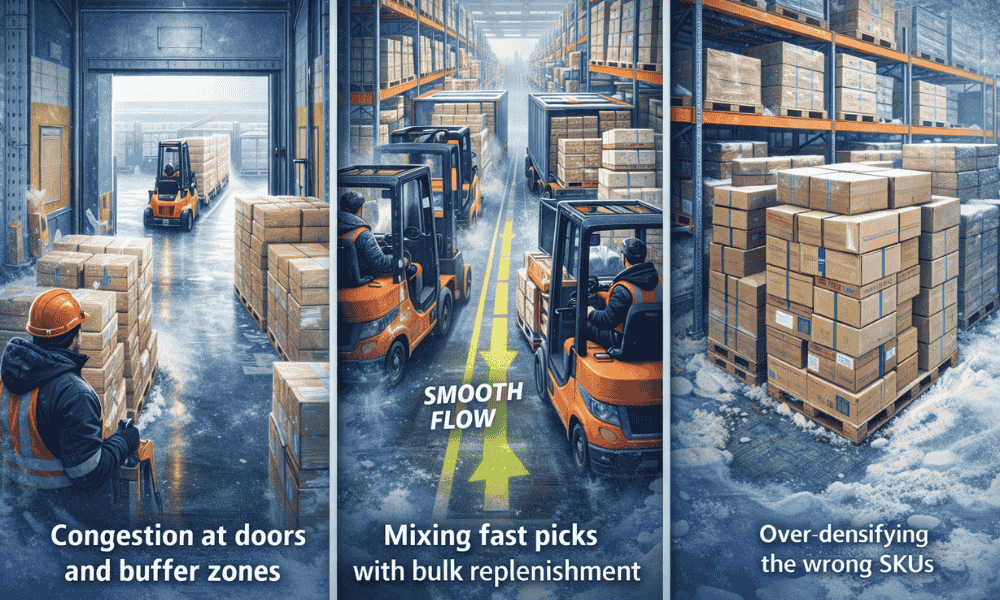
Soluciones integrales para almacenes de cadena de frío
Engineering for Weight: Handling Extra-Heavy Loads Safely
The physics of “Heavy Duty” requires more than just thick steel; it requires precise geometry. Structural racking frames must account for the Uniformly Distributed Load (UDL) as well as the dynamic forces applied during the placement of a 2,000kg+ pallet. The beam-to-upright connection is the most critical failure point. High-quality systems utilize a 3-hook or 4-hook connector with safety pins to prevent accidental dislodgement from the upward force of a forklift mast.
When specifying a heavy-duty racking system architecture, engineers look at the “slenderness ratio” of the uprights. A frame that is too thin will undergo elastic buckling under full load, even if the steel grade is high. By using structural steel C-channels rather than standard roll-formed sections, facilities can support point loads that would otherwise collapse a lighter system. This structural rigidity is non-negotiable for industries handling machinery parts, metal coils, or bulk liquid storage.
Resilience During Seasonal Peaks and Environmental Stress
Operational failure rarely happens during normal usage; it occurs during peak seasons when throughput is high, operators are rushed, and systems are pushed to their 100% capacity. A resilient system is one that accounts for human error and high-velocity loading cycles. To ensure longevity, logistics managers must understand how to specify a system that survives peak season, which includes integrating impact protection, such as heavy-duty floor-mounted column guards and row end protectors.
This focus on durability is particularly crucial in emerging logistics hubs. For example, in high-temperature or seismic zones, the anchoring requirements and bracing patterns must be exponentially more robust. Observing sustainable logistics growth in harsh environments highlights the importance of seismic-certified baseplates and high-strength floor anchoring bolts that resist shear forces.
Material Selection for Chemical and Flammable Storage
Storage solutions for chemical and flammable materials involve strict adherence to safety regulations like NFPA 30 (Flammable and Combustible Liquids Code). In these environments, the racking must be engineered to prevent spark generation and integrated with spill containment systems. Material selection often includes stainless steel or non-sparking zinc-plated decking.
A comprehensive one-stop industrial storage solution for hazardous materials includes pre-engineered drainage slopes and integrated fire sprinkler paths within the racking flue spaces. This ensures that in the event of a leak or fire, the system aids in containment rather than contributing to the hazard. Choosing the right material handling interface is equally vital; for instance, optimizing cold storage forklift operations in chemical zones requires Explosion-Proof (EX) certified vehicles to prevent vapor ignition.
Future Trends: Automation and Structural Sustainability
As we look toward 2030, the integration of IoT (Internet of Things) sensors within the racking structure will become standard. These sensors can detect structural strain or temperature-induced micro-cracks in real-time, allowing for predictive maintenance before a failure occurs. Furthermore, the use of high-yield recycled steel is reducing the carbon footprint of industrial storage, aligning heavy-duty engineering with global ESG (Environmental, Social, and Governance) goals.
In conclusion, the decision to invest in heavy-duty storage is a decision to secure the future of the supply chain. By prioritizing scientific material selection, specialized coatings for extreme temperatures, and high-density automation, businesses can transform their warehouse from a simple storage cost-center into a high-efficiency strategic asset.
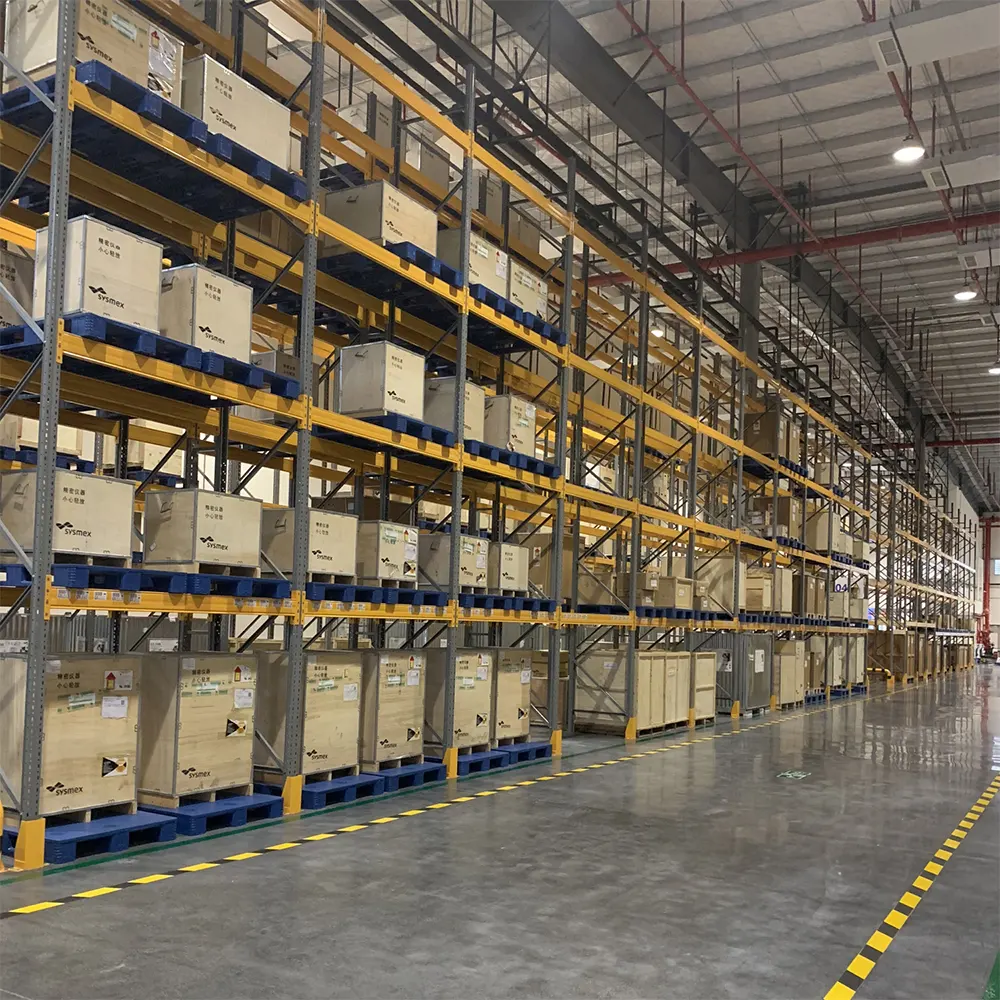
estanterías para cargas pesadas
PREGUNTAS FRECUENTES
1. What is the best racking system for cold storage at -30°C?
For temperatures as low as -30°C, the best solution is a Radio Shuttle or Drive-in system paired with Hot-Dip Galvanized (HDG) steel. The HDG coating prevents corrosion caused by condensation, while high-density configurations minimize the volume of air that needs to be cooled, significantly lowering energy costs.
2. How much weight can a heavy-duty pallet racking system hold?
Standard heavy-duty systems are designed to hold between 1,000kg and 2,500kg per pallet. However, specialized structural steel racking can support up to 5,000kg per beam level. It is crucial to verify the Uniformly Distributed Load (UDL) ratings provided by the manufacturer to ensure safety compliance.
3. Why is structural steel better than roll-formed steel for heavy industry?
Structural steel is hot-rolled and significantly thicker than cold-rolled roll-formed steel. It offers superior resistance to forklift impacts, which are the most common cause of racking failure. While the initial cost is higher, the total cost of ownership is lower due to reduced maintenance and increased lifespan in high-traffic environments.
4. Are there specific fire safety regulations for chemical storage racking?
Yes, chemical storage must comply with NFPA 30 standards. This often requires “in-rack” sprinkler systems, specific flue space gaps between pallets to allow heat to rise and trigger sensors, and spill containment sumps integrated into the base of the racking to prevent hazardous runoff.
5. How often should heavy-duty storage systems be inspected?
According to RMI and FEM standards, racking systems should undergo a professional inspection at least once a year. Additionally, daily or weekly “walk-through” inspections by warehouse staff are recommended to check for visible damage, missing safety pins, or overloaded beams.
Referencias
-
RMI (Rack Manufacturers Institute): Specification for the Design, Testing, and Utilization of Industrial Steel Storage Racks.
-
NFPA 30: Flammable and Combustible Liquids Code.
-
ASTM A36/A36M: Standard Specification for Carbon Structural Steel.
-
Journal of Food Engineering: Energy Consumption and Efficiency in Cold Storage Warehousing.
-
FEM 10.2.02: The Design of Static Steel Pallet Racking.
-
OSHA 1910.176: Handling Materials and General Storage Safety Requirements.
-
Cold Chain Federation: 2025 State of the Cold Chain Industry Report.
-
Steel Construction Institute (SCI): Structural Design of Cold-Formed Steel Sections.
Strategic Procurement for Industrial Storage Environments
Procuring Heavy Duty Storage Solutions is fundamentally a structural engineering challenge, not a commodity purchase. In extreme environments—such as -30°C cold chain facilities or chemical processing plants—standard commercial racking faces an unacceptably high risk of catastrophic failure. The industry consensus dictates that modern warehouse optimization must synergize high-yield structural steel, specialized thermal coatings (like Hot-Dip Galvanization), and high-density automation to ensure structural resilience and regulatory compliance.
Critical Engineering Considerations
- Mitigating Steel Embrittlement (Cold Storage): A common industry risk is specifying standard carbon steel for deep-freeze zones. Below -20°C, standard steel loses ductility. Procurement must mandate low-temperature impact-tested steel and Hot-Dip Galvanized finishes to prevent hidden micro-fissures and moisture-induced core corrosion during thaw cycles.
- Impact Resistance & Load Physics: For dynamic point loads exceeding 2,000kg, roll-formed steel is often insufficient. Upgrading to hot-rolled structural steel (C-channel uprights) exponentially increases resilience against forklift impacts, which remains the leading cause of progressive racking collapse globally.
- Chemical & Hazardous Compliance: Warehousing flammable materials requires strict adherence to NFPA 30 and OSHA standards. This necessitates non-sparking interfaces, integrated spill-containment sumps within the rack footprint, and exact flue-space engineering for fire suppression systems.
Strategic Decision Matrix
Option 1: If operating a high-turnover cold storage facility (-30°C) requiring maximum energy efficiency ➔ Specify Hot-Dip Galvanized Radio Shuttle automation to eliminate forklift aisles.
Option 2: If designing a cross-docking hub with 24/7 heavy machinery traffic and elevated collision risks ➔ Specify Structural Steel racking with floor-anchored column protectors.
Option 3: If expanding operations into high-seismic or hazardous industrial zones ➔ Mandate an engineering audit to calculate maximum Uniformly Distributed Loads (UDL) based on RMI/FEM safety multipliers.
Next Step: Do not leave structural safety to chance. Contact our heavy-duty engineering team to request a comprehensive load stress audit and blueprint evaluation for your facility.