

 Spanish
  English
  Russian
  French
  German
  Italian
  Portuguese
  Korean
  Japanese
  Arabic
  Turkish
  Indonesian
  Dutch
Dutch 

A Conversation That Mirrors Southeast Asia’s Logistics Reality
“Why are we still shipping from three different warehouses?” asked the supply chain manager of a growing e-commerce brand in Ho Chi Minh City.
“Because we never had one system that could handle everything,” the warehouse supervisor admitted.
“And that’s exactly why we’re losing time — and customers,” she replied.
That short exchange could happen in Bangkok, Jakarta, or Kuala Lumpur — anywhere the logistics boom is redefining how Southeast Asia moves goods. In a region where online retail is exploding, manufacturers are expanding, and urban density challenges delivery times, a One-Stop Warehouse is becoming the most efficient way to merge storage, fulfillment, and distribution under one data-driven roof.
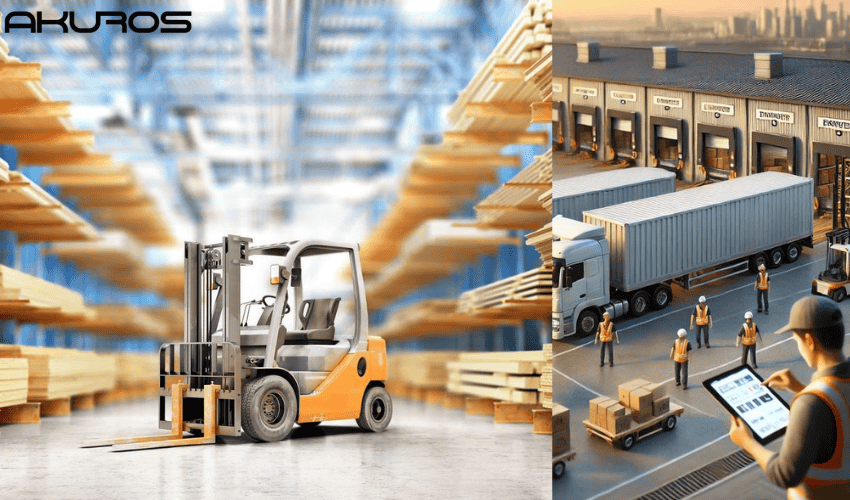
almacén centralizado
Why Southeast Asia Needs Smarter One-Stop Warehouses
According to the ASEAN Logistics Market Outlook 2025, warehouse demand across the region will grow by over 12% annually, driven by cross-border e-commerce and cold-chain expansion. Yet, many facilities still rely on outdated systems and fragmented subcontracting.
Un moderno Ventanilla única is designed to integrate multiple logistics functions — from pallet storage and packaging to transportation and returns — into a unified ecosystem. Instead of relying on separate facilities for different processes, businesses can consolidate under one operational backbone.
Learn more about industries that gain the most from integration in Akuros’ article, Los sectores que más se benefician de los servicios de almacén centralizado.
By combining high-density racking, automation, and real-time analytics, companies across Thailand, Malaysia, and Vietnam can now achieve:
-
30–40% higher space utilization,
-
25% faster order processingy
-
significant cost reductions through shared resources and localized distribution.
Adapting Warehouse Systems to Tropical and Trade Challenges
Southeast Asia presents unique operational pressures — extreme humidity, heat, seasonal monsoons, and uneven infrastructure. To succeed, Ventanilla única designs here must go beyond global templates and align with regional realities.
Key adaptations include:
-
Climate-Resilient Materials: Corrosion-resistant racking and high-humidity insulation.
-
Smart Energy Systems: Solar-assisted ventilation and LED lighting to cut energy costs.
-
Flexible Floor Design: Modular layouts to handle both e-commerce parcels and industrial cargo.
-
Localized Automation: Lightweight conveyors, compact stackers, and mobile robotics suited for narrower aisles.
Power efficiency is a major priority. The shift toward electric equipment — such as forklifts powered by advanced batteries — helps facilities meet both environmental and performance targets. See how these technologies are transforming efficiency in Gabelstapler Batterie.
How Digitalization Transforms Efficiency
Research from DHL’s “Digital Asia Supply Chain Report 2025” shows that warehouses using integrated management systems experience up to 60% faster decision-making and 99% inventory visibility.
Akuros’ case studies across Singapore and Vietnam highlight how automation and real-time dashboards reduce human error and streamline multi-client operations. Key features include:
-
AI-Driven Warehouse Management Systems (WMS): Predicts order peaks and allocates manpower dynamically.
-
IoT-Enabled Sensors: Track pallet temperature, vibration, and humidity.
-
Data Visualization Dashboards: Provide a 360° operational view for faster response to supply shocks.
Meanwhile, equipment standardization — from pallet jacks to autonomous trolleys — keeps operations agile. Read more about foundational handling tools in Todo lo que debe saber sobre las transpaletas.
A Real-World Case: Redesigning a Logistics Hub in Malaysia
In 2024, Akuros partnered with a manufacturing conglomerate in Penang to consolidate three legacy warehouses into a single integrated facility. The original setup faced delays, inconsistent loading times, and excess labor costs.
After assessment, Akuros introduced:
-
Drive-in racking for raw material storage.
-
AI-based WMS integration for predictive restocking.
-
Renewable energy optimization using rooftop solar panels.
-
Cross-docking design for real-time transfer between inbound and outbound lanes.
The outcome?
-
38% improvement in turnaround time.
-
42% reduction in operational energy use.
-
27% lower maintenance costs within six months.
To explore these customized systems in detail, visit Solución de almacén — a comprehensive overview of how modern infrastructure meets diverse industry needs.
Sustainability and the Future of ASEAN Logistics
The Southeast Asian logistics sector is under increasing regulatory and customer pressure to go green. Organizations such as ESTA (European Supply Chain Technology Alliance) are collaborating with regional partners to promote low-emission warehouse standards.
By adopting Ventanilla única designs with smart cooling systems, recyclable materials, and energy monitoring, companies can comply with ESG goals while improving ROI. In fact, a 2025 ASEAN Development Bank study found that logistics firms with green-certified warehouses achieved an average 15% revenue increase due to customer trust and global supplier partnerships.
Akuros continues to lead innovation in sustainability, helping clients build facilities that reduce waste and emissions while improving scalability and automation resilience.
For broader context and upcoming innovations, visit the main Akuros platform.
Expert Insights
Professor Nguyen Le Minh from the Vietnam Institute of Logistics shares:
“Southeast Asia’s warehouse evolution depends not only on automation but on smart localization — adapting global technology to tropical climates, local supply networks, and consumer expectations.”
Likewise, industry analyst Rina Santoso notes:
“The most successful One-Stop Warehouses in ASEAN combine flexibility with foresight — balancing global efficiency with regional adaptability.”
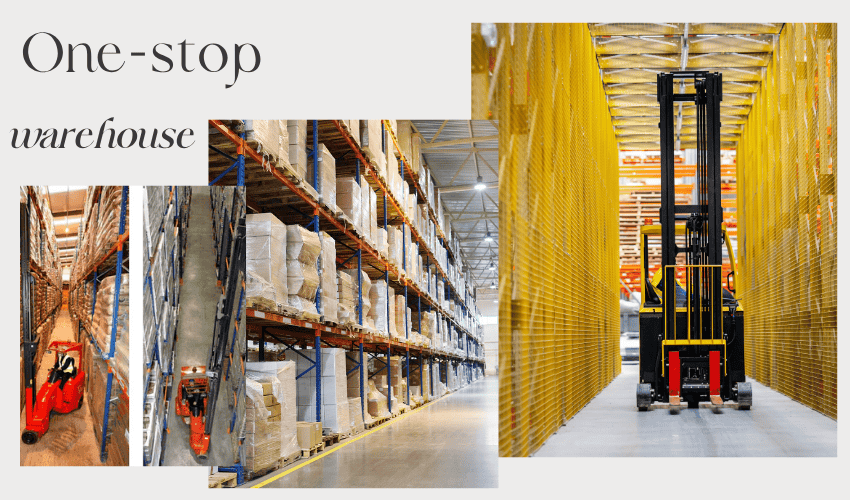
Almacén único
PREGUNTAS FRECUENTES
1. What makes a One-Stop Warehouse ideal for Southeast Asia?
It consolidates multiple logistics functions into one system, improving efficiency in space-limited, high-demand regions.
2. Can tropical climates affect warehouse performance?
Yes. Humidity and heat require corrosion-proof materials, smart ventilation, and humidity sensors to maintain product quality.
3. How does automation improve warehouse efficiency?
Automation reduces errors, accelerates sorting, and enables real-time visibility, resulting in higher throughput and reliability.
4. Are electric forklifts suitable for tropical operations?
Absolutely. Modern electric batteries are designed to withstand temperature fluctuations, making them efficient and eco-friendly for ASEAN markets.
5. How does Akuros support customized warehouse development?
Akuros provides end-to-end design, engineering, and technology integration tailored to each country’s logistics and climate requirements.
The Southeast Asian supply chain is shifting from fragmentation to integration — from manual workflows to One-Stop Warehouses that unify technology, people, and processes.
Whether serving Thailand’s food exports or Vietnam’s electronics assembly lines, the key is the same: adaptability.
With its proven record in modular design and intelligent systems, Akuros is helping businesses future-proof their logistics — one customized warehouse at a time.
Dr. Suriya Anant, a logistics consultant at the ASEAN Smart Supply Alliance, emphasizes:“The strength of Southeast Asia’s warehouse growth lies in adaptation, not imitation. Facilities that integrate automation, data analytics, and local climate design outperform generic global templates by a wide margin.”
Similarly, Professor Nguyen Minh from the Vietnam Institute of Logistics adds:
“Localization is the future. The region’s diversity demands flexible infrastructure — One-Stop Warehouse models succeed because they think regionally but execute locally.”
In the coming years, companies that align smart infrastructure with regional logistics ecosystems will lead ASEAN’s export and e-commerce expansion. With its proven record of innovation, Akuros continues to be a benchmark for how tailored warehouse design can create resilience, efficiency, and sustainable value across Southeast Asia.