

 Spanish
  English
  Russian
  French
  German
  Italian
  Portuguese
  Korean
  Japanese
  Arabic
  Turkish
  Indonesian
  Dutch
Dutch 

Forklift failures occur far more frequently in cold storage than in ambient warehouses due to low temperatures, condensation, and high operational stress. This article identifies the most common forklift failure types in frozen environments, explains their root causes, and outlines practical prevention strategies to reduce downtime, safety risks, and lifecycle costs.
1. Why Forklift Failures Are More Severe in Cold Storage
Cold storage warehouses amplify every weakness in forklift design and operation. Sub-zero temperatures, humidity caused by door transitions, frozen floors, and multi-shift utilization create a compounding effect on mechanical, electrical, and energy systems.
In ambient warehouses, many forklift issues are minor inconveniences. In frozen environments, the same issues often escalate into system-wide disruptions, affecting throughput, order fulfillment, and cold chain integrity.
This is why forklift reliability in cold storage must be evaluated as part of an integrado solución de almacén, rather than as an isolated equipment issue.
 2. Common Forklift Failures in Cold Storage — Overview Table
Before analyzing individual failure modes, the table below summarizes the most common forklift failures observed in cold storage warehouses, along with their primary causes and operational impact.
📊 Forklift Failure Overview in Cold Storage Warehouses
| Failure Type | Root Cause | Operational Impact | Typical Early Warning Signs |
|---|---|---|---|
| Battery capacity loss | Low-temperature discharge inefficiency | Unexpected shutdowns, reduced shift coverage | Rapid voltage drop, slow acceleration |
| Electronic control failure | Condensation and moisture ingress | Unplanned downtime, safety risks | Error codes, intermittent response |
| Reduced traction & braking | Frozen floors, unsuitable tires | Collisions, rack damage | Longer stopping distance, wheel slip |
| Hydraulic performance degradation | Inappropriate low-temperature lubrication | Slower lifting, unstable handling | Jerky mast movement |
| Structural corrosion | Humidity and temperature cycling | Shortened equipment lifespan | Rust, abnormal noise |
This table provides a diagnostic framework. Effective prevention requires addressing root causes rather than symptoms.
3. How to Interpret These Failures (Key Insight)
The failures listed above rarely occur in isolation. In most cold storage environments, one failure triggers another.
For example:
-
Battery instability leads to rushed charging behavior
-
Condensation-related electronics failure increases unplanned stops
-
Reduced traction raises collision and rack damage risk
Understanding these interactions is critical to designing a reliable cold chain operation.
 4. Battery-Related Failures: The Most Common Root Cause
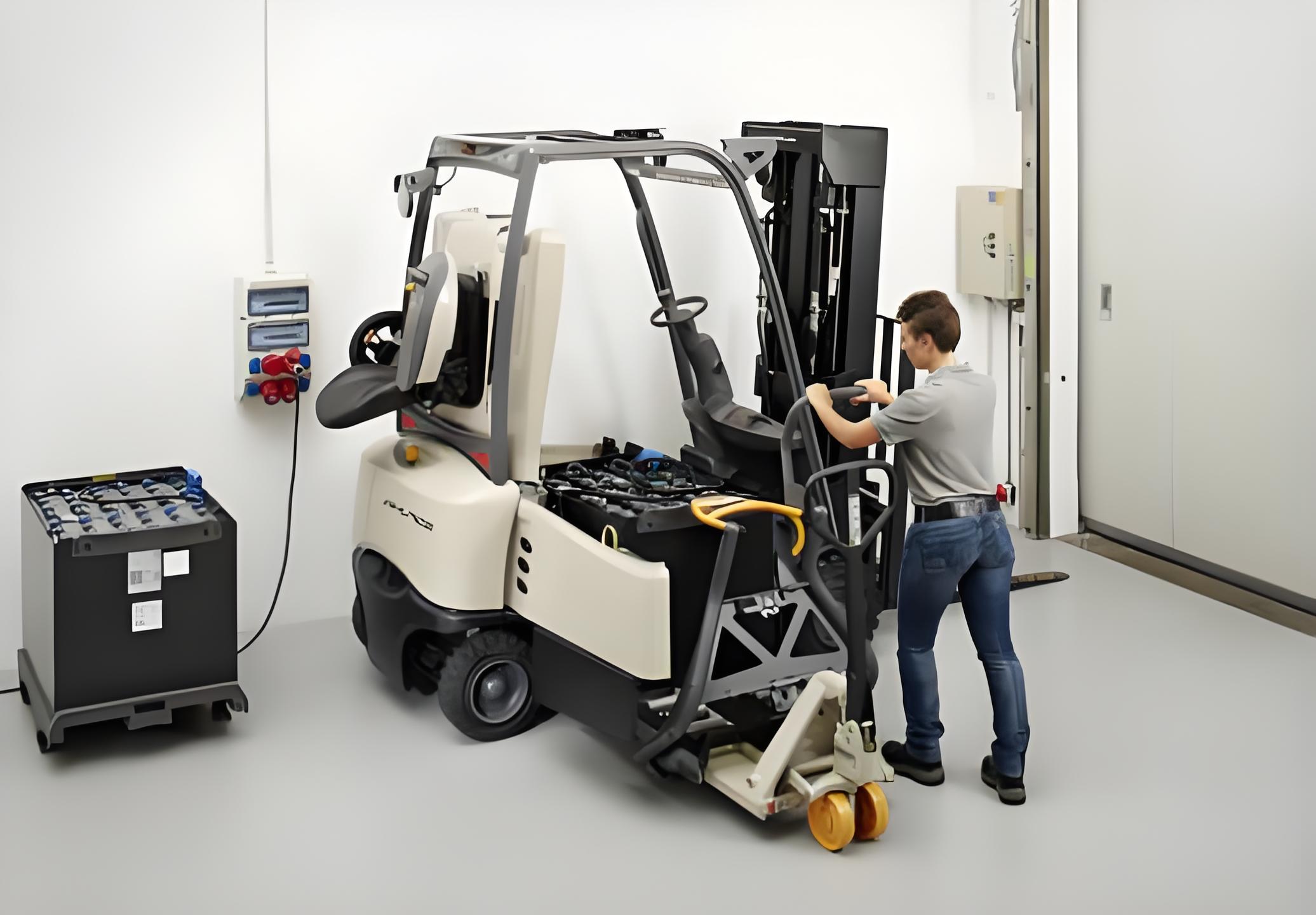
Battery performance is the most frequent point of failure in cold storage forklifts. At temperatures below -20°C, battery chemistry and insulation quality directly determine usable capacity and discharge stability.
Forklifts operating in frozen warehouses must rely on cold-rated batería de carretilla elevadora systems designed to maintain stable output in low-temperature environments. Without this, operators experience shortened shifts, increased charging cycles, and accelerated battery degradation.
Preventive strategies include:
-
Cold-resistant battery specifications
-
Proper charging room separation
-
Battery maintenance aligned with frozen operations
5. Electronic and Control System Failures Caused by Condensation
Condensation occurs when forklifts transition between frozen and ambient zones. Moisture intrusion into control units and wiring harnesses is one of the most underestimated risks in cold storage operations.
Forklifts designed for cold environments incorporate enhanced sealing and condensation control to protect critical electronics. Without these measures, electronic instability becomes a recurring downtime driver.
Preventive strategies focus on:
-
Sealed electronic components
-
Controlled transition zones
-
Operator training on door-cycle behavior
 6. Traction, Tires, and Safety Failures on Frozen Floors
Frozen and damp floors significantly reduce traction, increasing braking distance and collision risk. This issue becomes critical in high-density storage layouts where maneuvering margins are limited.
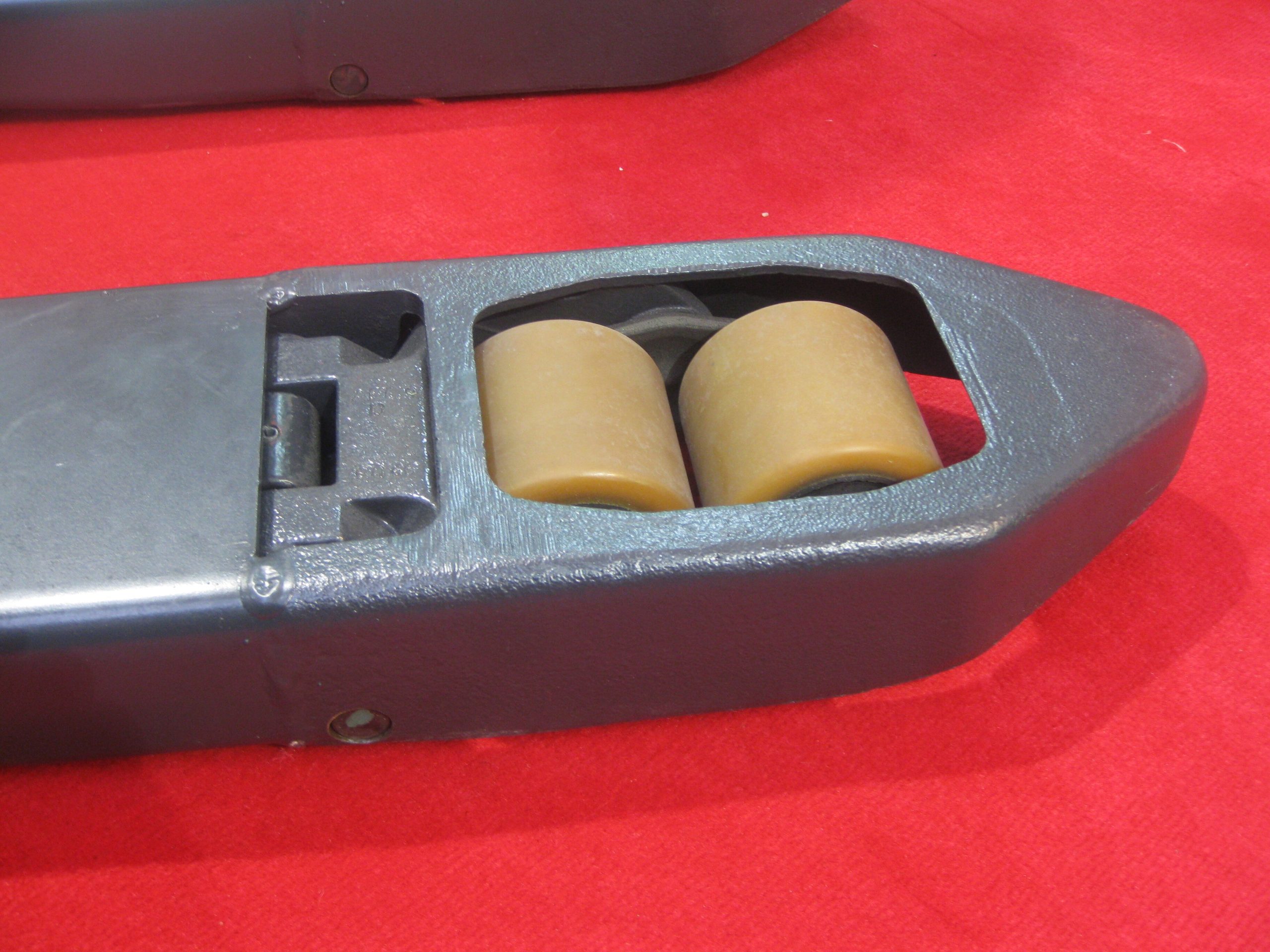
Cold storage operations typically rely on polyurethane tire solutions engineered for consistent grip and wear resistance in low-temperature environments. Incorrect tire selection often leads to repeated safety incidents and rack damage.
Preventive strategies include:
-
Cold-rated tire compounds
-
Regular traction inspections
-
Alignment between forklift type and aisle geometry
7. Structural and Mechanical Failures Over Time
Humidity and temperature cycling accelerate corrosion and mechanical wear in cold storage forklifts. Over time, this shortens equipment lifespan and increases maintenance frequency.
Forklifts operating in frozen warehouses benefit from reinforced structures, corrosion-resistant treatments, and maintenance schedules tailored to cold environments rather than ambient assumptions.
8. How Failure Prevention Links to Automation and Layout Planning
Forklift failures often signal deeper system-level issues. Warehouses designed without considering traffic flow, aisle width, and future automation place additional stress on forklifts.
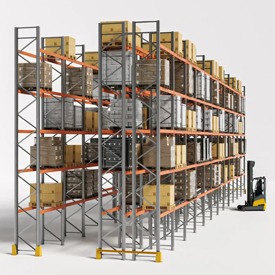
Facilities that align forklift selection with racking design and automated warehouse solutions experience fewer failures because equipment operates within its intended performance envelope.
9. Prevention Framework: How to Reduce Forklift Failures in Cold Storage
A practical prevention framework includes:
-
Selecting forklifts specifically engineered for cold storage
-
Matching forklifts with racking geometry and aisle width
-
Using cold-rated batteries and tires
-
Integrating equipment planning into an end-to-end warehouse solution
Prevention is significantly more cost-effective than reactive maintenance in frozen environments.
10. Google Popular Topics (Contextual Answers)
Why do forklifts fail more often in cold storage?
Because low temperatures, condensation, and frozen floors amplify battery, electronic, and traction-related weaknesses.
What is the most common forklift failure in frozen warehouses?
Battery capacity loss due to low-temperature operation.
Can standard electric forklifts operate reliably in cold storage?
Generally no. Cold storage requires forklifts specifically designed for sub-zero environments.
How can forklift downtime be reduced in cold storage?
By addressing root causes through proper equipment selection, battery systems, and layout planning.
Do forklift failures affect cold chain compliance?
Yes. Downtime and handling delays can disrupt temperature control and order fulfillment.