

 Spanish
  English
  Russian
  French
  German
  Italian
  Portuguese
  Korean
  Japanese
  Arabic
  Turkish
  Indonesian
  Dutch
Dutch 

Flexibility, Throughput & Cost Control
3PL cold storage warehouses operate under constant uncertainty—fluctuating volumes, diverse SKUs, and strict service-level agreements. This article explains how 3PL operators should design and equip cold storage warehouses to balance flexibility, throughput, and cost control without locking themselves into rigid layouts or equipment choices.
1. Why 3PL Cold Storage Is Different from Owner-Operated Facilities
Unlike single-owner cold storage warehouses, 3PL operators must serve multiple clients with different product profiles, turnover rates, and service expectations—all within the same facility.
Common characteristics of 3PL cold storage include:
-
Highly variable inbound and outbound volumes
-
Frequent SKU changes driven by client onboarding and offboarding
-
Tight SLA requirements for order accuracy and lead time
-
Constant pressure to control operating cost per pallet
These dynamics make rigidity the biggest risk in 3PL cold storage design. What works efficiently today may become a bottleneck within a year if flexibility is not built into the system.
This is why 3PL facilities must be planned as an integrado solución de almacén, not a fixed-purpose freezer.
 2. 3PL Cold Storage Challenges — Overview Table
Before exploring layout and equipment choices, the table below summarizes the most common challenges faced by 3PL cold storage operators and the corresponding design priorities.
📊 3PL Cold Storage Challenges & Design Priorities
| 3PL Challenge | Operational Impact | Design Priority |
|---|---|---|
| Fluctuating volumes | Congestion during peaks | Scalable flow design |
| High SKU diversity | Slower picking | High selectivity |
| Client turnover | Layout rework cost | Reconfigurable racking |
| SLA pressure | Throughput risk | Efficient equipment |
| Cost sensitivity | Margin erosion | Lifecycle cost focus |
For 3PL operators, flexibility is not a feature—it is a survival requirement.
3. Layout Design: Designing for Peaks, Not Averages
One of the most common mistakes in 3PL cold storage design is sizing layout and equipment based on average volume. In reality, peak demand defines operational success or failure.
Layouts must provide:
-
Sufficient staging space for peak inbound and outbound flows
-
Clear separation between pallet storage and picking zones
-
Traffic patterns that can absorb temporary congestion without gridlock
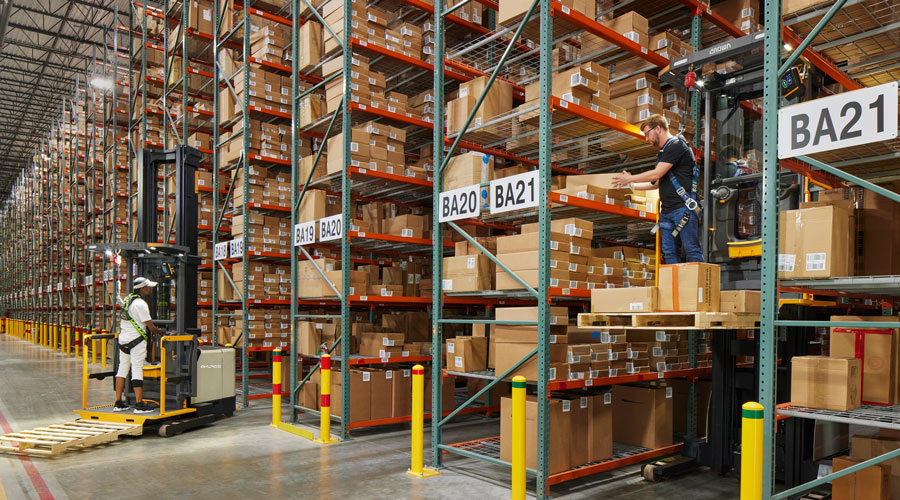
Designing layout within a warehouse solution framework allows 3PL operators to adjust flow patterns without structural changes as client mix evolves.
4. Racking Systems That Support 3PL Flexibility
Racking selection plays a decisive role in how easily a 3PL facility can adapt to changing client requirements.
-
Very narrow aisle racking systems are well suited for high SKU diversity and frequent picking, offering strong selectivity and vertical utilization.
-
Double deep racking systems provide a balance between density and accessibility, commonly used for clients with moderate SKU variety and predictable turnover.
Overreliance on rigid high-density systems often limits a 3PL’s ability to reassign space as client profiles change.
5. Forklifts and Equipment for Variable Workflows
3PL cold storage facilities require equipment that can handle frequent task switching—from pallet put-away to order picking to cross-docking.
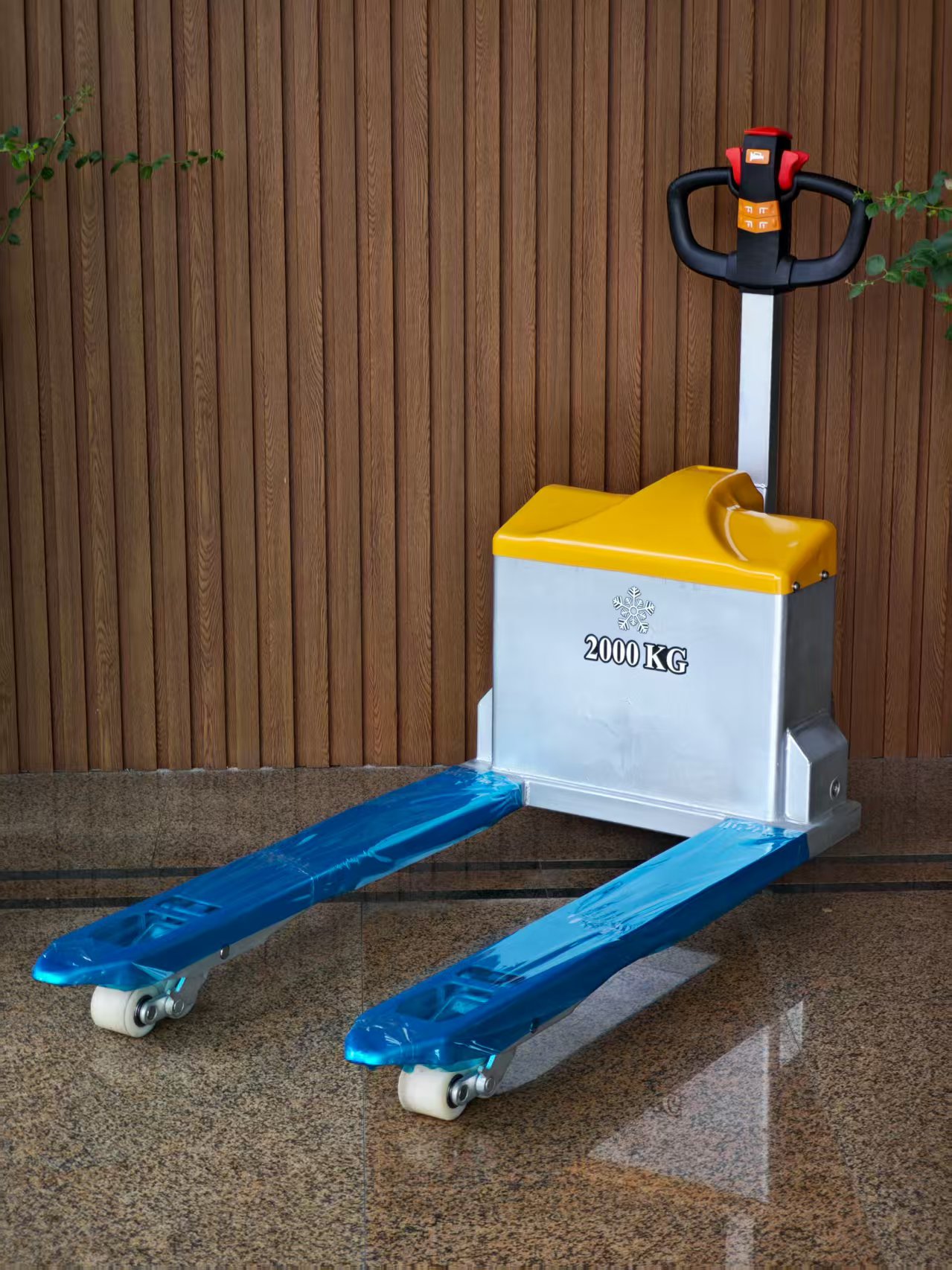
Cold-adapted carretillas eléctricas form the backbone of most 3PL operations, supported by:
-
Electric pallet trucks for staging and short-distance transfers
-
Order pickers for high-frequency picking zones
Equipment must be selected based on maneuverability and uptime under -25°C conditions, not just lifting capacity.
 6. Automation for 3PL Cold Storage: Selective, Not Absolute
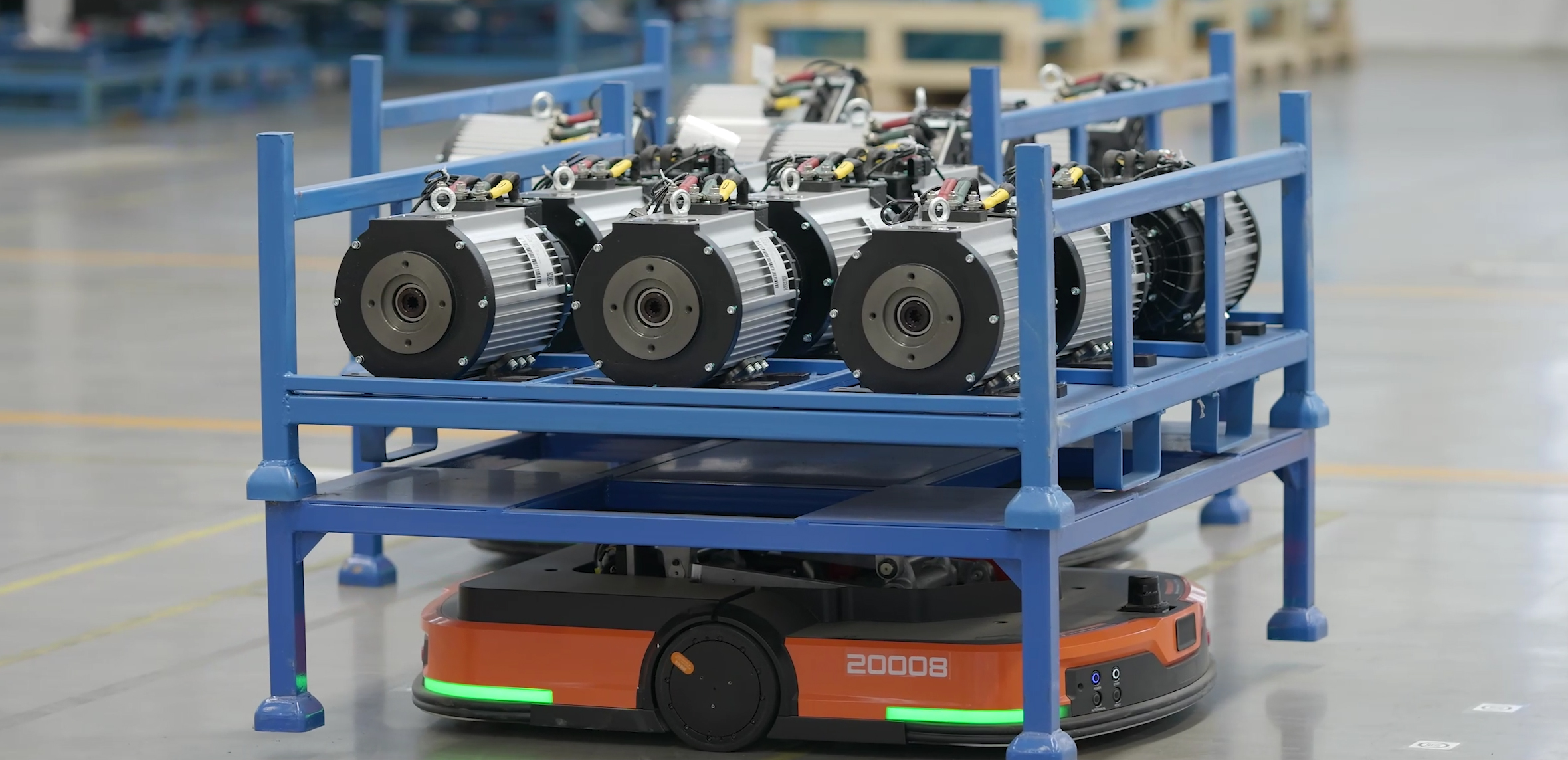
Automation in 3PL cold storage delivers value only when applied selectively. Stable, repetitive transport routes—such as pallet movement between inbound docks and storage zones—are well suited for Sistemas AGV.
However, client-driven variability often requires manual intervention. Integrating AGVs within broader automated warehouse solutions allows 3PL operators to automate predictable tasks while preserving flexibility for exceptions.
 7. Cost Control Through Lifecycle Planning
3PL margins are sensitive to hidden costs: downtime, reconfiguration, and underutilized space. Decisions based solely on initial CAPEX often lead to higher operating costs over time.
Lifecycle-focused planning considers:
-
Reconfiguration cost when client mix changes
-
Equipment uptime during peak seasons
-
Compatibility with future automation upgrades
This approach consistently delivers better cost control than static, density-driven designs.
8. Common Mistakes in 3PL Cold Storage Projects
Recurring issues include:
-
Designing for a single “anchor client”
-
Locking layouts into rigid high-density configurations
-
Underestimating peak-period congestion
-
Introducing automation without flexibility safeguards
In 3PL environments, these mistakes reduce responsiveness and directly impact contract renewals.
9. How Successful 3PL Operators Design Cold Storage Facilities
High-performing 3PL operators share several design principles:
-
Modular layouts that can be reconfigured
-
Mixed racking strategies aligned to client profiles
-
Equipment fleets optimized for versatility
-
Automation applied only where variability is low
These principles are best implemented through an end-to-end warehouse solution rather than incremental upgrades.
10. Google Popular Topics (Contextual Answers)
Why is flexibility critical in 3PL cold storage warehouses?
Because client mix, SKU profiles, and volumes change frequently.
Which racking systems work best for 3PL cold storage?
VNA for high SKU diversity and double deep for balanced density.
Is automation suitable for 3PL cold storage?
Yes, when applied selectively to stable workflows.
How can 3PL operators control cold storage costs?
By focusing on lifecycle cost rather than upfront equipment price.
Should 3PL cold storage be designed for future expansion?
Yes. Expansion and reconfiguration are common in 3PL operations.